
Loading, please wait...


LOT 0252
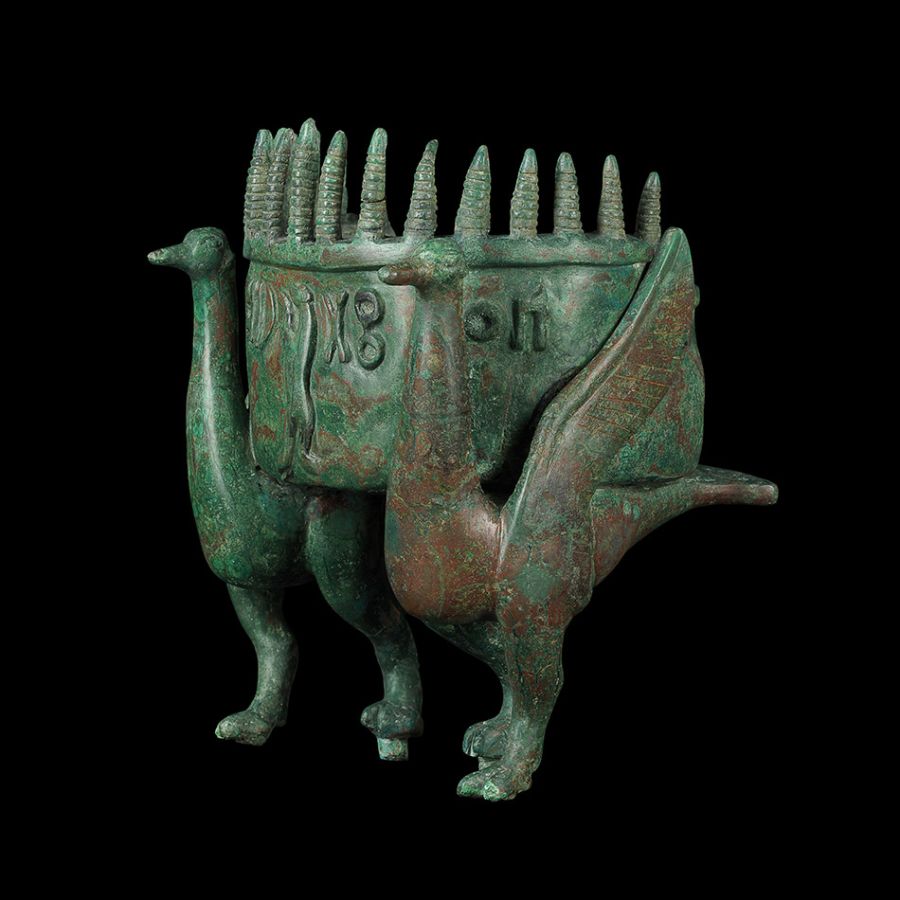
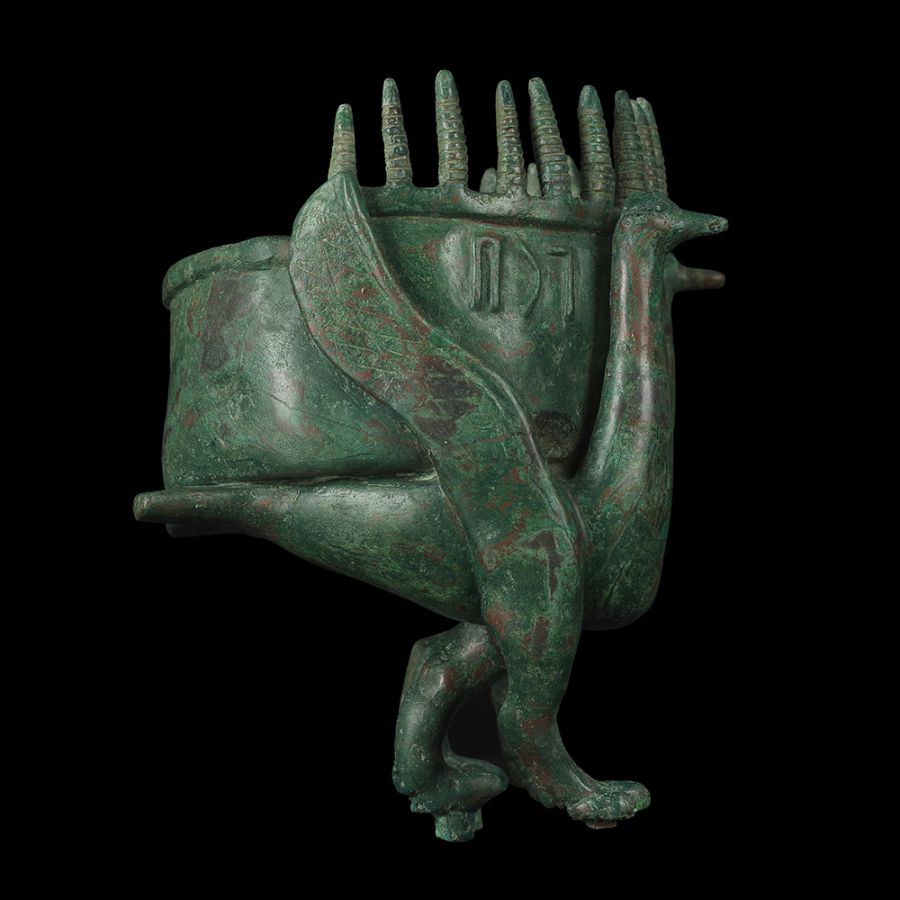
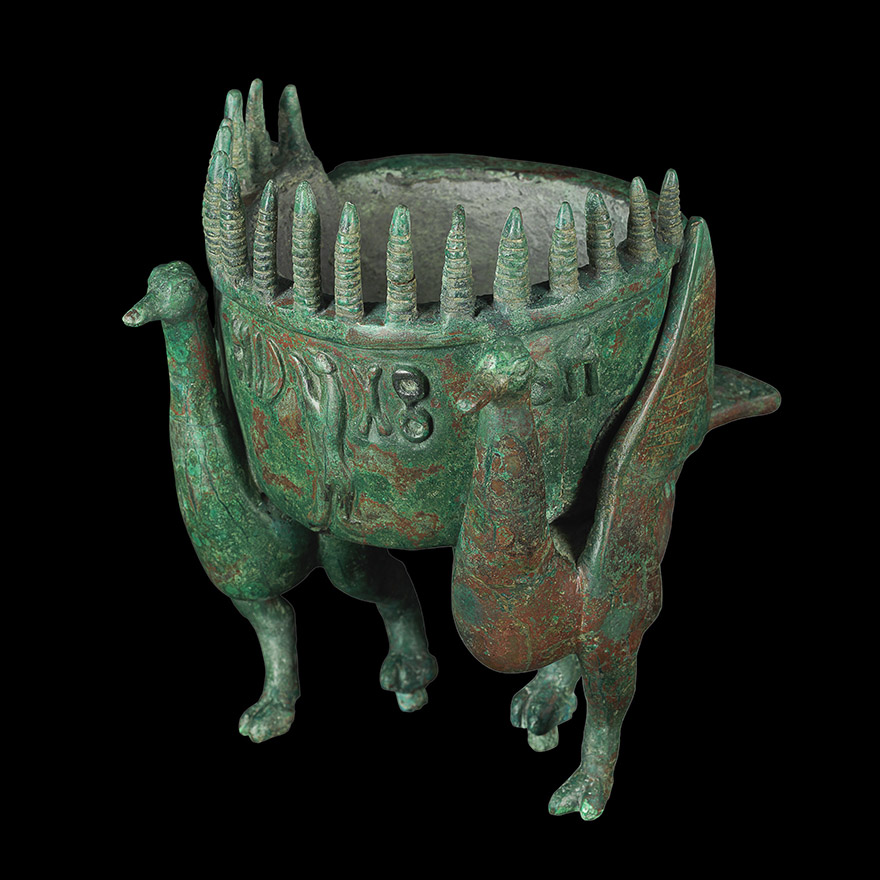
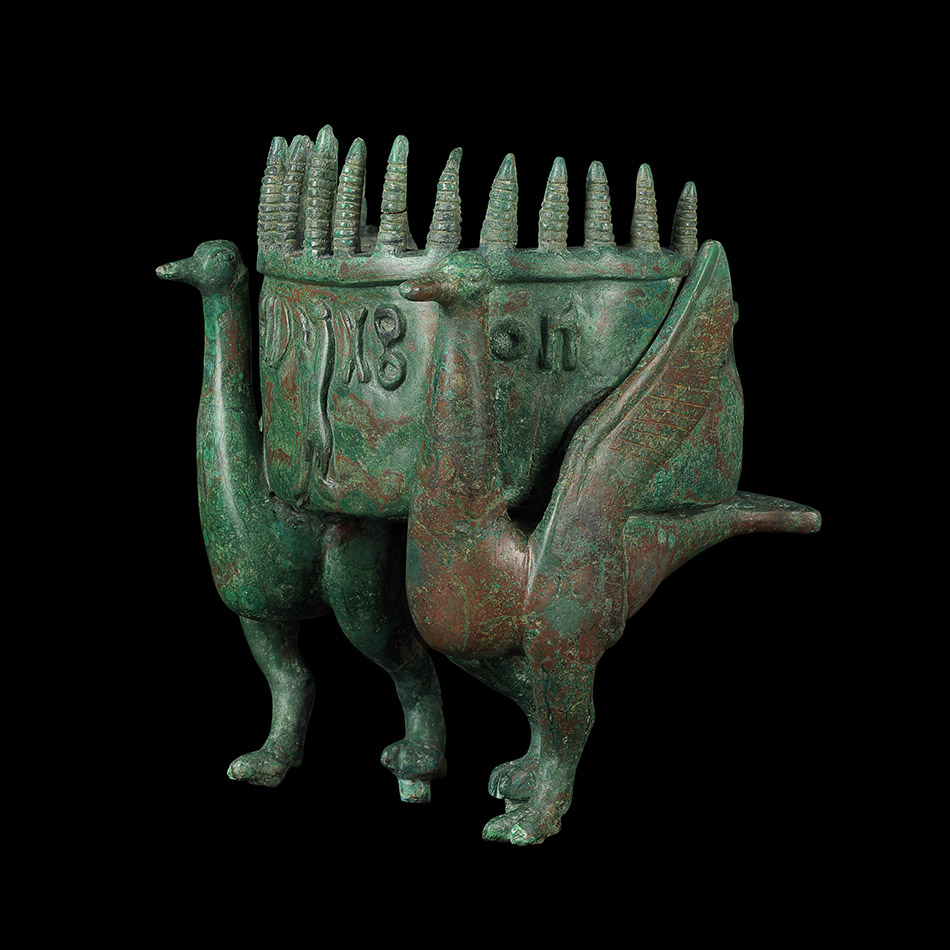
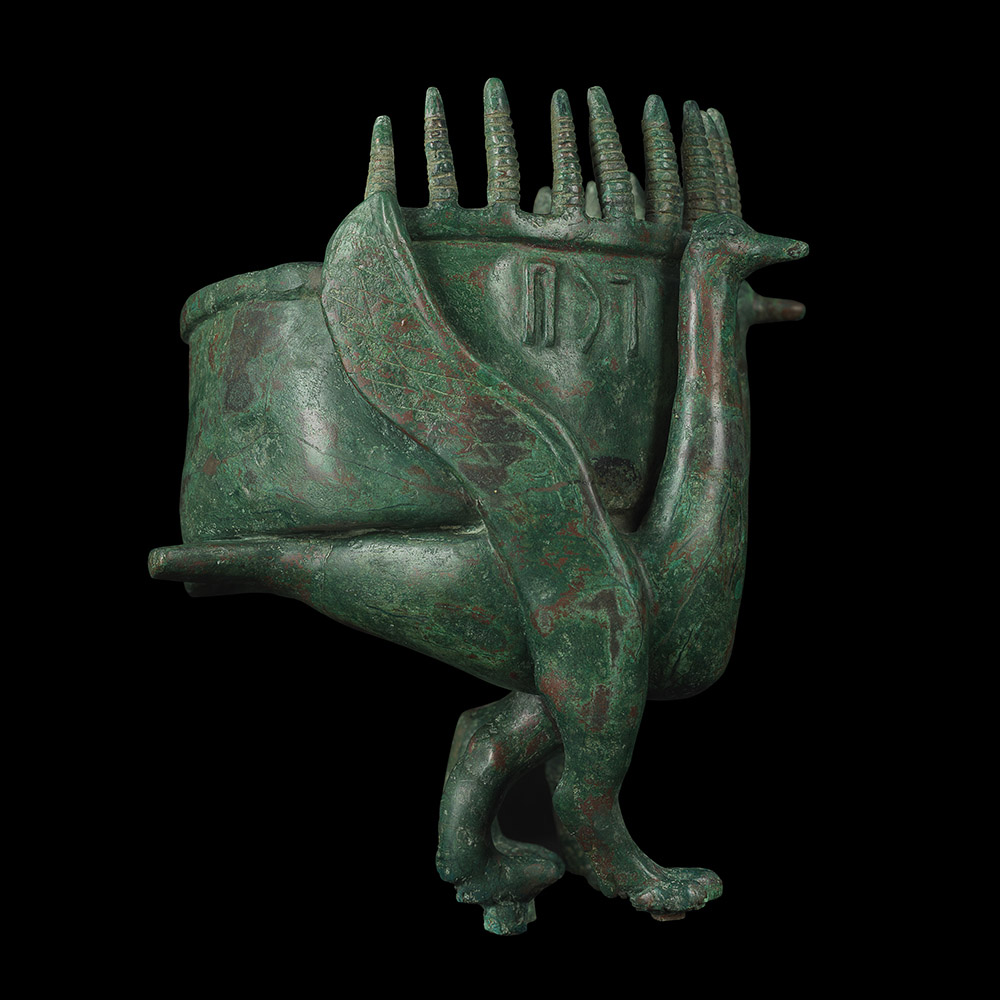
'The Moussaieff' South Arabian Bronze Incense Burner
CIRCA 7TH-6TH CENTURY B.C.
11 in. (9.17 kg total, 28 cm including stand).
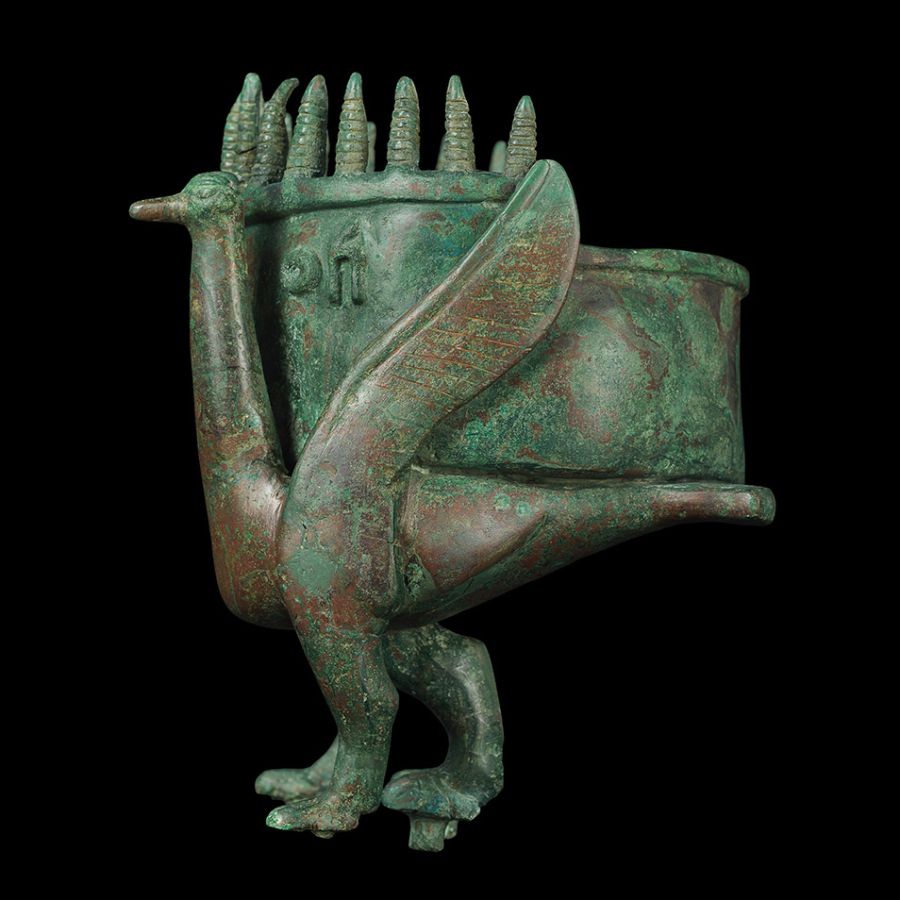
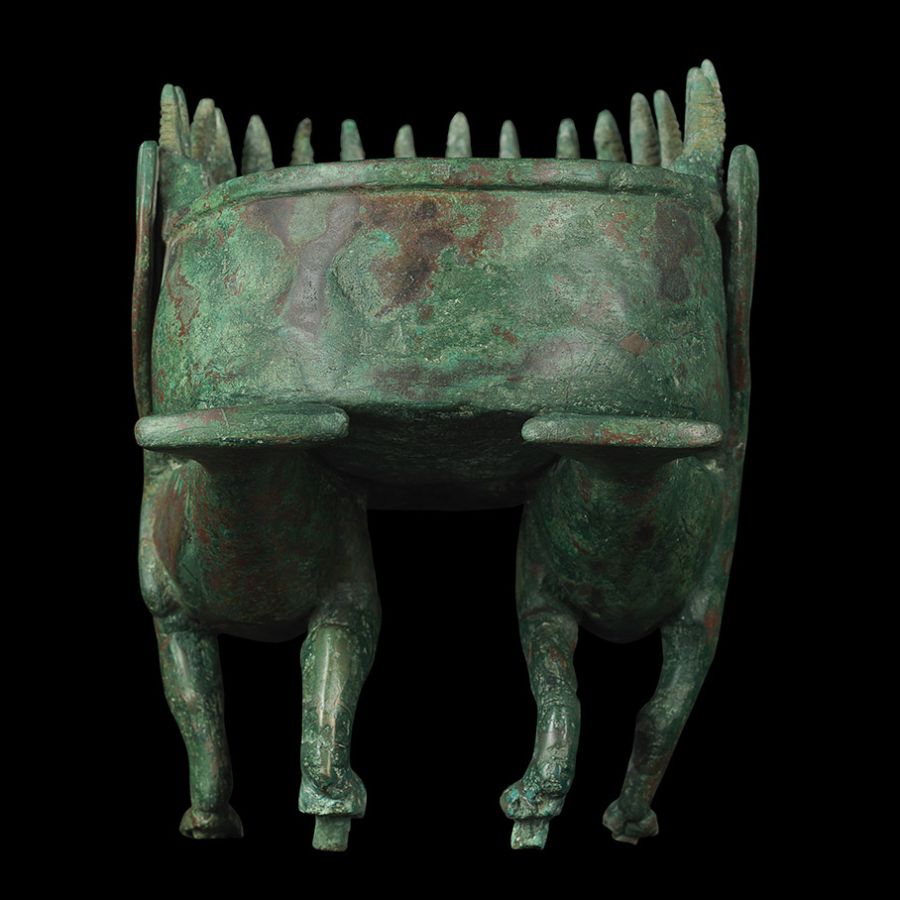
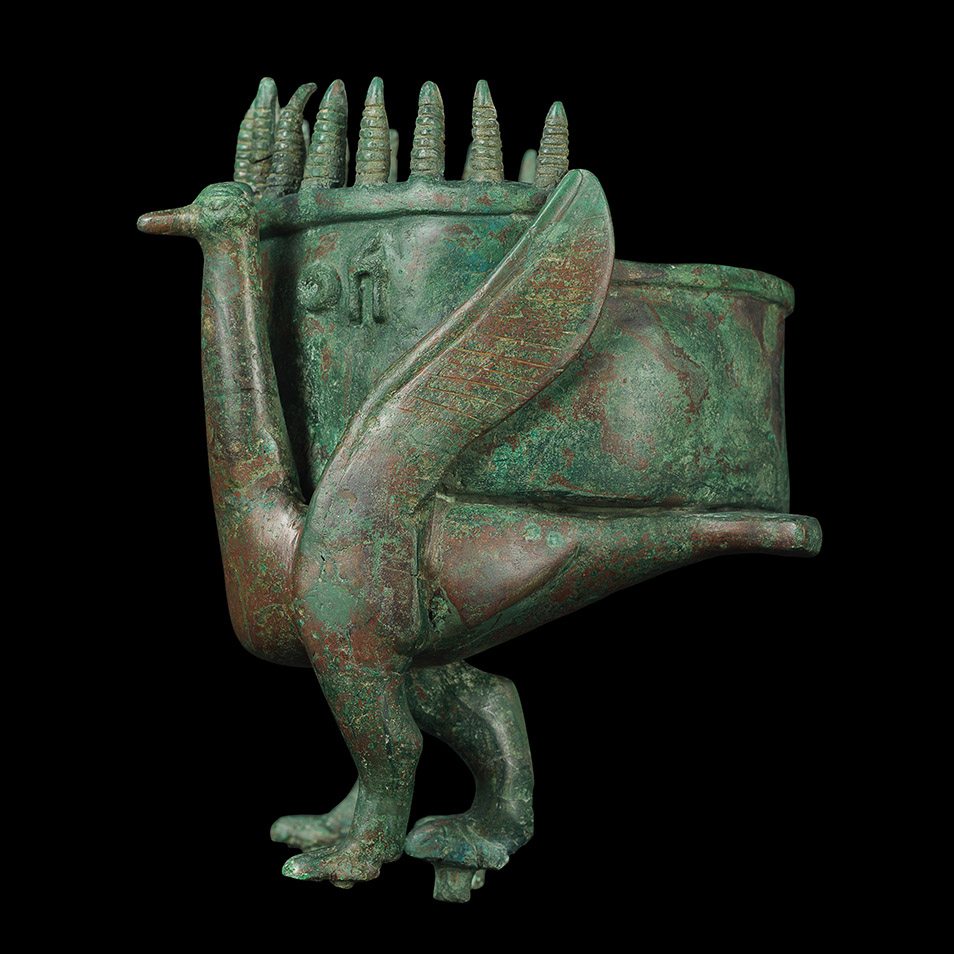
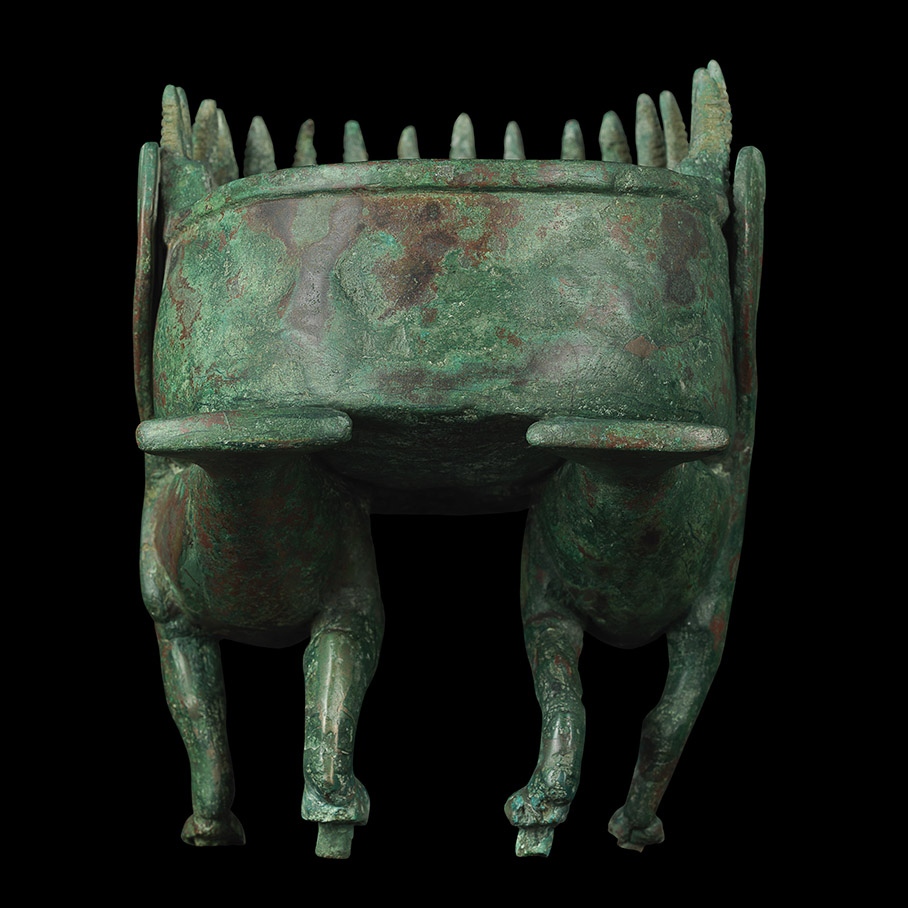
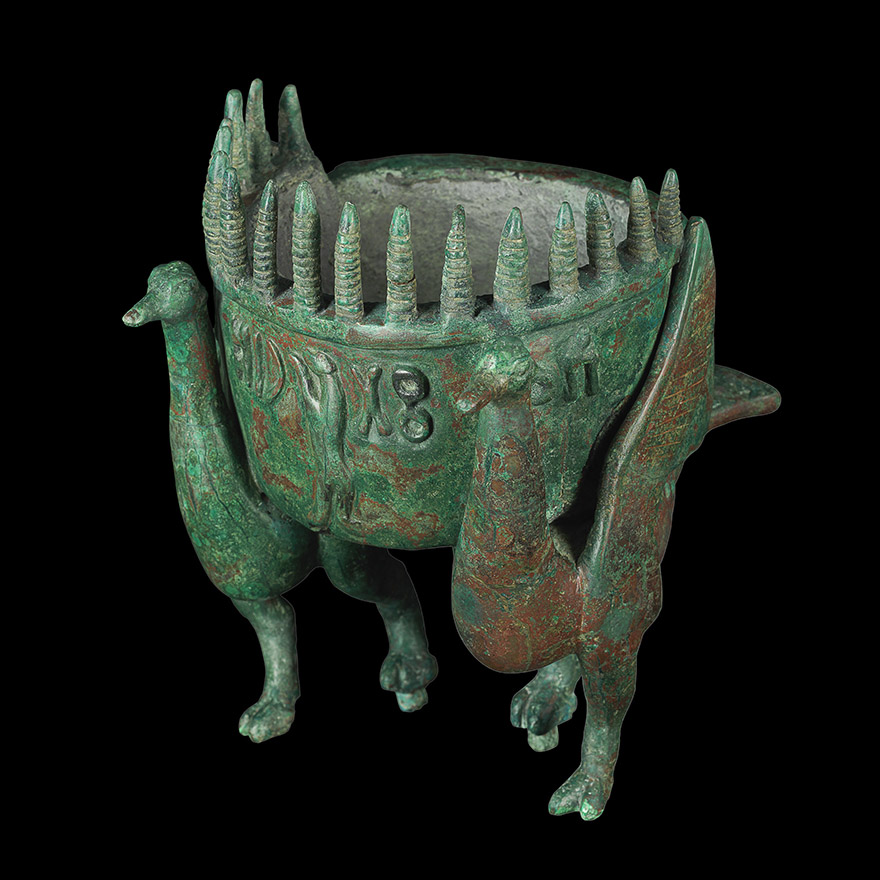
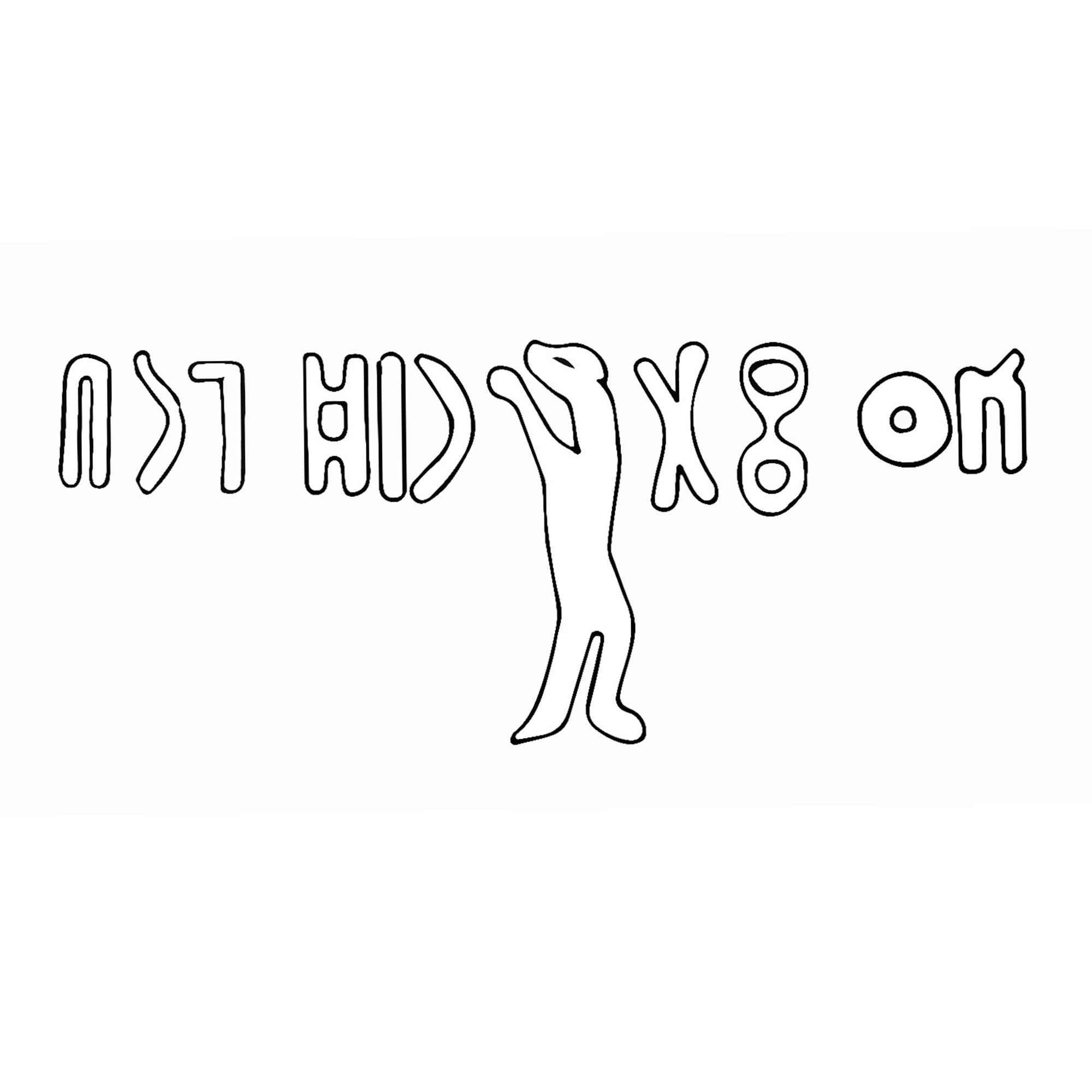
In the form of a bowl with one part of the rim raised and surmounted by spikes decorated with concentric rings; flanked by two large aviform supporters, each with one long curving wing to the outer side of the bowl and legs placed one in front of the other in advancing pose; obverse decorated with a raised legend in South Arabian script intersected by a quadruped with long tail, possibly a lion, rearing on its hind legs; accompanied by a display stand.
ProvenanceReputedly from the temple of ʿAthtar dhu-Garb in al-Sawdāʾ (ancient Nashshān) in the Jawf of Yemen.
Previously in the private collection of Shlomo Moussaieff (1925–2015), Israel.
Thence by descent.
Acquired from the above 18 May 2021.
Accompanied by Israeli export license.
Accompanied by an Art Loss Register Search Confirmation number S00224376 with IADAA Certificate.
This lot has been checked against the Interpol Database of stolen works of art and is accompanied by search certificate no.12483 -229826.
This lot has been cleared against the Art Loss Register database, and is accompanied by an illustrated lot declaration signed by the Head of the Antiquities Department, Dr Raffaele D'Amato.
Sabina Antonini de Maigret and Christian Julien Robin, ‘Un originale incensiere in bronzo da Nashshān/al-Sawdā, Yemen (VII-VI secolo a.C.)’, Semitica et Classica, XVI (2023), pp. 261-266.
LiteratureFor similar items of circa mid-1st millennium B.C. date, see Metropolitan Museum of Art (ref.49.71.2) and one of circa 8th-3rd century BC, Sabaean, South Arabia Bronze, British Museum (ref.132909).
FootnotesThe animals represented do not fit with any common South Arabian models, and it is possible they are based on interpretation of foreign designs. The legend is a dedicatory text in Maʿīnic, and reads (from right to left): ' kʿ ṯt {animal} r/ḏ Grb k-ʿṯtr ḏ-Grb' (For {the god} ʿAthtar duh-Garb ) Ashtar, or Attar, was an ancient Semitic god of war, associated with the morning star, the gazelle and thunderstorms. As a thunder-god he was also associated with fertility, represented by rainstorms. It is likely this incense burner was dedicated to his temple in al-Sawdā, where it would have been used in his ceremonial rites.
Al-Sawdā was known in ancient Yemeni inscriptions as 'Nashan' and was described as a great city with a robust wall. Nashan dates back to the 8th century BC (715 BC). In its first phase, it was an independent sovereign state, later joining the Ma’in state. It was a rich city, with commercial, religious and industrial success. In a later phase, it joined the kingdom of Sheba with the rest of the Ma’in state. It was known as one of the most important cities in the Ma’in Kingdom for the manufacture of metal vessels and the remains of ores of different minerals have been found there. But the great importance of the city was due to the fact that it was the city of temples; it retains the remnants of several examples described as some of the most beautiful temples in the entire Arabian Peninsula, amongst which is a group known as the “daughters of Aad” (temples of Attar), from which this incense burner likely came.
South Arabia, called Arabia Felix (Fortunate Arabia) by the ancient Romans, was the southern fringe of the Arabian Peninsula. It owed its wealth to its position on the trade routes, in particularly those that supplied incense and myrrh. The production and export of incense was a fundamental part of the thriving economy of ancient South Arabian, and the variety of surviving incense burners is testament to this. Incense was of central importance to many of the ceremonies of the religions of the ancient world, burned to honour the gods and the dead. The kingdoms of South Arabia held a tight monopoly on these trades.
Large metal incense burners such as this were doubtless the most valuable items of their type but few survive, making this an important example. The importance of the manufacture of bronze objects in ancient South Arabia can be seen from archaeological finds and inscriptions; bronze artefacts occur in South Arabian archaeological sites as often as donations of statues in dhb (the ancient South Arabian term for ‘bronze’) are recorded in South Arabian inscriptions. There are a great number of zoomorphic statues and statuettes, which in addition to being decorative, were probably used in some instances to represent divine hypostasis or to allude symbolically to the dedication of the temple. Shlomo Moussaieff (1925-2015) owned one of the world’s largest private collections of Near Eastern antiquities, surpassing those of many major museums. He collected widely for most of his life with a large expanse of interests, but mostly focussing on ancient artefacts. The Israel Museum and the Bible Lands Museum both displayed items from his collection, including elegant glassware fashioned by Ennion, the greatest of the Greek glassmakers, of which Moussaieff owned more than either the Sorbonne or the British Museum. Bar-Ilan University in Tel Aviv awarded Moussaieff an honorary doctorate in gratitude for his gift of rare Jewish mystical texts (kabbalah) and in 2003 the Smithsonian Institution in Washington, D.C., mounted a special exhibition consisting solely of seven of the world’s rarest and greatest diamonds displayed in a single vitrine. One of these diamonds, a nearly perfect red diamond of more than 5 carats, is known as the 'Moussaieff Red'.
TimeLine Auctions follows a vetting process to ensure the authenticity and legality of all items, reinforcing our commitment to integrity and responsible trading. Each antiquity, antique, and coin lot undergoes thorough examination by a vetting committee of at least ten external specialists, professional trade association members, scientists, and archaeologists: Our Vetting Process
AUCTIONS:
TimeLine is a leading auction house specialising in antiquities, ancient art, collectables, natural history, coins, medals, and books. Our auctions offer museums, collectors, historians, and enthusiasts the opportunity to acquire unique and historically significant pieces.
LOT 0252
'The Moussaieff' South Arabian Bronze Incense Burner
Sold for (Inc. bp): £39,000
-
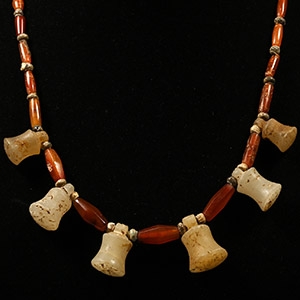
Elamite Carnelian Necklace with Stamp Seals
Late 2nd-early 1st millennium B.C.Sold for (Inc. bp): £2,340
Restrung necklace of tubular and fusiform carnelian beads with annular spacers; drum-shaped dangles each with an incuse motif to the underside. 78 grams, 53 cm long
Acquired before 1983. Ex London gallery, 1990s. This lot has been checked against the Interpol Database of stolen works of art and is accompanied by a search certificate number no.12537-231965. This lot has been cleared against the Art Loss Register database, and is accompanied by an illustrated lot declaration signed by the Head of the Antiquities Department, Dr Raffaele D'Amato. -
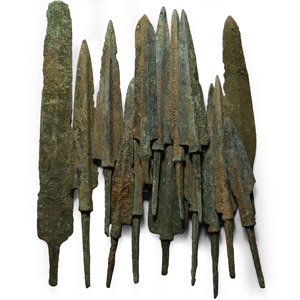
Luristan Bronze Arrowhead Group
13th-6th century B.C.Sold for (Inc. bp): £247
Including leaf-shaped, round-tipped, barbed, triangular and other tanged types. 396 grams total, 10.6-19 cm
Acquired 1980-2015. Ex Abelita family collection. This lot has been cleared against the Art Loss Register database, and is accompanied by an illustrated lot declaration signed by the Head of the Antiquities Department, Dr Raffaele D'Amato. -
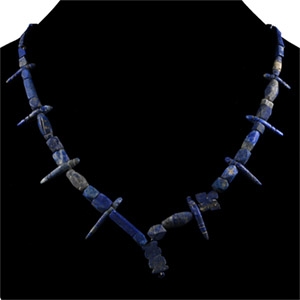
Bactrian Style Lapis Lazuli Bead Necklace String
20th century A.D.Sold for (Inc. bp): £52
Composed mainly of multifacetted, barrel-shaped and biconical beads with long double-pierced amuletic beads and a flower-shaped bead, central feature a large tabular bead; restrung. 44.3 grams, 41 cm
Ex London art market. Property of a North London, UK, gentleman. This lot has been cleared against the Art Loss Register database, and is accompanied by an illustrated lot declaration signed by the Head of the Antiquities Department, Dr Raffaele D'Amato.
