
Loading, please wait...
LOT 0043
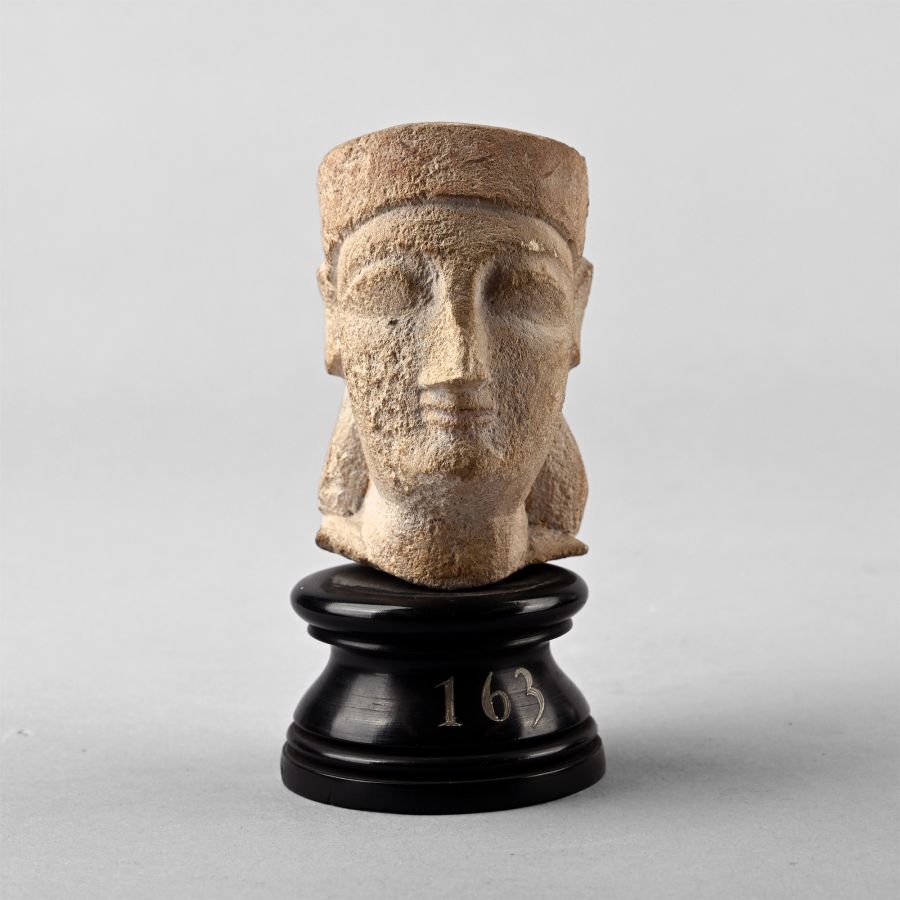
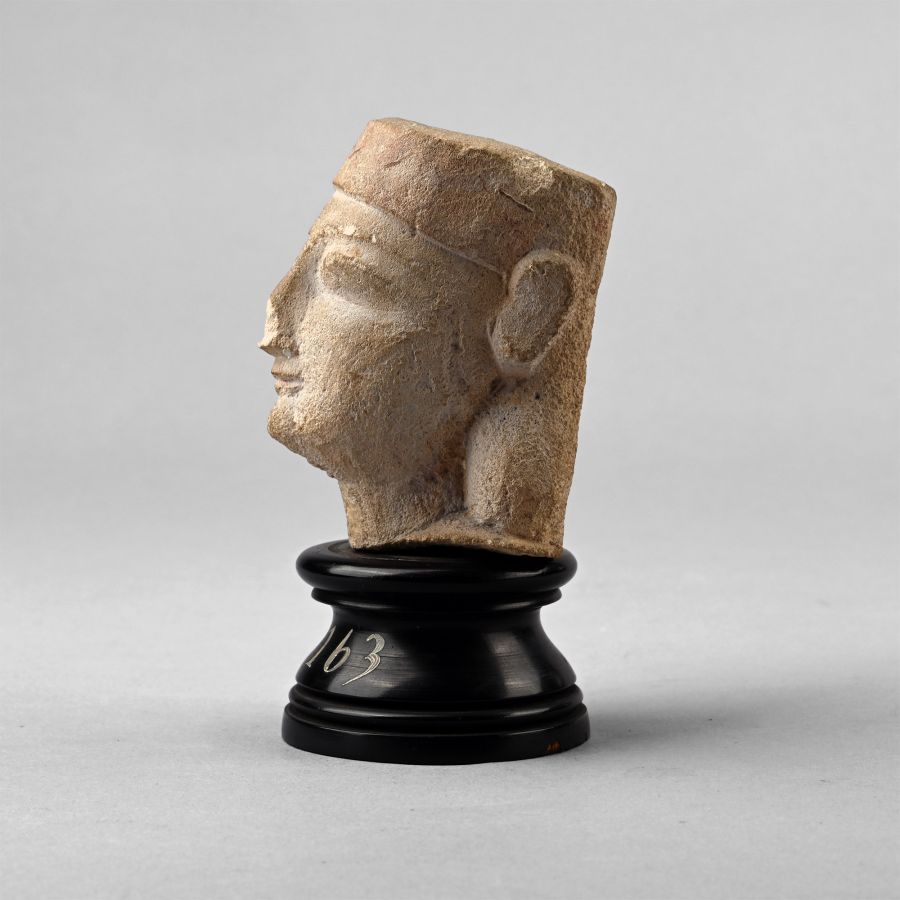
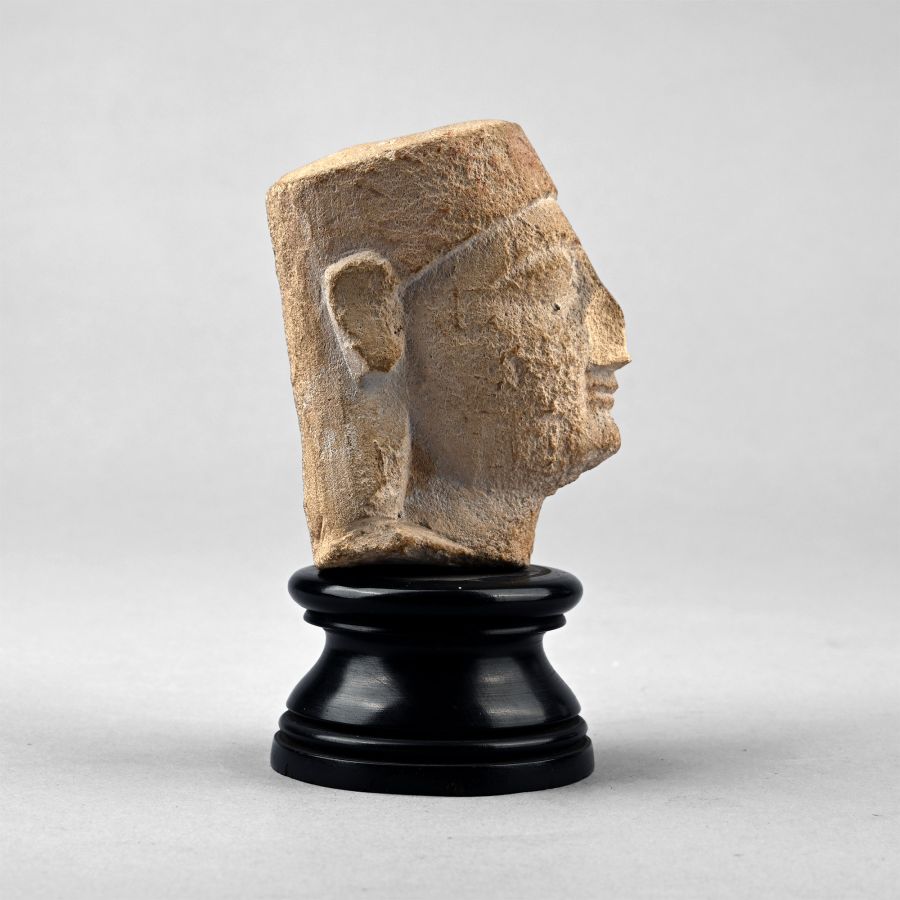
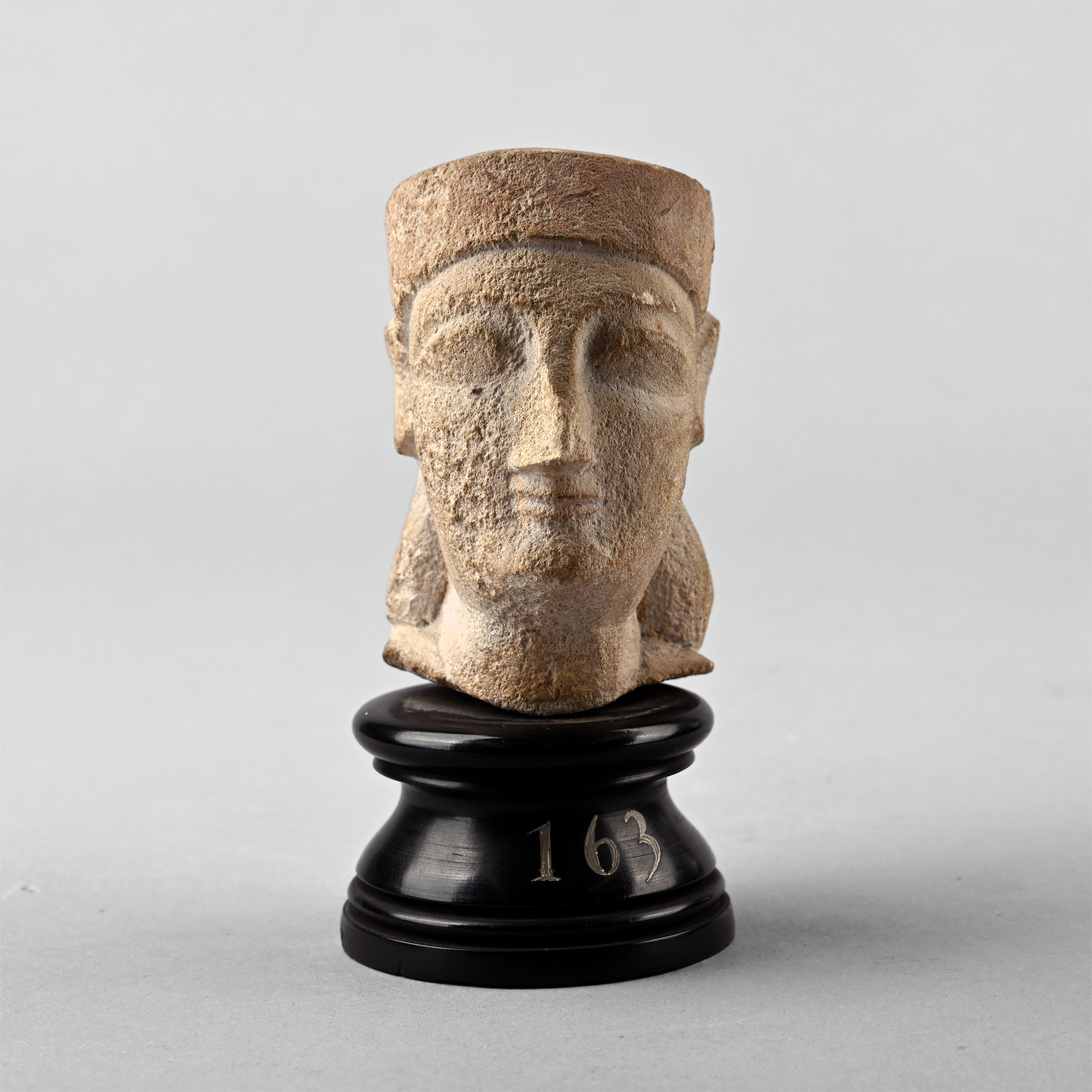
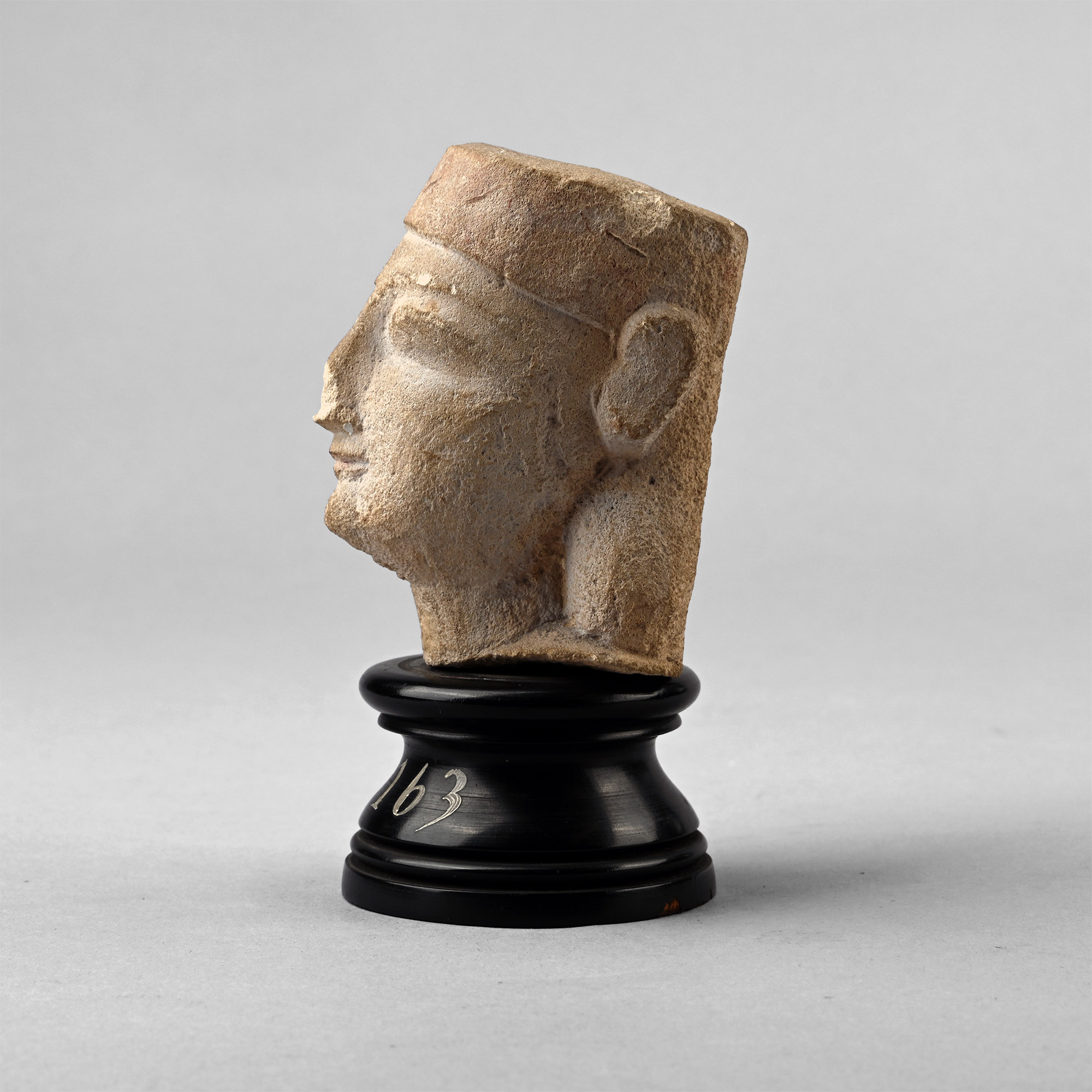
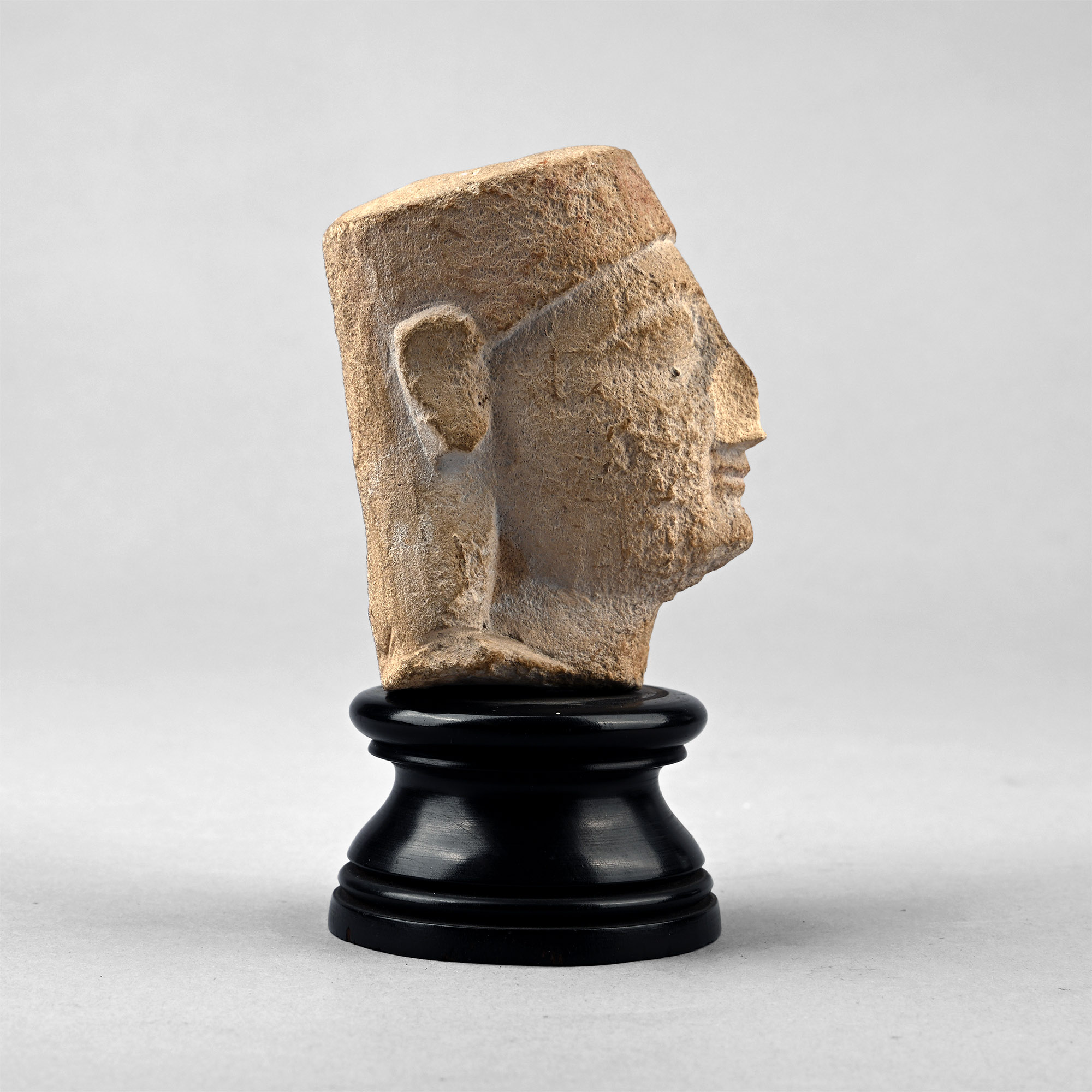
'The Metropolitan Museum of Art' Cypriot Limestone Votive Head of a Man
CIRCA 5TH CENTURY B.C.
5 1/8 in. (367 grams total, 13.1 cm high including stand).
Finely carved votive head with almond-shaped eyes and strong nose, lips set to a gentle smile, typical of the Greek kouroi of this period, wearing a conical headdress leaving the ears exposed; set on its original base from the Metropolitan Museum of Art, New York, with item number '163' and three sale labels on the base.
ProvenanceLikely discovered by Luigi Palma di Cesnola in Cyprus, 1860s-70s.
Collection of The Metropolitan Museum of Art, New York, likely acquired from the above in 1872.
Collection of Ira Martin, New York, acquired from the above on 12 March 1926.
with Christie’s, New York, Antiquities, 5 June 1998, no.133.
Private collection, thence by descent.
Exhibited at The Metropolitan Museum of Art, c.1872-1926.
LiteratureSee a figure in the British Museum, London, from the Sanctuary of Apollo, BM 1910,0620.9, for a similar votive.
CONDITIONTimeLine Auctions follows a vetting process to ensure the authenticity and legality of all items, reinforcing our commitment to integrity and responsible trading. Each antiquity, antique, and coin lot undergoes thorough examination by a vetting committee of at least ten external specialists, professional trade association members, scientists, and archaeologists: Our Vetting Process
AUCTIONS:
TimeLine is a leading auction house specialising in antiquities, ancient art, collectables, natural history, coins, medals, and books. Our auctions offer museums, collectors, historians, and enthusiasts the opportunity to acquire unique and historically significant pieces.
LOT 0043
'The Metropolitan Museum of Art' Cypriot Limestone Votive Head of a Man
Sold for (Inc. bp): £2,860
-
.jpg)
Greek Miniature Bronze Hydria
Geometric Period, 6th century B.C.Sold for (Inc. bp): £845
With a bulbous body, flared foot, lateral loop handles to the shoulder and a strap handle to the rear. 23.5 grams, 37 mm
Acquired by a Swiss family in the mid-1980s to late 1990s, thence by descent. Private collection, Switzerland, since the late 1990s.
The earliest Archaic Greek bronze hydriai enter the archaeological record in the last quarter of the seventh century. Although the appearance of bronze marks the first significant period of production in the Iron Age, these vessels represent a reawakening of an illustrious tradition dating back at least to the Helladic Bronze Age, if not considerably earlier. -
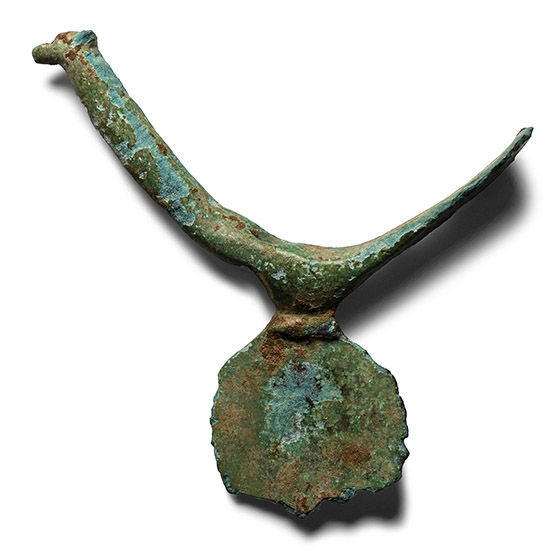
Greek Geometric Votive Gift in the Form of a Bird
8th century B.C.Sold for (Inc. bp): £72
Comprising a columnar neck with pinched detailing to the head and spatulate tail, discoid plate below. 8.47 grams, 46 mm
Acquired from a London auction house, circa 2001. Property of a Swiss gentleman. -
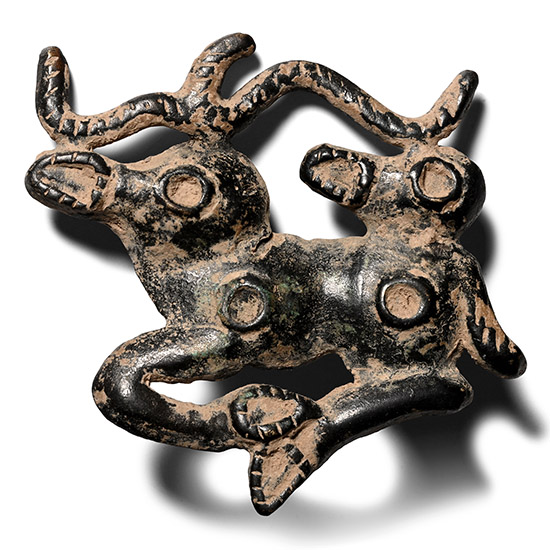
Scythian Bronze Galloping Stag Strap Decoration
Circa 5th-3rd century B.C.Estimate: £200 - 300 (+bp*)
Current Winning Bid: £100
Modelled as a stylised quadruped with its legs folded beneath the body, long curving horns and circular cells on the body and eye, two lugs on the reverse. 24.3 grams, 51 mm
Ex Abelita collection, 1990s.
