
Loading, please wait...
LOT 1387
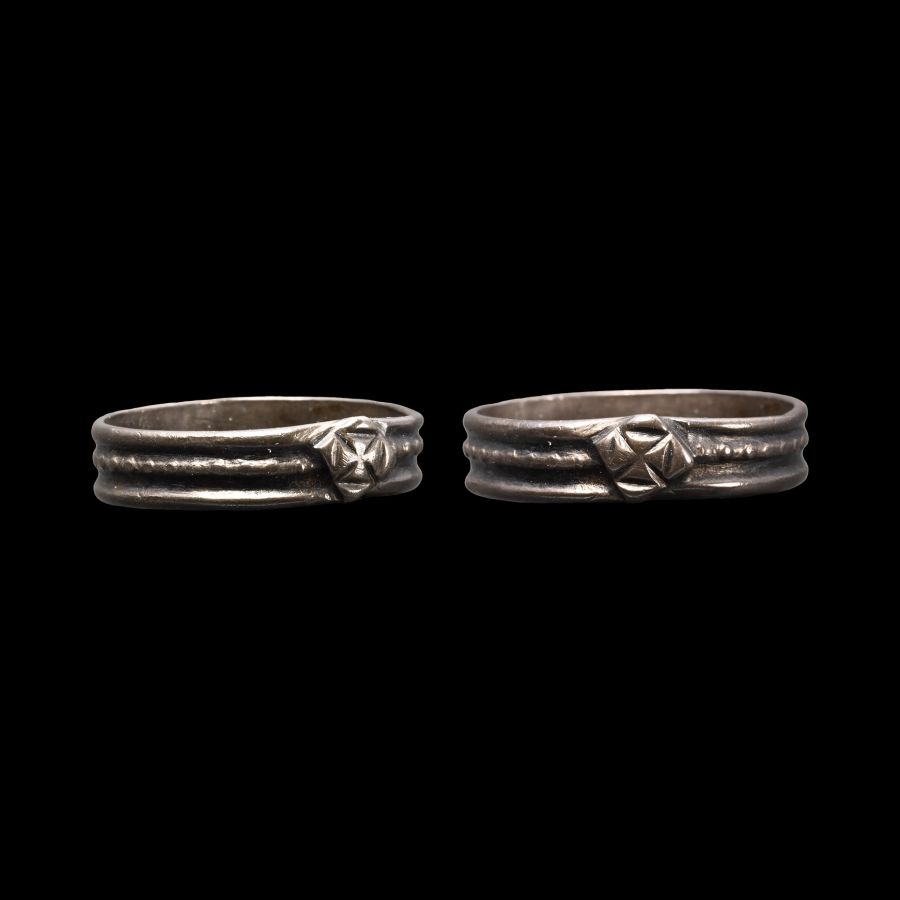
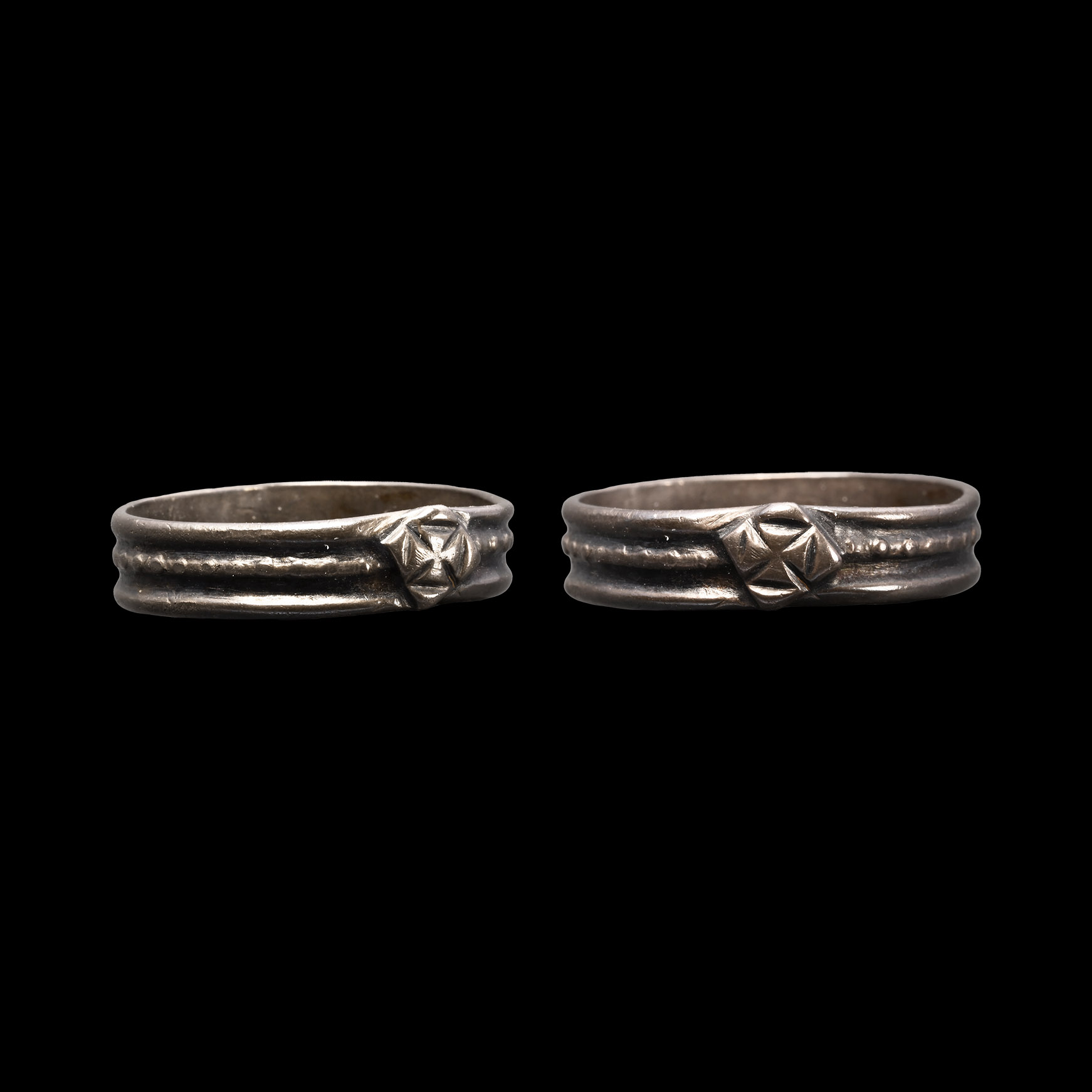
'The Lonsdale' Medieval Silver Ring with Cross Pattee
CIRCA 12TH-13TH CENTURY A.D.
7/8 in. (3.06 grams, 22.41 mm overall, 19.95 mm internal diameter (approximate size British T 1/2, USA 9 3/4, Europe 21.89, Japan 21)).
A heavily patinated silver annular band, roughly rectangular in section decorated with a raised medial beaded band, plain raised bands above and below, and mounted lozengiform plaque displaying a central cross pattee; accompanied by a hinged ring box.
ProvenanceFound whilst searching with a metal detector in Longsdale, Cumbia, UK, on Monday 1st January 1996, disclaimed and returned to the finder.
Accompanied by a copy of the British Museum’s Portable Antiquities Scheme (PAS) report no.LANCUM-8541C5.
Cf. Museums Wales, Collections Online, Archaeology and Numismatics, accession numbers 2018.11H, 2000.20H/1 and 2001.19H/1, for comparable rings; cf. The V & A Museum, accession number 708-1871, for a comparable example.
CONDITIONTimeLine Auctions follows a vetting process to ensure the authenticity and legality of all items, reinforcing our commitment to integrity and responsible trading. Each antiquity, antique, and coin lot undergoes thorough examination by a vetting committee of at least ten external specialists, professional trade association members, scientists, and archaeologists: Our Vetting Process
AUCTIONS:
TimeLine is a leading auction house specialising in antiquities, ancient art, collectables, natural history, coins, medals, and books. Our auctions offer museums, collectors, historians, and enthusiasts the opportunity to acquire unique and historically significant pieces.
-
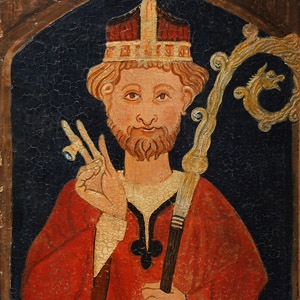
Medieval Icon of Pope Benedict XI
14th century A.D. or laterSold for (Inc. bp): £1,235
A rectangular wooden icon of Pope Benedict XI (papacy: 22 October 1303-7 July 1304) standing facing within an arch; elaborate crozier to the left hand with returned horse-head finial and scrolled spurs to the outer edge; right hand extended in the gesture of benediction with large gem-set finger ring carefully displayed; mitre with jewelled headband, simple red vestment with white undergarment and black trim; heavily overpainted; mounted in a gilt wooden frame with hatched lower panel. 1.6 kg, 50.5 x 37.5 cm
Ex Richard Philp, London, UK. with W.E. Tristram (1882-1952). Acquired from Patrick Reijgerberg, Holland March, 2003. UK private collection. -
.jpg)
Medieval and Other Ring Collection
Mainly 12th-15th century A.D.Sold for (Inc. bp): £72
A mixed group of finger rings comprising various shapes and sizes, bezels with plain, geometric and floral designs. 46 grams total, 21-26 mm
Fine condition.
European private collection, 1970-1980s. London, UK, late 1990s. -
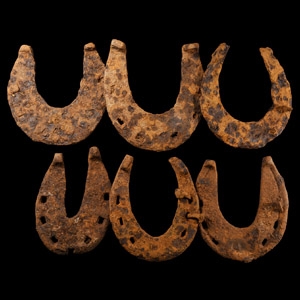
Medieval Horse Shoe Collection
14th-16th century A.D.Sold for (Inc. bp): £72
A group of iron horse shoes of various sizes, including examples retaining nails. 1.29 kg total, 9.8-11.6 cm
Acquired in the 1990s. Collection of a Suffolk, UK, gentleman.
