
Loading, please wait...
LOT 0162
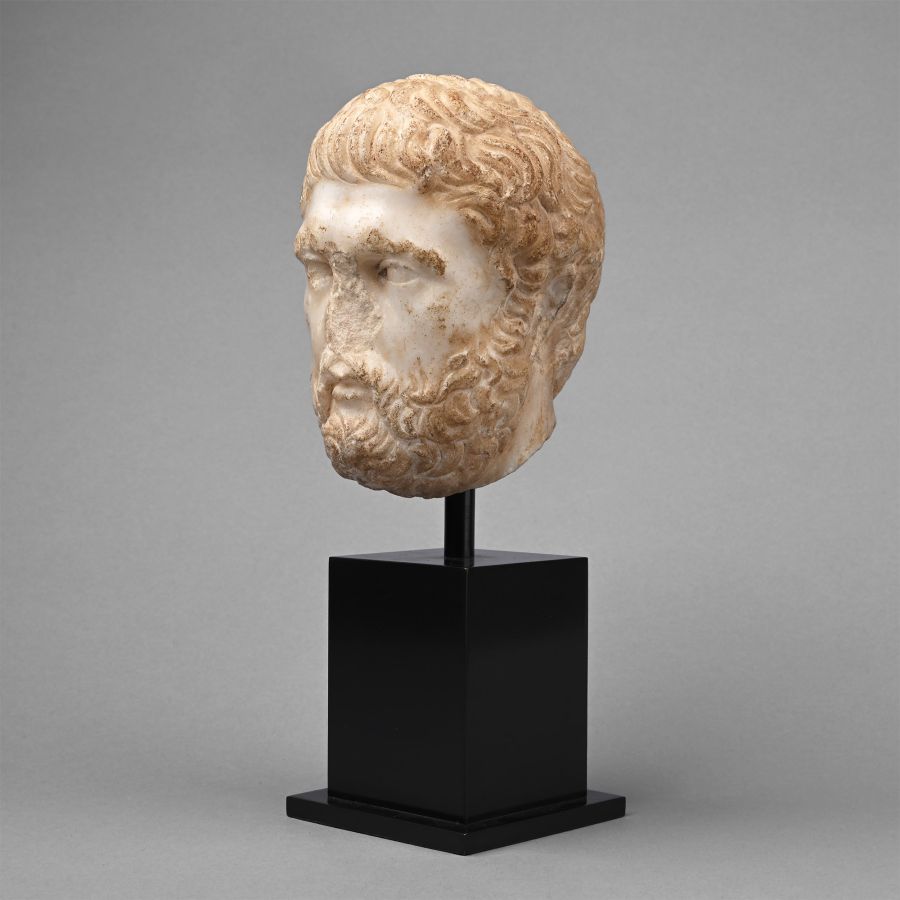
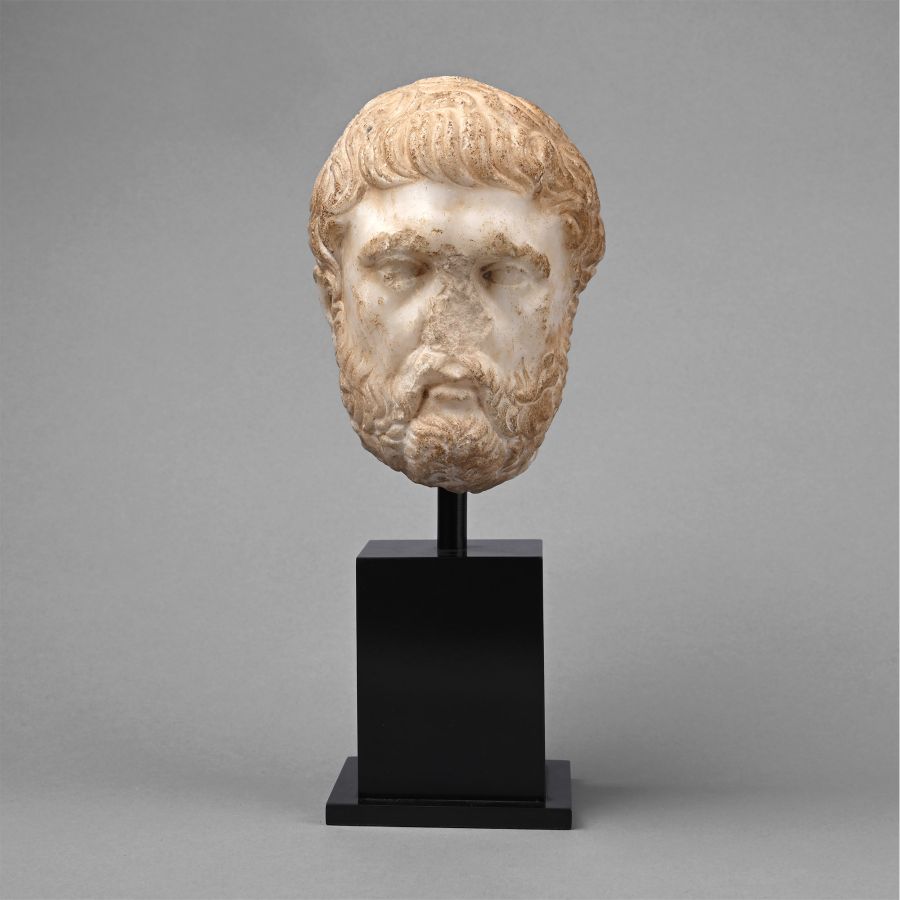
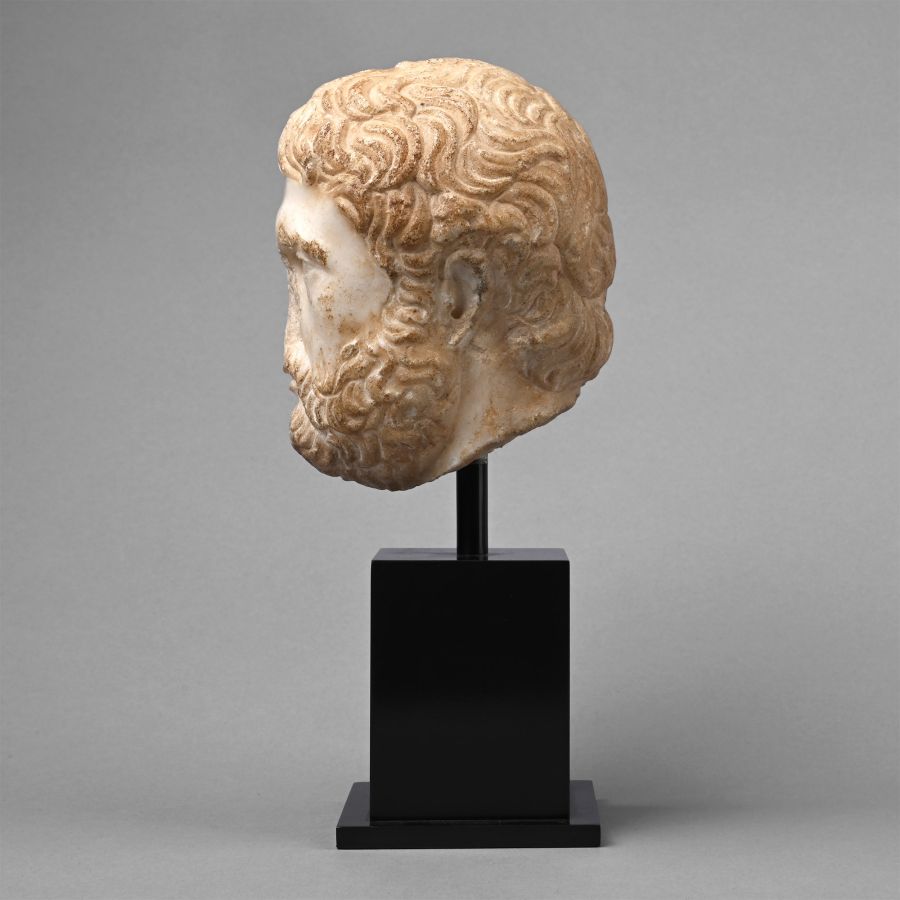
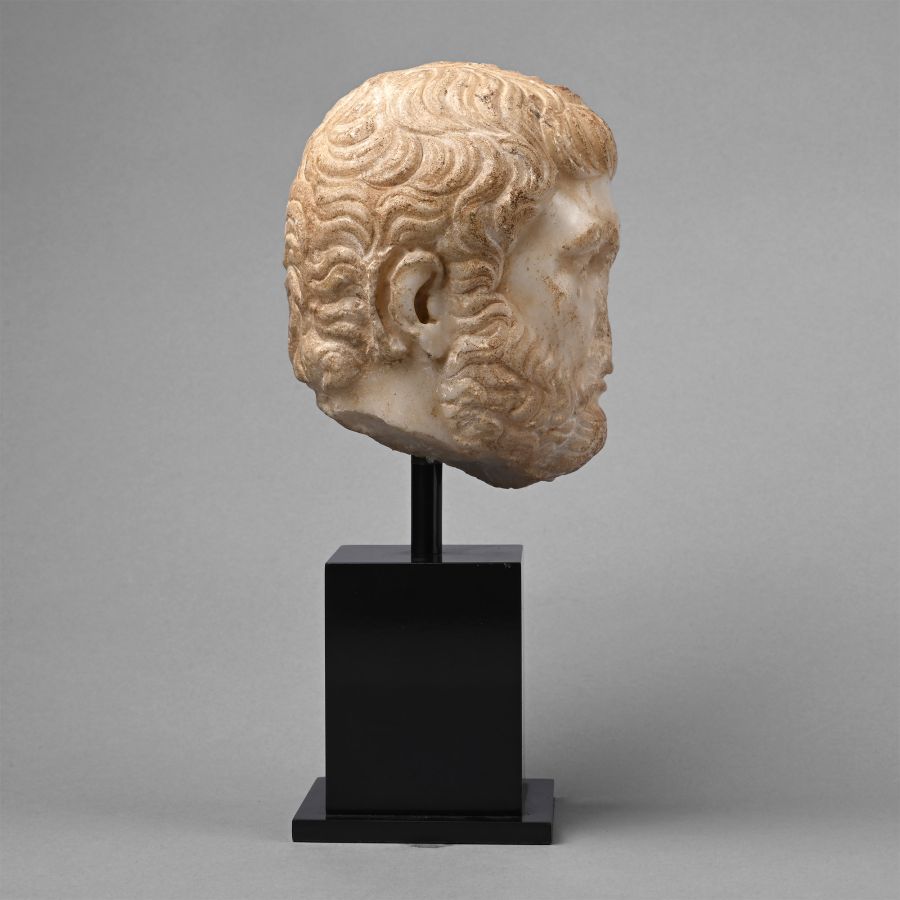
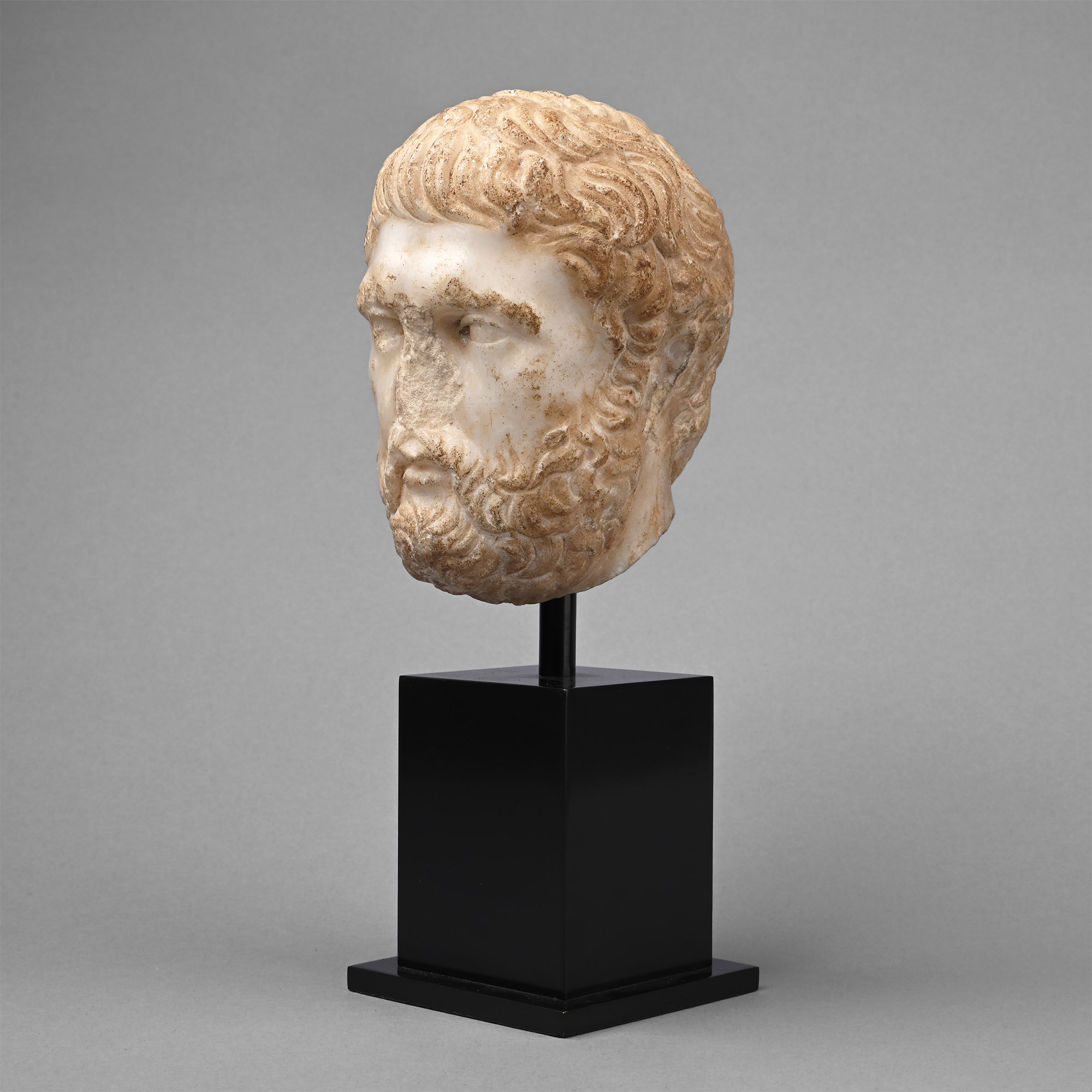
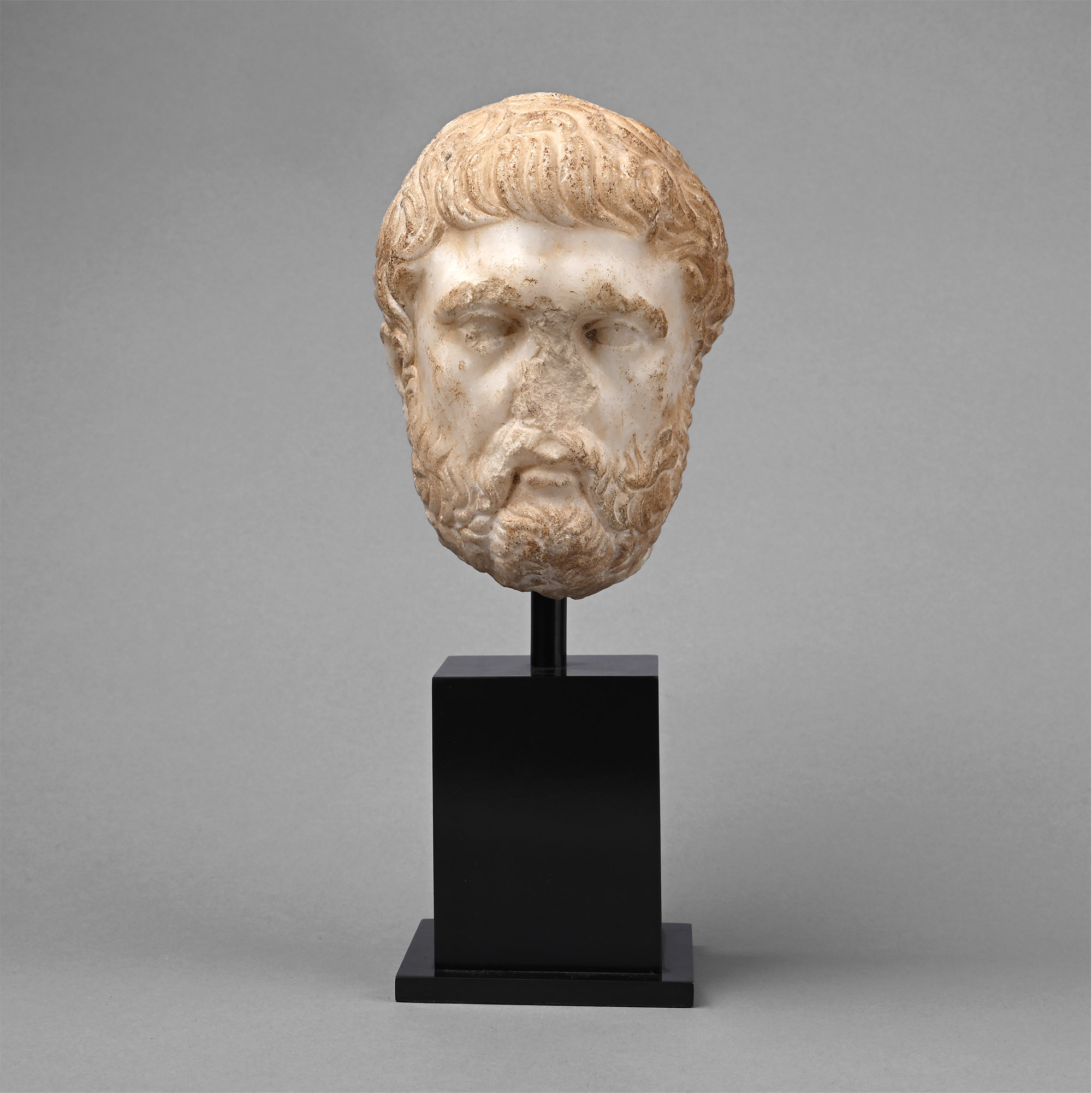
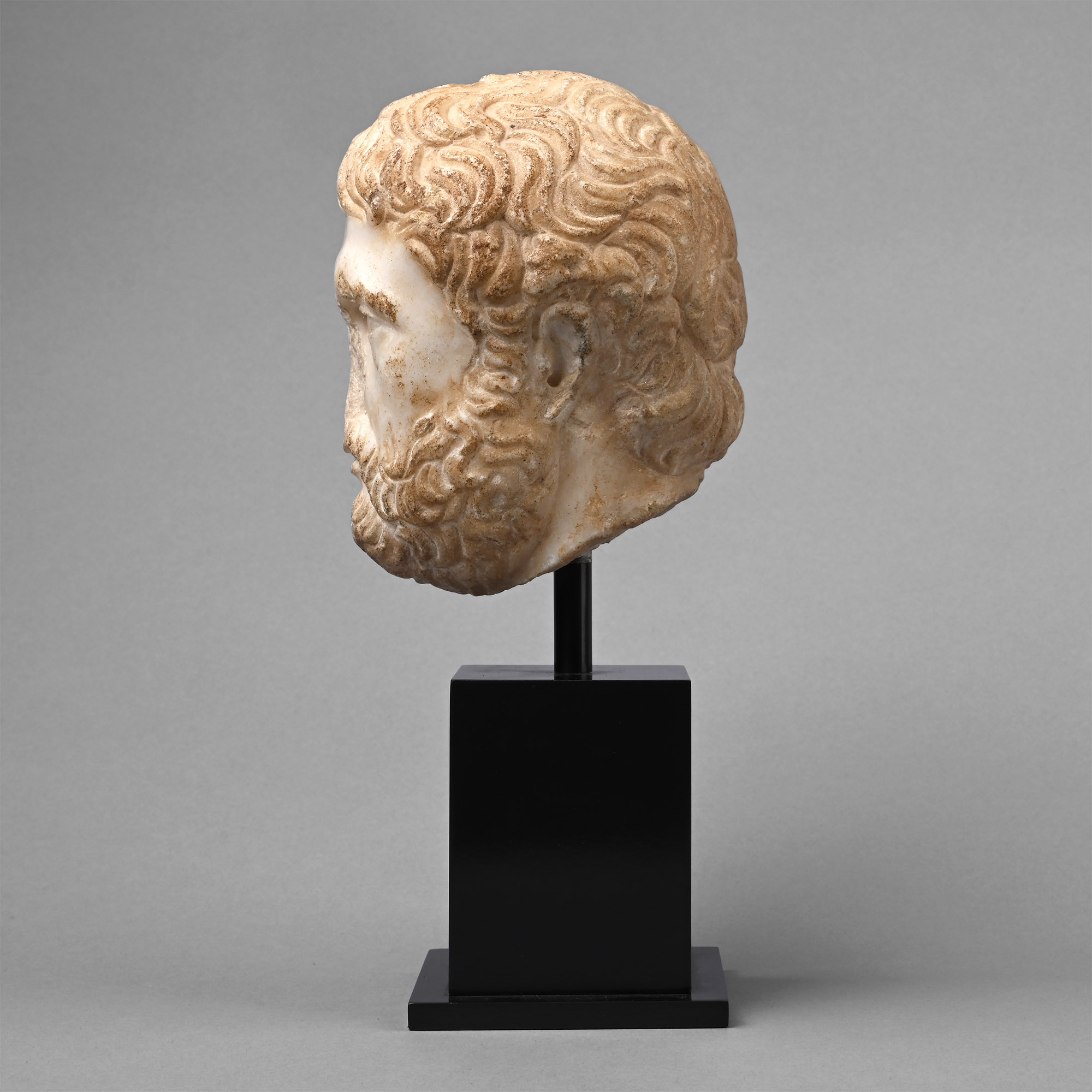
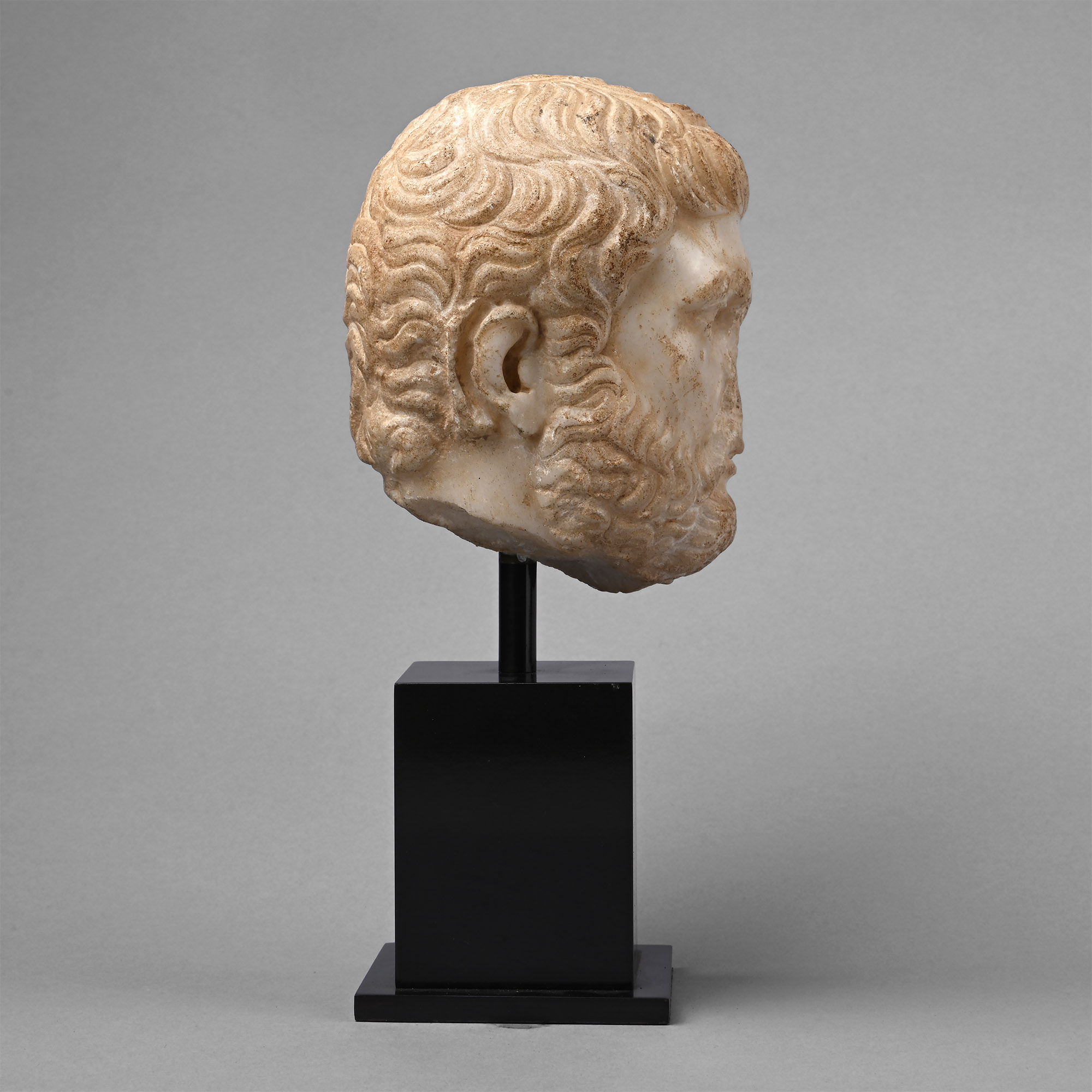
'The Kenzo' Roman Marble Head of the Philosopher Hermarchus
CIRCA 1ST-2ND CENTURY A.D.
9 in. (2.34 kg total, 22.8 cm high including stand).
A finely carved marble portrait head of a middle-aged bearded male, possibly Hermarchus, with short, softly modelled wavy hair, deep-set and defined eyes, the lips almost hidden among the details of the beard; the facial expression appears stern but thoughtful, perhaps derived from the tradition of Roman Imperial portraiture; mounted on a custom-made stand.
ProvenanceKenzo collection, the late fashion designer, acquired in the early 1980s.
Ex French private collection.
Charles Ede, 12 June 2008.
Accompanied by an academic report by Dr Raffaele D’Amato.
This lot has been checked against the Interpol Database of stolen works of art and is accompanied by search certificate no.13436-262427.
Greek and Roman sculpture in stone 400 BC – AD 300, Charles Ede Ltd 2007, no 9; Martha Weber, 'Überlegungen zum Eikon des Platon von Silanion,' Thetis, vol.19, 2012, p.26, note 37, fig.9a.
LiteratureCf. Di Cesare, R., ‘Ritratti di intellettuali tra mondo greco e romano,’ in La Rocca, E., Parisi Presicce, C., Lo Monaco, A., Ritratti. Le tante facce del potere, Roma Musei Capitolini 10 marzo- 25 settembre 2011, Roma 2011, pp. 93-107; Weber, M., 'Überlegungen zum Eikon des Platon von Silanion,' in Thetis, vol.19, 2012, p.26, note 37, fig.9a; Mastronuzzi, G., ‘Immagini di poeti e filosofi della Magna Grecia,’ in Quaderni di “Atene e Roma”, Pubblicazione dell’Associazione Italiana di Cultura Classica, 5; Capasso, M., Cinque incontri sulla Cultura Classica, Lecce 2015, pp. 55-70.
FootnotesThe philosopher represented here must have been very important, and it can be assumed we can recognise one of the valuable copies, known in different variants, of the portrait of Hermarchus, successor of Epicurus at the head of the Epicurean School, who lived at Mytilene between 325 and 250 B.C., for its similarity with the portrait of the same philosopher at the Ny Carlsberg Glyptotek (inv. no.2689).
CONDITIONTimeLine Auctions follows a vetting process to ensure the authenticity and legality of all items, reinforcing our commitment to integrity and responsible trading. Each antiquity, antique, and coin lot undergoes thorough examination by a vetting committee of at least ten external specialists, professional trade association members, scientists, and archaeologists: Our Vetting Process
AUCTIONS:
TimeLine is a leading auction house specialising in antiquities, ancient art, collectables, natural history, coins, medals, and books. Our auctions offer museums, collectors, historians, and enthusiasts the opportunity to acquire unique and historically significant pieces.
LOT 0162
'The Kenzo' Roman Marble Head of the Philosopher Hermarchus
Estimate £14,000 - 19,000€16,240 - 22,040 (for guidance only)$18,900 - 25,650 (for guidance only)
Opening Bid
£7,000 (EUR 8,120; USD 9,450) +BP*
-
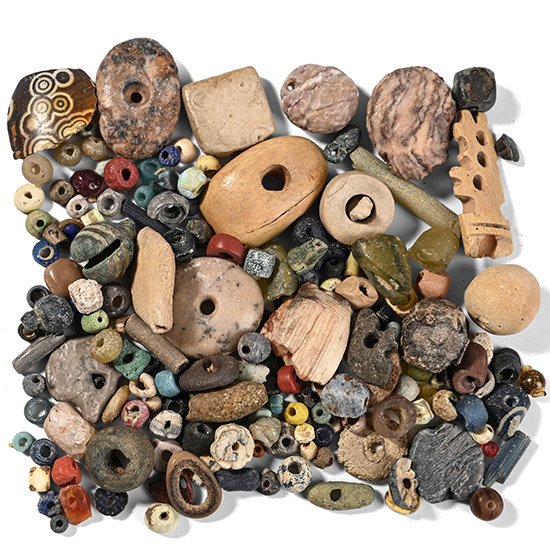
Roman and Other Mixed Stone and Glass Necklace Bead Group
1st-4th century A.D. and laterEstimate: £50 - 70 (+bp*)
Opening Bid: £5
Mixed group of beads, including some amulets. 48 grams total, 1-25 mm
Ex London, UK, collection, 1990s. -
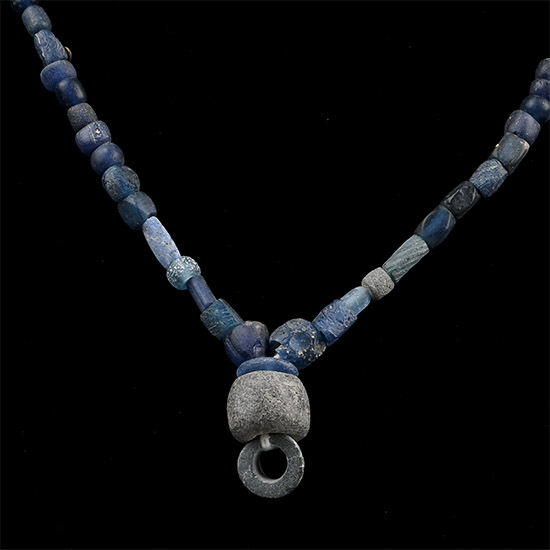
Roman and Other Dark Blue Glass Bead Necklace String
1st-4th century A.D. and laterEstimate: £50 - 70 (+bp*)
Opening Bid: £5
Composed of graduated oblate, annular, and other beads with larger beads as a central feature, restrung. 25 grams, 42 cm
Ex London, UK, collection, 1990s. -
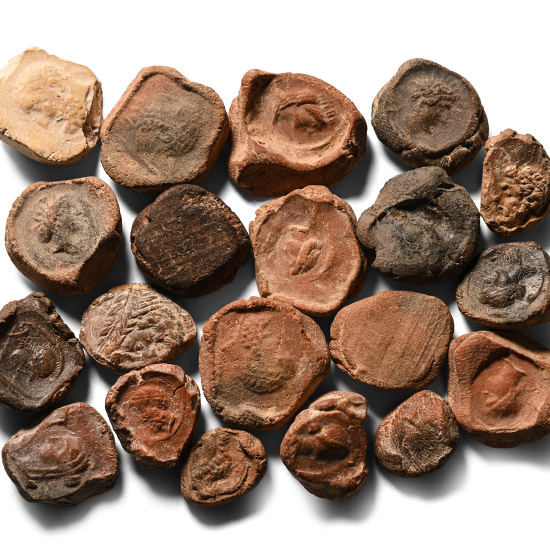
Roman Terracotta Bullae, Tesserae or Token Group
3rd century B.C.-1st century A.D.Estimate: £100 - 140 (+bp*)
Opening Bid: £5
A mixed group of ceramic bullae, tesserae or theatre tokens bearing low-relief motifs, mainly consisting of profile busts of deities. 31.5 grams total, 13-21 mm
From the private collection of a European gentleman (1942-2024), formed since the 1970s.
The term 'tessera' was used in Roman times to convey the Greek term σύμβολον (token). Small tiles are known as tokens, often shaped like coins, made of metal (copper, lead, iron), clay, bone, wood, or glass, stamped as well as engraved. The tokens, however, are not exclusively coin-shaped, as the Latin term 'tessera' suggests by etymologically referring to a square or at least a four-sided shape and confirmed in several cases by material remains of the past. Tokens and tesserae seem to have been used both in Athens and Rome for the distribution of goods. According to written sources, the term token is identified with credentials of the official authorities. They have also been interpreted as tokens of identity, as entrance tickets to theatre performances, tribunals or assemblies of citizens, archival material of seal engraving, as pawns in games, Charon’s obols and even as amulets.
