
Loading, please wait...
LOT 0101
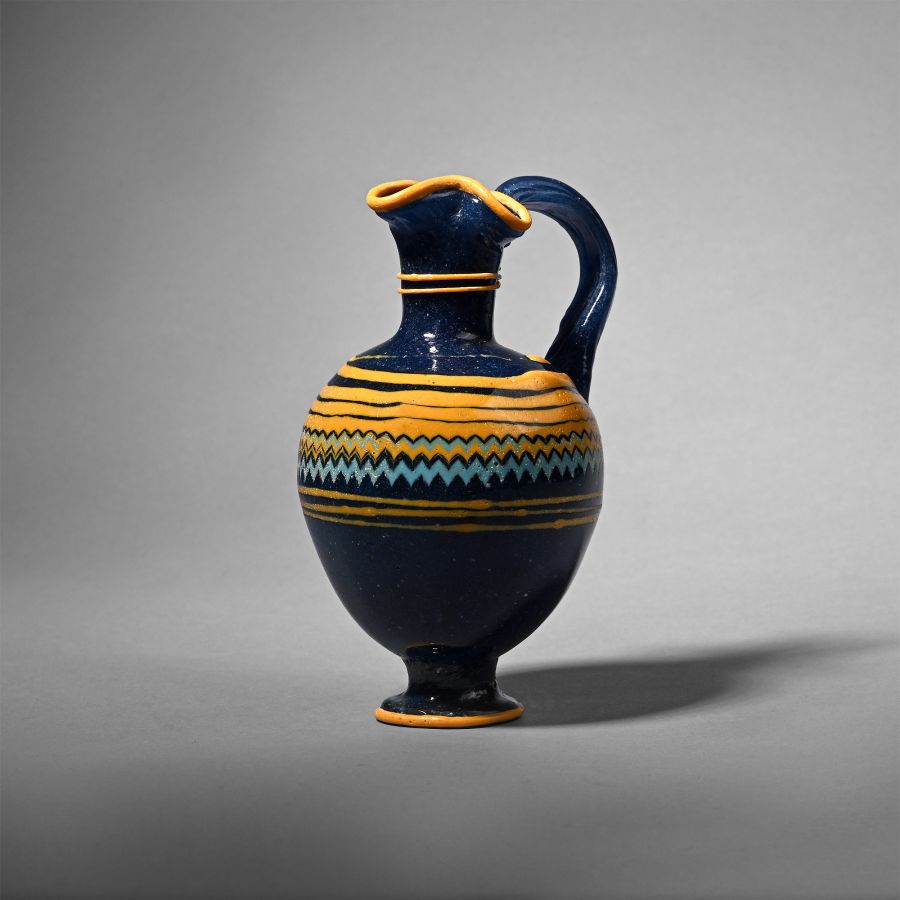
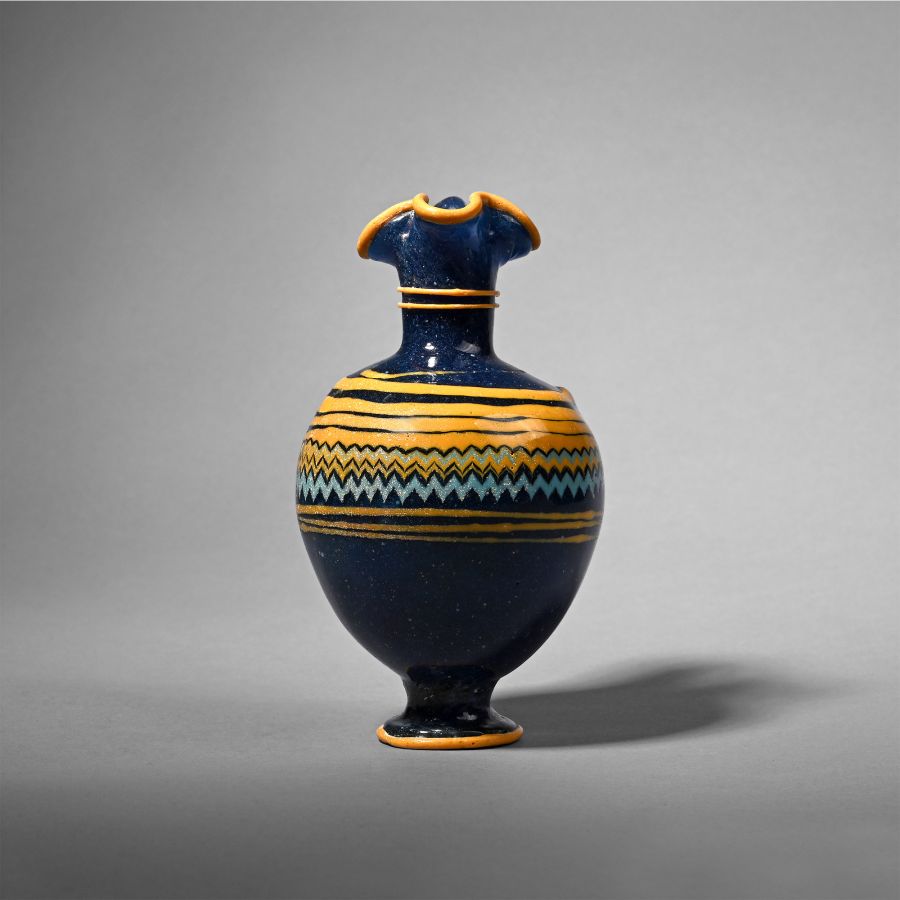
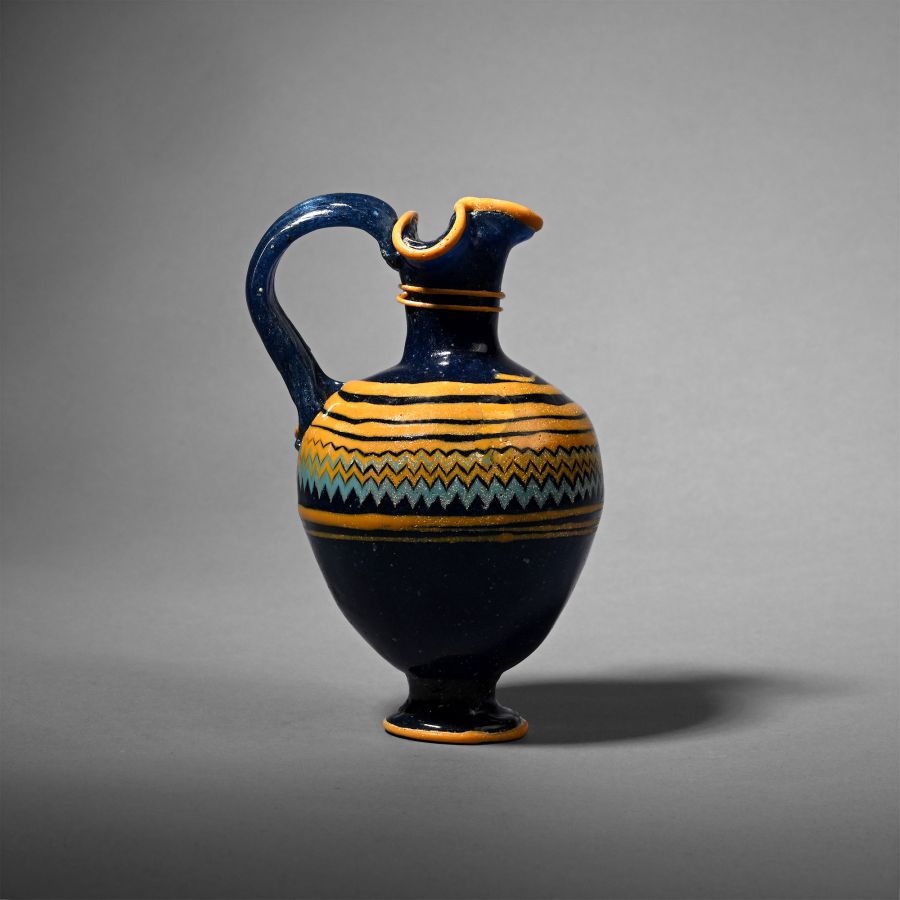
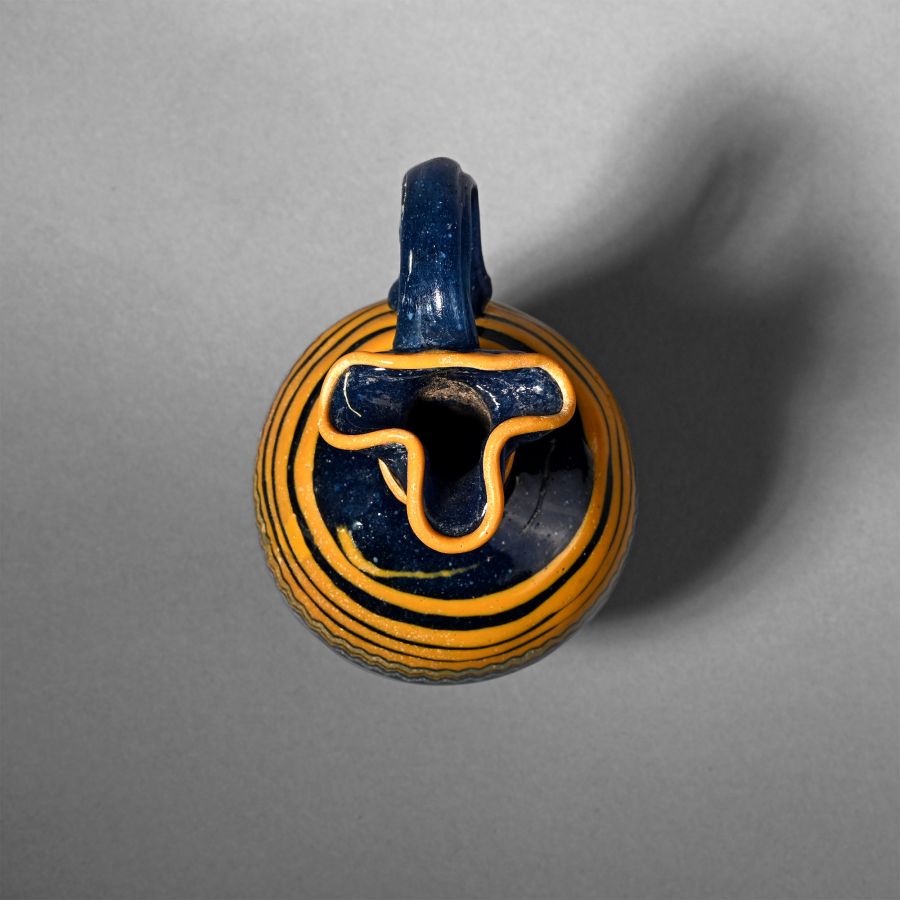
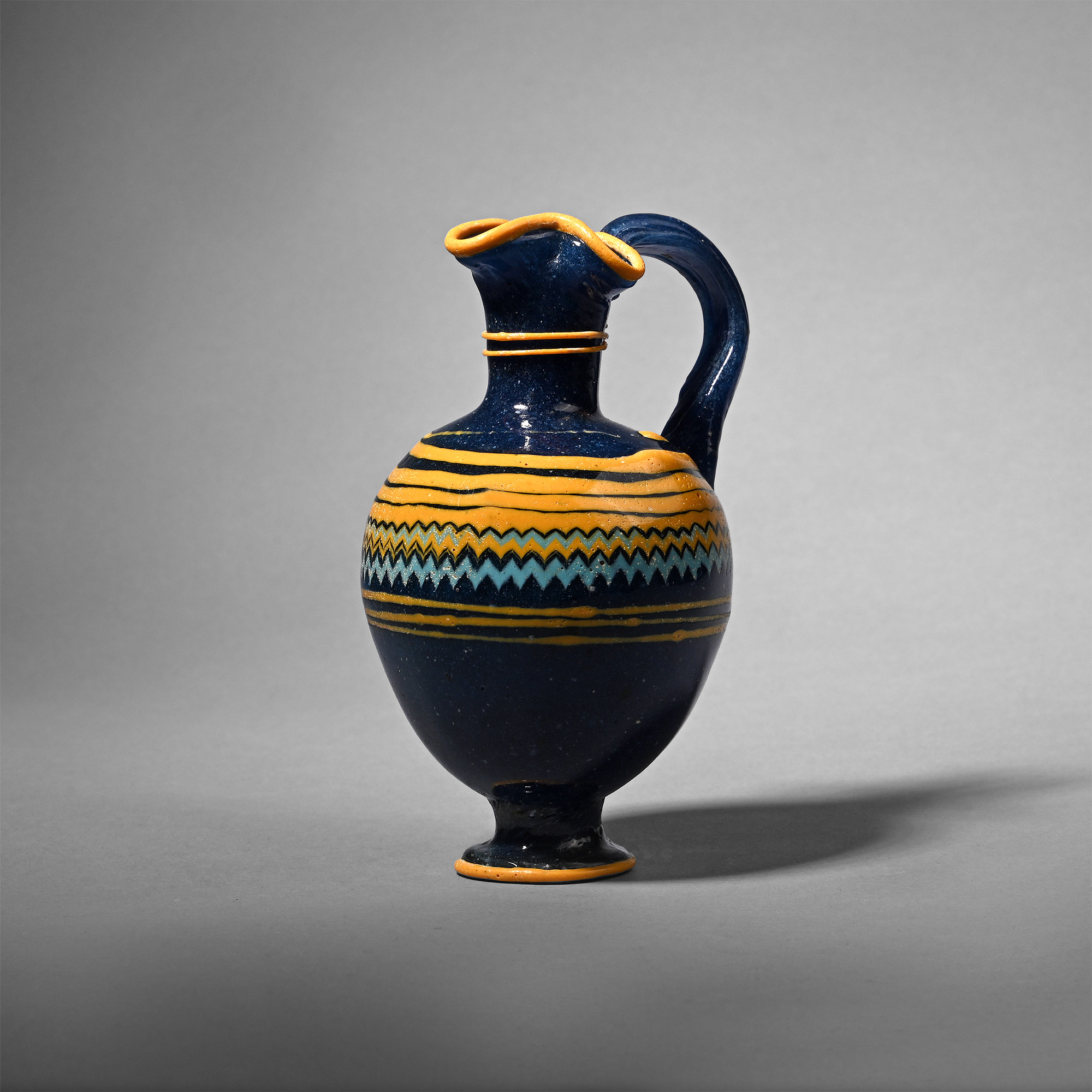
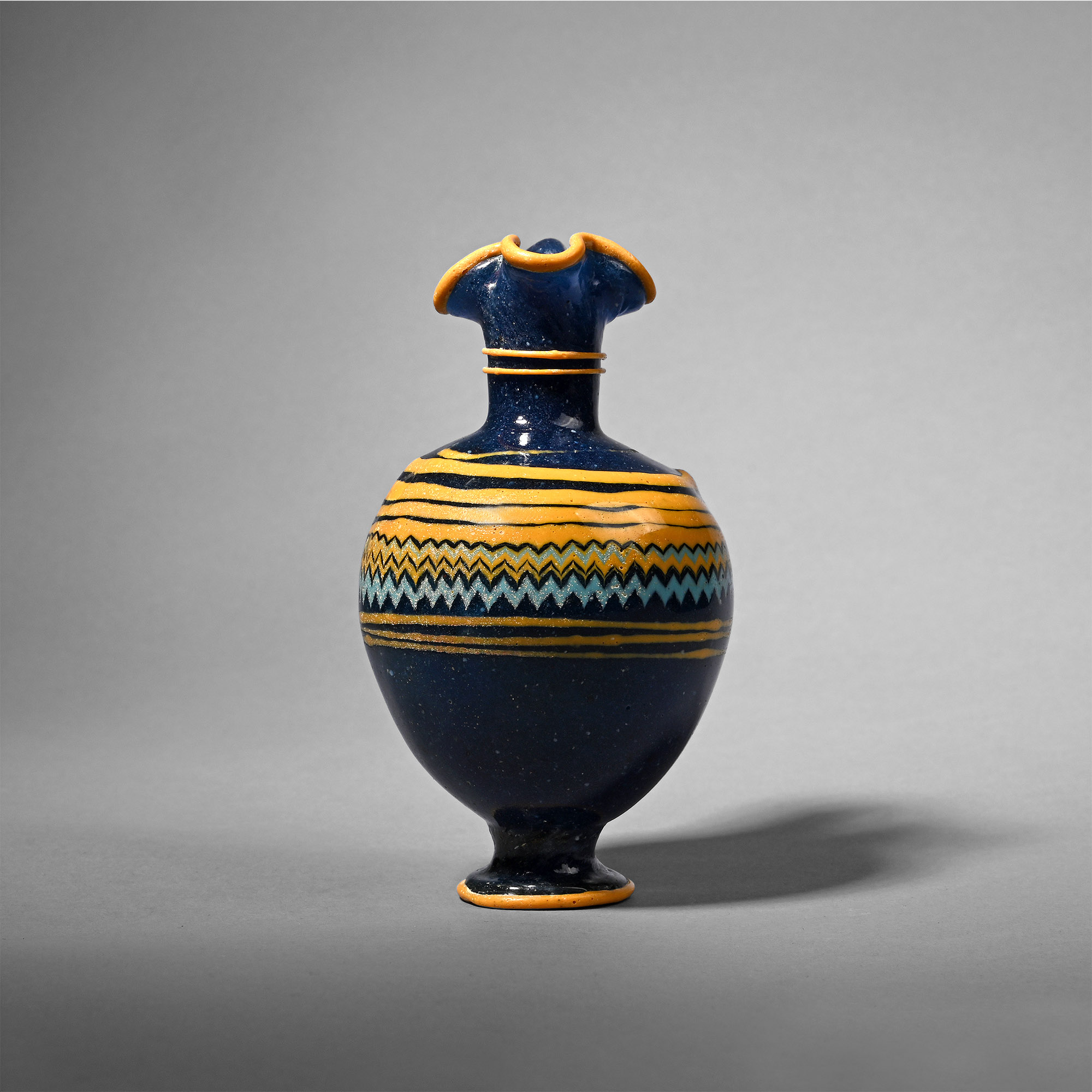
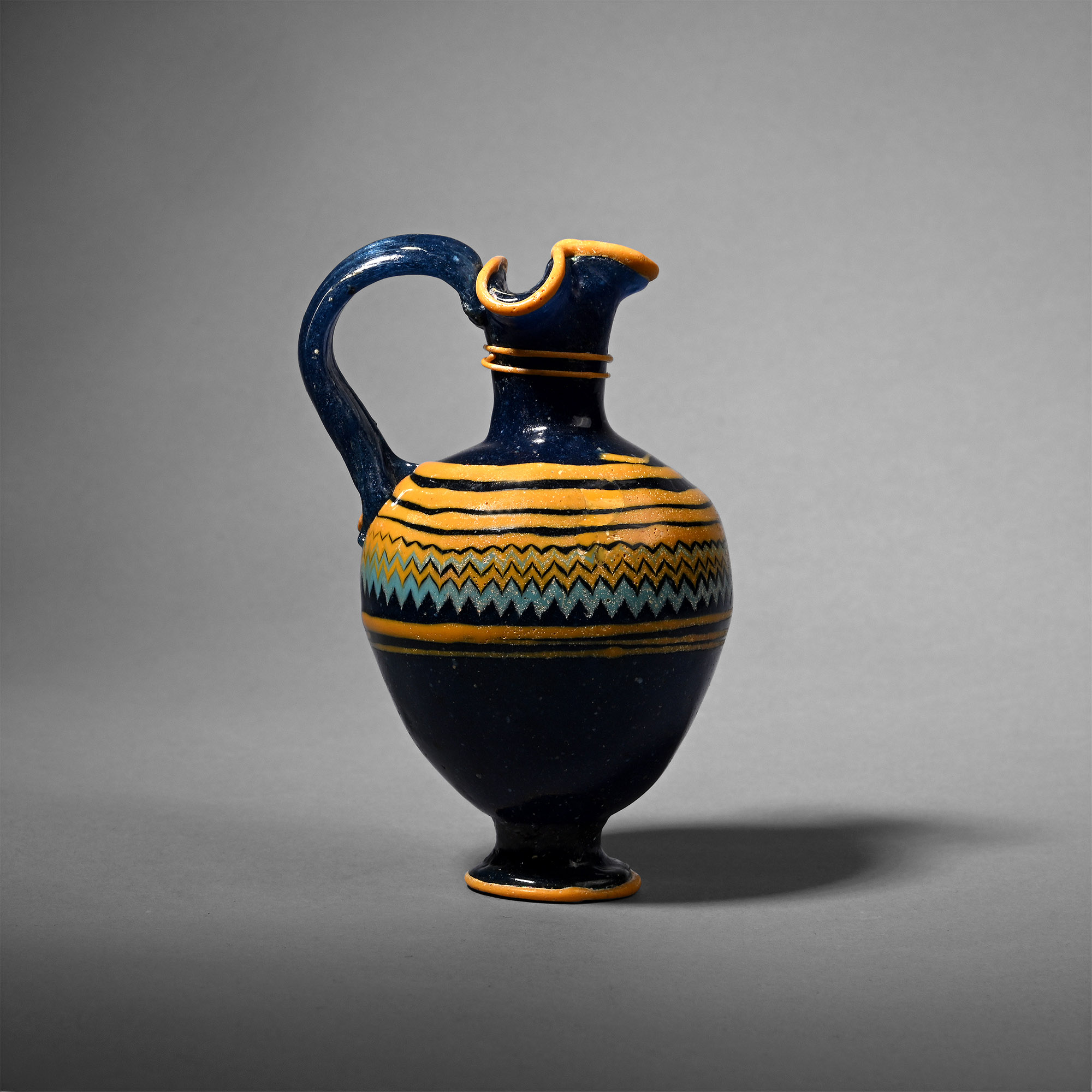
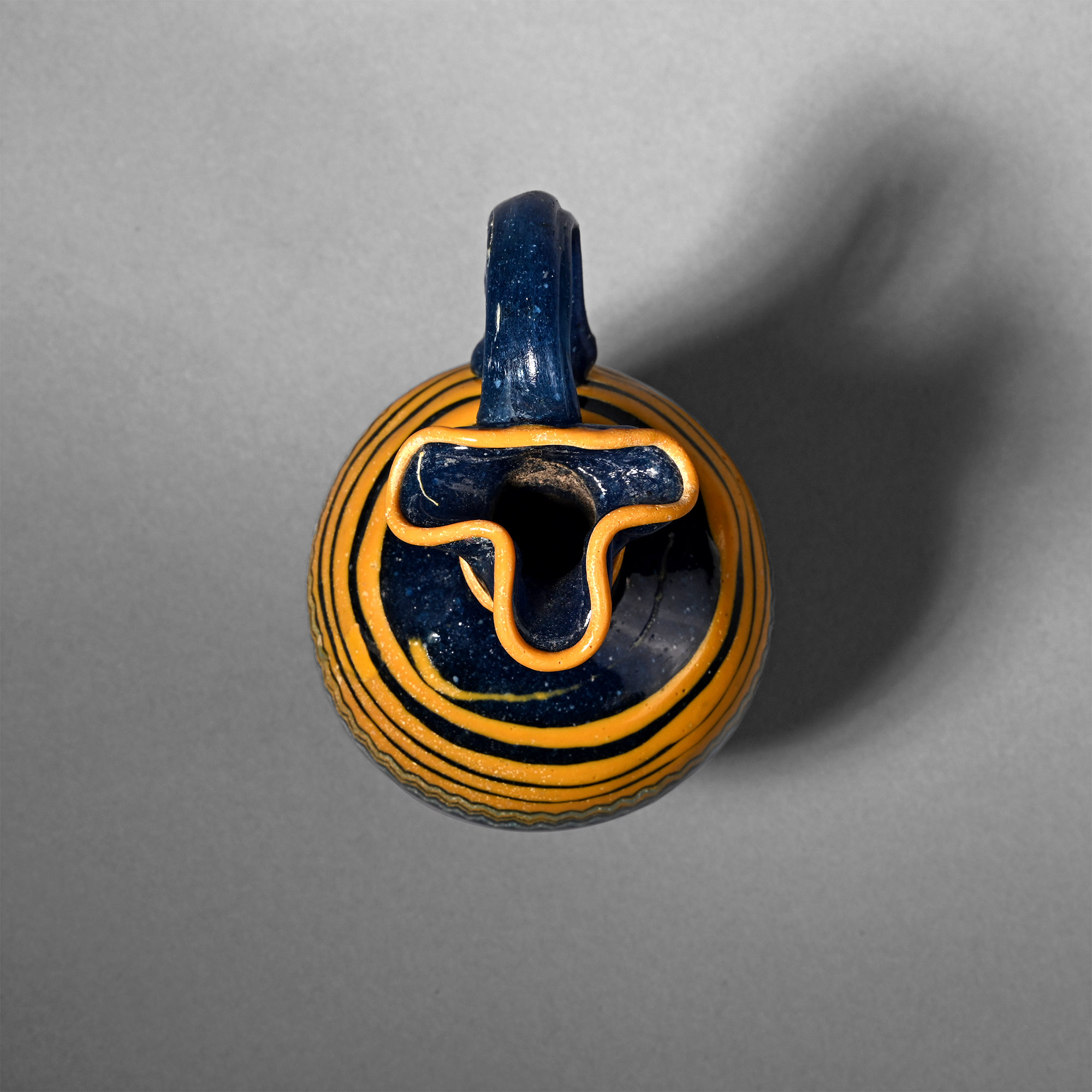
'The Cyrus Collection' Greek Core-Formed Glass Oinochoe
5TH CENTURY B.C.
5 1/2 in. (197 grams total, 13.5 cm high including stand).
Ovoid blue body with narrow flared foot, pinched mouth and applied strap handle; marvered trail decoration in yellow to the shoulder, applied trails to the neck, marvered and dragged trails to the equator; cleaned and repolished; supplied with a custom-made stand.
ProvenanceEx Antike Kunst Palladion, Basel.
The Cyrus collection, 1970s.
with Sotheby’s, New York, 9 December 2003, no.88.
Accompanied by a copy of the relevant Sotheby's catalogue pages.
This lot has been checked against the Interpol Database of stolen works of art and is accompanied by search certificate number no.13097-248080.
Cf. The Metropolitan Museum, accession no. 17.194.780 for similar; similar specimen from Mediterranean Group I is also visible in BM, inv. no. 1836, 0224.415, in Harden, D.B., Catalogue of Greek and Roman Glass in the British Museum, London, 1981, no.262.
FootnotesDuring the 5th century B.C., the colours of Mediterranean Group I vessels expanded from blue or opaque white to include dark green, golden brown, and opaque brick red.
CONDITIONTimeLine Auctions follows a vetting process to ensure the authenticity and legality of all items, reinforcing our commitment to integrity and responsible trading. Each antiquity, antique, and coin lot undergoes thorough examination by a vetting committee of at least ten external specialists, professional trade association members, scientists, and archaeologists: Our Vetting Process
AUCTIONS:
TimeLine is a leading auction house specialising in antiquities, ancient art, collectables, natural history, coins, medals, and books. Our auctions offer museums, collectors, historians, and enthusiasts the opportunity to acquire unique and historically significant pieces.
LOT 0101
'The Cyrus Collection' Greek Core-Formed Glass Oinochoe
Estimate £15,000 - 20,000€17,400 - 23,200 (for guidance only)$20,250 - 27,000 (for guidance only)
-
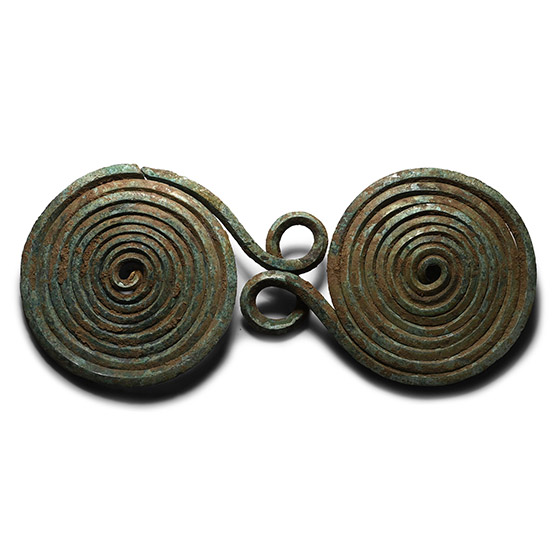
Large Greek Bronze Spiral Fibula
Geometric, 7th-6th century B.C.Estimate: £400 - 600 (‡+bp*)
Opening Bid: £200
Formed from a single square-section filament rolled into two 'spectacle' discs; one of the spirals terminating in a long pin, the other in a hook serving as the catchplate; openwork figure-of-eight at the centre; pin broken, coils separated. 159 grams, 17 cm
Acquired in the mid 1980s-1990s. Private collection, Switzerland, thence by descent. Private collection, since the late 1990s. -
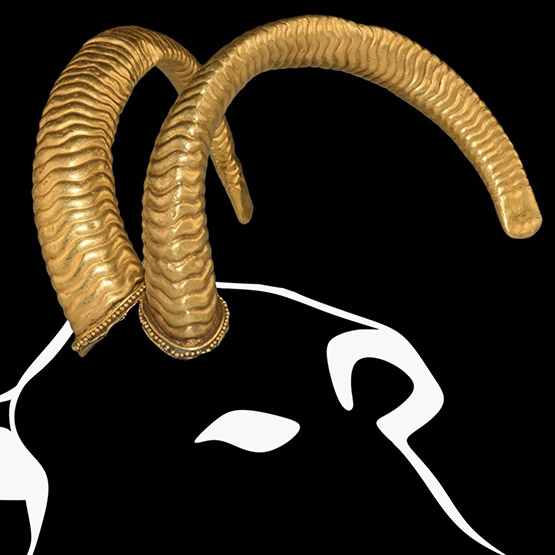
Greek Gold 'Golden Fleece' Ram-Horn Pair
5th-3rd century B.C.Sold for (Inc. bp): £6,240
A matched pair of sheet-gold model ram's horns, each curved with a narrow end flattened, ribbed body, flared rim to the mouth with applied granule detailing; probably from a representation of the χρυσόμαλλον δέρας or 'golden fleece' from the legend of Jason and his adventures with the crew of the ship Argo. 60.61 grams total, 10.5 cm each
From a private collection of seals and amulets, the property of a Canadian gentleman living in London; from his father's collection formed in the late 1960s to 1980s. This lot has been checked against the Interpol Database of stolen works of art and is accompanied by search certificate number no.13105-249639.
The legend of the Golden Fleece is referenced by several ancient writers, including Pindar, whose reformulation forms the basis of most modern retellings, but an earlier version was evidently familiar to Homer in the 8th century B.C. It appears as a pictorial theme on early Greek vases. The story refers to a celestial winged ram with golden wool, which was believed to live and be worshipped by the inhabitants of lands north of the Black Sea; this ram, in some versions of the tale, is transformed into the constellation Aries. -
.jpg)
Italic Carnelian Scarab with Satyr Mounted in a Gold Swivel Ring
4th-3rd century B.C.Sold for (Inc. bp): £1,404
Carved scarab with detailed carapace, legs and mouth; underside with intaglio standing figure holding an amphora; set into a later gold swivel ring. 5.30 grams, 23.85 mm overall, 14.56 x 17.70 mm internal diameter (approximate size British J 1/2, USA 5, Europe 9.32, Japan 9)
Private collection, Europe. Acquired on the English art market.
It is clear that the sculptor devoted more care and attention to carving the scarab itself rather than its intaglio.
