
Loading, please wait...
LOT 0144
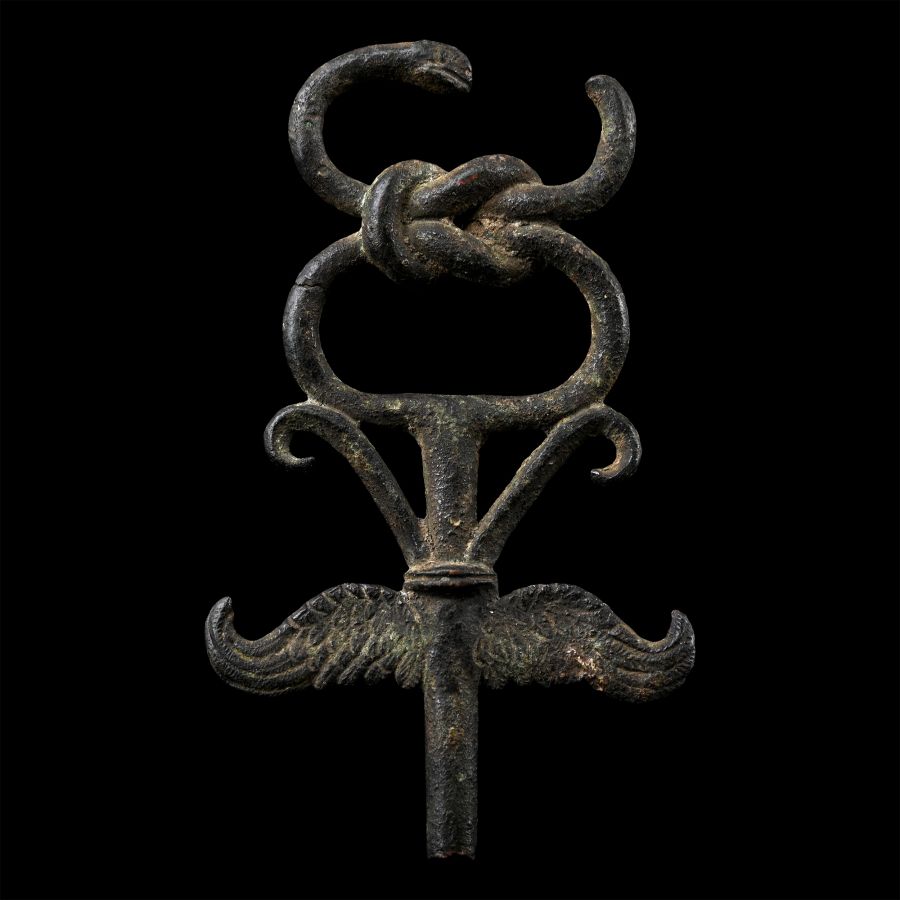
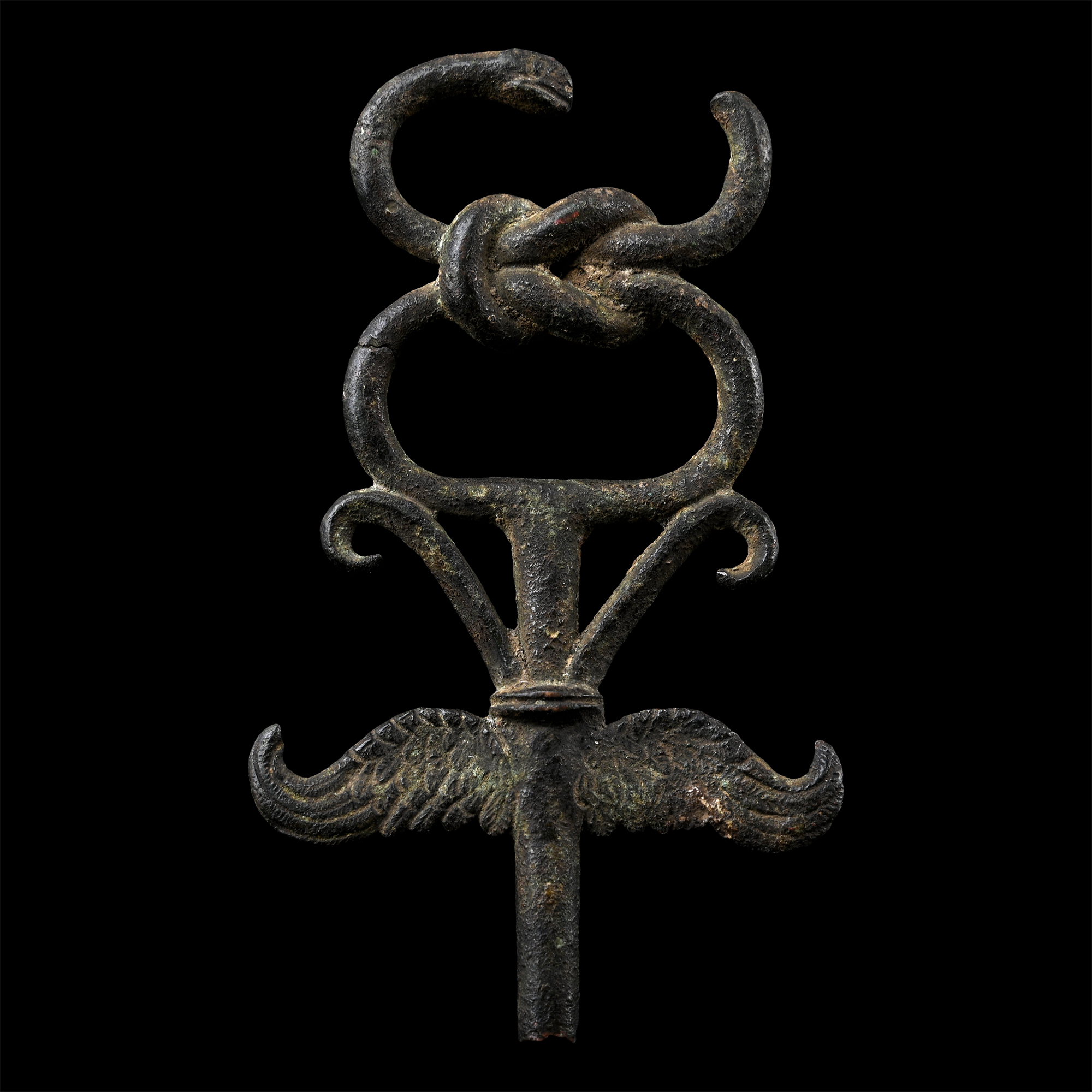
'The Colchester' Roman Bronze Caduceus Sceptre Finial
1ST-4TH CENTURY A.D.
4 1/8 in. (77 grams, 10.7 cm).
Monofacial openwork finial formed as a serpent entwined and knotted above a pair of spread wings; from a large statue of Mercury (Hermes).
ProvenanceFound in Colchester in the 1960s.
From a late gentleman archaeologist’s collection, thence by family descent.
Cf. similar fragment in the collection of the Louvre, Paris, under accession no. INV 211; Br 553.
CONDITIONTimeLine Auctions follows a vetting process to ensure the authenticity and legality of all items, reinforcing our commitment to integrity and responsible trading. Each antiquity, antique, and coin lot undergoes thorough examination by a vetting committee of at least ten external specialists, professional trade association members, scientists, and archaeologists: Our Vetting Process
AUCTIONS:
TimeLine is a leading auction house specialising in antiquities, ancient art, collectables, natural history, coins, medals, and books. Our auctions offer museums, collectors, historians, and enthusiasts the opportunity to acquire unique and historically significant pieces.
-
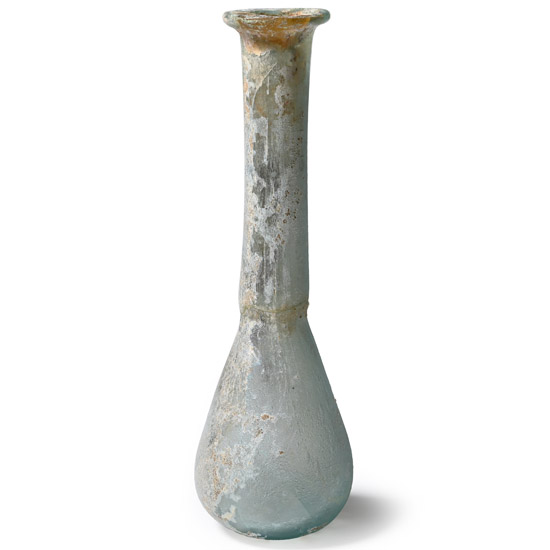
Roman Amphora-Shaped Glass Perfume Bottle
Circa 1st century B.C.-1st century A.D.Sold for (Inc. bp): £104
Piriform body with cylindrical neck, everted folded rim and a broad base; some iridescence remaining. 33 grams, 14 cm
From the private collection of Mr Brian Edwards, New Malden, Surrey, UK, formed from the late 1970s-early 1980s; thence by descent. Accompanied by the original collector's data sheet with reference no.A80. -
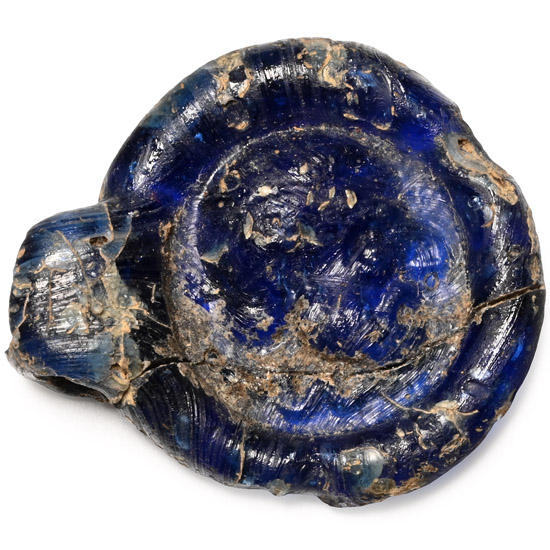
Roman Glass Pendant with Portrait
2nd-3rd century A.D.Sold for (Inc. bp): £46
Cobalt blue discoid pendant with an impressed profile bust. 1.75 grams, 21.78 mm
From the private collection of a European gentleman (1942-2024), formed since the 1970s. -
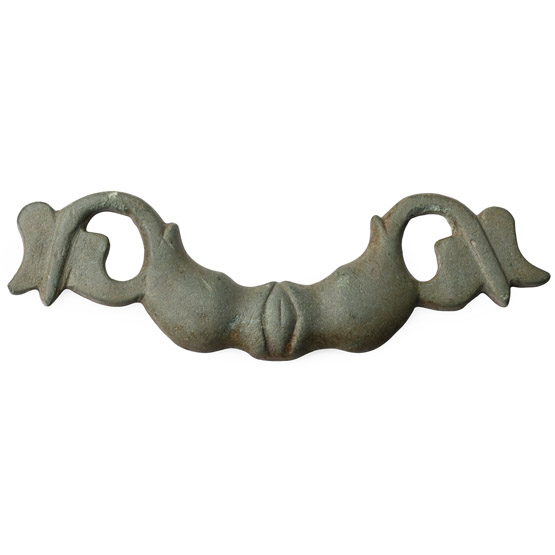
Roman Double Dolphin Handle
Circa 2nd century A.D.Sold for (Inc. bp): £130
Formed as two opposed dolphins with s-curved bodies terminating in vine leaves, vesica held between their open mouths; plano-convex in section with openwork. 59 grams, 12 cm
From an old English collection formed since 1960.
