
Loading, please wait...
LOT 0286
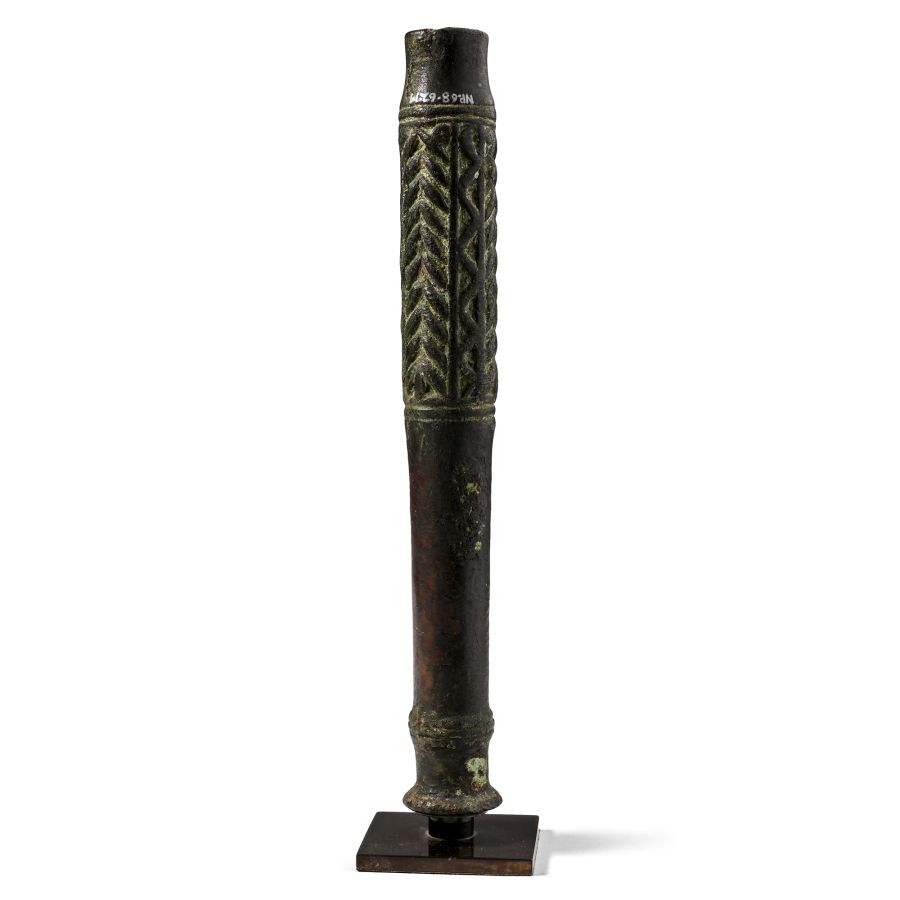
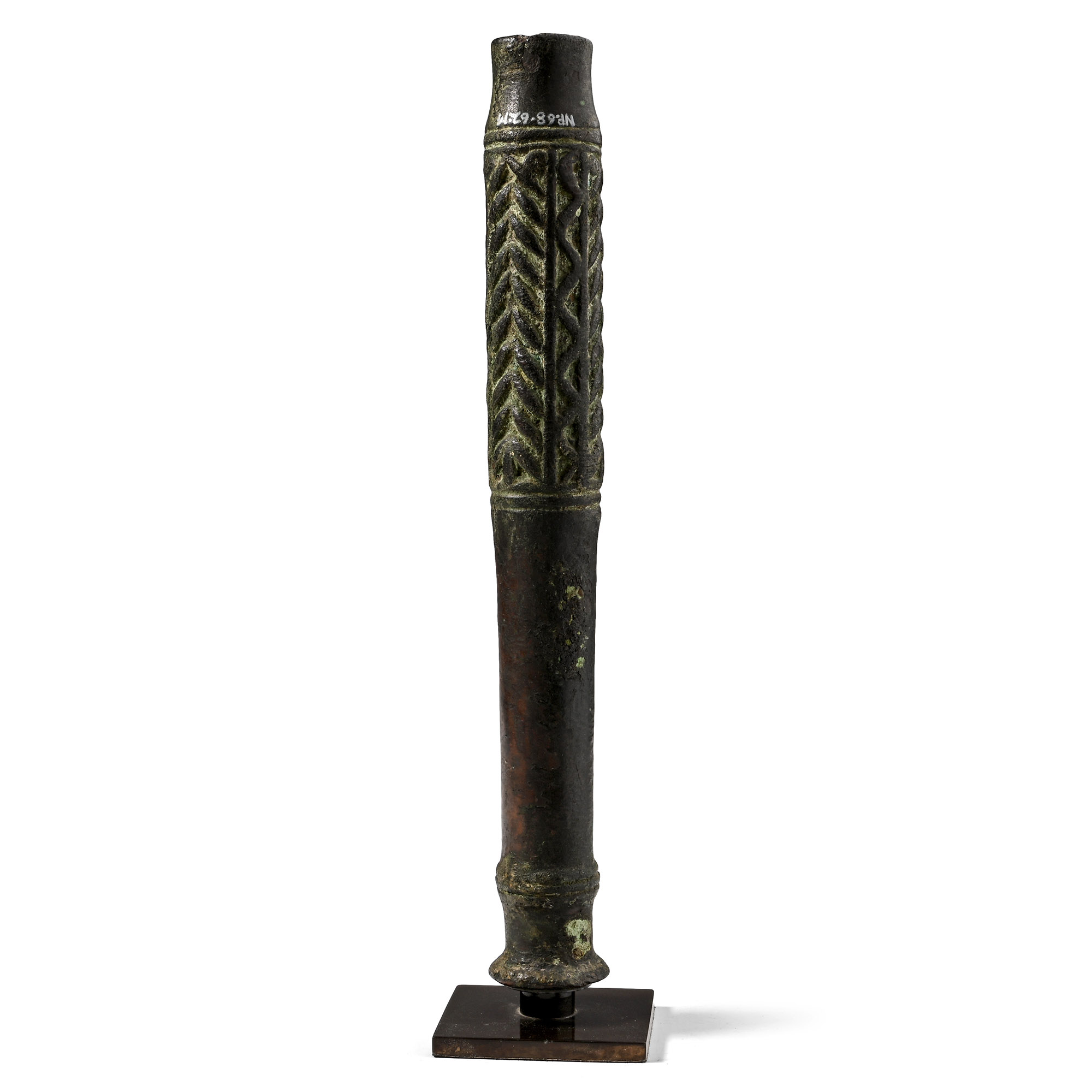
'The Chrysler Museum' Mesopotamian Bronze Macehead with Incised Decoration
EARLY 2ND MILLENNIUM B.C.
10 in. (647 grams total, 25.6 cm including stand).
Tubular in plan with low-relief braided panel and undulating lines; scooped profile at each end and securing collar; mounted on a custom-made stand.
ProvenanceEx Chrysler Museum of Art, Virginia, accession no.NP.68.62.M.
with ArtAncient, 2010.
Private collection, London, UK.
Cf. Mahboubian, H., Art of Ancient Iran, Copper and Bronze, London, 1997, fig.175, p.168, for type.
CONDITIONTimeLine Auctions follows a vetting process to ensure the authenticity and legality of all items, reinforcing our commitment to integrity and responsible trading. Each antiquity, antique, and coin lot undergoes thorough examination by a vetting committee of at least ten external specialists, professional trade association members, scientists, and archaeologists: Our Vetting Process
AUCTIONS:
TimeLine is a leading auction house specialising in antiquities, ancient art, collectables, natural history, coins, medals, and books. Our auctions offer museums, collectors, historians, and enthusiasts the opportunity to acquire unique and historically significant pieces.
LOT 0286
'The Chrysler Museum' Mesopotamian Bronze Macehead with Incised Decoration
Estimate £800 - 1,000€930 - 1,160 (for guidance only)$1,080 - 1,350 (for guidance only)
Opening Bid
£444 (EUR 516; USD 600) +BP*
-
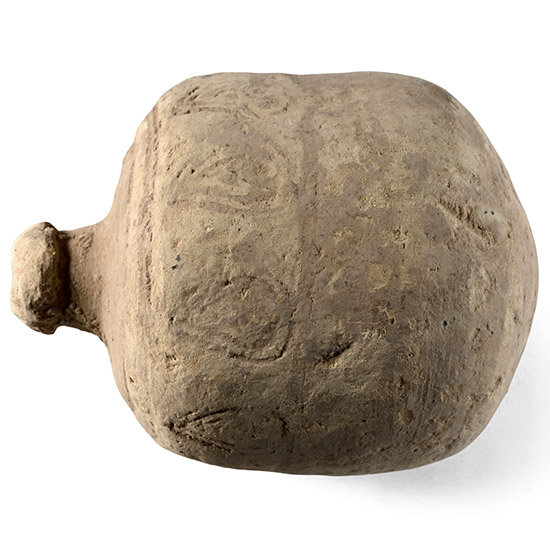
Byzantine 'Greek Fire' Ceramic Fire Bomb or Hand Grenade
9th-11th century A.D.Estimate: £70 - 90 (+bp*)
Opening Bid: £5
Drum-shaped body with rounded base and domed filler hole, impressed leaf motifs on the shoulder; intended to be filled with explosive liquid and a wick, and used as a hand grenade. 605 grams, 12.8 cm
Ex important collection of weaponry, London, UK, 1980-1990s. Accompanied by an academic paper by military specialist Dr Raffaele D'Amato, dated 15 July 2019 and titled 'Eastern Roman Empire - Greek Fire Bomb or Hand Grenade (μεσαίον kακάβιον) 9th-11th century AD'.
Apart from the use of siphons or manual flame-throwers called cheirosiphona, special corps of Roman soldiers employed terracotta grenades, in the form of small jars, abundantly evidenced in archaeological excavations. They were called μεσαία kακαβιά or κυτροκακάβια, where the former had a bulbous shape and the latter a more cylindrical form. -
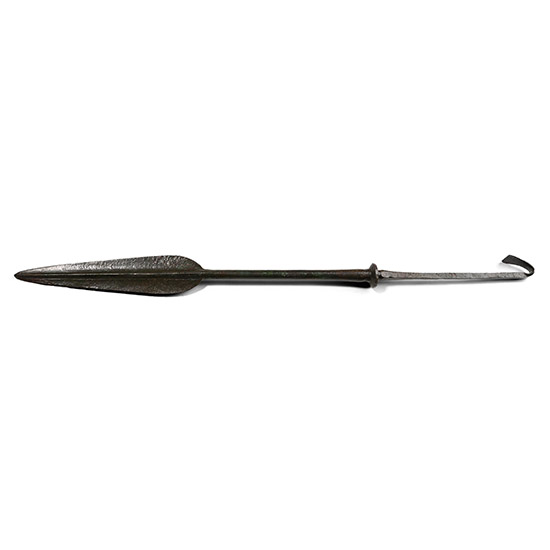
Luristan Bronze Javelin Head
2nd-1st millennium B.C.Estimate: £200 - 300 (+bp*)
Opening Bid: £100
Comprising a slender leaf-shaped two-edged blade with midrib extending to a columnar neck with median bulb and dished collar; square-section tang with bent fish-tail finial. 215 grams, 45.5 cm
Ex Abelita collection, 1980s-2010. -
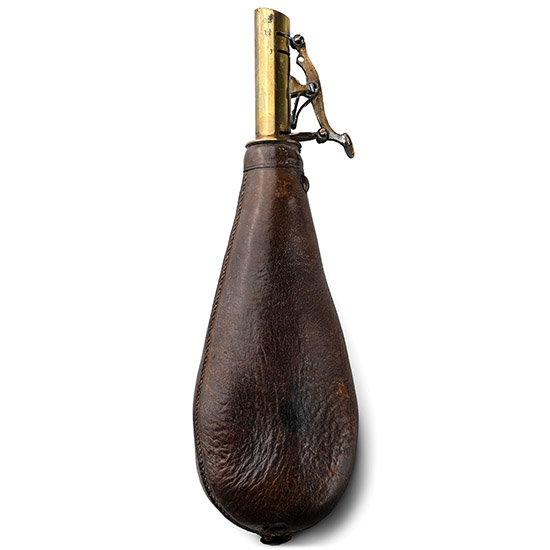
Post Medieval Leather Powder Flask
18th-19th century A.D.Estimate: £40 - 60 (+bp*)
Opening Bid: £5
Comprising: piriform leather pouch with saddle-stitched seam; brass tubular neck with spring-loaded mechanism to deliver a pre-measured amount to the mouth, stamped at top 'OZ / 1 ¼ /1'; neck stamped '1b 2½'. 78 grams, 21.4 cm
Acquired on the UK art market. Property of a Nottinghamshire, UK, gentleman.
