
Loading, please wait...
LOT 0302
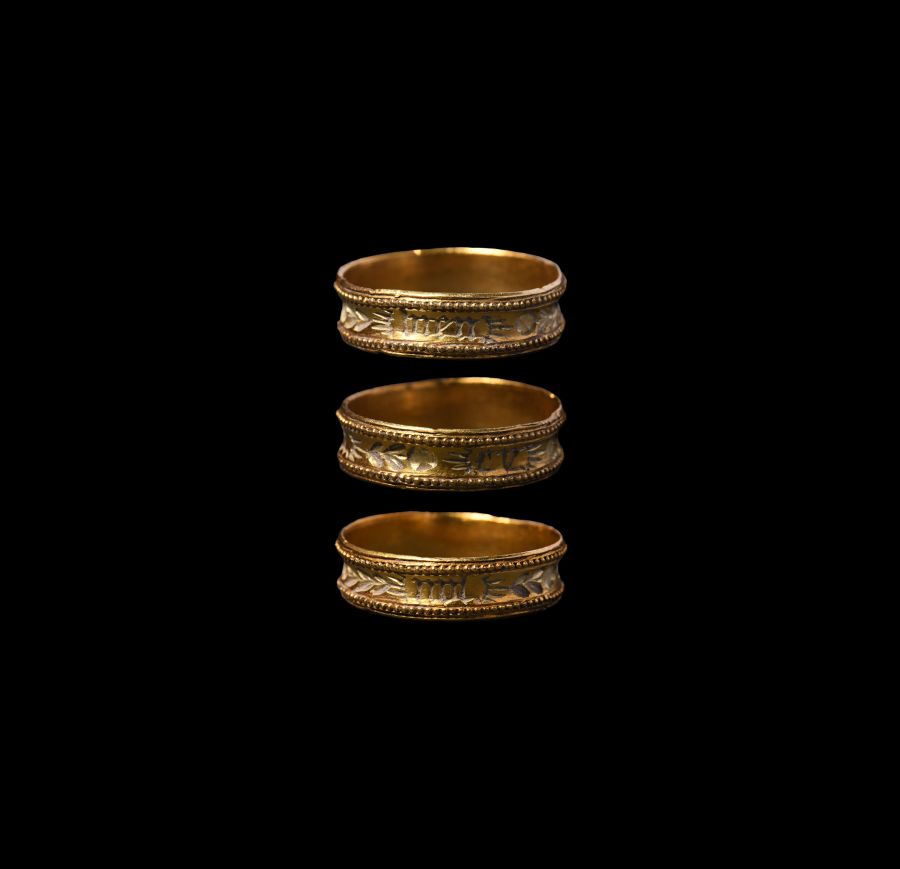
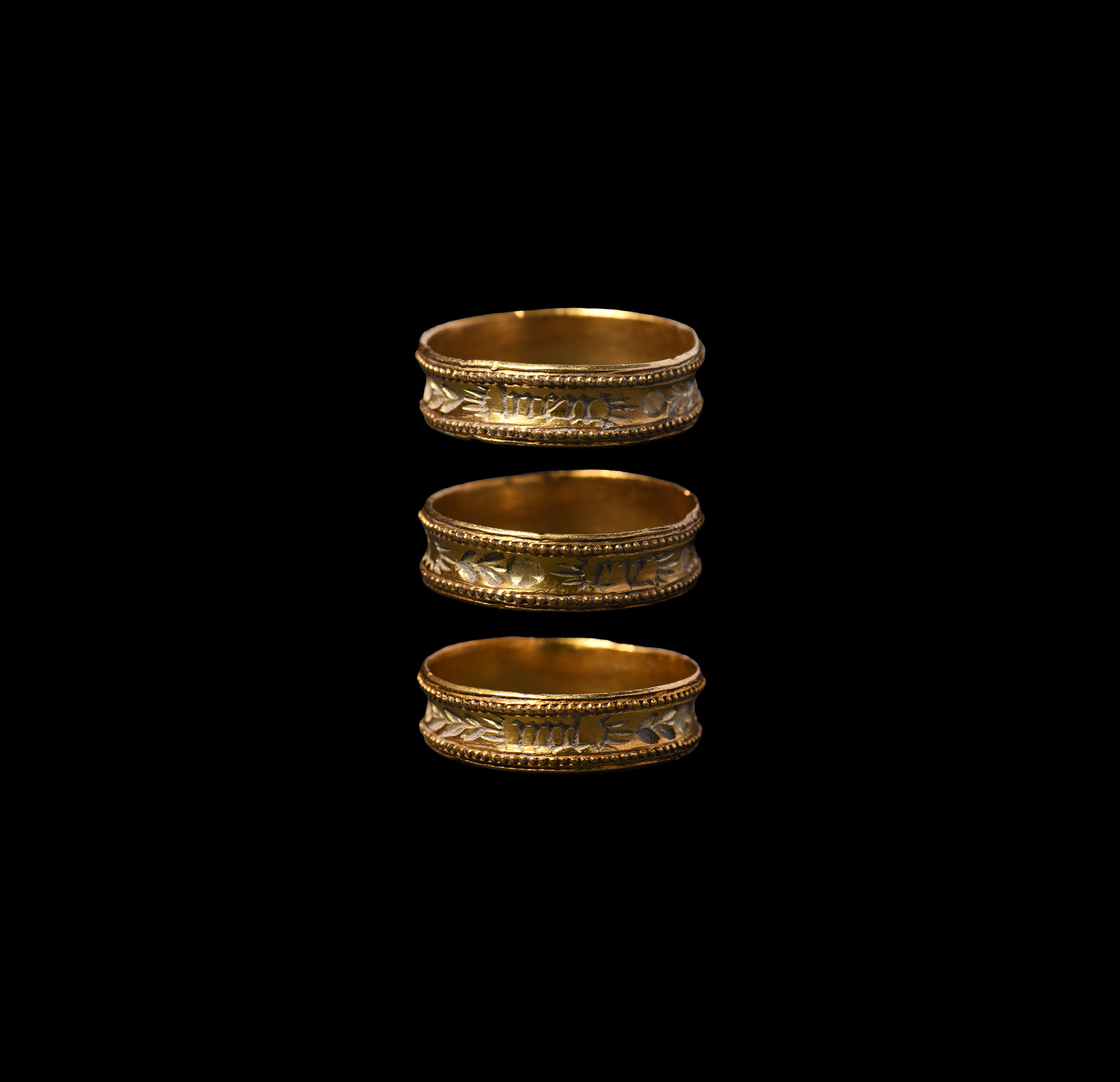
'The Chinnor' Medieval Gold 'None So Well' Decorated Posy Ring
CIRCA 1400-1500 A.D.
3/4 in. (1.83 grams, 18.11 mm overall, 16.35 mm internal diameter (approximate size British J 1/2, USA 5, Europe 9.32, Japan 9)).
A gold posy ring composed of a waisted band with pearled and raised upper and lower borders, each decorated with a circumferential ring of pellets, the central section engraved with a blackletter French inscription: 'nul ce bien' ('none so well'), each word separated by sunbursts and flowers; plain interior.
ProvenanceFound whilst searching with a metal detector by Kevin Ford on 25th January 2020 in Chinnor, South Oxfordshire, UK.
Accompanied by a copy of the British Museum's Portable Antiquities Scheme Report (PAS) number OXON-FF9F8E.
Accompanied by a letter to HM Coroner for Oxfordshire from the Treasure Registrar at the British Museum disclaiming the Crown's interest in the ring with treasure reference number 2020 T76.
Accompanied by a letter from the finder detailing the circumstances of the find.
This lot has been checked against the Interpol Database of stolen works of art and is accompanied by search certificate no.11657-196665.
Published on the British Museum's Portable Antiquities Scheme Database, record id. OXON-FF9F8E.
LiteratureCf. The V&A Museum, accession number M.219-1962, for a very similar 15th century ring; cf. The Portable Antiquities Scheme Database, record ids. PAS-A36D2D and NARC-394C24, for similar ring types of this dates and BERK-1893D5 for a similar ring and inscription; cf. Evans, J., English Posies and Posy Rings, OUP, 1931, p.12, for this inscription in black letter.
FootnotesFrench Gothic blackletter inscriptions on finger rings were associated with the culture of chivalry and courtly love; a historic example of gifts and tokens as expressions of love. Some scholars note that black letter inscriptions are prevalent on love rings between the 13th-15th centuries. Although such rings could be both English and French in origin, it is believed that most were English, with French inscriptions.
Note that the PAS offers a different interpretation of the inscription on this ring.
TimeLine Auctions follows a vetting process to ensure the authenticity and legality of all items, reinforcing our commitment to integrity and responsible trading. Each antiquity, antique, and coin lot undergoes thorough examination by a vetting committee of at least ten external specialists, professional trade association members, scientists, and archaeologists: Our Vetting Process
AUCTIONS:
TimeLine is a leading auction house specialising in antiquities, ancient art, collectables, natural history, coins, medals, and books. Our auctions offer museums, collectors, historians, and enthusiasts the opportunity to acquire unique and historically significant pieces.
LOT 0302
'The Chinnor' Medieval Gold 'None So Well' Decorated Posy Ring
Sold for (Inc. bp): £2,210
-
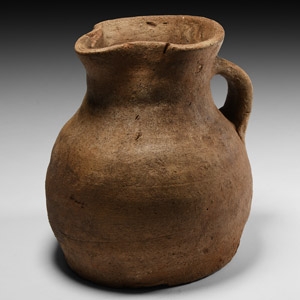
Medieval Handled Jug
15th-16th century A.D.Sold for (Inc. bp): £72
A coarse ceramic jug with squat body, steep shoulder, broad mouth pinched to form a pouring lip, thick strap handle to the rear. 1.4 kg, 16.7 cm high
Acquired 1971-1972. From the collection of the vendor's father. Property of a London, UK, collector. -
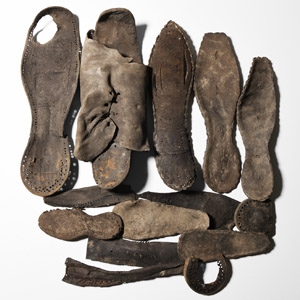
Medieval 'Thames' Leather Shoe Fragment Collection
Circa 14th-16th century A.D.Sold for (Inc. bp): £26
A group of leather shoe soles and fragments of various shapes, including examples displaying the original perforations for the attachment of additional shoe elements. 233 grams total, 5-25 cm
Found on the Thames foreshore, London, UK. Acquired on the UK antiques market between 1974-1985. Albert Ward collection, Essex, UK. -
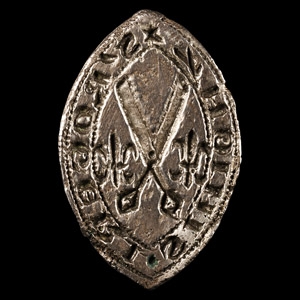
English Medieval Silver Vesica-Shaped Seal Matrix for Tailor Roger Simion
Circa 1290-1340 A.D. or laterSold for (Inc. bp): £819
A silver vesica-shaped seal matrix with strap and pierced lug to the reverse; incuse motif of a pair of shears between two small fleurs-de-lys; Lombardic script legend within borders '* S' ROGER · SIMION' (seal of Roger Simion). 14.4 grams, 33 mm
The Matrix Collection, formed by David Morris since the late 1980s. Matrix Collection catalogue no.0310. Many of the seals within the collection were published in a book titled 'The Matrix Collection', by David Morris in 2012. Accompanied by a copy of the illustrated collection notes.
The shears in the design may indicate that Roger was a tailor.
