
Loading, please wait...
LOT 0275
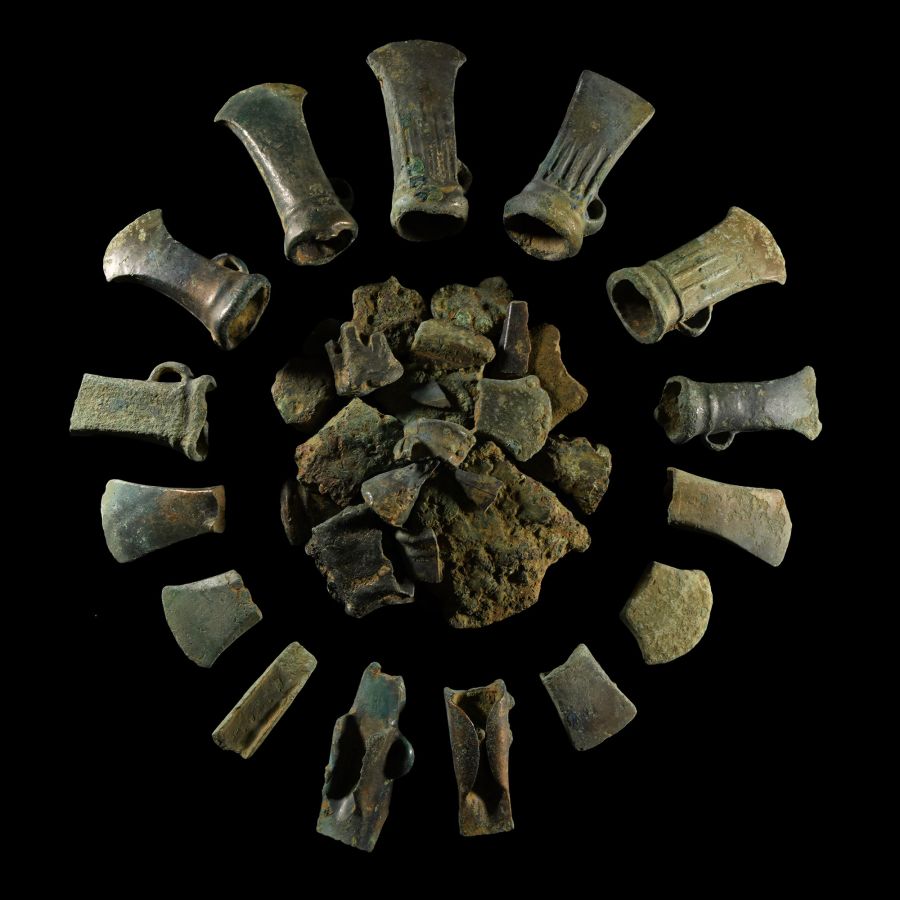
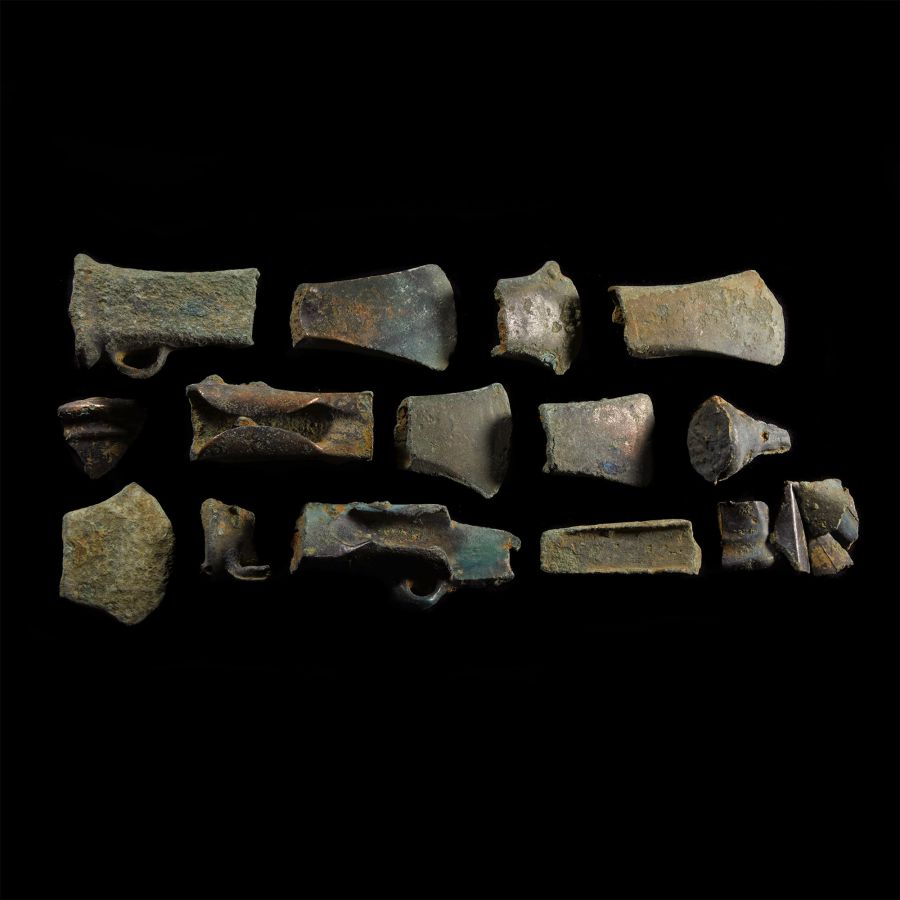
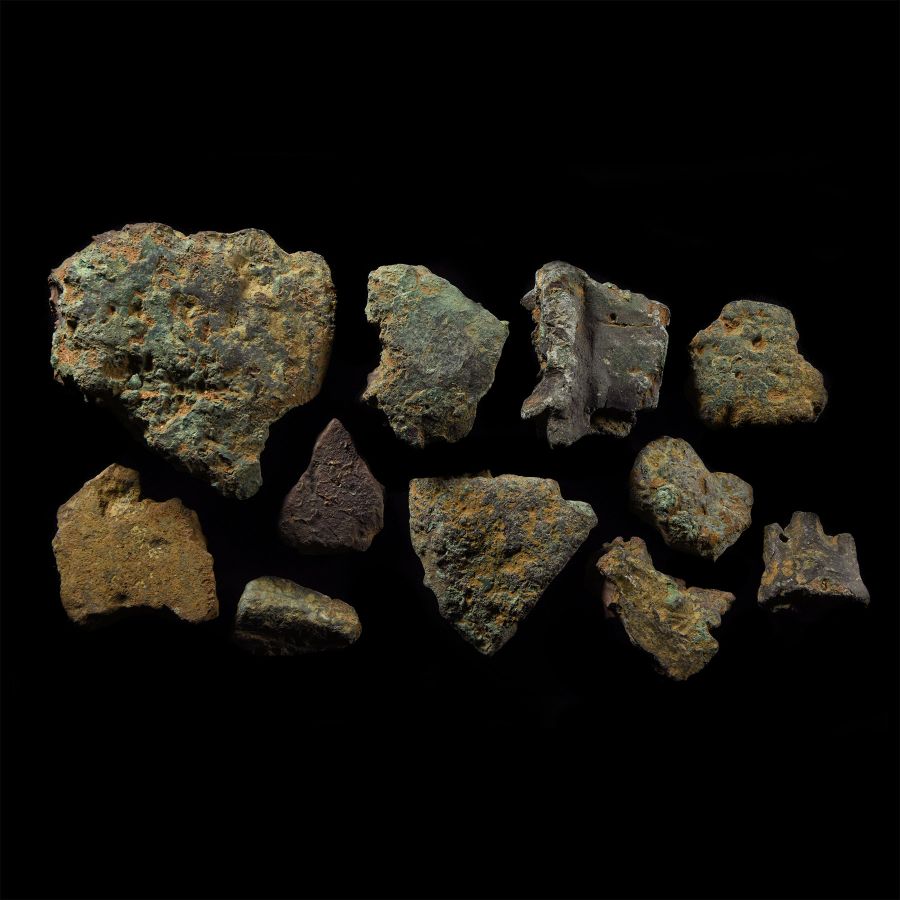
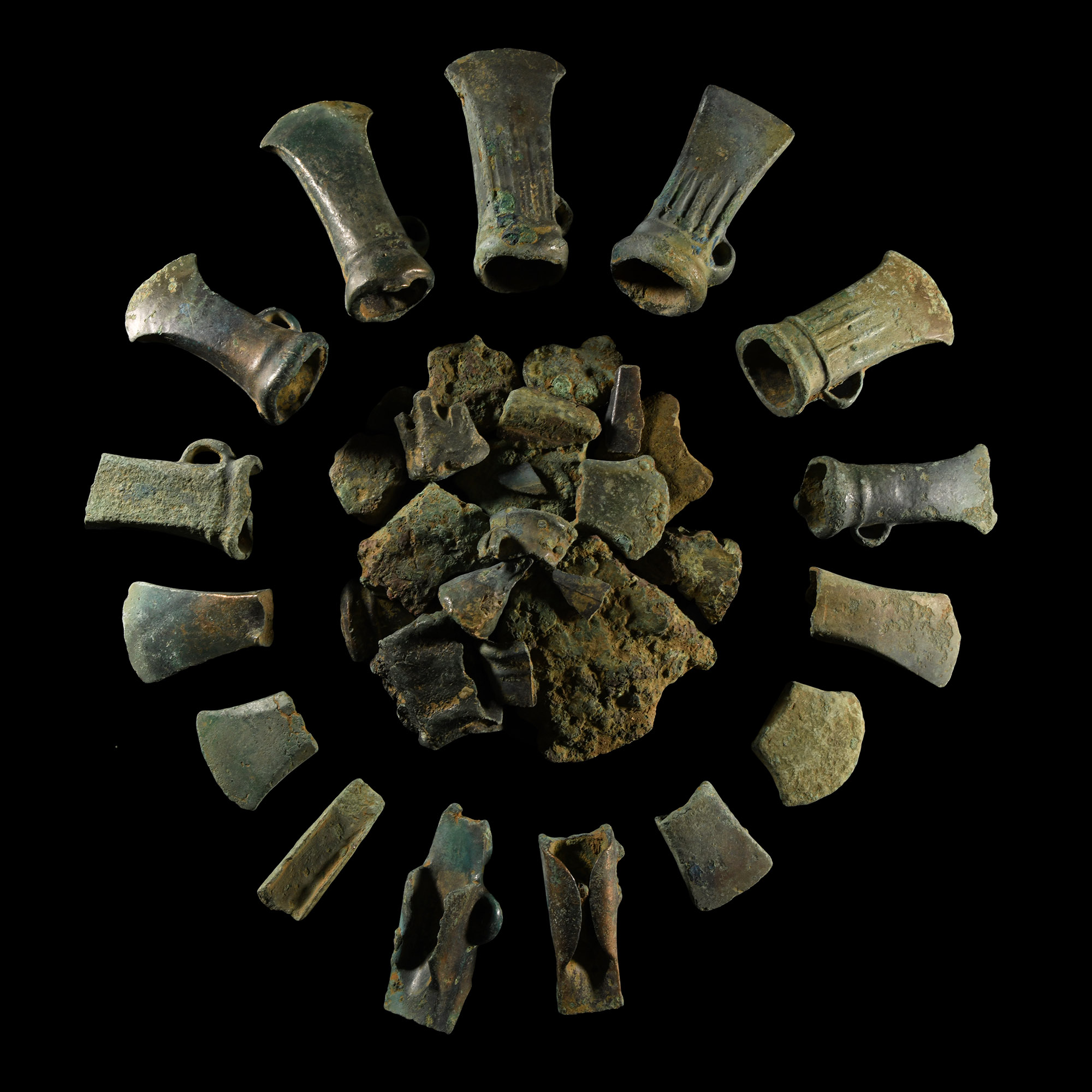
'The Braintree' Bronze Age Axehead and Foundry 'Carp's Tongue/Ewart Phase' Hoard
DEPOSITED CIRCA 900-800 B.C.
7/8 - 4 3/8 in. (5.20 kg total, 2-11 cm).
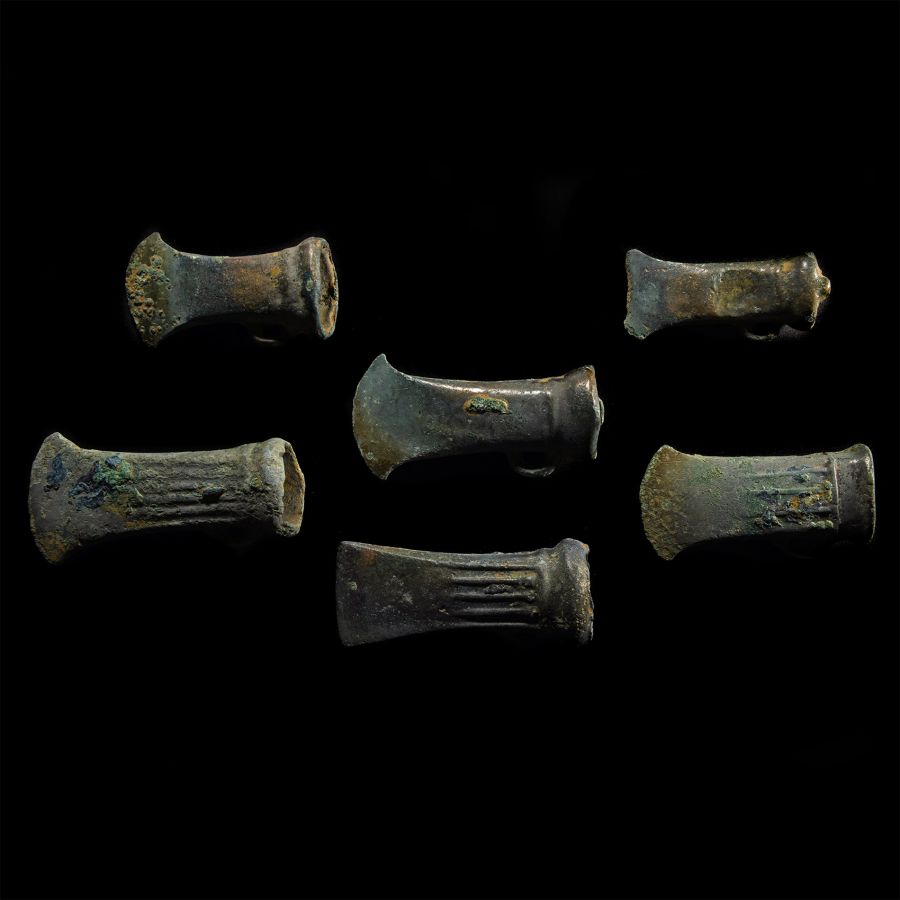
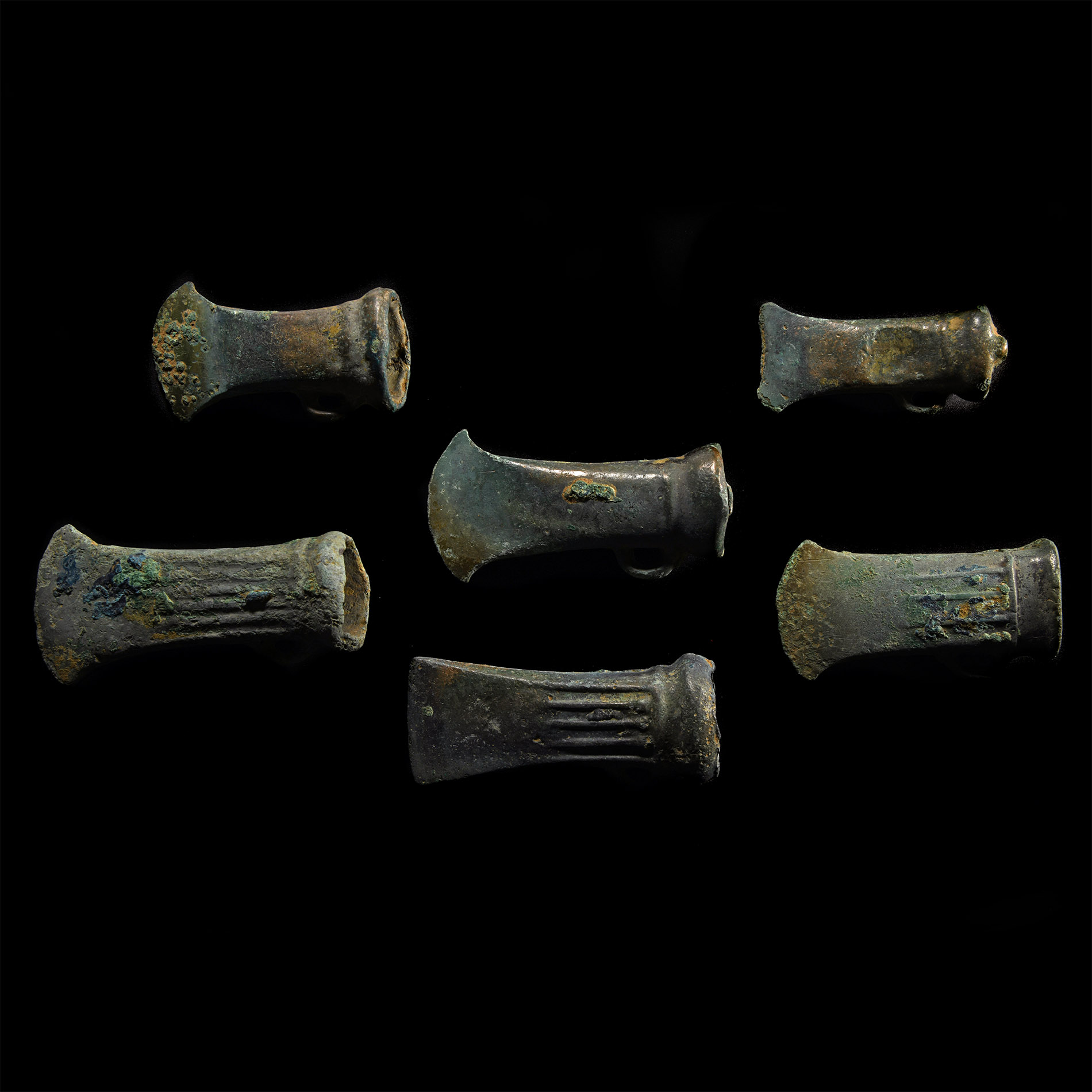
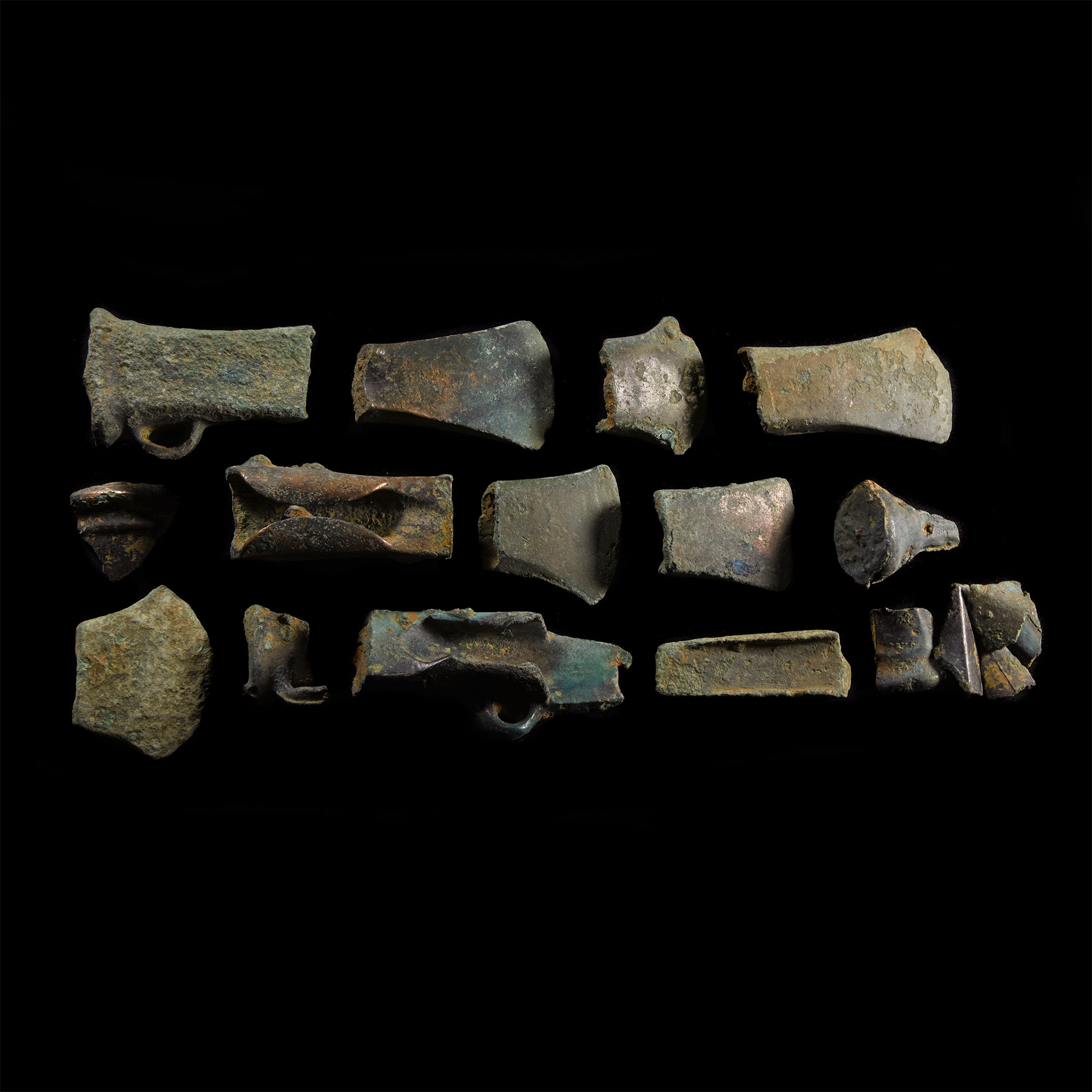
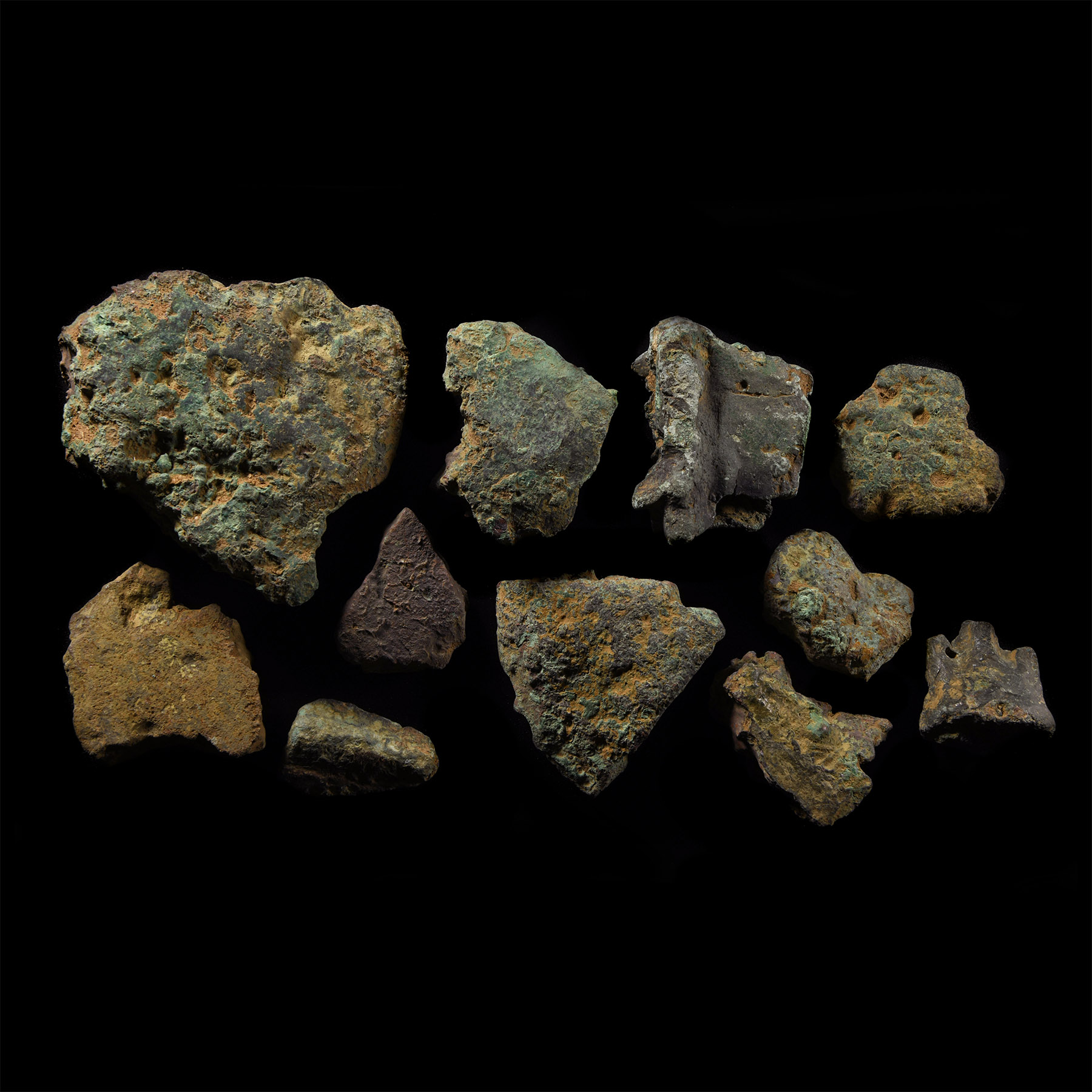
Being an entire 'founder' hoard deposit comprising: complete socketted axes (6; three with linear ornament to sockets); fragments of socketted and earlier type palstave axes (18, including two that fit together); fragments of other items (4) and pieces of copper 'bun' ingot (8). [36]
ProvenanceFound whilst searching with a metal detector in Braintree, Essex, UK, on 14th August 2019.
Accompanied by a copy of the British Museum's Portable Antiquities Scheme (PAS) report no.BM-C514EA and with a copy of the Harwich Museum loan form.
Disclaimed under the Treasure Act with reference number 2019 T731.
The British Museum's Portable Antiquities Scheme (PAS), reference BM-C514EA (this find).
Exhibited at Harwich Museum, Harwich, Essex, UK, 29th June-4th September 2023.
See Pendleton, Colin F., Bronze Age Metalwork in Northern East Anglia, BAR British Series 279, 1999, for much information on similar pieces found in East Anglia; see also Evans, John, The Ancient Bronze Implements, Weapons and Ornaments of Great Britain and Ireland, London, 1881.
FootnotesThe composition of this hoard is quite typical of similar deposits found across south-eastern England and dating to the Late Bronze Age; most such finds include broken fragments together with pieces of ingot and some complete items, as seen here. It is unusual to see an entire deposit offered together as most such are either held in museums or have been divided up.
CONDITIONTimeLine Auctions follows a vetting process to ensure the authenticity and legality of all items, reinforcing our commitment to integrity and responsible trading. Each antiquity, antique, and coin lot undergoes thorough examination by a vetting committee of at least ten external specialists, professional trade association members, scientists, and archaeologists: Our Vetting Process
AUCTIONS:
TimeLine is a leading auction house specialising in antiquities, ancient art, collectables, natural history, coins, medals, and books. Our auctions offer museums, collectors, historians, and enthusiasts the opportunity to acquire unique and historically significant pieces.
LOT 0275
'The Braintree' Bronze Age Axehead and Foundry 'Carp's Tongue/Ewart Phase' Hoard
Sold for (Inc. bp): £3,380
-
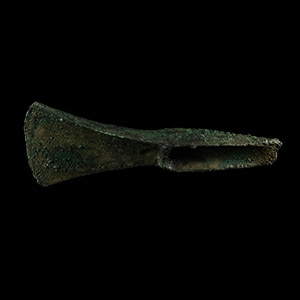
Bronze Age 'The Manston Hoard' Palstave Axehead
Middle Bronze Age, 1400-1150 B.C.Sold for (Inc. bp): £390
Complete and one of the best examples in the hoard; triangular flanges rise from the butt to the stop bar; below the septum a hollow to both faces; narrow body expanding to a wide triangular blade with slight flare at the tips; a rare opportunity to acquire a British Bronze Age axe from a recorded treasure hoard. 480 grams, 18 cm
Found near Manston, Kent, UK, 2016. Accompanied by copies of the British Museum's portable Antiquities Scheme (PAS) report no.KENT-495597 and disclaimed as Treasure with reference no.2016 T618. -
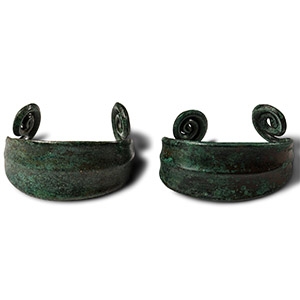
Bronze Age Coiled Bracelet Pair
8th-6th century B.C.Sold for (Inc. bp): £286
Each of small penannular form with a raised medial rib to the elliptical face, tapering to coiled terminals with lozengiform cross-section. 72 grams total, 56-58 mm wide
From the private collection of a London gentleman, from his grandfather's collection formed before the early 1970s. -
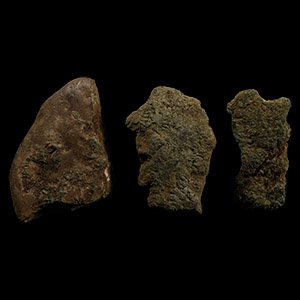
Bronze Age Pancake Ingot Fragment Group
2nd-1st millennium B.C.Sold for (Inc. bp): £26
Comprising three pieces of copper 'bun' ingot, one showing the characteristic edge cross-section. 508 grams total, 54-69 mm
UK gallery, early 2000s.
These bun ingots were cast in shallow saucer depressions cut into rock where the copper ore was mined and smelted; they were then carried and traded across Europe before being broken up, melted down and having tin added to form bronze alloy; fragments such as these are frequently found as part of smith's hoards of, usually, worn out tools, weapons and raw material from the Late Bronze Age.
