
Loading, please wait...
LOT 1526
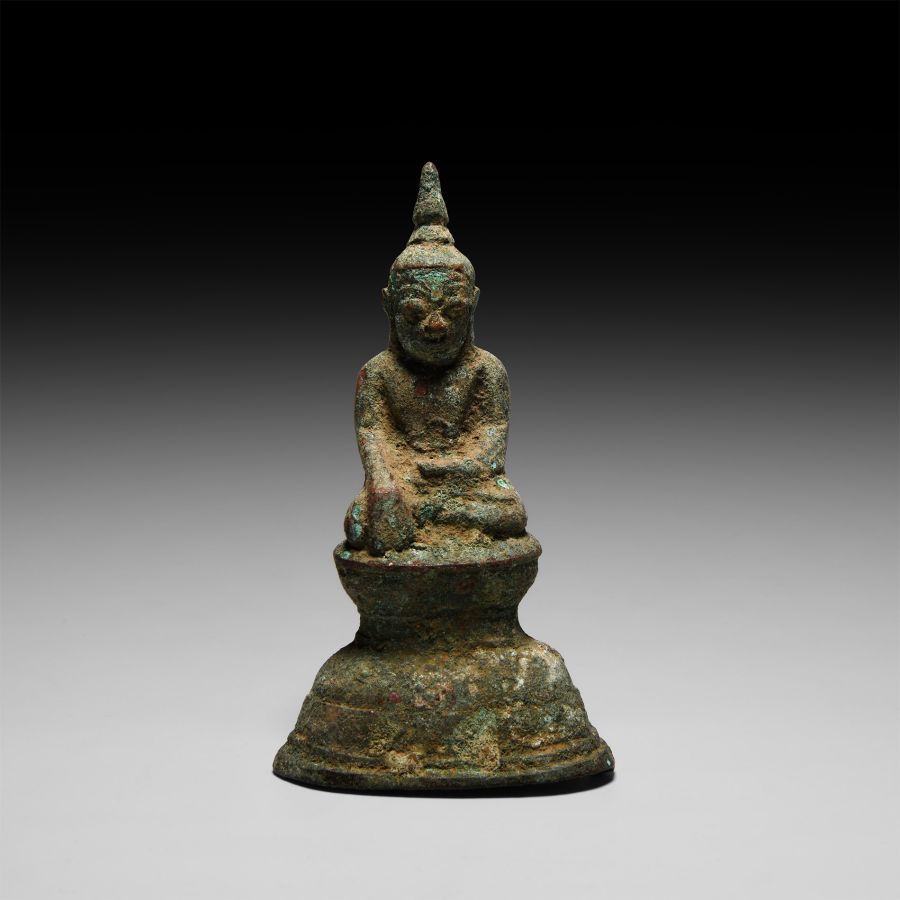
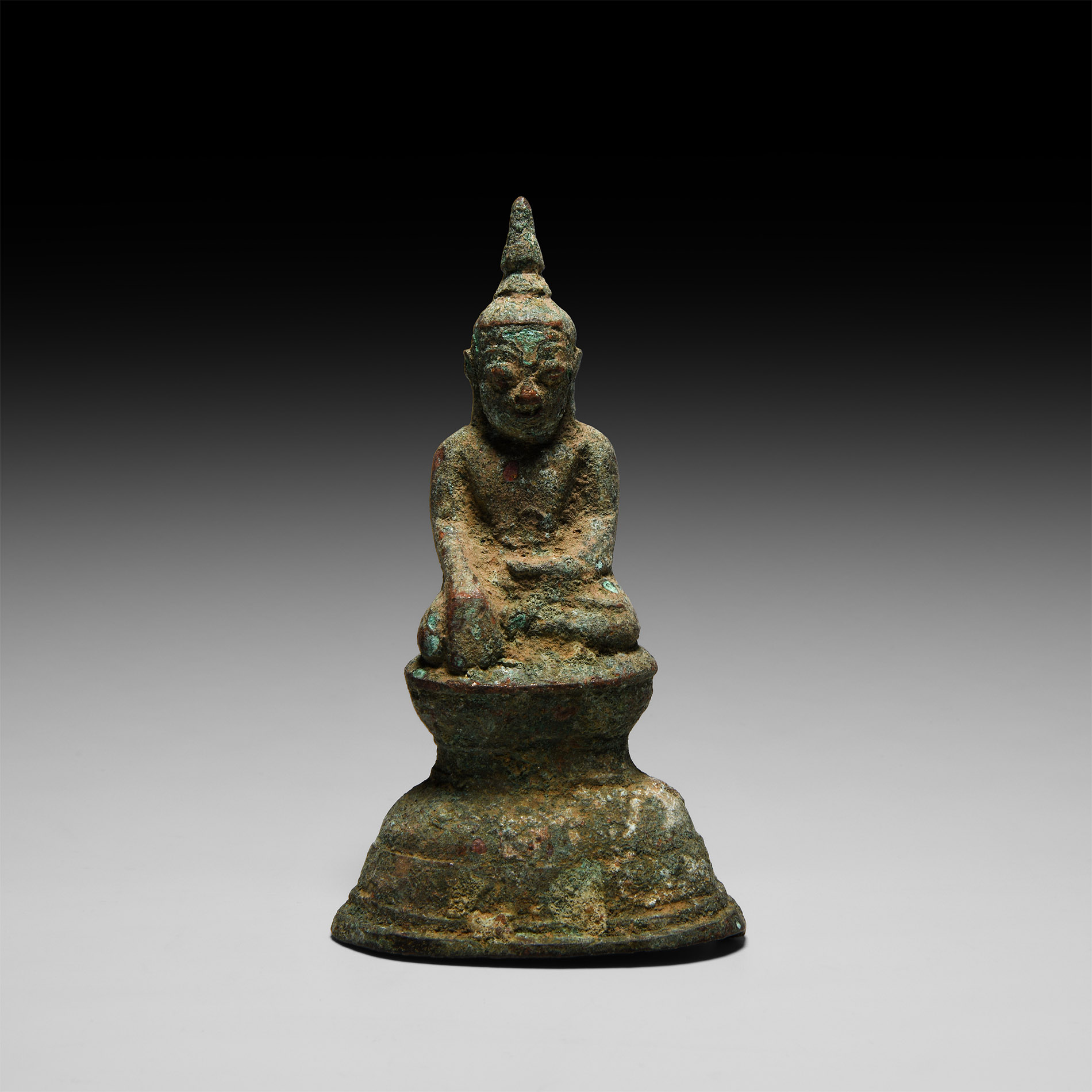
Thai Seated Buddha Statuette
10TH-12TH CENTURY A.D.
5 1/4 in. (370 grams, 13.5 cm high).
A copper-alloy figure modelled seated cross-legged on what is possibly a lotus flower atop a domed base, hands held in a mudra and wearing a conical crown; possibly a Buddha figure; of Thai or Burmese origin. [No Reserve]
ProvenanceEssex gallery, early 2000s.
CONDITIONTimeLine Auctions follows a vetting process to ensure the authenticity and legality of all items, reinforcing our commitment to integrity and responsible trading. Each antiquity, antique, and coin lot undergoes thorough examination by a vetting committee of at least ten external specialists, professional trade association members, scientists, and archaeologists: Our Vetting Process
AUCTIONS:
TimeLine is a leading auction house specialising in antiquities, ancient art, collectables, natural history, coins, medals, and books. Our auctions offer museums, collectors, historians, and enthusiasts the opportunity to acquire unique and historically significant pieces.
-
Chinese Ordos Style Dragon Belt Distributor
19th century A.D.Sold for (Inc. bp): £377
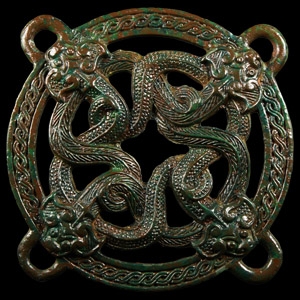
A copper-alloy belt fitting featuring an openwork discoid design composed of four entwined dragons with snake-like bodies, each resting its head on a circular frame adjacent to a D-shaped attachment lug, interlace design to the body and anatomical detailing to the beasts. 162 grams, 88 mm wide
Acquired before the early 1970s. Ex London, UK, gallery. Property of a London gentleman. -
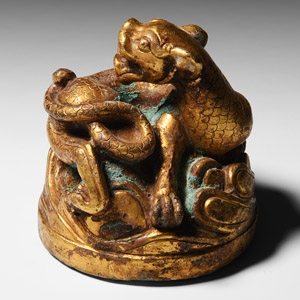
Chinese Han Style Gilt Coiled Lionesque Creature
20th century A.D. or earlierEstimate: £250 - 350 (+bp*)
Opening Bid: £125
A Han Dynasty style sinuous gilt bronze lionesque beast, modelled in a dynamic coiled posture on a circular base from which fingers of water rise in response to the animal's muscular movements, its slender body with a dense covering of scales, its long and scaly tail curled upwards and its roaring mouth ajar, revealing a row of squared teeth and a protruding tongue, its eyes bulbous and large ears pricked. 367 grams, 66 mm
Fine condition.
Acquired 1970s. West Country, UK, collection. -
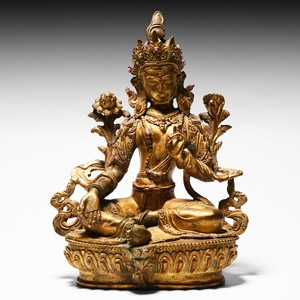
Sino-Tibetan Gilt Arya Tara Figure
19th-early 20th century A.D.Estimate: £350 - 450 (+bp*)
Opening Bid: £194
A gilt-bronze figure of Arya Tara modelled in the round in meditating pose with eyes half-closed and a utpala flower to each upper arm; D-shaped lotus flower dais, hollow with panel to the underside. 1.34 kg, 21 cm high
Fine condition.
Acquired 1970s-2000s. From a Japanese collection of Buddhist art.
