
Loading, please wait...
LOT 1545
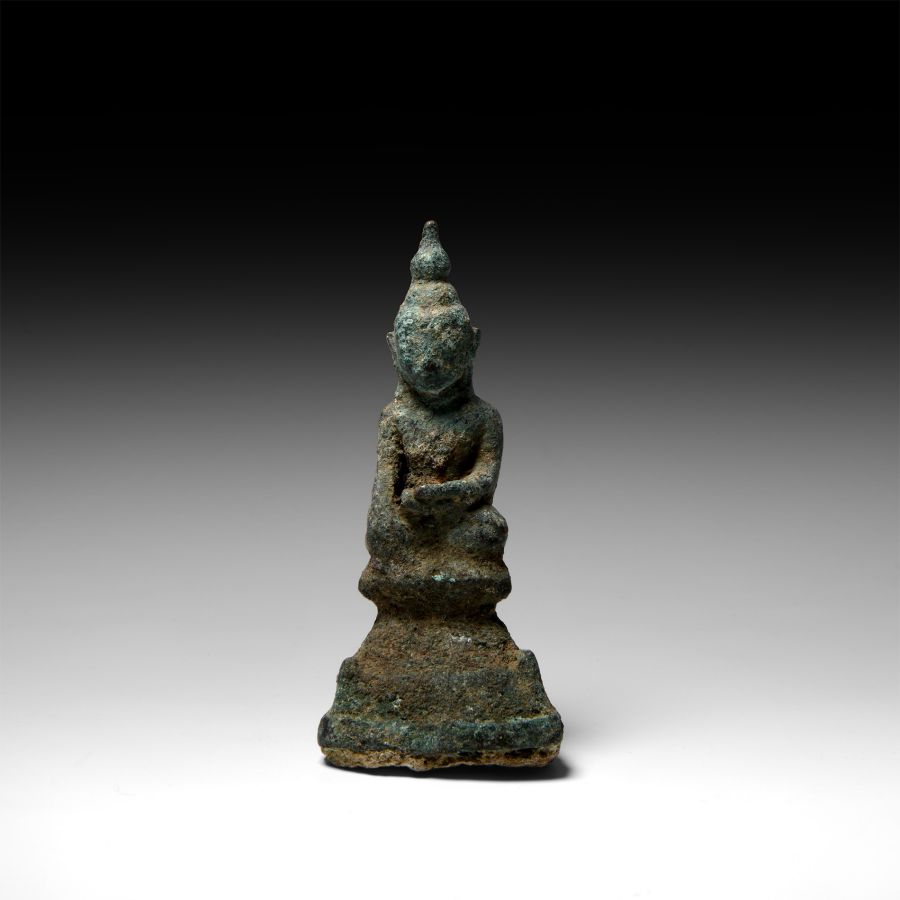
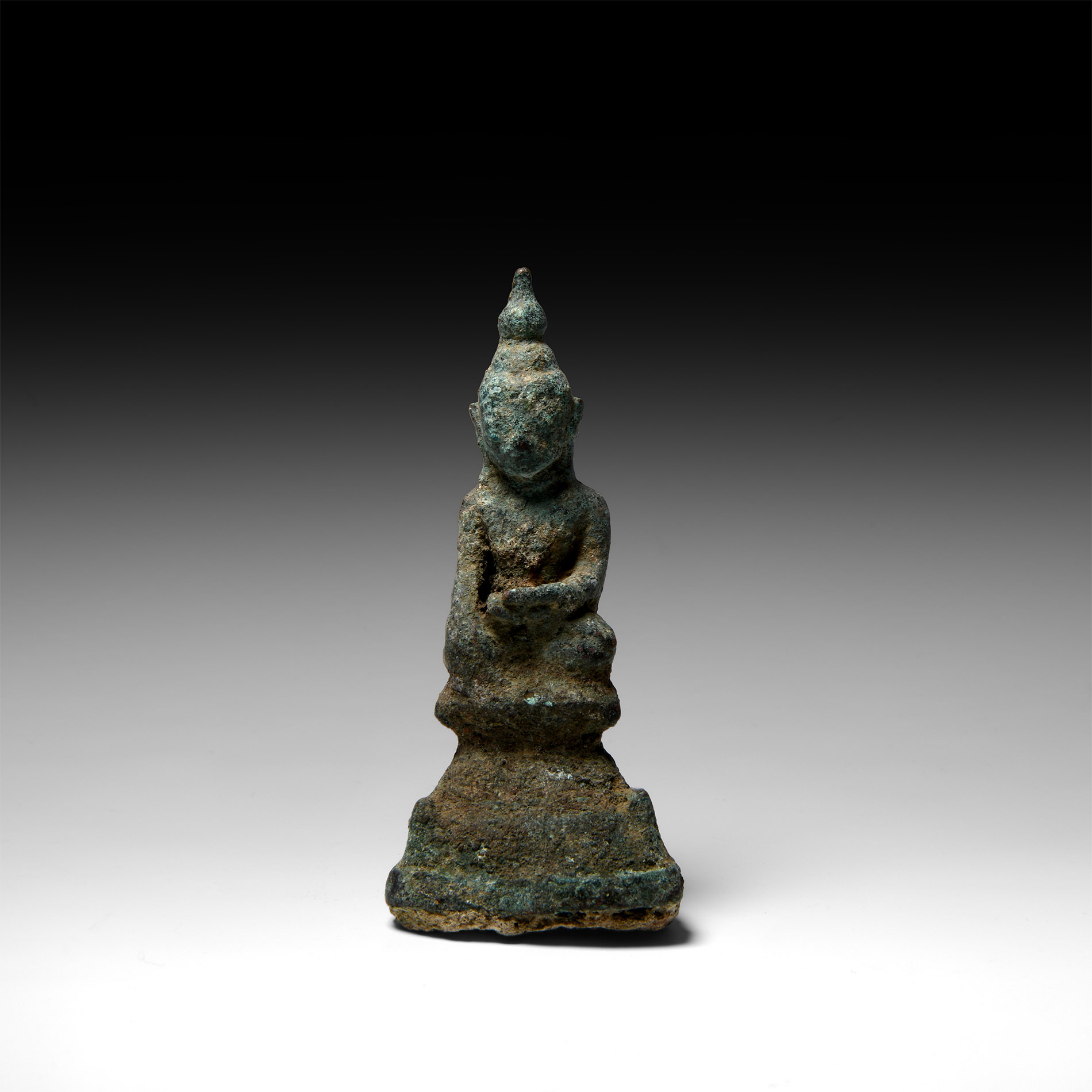
Thai Seated Buddha Statuette
11TH-13TH CENTURY A.D.
4 in. (157 grams, 10.3 cm high).
A copper-alloy Buddha statuette modelled seated cross-legged on a domed trapezoidal base, hands held in a mudra and wearing a conical crown; of Thai or Burmese origin. [No Reserve]
ProvenanceEssex gallery, early 2000s.
CONDITIONTimeLine Auctions follows a vetting process to ensure the authenticity and legality of all items, reinforcing our commitment to integrity and responsible trading. Each antiquity, antique, and coin lot undergoes thorough examination by a vetting committee of at least ten external specialists, professional trade association members, scientists, and archaeologists: Our Vetting Process
AUCTIONS:
TimeLine is a leading auction house specialising in antiquities, ancient art, collectables, natural history, coins, medals, and books. Our auctions offer museums, collectors, historians, and enthusiasts the opportunity to acquire unique and historically significant pieces.
-
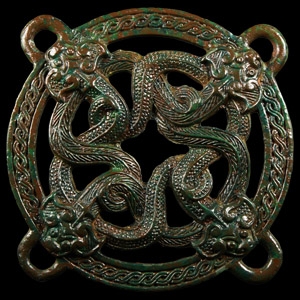
Chinese Ordos Style Dragon Belt Distributor
19th century A.D.Sold for (Inc. bp): £377
A copper-alloy belt fitting featuring an openwork discoid design composed of four entwined dragons with snake-like bodies, each resting its head on a circular frame adjacent to a D-shaped attachment lug, interlace design to the body and anatomical detailing to the beasts. 162 grams, 88 mm wide
Acquired before the early 1970s. Ex London, UK, gallery. Property of a London gentleman. -
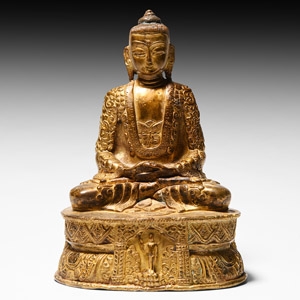
Sino-Tibetan Gilt Buddha Figure
19th-20th century A.D.Estimate: £350 - 450 (+bp*)
Opening Bid: £194
A gilt-bronze statuette of Buddha sitting cross-legged on a lotus flower dais; both hands placed palm-upwards in the lap; the D-shaped base with a lotus detailing to the outer face and icons of Buddha in various poses, hollow with panel to the underside. 1.9 kg, 17 cm high
Fine condition.
Acquired 1970s-2000s. From a Japanese collection of Buddhist art. -
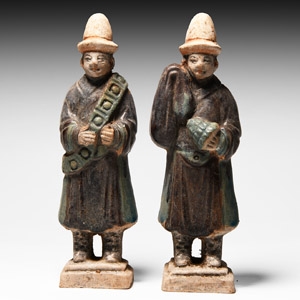
Chinese Ming Retainer Group
Late Ming Dynasty-early Qing Dynasty, 16th-17th century A.D.Estimate: £300 - 400 (+bp*)
Opening Bid: £150
A pair of glazed ceramic figurines comprising: retainer standing on a socle base wearing long high-collar knee-length robe and conical cap, hands on the stomach holding an applied bandolier; similar with right hand raised inside an overlong sleeve and left hand holding a cap(?). 599 grams total, 18 cm high each
Acquired 1970s. West Country, UK, collection.
