
Loading, please wait...
LOT 2107
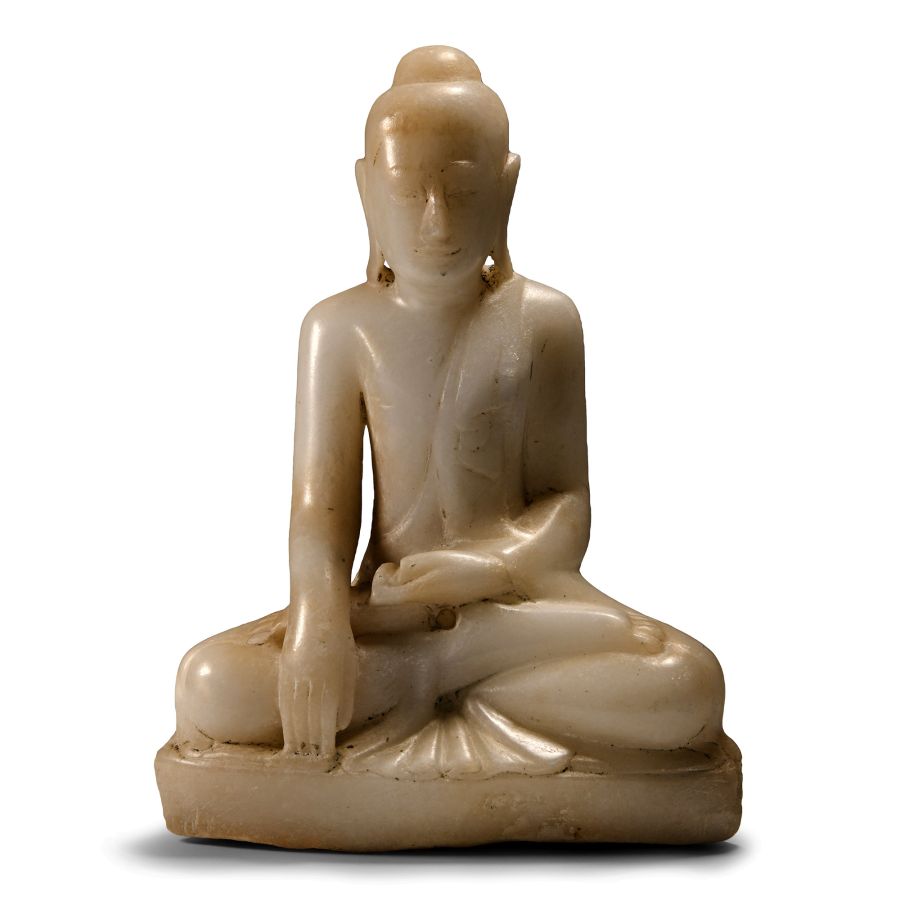
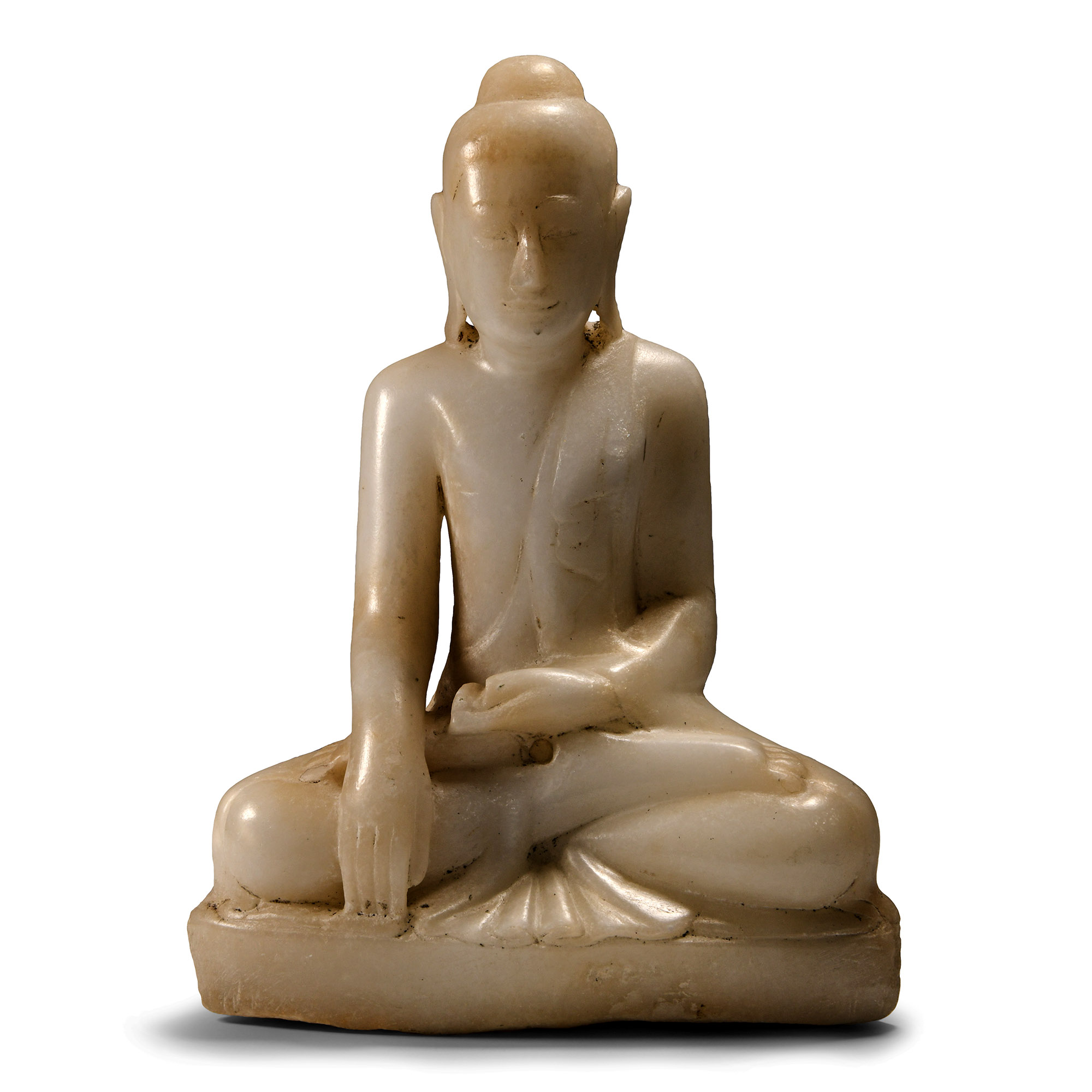
Thai Alabaster Buddha Touching the Earth
16TH-17TH CENTURY A.D. OR LATER
9 7/8 in. (3.07 kg, 25 cm high).
Carved in the round seated on a lotus flower base, right hand in Bhumisparsha mudra.
ProvenanceAcquired 1970s onwards.
Private collection of Michael O'Hara, Cambridgeshire, UK.
Ex private collection of Benjamin Hyde-Smith, Hertfordshire, UK.
TimeLine Auctions follows a vetting process to ensure the authenticity and legality of all items, reinforcing our commitment to integrity and responsible trading. Each antiquity, antique, and coin lot undergoes thorough examination by a vetting committee of at least ten external specialists, professional trade association members, scientists, and archaeologists: Our Vetting Process
AUCTIONS:
TimeLine is a leading auction house specialising in antiquities, ancient art, collectables, natural history, coins, medals, and books. Our auctions offer museums, collectors, historians, and enthusiasts the opportunity to acquire unique and historically significant pieces.
LOT 2107
Thai Alabaster Buddha Touching the Earth
Estimate £300 - 400€350 - 460 (for guidance only)$410 - 540 (for guidance only)
-
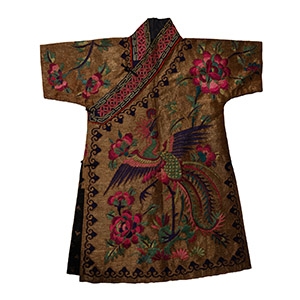
Sino-Tibetan Embroidered Chupa Robe
Early 20th century A.D.Estimate: £600 - 800 (+bp*)
Opening Bid: £300
The garment decorated with vibrantly-coloured flowers and vegetal forms surrounding a large phoenix; two globular toggle fasteners; floral lining to the interior. 1.04 kg, 1.03 m
Acquired by private treaty from old U.S.A. collection. Property of R.W.M. Collection. -
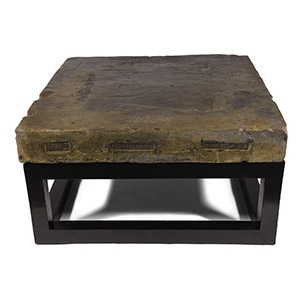
Chinese Table with Golden Brick by Yuan Hongde
18th century A.D.Sold for (Inc. bp): £2,340
Worn smooth on the upper face; the substantial rectangular 'brick' stamped to the side edges: '大一甲 袁洪德造 da yi jia, Yuan Hongde zao (size of the brick, made by Yuan Hongde) 督造官江南蘇州府知府魁元 (under the supervisor Kui Yuan of Jiangnang, Suzhou) 乾隆十八年成造细料二尺二寸見方金磚 (18th year of Qianlong (1754), square gold brick)'; accompanied by a low wooden table frame. 104.3 kg total, 72 x 72 x 37 cm
with the owner's family since the early 1990s. This lot has been checked against the Interpol Database of stolen works of art and is accompanied by search certificate number no.11916-204597.
Also known as jinzhuan, Golden Bricks are produced from a finite iron-rich soil, crafted by a team of people over a period of 2-3 years, using a process involving 29 distinct procedures. The bricks produce a metallic sound when induced to do so and have an internal structure which is so fine that the pores of the clay can hardly be seen. Historically, golden bricks were reserved for the use of emperors and the construction of their palaces, first appearing during the reign of Emperor Yongle in the Ming Dynasty (1368-1644), produced in Suzhou under imperial order to be used for paving the floors of the imperial palaces, monasteries and mausoleums in Beijing; they are witnesses to history and embody the wisdom of the ancients. -
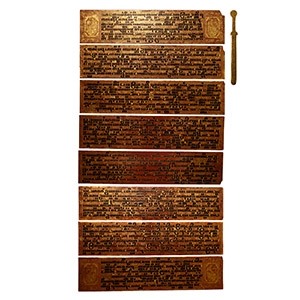
Gilt Burmese Buddhist Kammavaca Manuscript Group
Konbaung Dynasty, 18th-19th century A.D.Sold for (Inc. bp): £520
Written in Pali in Burmese square script on gilded, lacquered and numbered palm leaves; each leaf is double-sided with the exception of one cover leaf which displays interlaced geometric panels populated with female figures, dragonesques and birds to one face; accompanied by an ornately decorated sword-shaped 'pointer', also gilded, possibly not belonging. 1.15 kg total, 29-56.5 cm
London collection since the 1980s. Property of a Canadian family.
Kammavaca is a Pali term describing an assemblage of passages from the Tipitaka (the Theravada Buddhist canon) relating to ordination, the bestowing of robes and other rituals of monastic life. The texts typically contain religious instructions for monks. The piercings in the leaves are functional; each leaf was placed over a skewer (likely bamboo) when read.
