
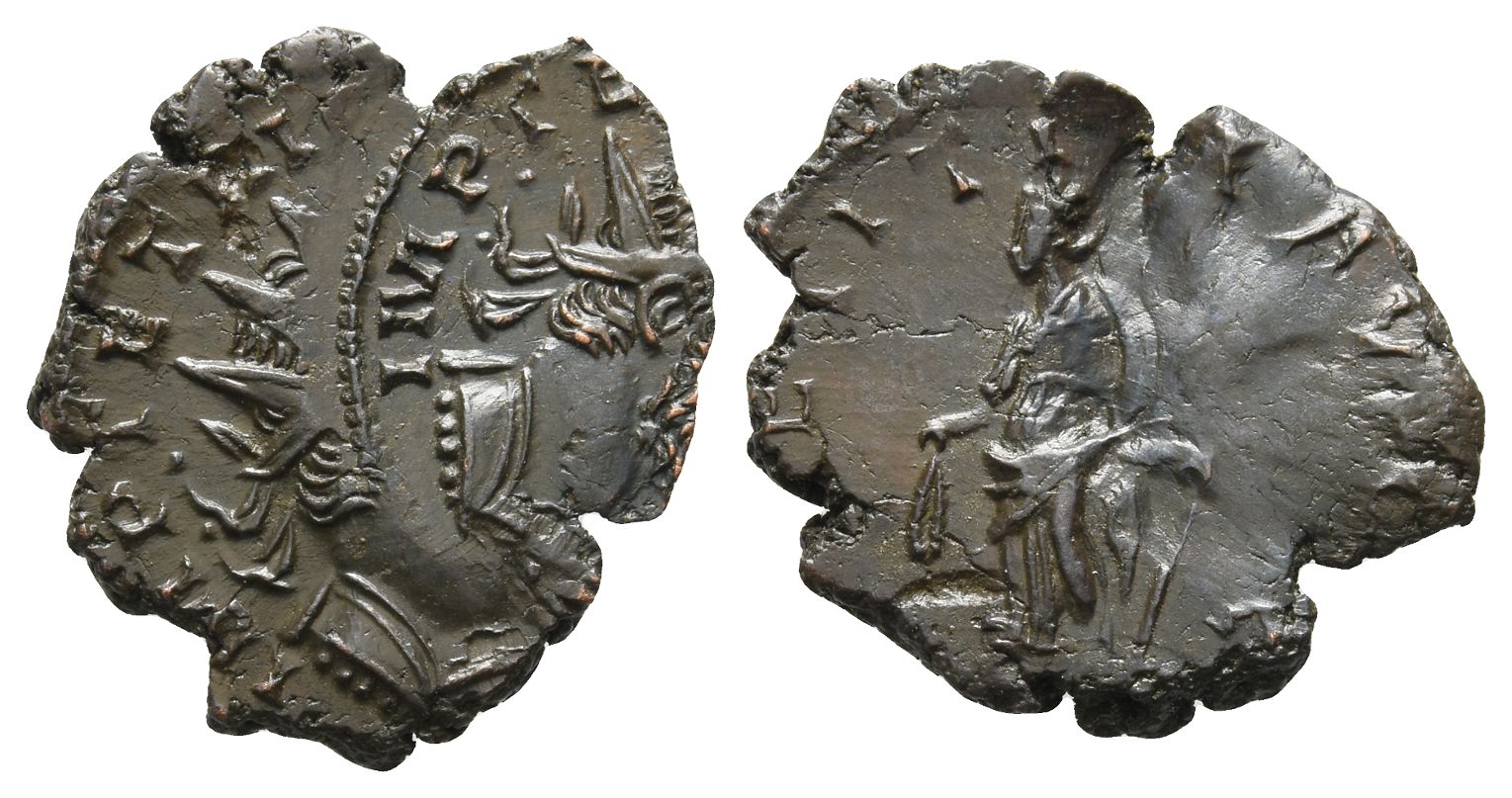
LOT 3308
Tetricus I, Romano-Gallic Emperor BI Antoninianus. AD 271-274.
Treveri mint. IMP TETRI[...], radiate and cuirassed bust to right / [LA]ETITIA AVGG, Laetitia standing to left, holding wreath and anchor. Cf. RIC V.2 88 (Colonia Agrippinensis). Mint State. Double struck.(2.46gr, 22mm.).
ProvenanceProperty of a Cambridgeshire, UK, gentleman.
TimeLine Auctions follows a vetting process to ensure the authenticity and legality of all items, reinforcing our commitment to integrity and responsible trading. Each antiquity, antique, and coin lot undergoes thorough examination by a vetting committee of at least ten external specialists, professional trade association members, scientists, and archaeologists: Our Vetting Process
AUCTIONS:
TimeLine is a leading auction house specialising in antiquities, ancient art, collectables, natural history, coins, medals, and books. Our auctions offer museums, collectors, historians, and enthusiasts the opportunity to acquire unique and historically significant pieces.
-
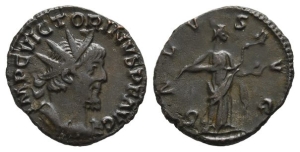
Victorinus, Romano-Gallic Emperor BI Antoninianus. AD 269-271.
Sold for (Inc. bp): £13
Colonia Agrippinensis mint; struck AD 271. IMP C VICTORINVS P F AVG, radiate and cuirassed bust to right / SALVS AVG, Salus standing to right, feeding serpent in her arms. RIC V.2 67 (Southern Mint) and 122 (Colonia Agrippinensis). 3.13gr, 20mm, 12h.
Very Fine.
From a London, UK, specialist collection, 1990s. -
Victorinus, Romano-Gallic Emperor BI Antoninianus. AD 269-271.
Sold for (Inc. bp): £20
Contemporary imitation. IMP C VICTORINVS [...], radiate bust to right / [...] AVG, Pax(?) standing to left, holding olive branch and sceptre. Cf. RIC V.2 118. 2.74gr, 20mm, 6h.
Near Very Fine.
From a London, UK, specialist collection, 1990s. -
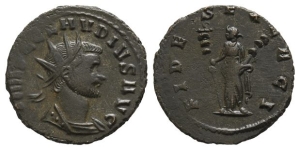
Claudius II Gothicus BI Antoninianus. AD 268-270.
Sold for (Inc. bp): £13
Rome mint; struck AD 268-269. IMP C CLAVDIVS AVG, radiate and cuirassed bust to right / FIDES EXERCI, Fides standing to left, holding standard and transverse standard. RIC V.1 34 var. (Fides standing to right). 3.71gr, 21mm, 6h.
Very Fine.
From a London, UK, specialist collection, 1990s.
