
Loading, please wait...
LOT 0862
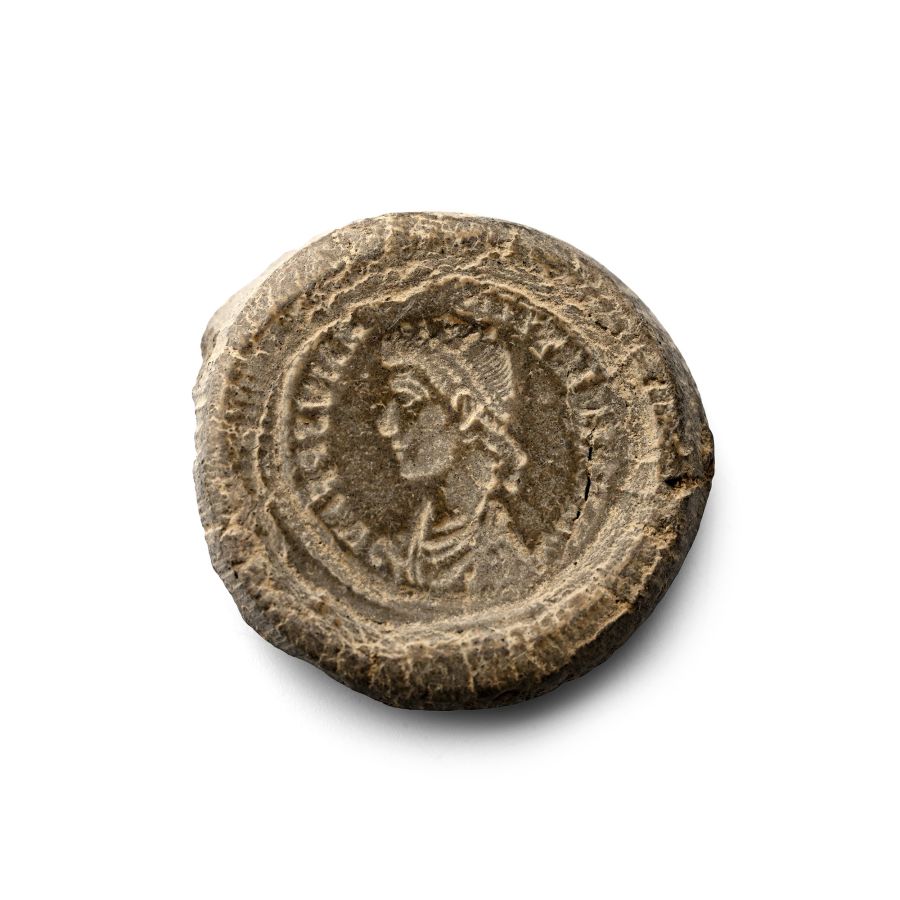
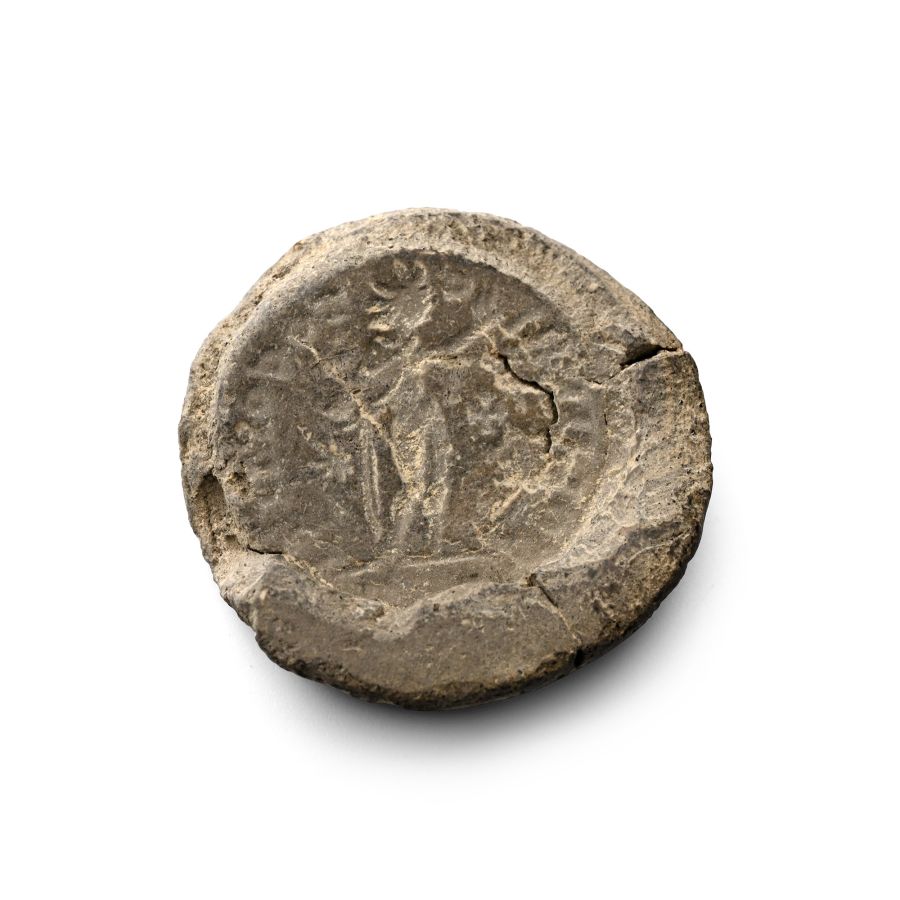
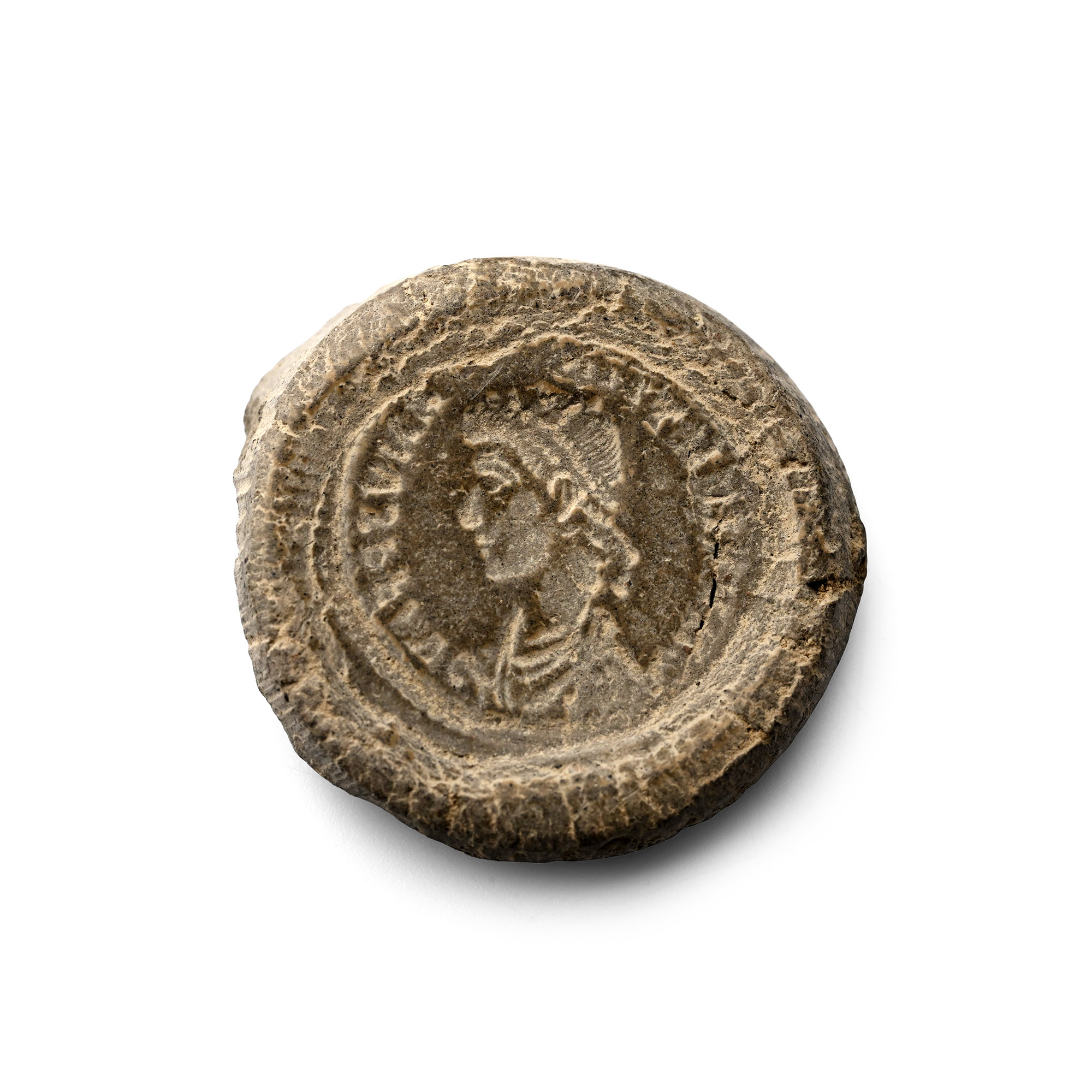
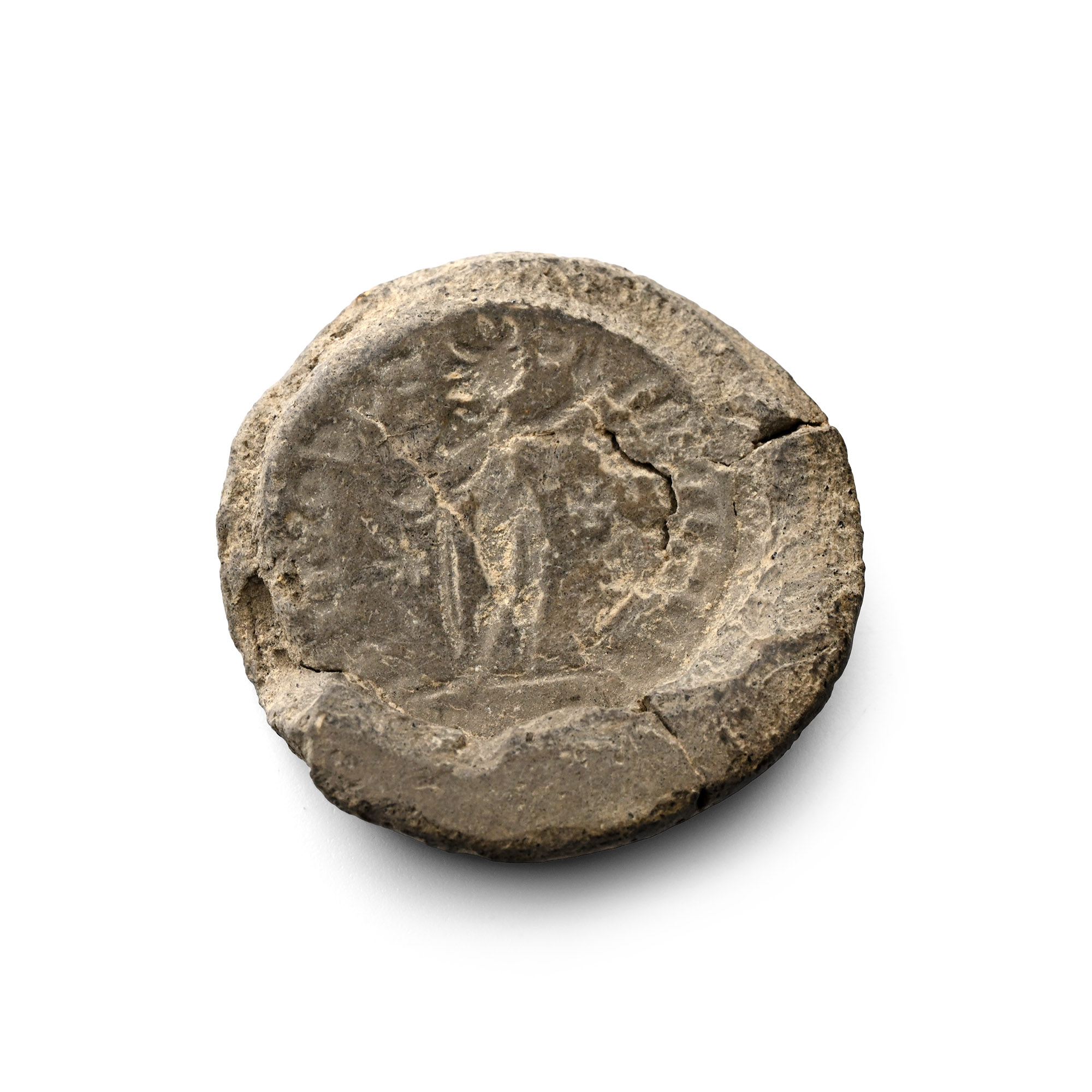
Terracotta Forger's Casting Mould
4TH CENTURY A.D.
1 in. (3.46 grams, 24 mm).
Discoid clay mould with impressed design of a coin to each face. [No Reserve]
ProvenanceFrom the collection of a gentleman, acquired on the London art market in the 1990s.
This lot is accompanied by an illustrated lot declaration signed by the Head of the Antiquities Department, Dr Raffaele D'Amato.
TimeLine Auctions follows a vetting process to ensure the authenticity and legality of all items, reinforcing our commitment to integrity and responsible trading. Each antiquity, antique, and coin lot undergoes thorough examination by a vetting committee of at least ten external specialists, professional trade association members, scientists, and archaeologists: Our Vetting Process
AUCTIONS:
TimeLine is a leading auction house specialising in antiquities, ancient art, collectables, natural history, coins, medals, and books. Our auctions offer museums, collectors, historians, and enthusiasts the opportunity to acquire unique and historically significant pieces.
-
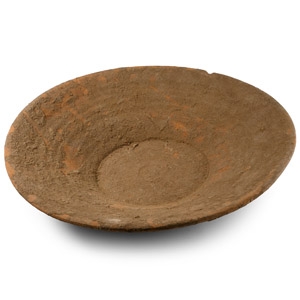
Roman Terracotta Dish
1st-4th century A.D.Sold for (Inc. bp): £85
With central tondo and gentle fluting, curved profile, basal ring. 780 grams, 25 cm
Ex London, UK, collection, 1990-2000. This lot is accompanied by an illustrated lot declaration signed by the Head of the Antiquities Department, Dr Raffaele D'Amato. -
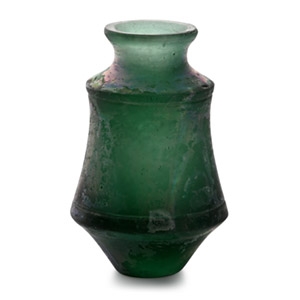
Roman Emerald Green Glass Vessel
1st-3rd century A.D.Estimate: £400 - 600 (+bp*)
Opening Bid: £200
Miniature bell-shaped flask with carinated foot and shoulder, everted rim., 19.2 grams, 39 mm
Ex Mayfair, London, UK, gallery, 1990s-2000s. From an important collection of glass, the property of a London gentleman. This lot is accompanied by an illustrated lot declaration signed by the Head of the Antiquities Department, Dr Raffaele D'Amato. -
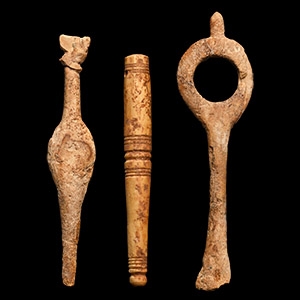
Roman Bone Pin and Implement Group
3rd-4th century A.D.Estimate: £100 - 140 (+bp*)
Opening Bid: £50
Each with round-section shank, one with hoop finial. 29.3 grams total, 9.2-11.3 cm
Private collection of Mr K.A., acquired in the 1990s-early 2000s. This lot is accompanied by an illustrated lot declaration signed by the Head of the Antiquities Department, Dr Raffaele D'Amato.
