
Loading, please wait...
LOT 0249
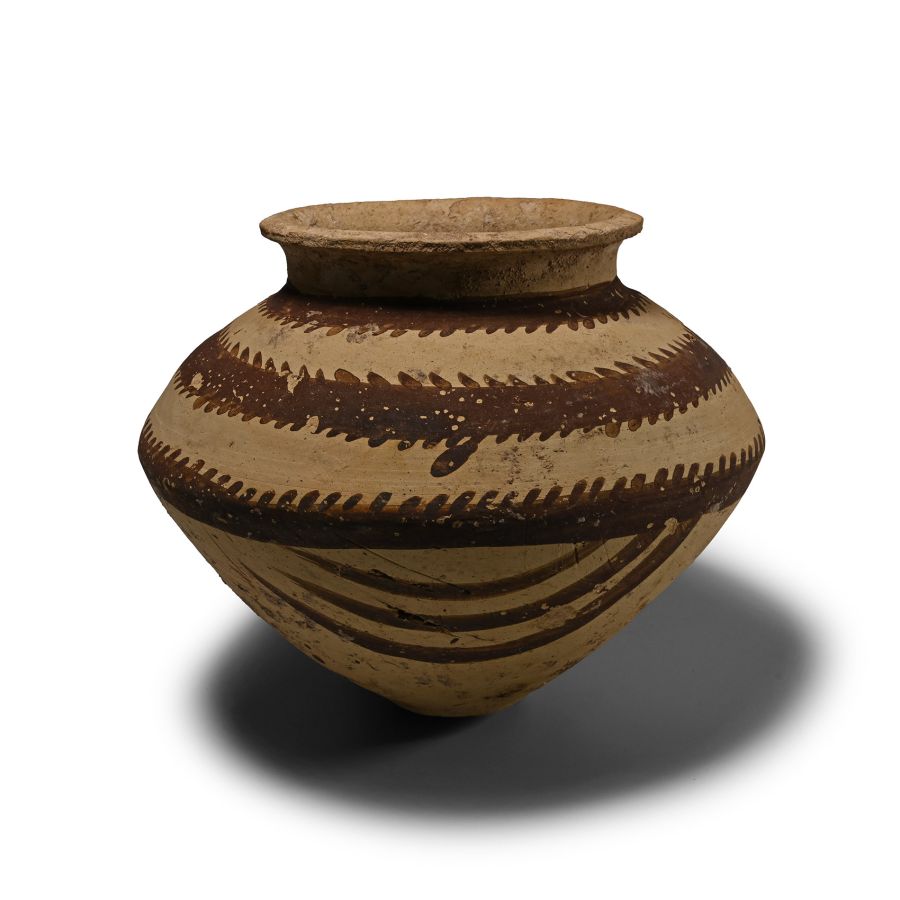
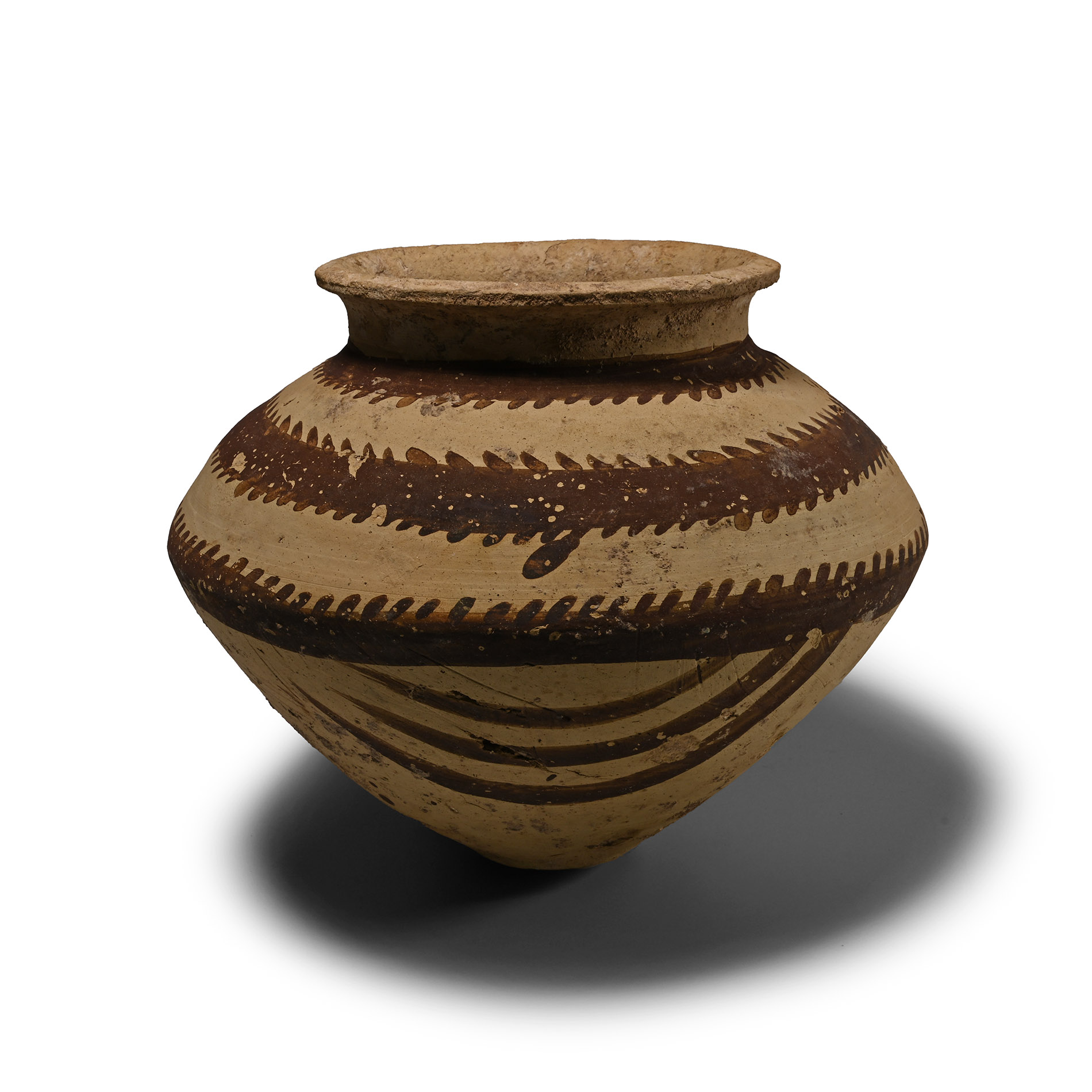
Tell Halaf Painted Terracotta Vessel
2900-2500 B.C.
7 in. (712 grams, 18 cm wide).
Biconical in profile with narrow base, broad shoulder and everted flared rim; painted concentric herringbone band to the shoulder and swags beneath.
ProvenanceAcquired in the mid 1980s-1990s.
Private collection, Switzerland, thence by descent.
Private collection, since the late 1990s.
This lot has been checked against the Interpol Database of stolen works of art and is accompanied by search certificate number no.12258-222363.
This lot has been cleared against the Art Loss Register database, and is accompanied by an illustrated lot declaration signed by the Head of the Antiquities Department, Dr Raffaele D'Amato.
See Abd el-Mesih Baghdo, Lutz Martin, Mirko Novák, Winfried Orthmann, Ausgrabungen auf dem Tell Halaf in Nordost-Syrien. Vorbericht über die erste und zweite Grabungskampagne, Wiesbaden, 2009.
CONDITIONTimeLine Auctions follows a vetting process to ensure the authenticity and legality of all items, reinforcing our commitment to integrity and responsible trading. Each antiquity, antique, and coin lot undergoes thorough examination by a vetting committee of at least ten external specialists, professional trade association members, scientists, and archaeologists: Our Vetting Process
AUCTIONS:
TimeLine is a leading auction house specialising in antiquities, ancient art, collectables, natural history, coins, medals, and books. Our auctions offer museums, collectors, historians, and enthusiasts the opportunity to acquire unique and historically significant pieces.
LOT 0249
Tell Halaf Painted Terracotta Vessel
Estimate £1,500 - 2,000€1,740 - 2,320 (for guidance only)$2,030 - 2,700 (for guidance only)
-

West Central Asian Bronze Rhomb Stamp Seal
Circa 2300-2000 B.C.Sold for (Inc. bp): £117
Openwork stamp with loop handle; accompanied by an old scholarly note, typed and signed by W.G. Lambert, late Professor of Assyriology, University of Birmingham, 1970-1993, which states: 'Stamp Seal of Bronze 36x33x13 mm. This is flat, compartmented and open-work, with a handle of inverted V-shape on the back. The design is a linear pattern: to each end is a horizontal straight line, the two being joined by pairs of diagonal lines from them crossing in the middle and creating a row of one rhomb and two triangles in the middle. This comes from west central Asia and dates to c. 2300-2000 B.C. It is a nice example of its kind and in very good condition.' 10 grams, 36 mm
From the collection of the late Mr S, 1970-1990s. Accompanied by an original typed and signed scholarly note by the late W.G. Lambert, Professor of Assyriology at the University of Birmingham, 1970-1993. This lot has been cleared against the Art Loss Register database, and is accompanied by an illustrated lot declaration signed by the Head of the Antiquities Department, Dr Raffaele D'Amato. -
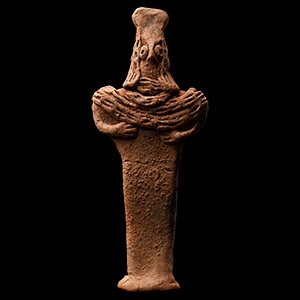
Syro-Hittite Terracotta Fertility Figure
1500-900 B.C. or laterSold for (Inc. bp): £234
Standing female deity (Astarte?), wearing a long robe and a broad textured necklace; arms bent and hands placed on the abdomen; beaked facial features with applied eyes and single spur to the rear. 158 grams, 18.5 cm
Acquired in Paris, France, in 1988. From the collection of G.M.R.H., London, UK. This lot has been cleared against the Art Loss Register database, and is accompanied by an illustrated lot declaration signed by the Head of the Antiquities Department, Dr Raffaele D'Amato. -
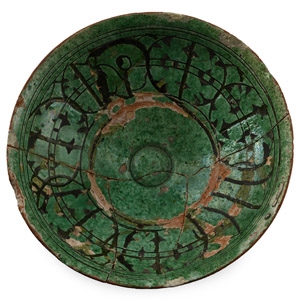
Western Asiatic Green Glazed Bowl with Incised Decoration
9th century A.D.Sold for (Inc. bp): £98
Funnel-shaped with stepped foot, green glazed inner face with decorative scrolls; old label to the underside, repaired. 455 grams, 19 cm wide
From the private family collection of Ersula Barter-Hemmerich, the longest serving member of staff working at the United Nations, her private collection formed in the 1950s and 1960s; thence by descent to her grandson. This lot has been cleared against the Art Loss Register database, and is accompanied by an illustrated lot declaration signed by the Head of the Antiquities Department, Dr Raffaele D'Amato.
