
Loading, please wait...
LOT 0906
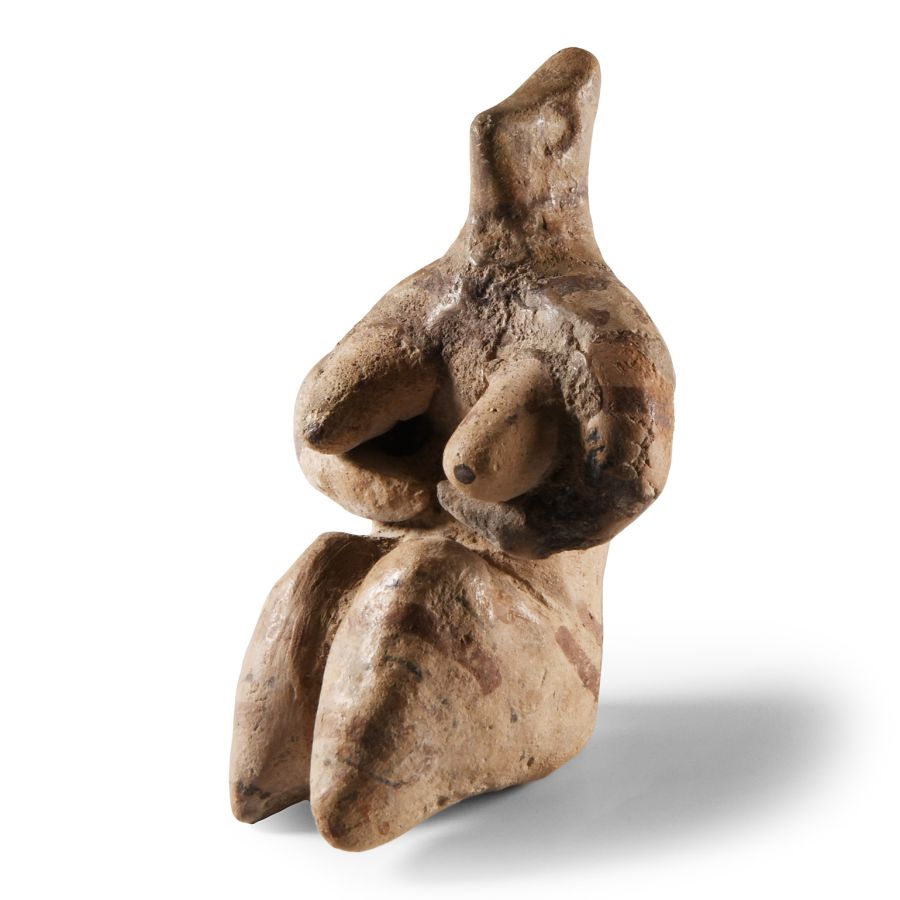
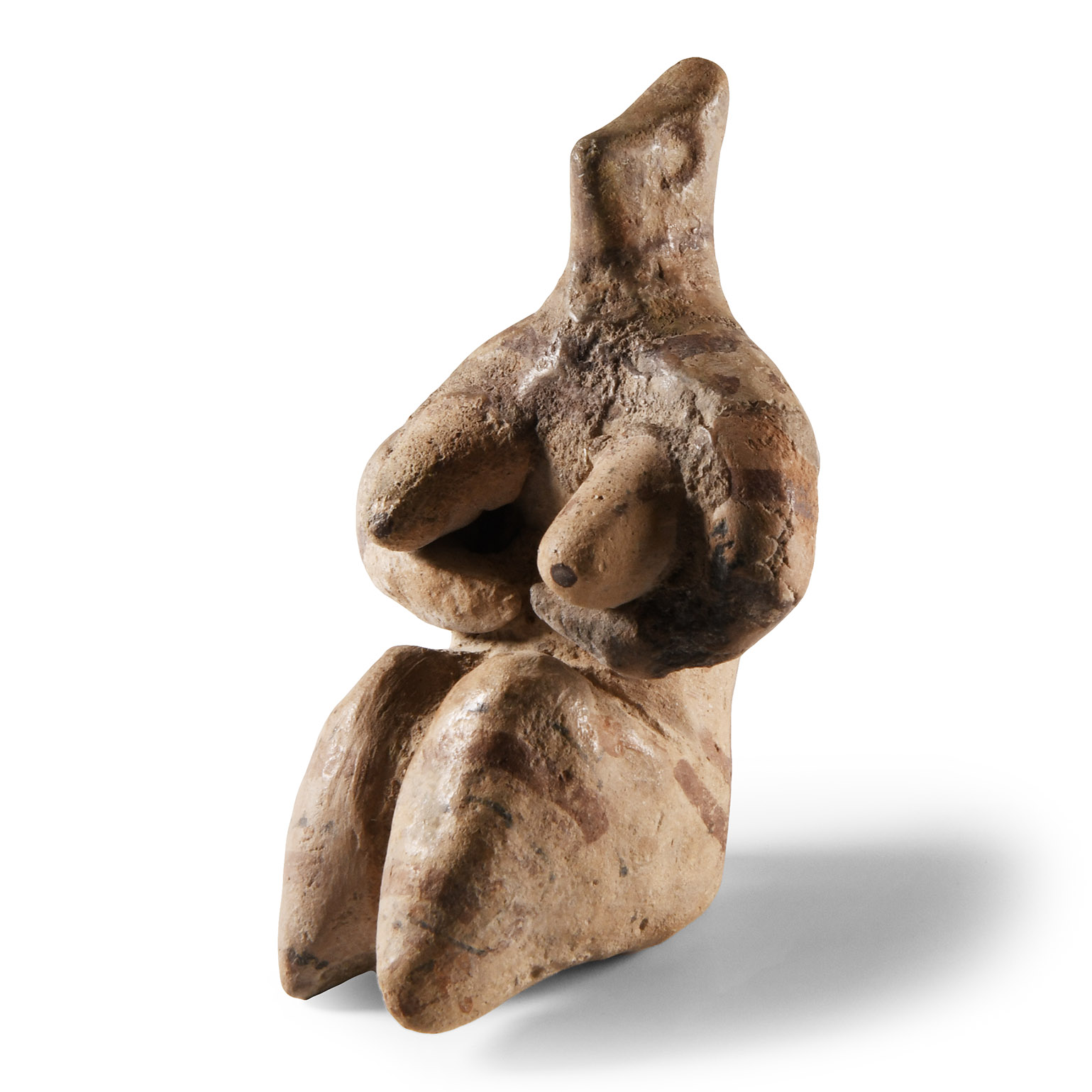
Tel Halaf Terracotta Fertility Figure
6TH-5TH MILLENNIUM B.C. AND LATER
3 3/4 in. (119 grams, 94 mm).
With pinched facial features, applied breasts, horizontal bands of pigment; restored from old and new pieces. [No Reserve]
ProvenanceAcquired 1980-1990s.
From the private collection of H.N., Milton Keynes, Bedfordshire, UK.
Cf. Staatliche Museen zu Berlin, inventory number VA 12517, 12518, for a very similar example.
CONDITIONTimeLine Auctions follows a vetting process to ensure the authenticity and legality of all items, reinforcing our commitment to integrity and responsible trading. Each antiquity, antique, and coin lot undergoes thorough examination by a vetting committee of at least ten external specialists, professional trade association members, scientists, and archaeologists: Our Vetting Process
AUCTIONS:
TimeLine is a leading auction house specialising in antiquities, ancient art, collectables, natural history, coins, medals, and books. Our auctions offer museums, collectors, historians, and enthusiasts the opportunity to acquire unique and historically significant pieces.
-
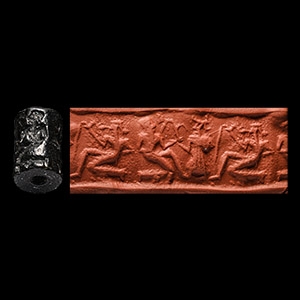
Western Asiatic Black Stone Cylinder Seal with Presentation Scene
2nd-1st millennium B.C.Estimate: £200 - 300 (+bp*)
Opening Bid: £100
Small cylinder with carved frieze of two kneeling warriors flanking a standing robed figure with headdress; supplied with a museum-quality impression. 2.69 grams, 15 mm
From a Cotswold, UK, collection, item no.121; as seen and catalogued by the late Professor Wilfrid George Lambert pre 1990.
The late W.G. Lambert was Professor of Assyriology at the University of Birmingham in the period 1970-1993. -
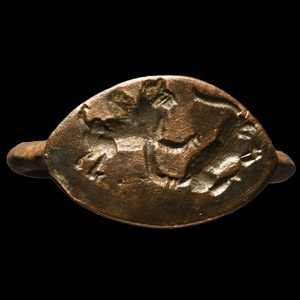
Parthian Bronze Ring with Attacking Gryphon
Late 1st millennium B.C.Sold for (Inc. bp): £169
Round-section hoop supporting a scaphoid plaque with chamfered underside, incuse image of a winged gryphon seizing an ibex. 6.32 grams, 25.71 mm overall, 20.14 mm internal diameter (approximate size British R 1/2, USA 8 3/4, Europe 19.38, Japan 18)
Ex old English collection. London art market, pre 2000. Property of a London, UK, gentleman. -
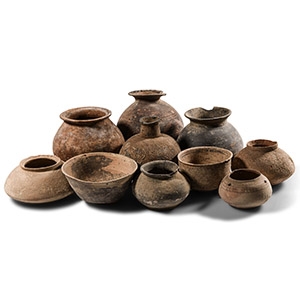
Western Asiatic Pottery Vessel Group
Circa 3rd-1st millennium B.C.Sold for (Inc. bp): £117
Comprising various types, including examples decorated with painted geometric motifs; some chipped. 2.36 kg total, 7.9-14 cm
Acquired 1980-2015. Ex Abelita family collection.
