
Loading, please wait...
LOT 2475
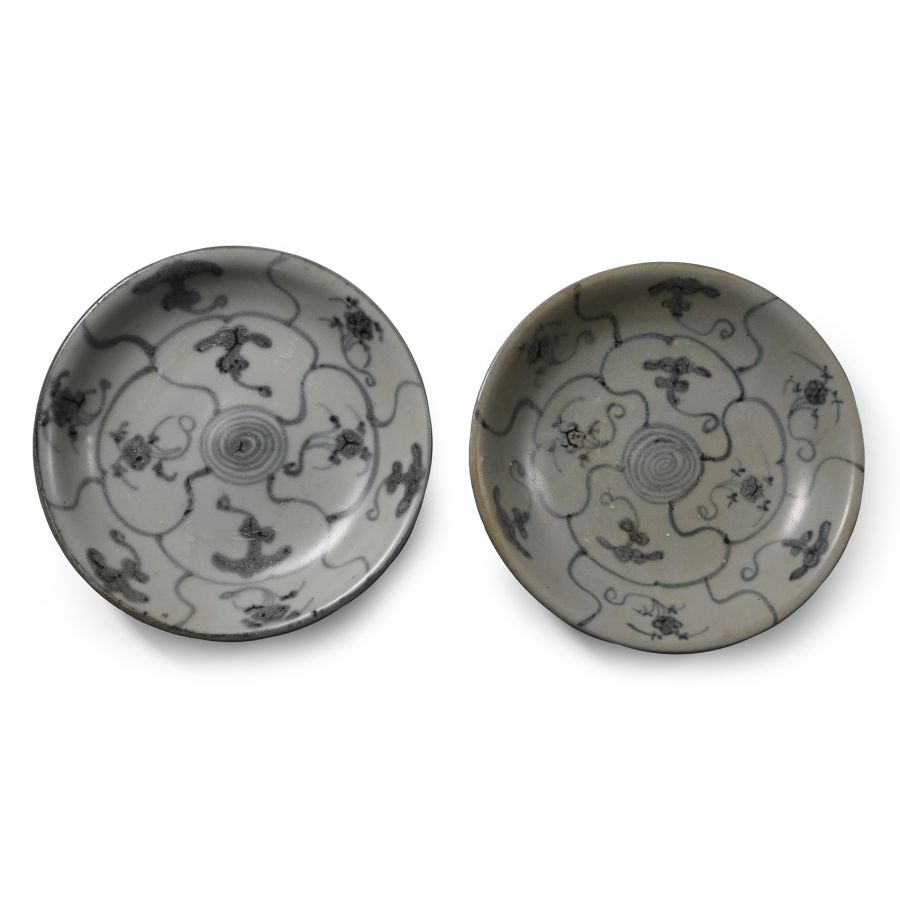
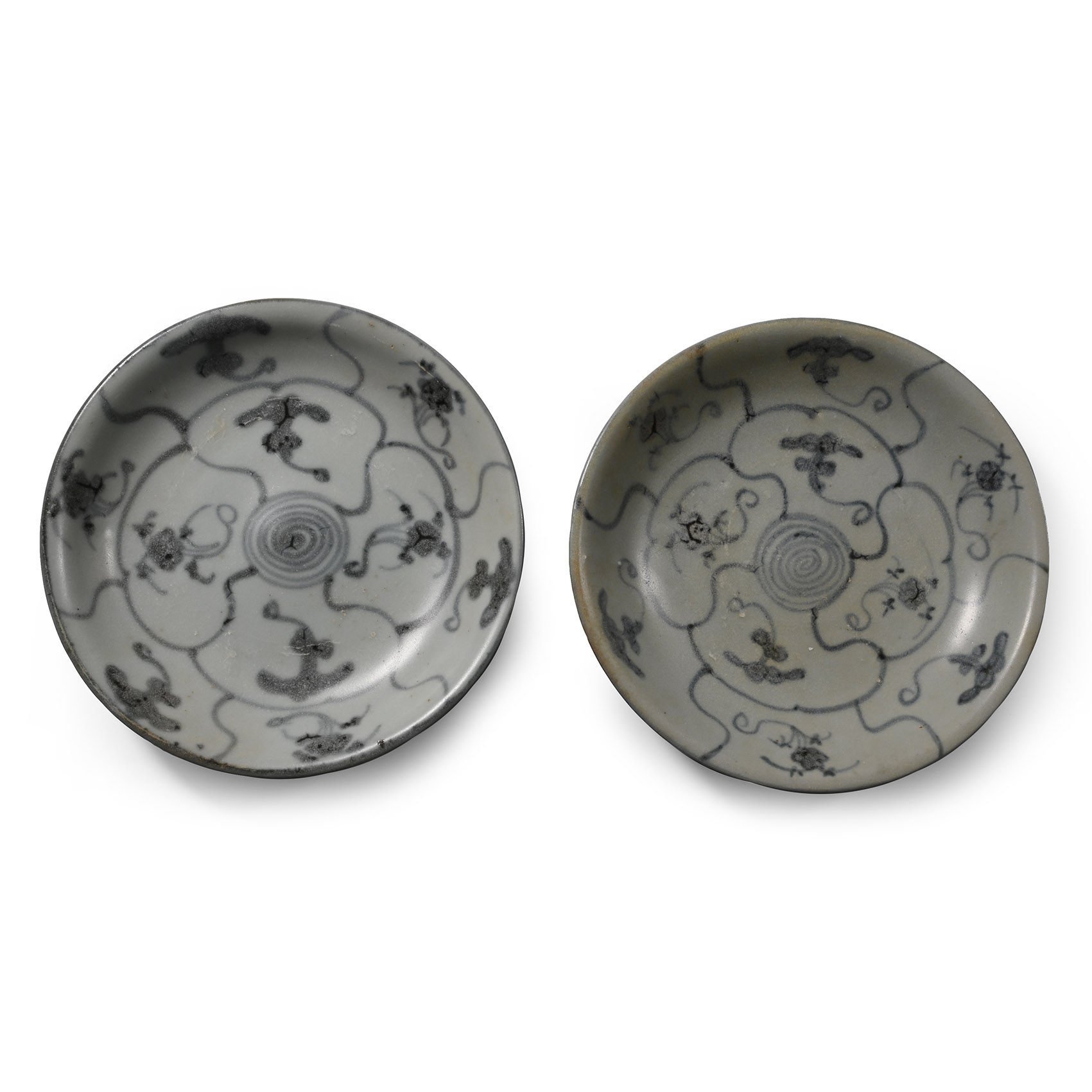
Tek Sing Treasure Shipwreck Glazed Dark Blue and White Plate Pair with Flowers
EARLY 19TH CENTURY A.D.
6 1/8 in. (485 grams total, 15.4 cm each).
Each with floral and tendril motifs to the inner and outer surfaces, central spiral to the inner face, a signature(?) to base. [2, No Reserve]
ProvenanceEx Nagel Auction, with official Tek Sing Treasure labels to verso.
Accompanied by an illustrated information sheet about the Tek Sing shipwreck.
This lot is accompanied by an illustrated lot declaration signed by the Head of the Antiquities Department, Dr Raffaele D'Amato.
The Tek Sing (True Star) wreck is one of the famous recovery stories of the 20th century. Sailing from the port of Xiamen (then known as Amoy) in February 1822 the vessel Tek Sing was bound for Jakarta, Indonesia laden with porcelain goods and 1600 Chinese emigrants. The captain decided to pass through the Gaspar Strait, between the Bangka-Belitung Islands, and ran aground on a reef. The vessel sank in about 100 feet of water. The next morning, February 7, an English East Indiaman captained by James Pearl, passing through the same waters, encountered debris and some survivors and managed to rescue about 190 of the latter.
CONDITIONTimeLine Auctions follows a vetting process to ensure the authenticity and legality of all items, reinforcing our commitment to integrity and responsible trading. Each antiquity, antique, and coin lot undergoes thorough examination by a vetting committee of at least ten external specialists, professional trade association members, scientists, and archaeologists: Our Vetting Process
AUCTIONS:
TimeLine is a leading auction house specialising in antiquities, ancient art, collectables, natural history, coins, medals, and books. Our auctions offer museums, collectors, historians, and enthusiasts the opportunity to acquire unique and historically significant pieces.
LOT 2475
Tek Sing Treasure Shipwreck Glazed Dark Blue and White Plate Pair with Flowers
Sold for (Inc. bp): £52
-
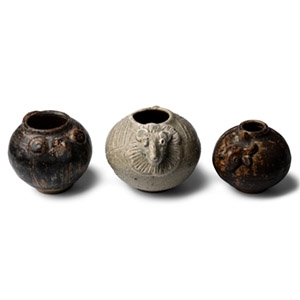
South East Asian Glazed Vessel Group
19th century A.D. or earlierSold for (Inc. bp): £20
Three squat jars each with an animal-head to the shoulder: ox, sheep and stylised bird. 480 grams total, 78-97 mm
From the private collection of a Canadian gentleman living in Essex, UK, formed since the 1920s-circa 1990. Property of an Essex lady until the late 1990s; thence by descent. From the private collection of an Essex gentleman since the late 1990s. This lot is accompanied by an illustrated lot declaration signed by the Head of the Antiquities Department, Dr Raffaele D'Amato. -
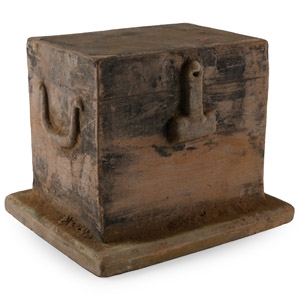
Chinese Ming Glazed Terracotta Model Chest
Ming Dynasty, 1368-1644 A.D. or laterSold for (Inc. bp): £104
Formed as a lidded black chest on a green rectangular base; two large handles, hinges, and a lock to the front, five holes to the base; from a tomb group. 1.08 kg, 13.5 x 11.5 cm
From a West Country collection, UK, 1990s. This lot is accompanied by an illustrated lot declaration signed by the Head of the Antiquities Department, Dr Raffaele D'Amato. -
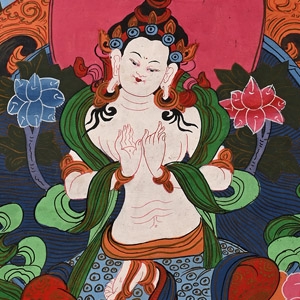
Vintage Tibetan Buddhist Hand-Painted Thangka
Mid 20th century A.D.Sold for (Inc. bp): £33
Painted panel with central Bodhisattva Samantabhadra figure surrounded by miniatures of Buddhist deities. 46 grams, 53.5 x 39.6 cm
From the private collection of a Canadian gentleman living in Essex, UK, formed since the 1920s-circa 1990. Property of an Essex lady until the late 1990s; thence by descent. From the private collection of an Essex gentleman since the late 1990s. This lot is accompanied by an illustrated lot declaration signed by the Head of the Antiquities Department, Dr Raffaele D'Amato.
