Loading, please wait...
LOT 1718
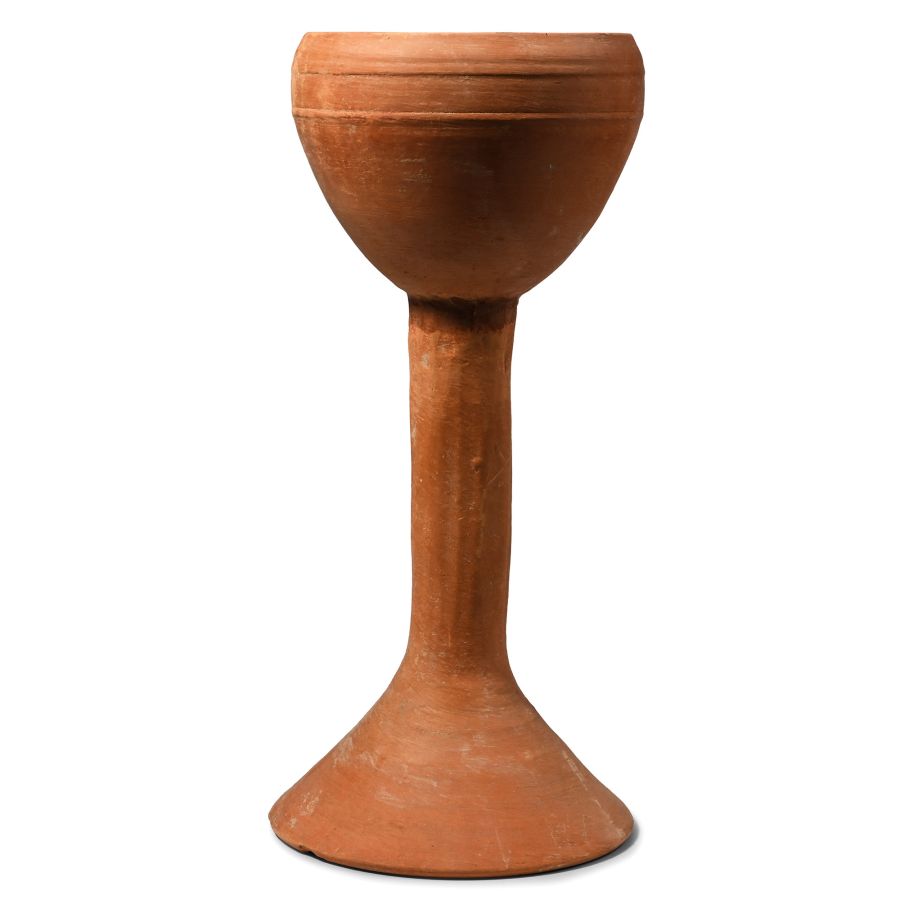
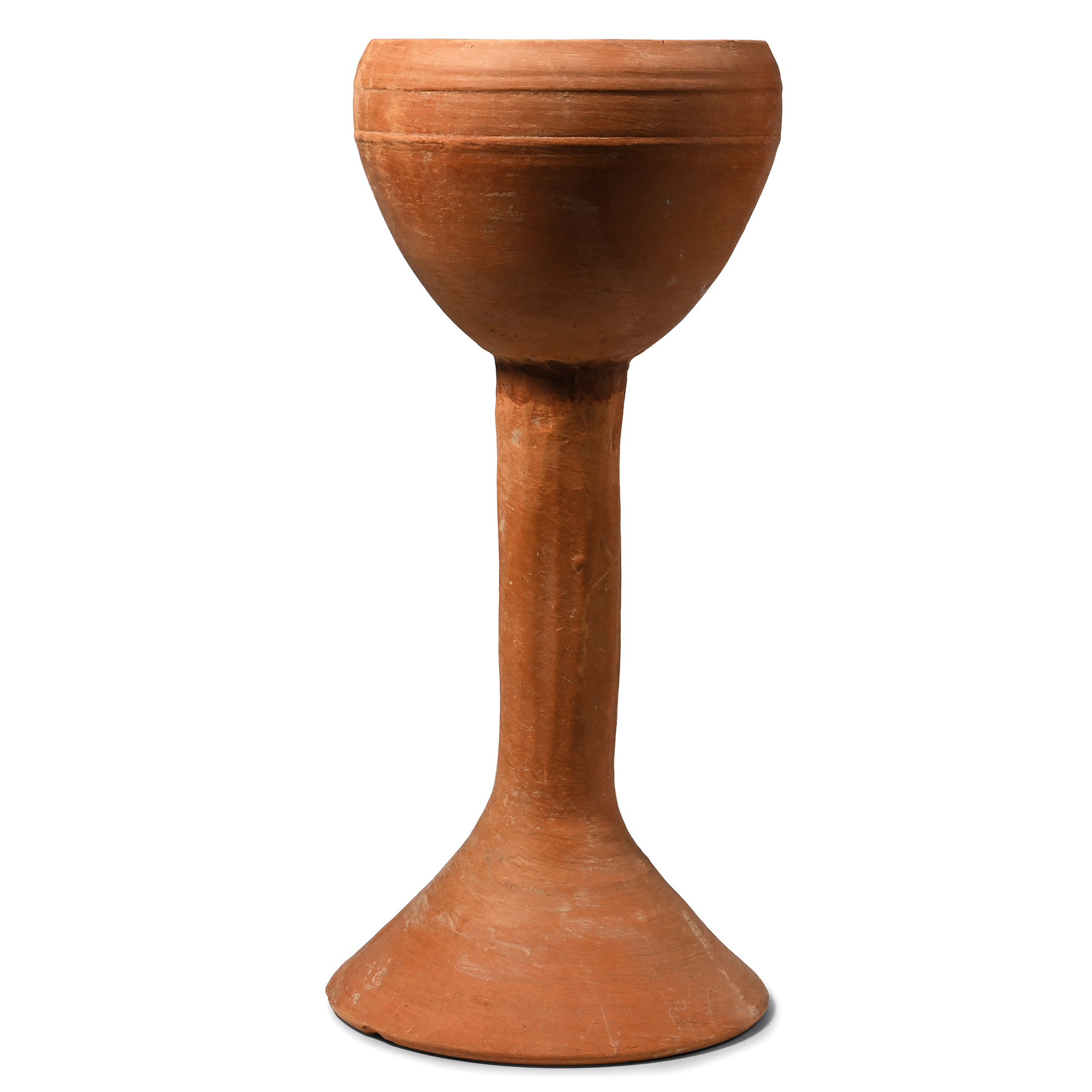
Tall Western Asiatic Pottery Chalice
1ST MILLENNIUM B.C.
10 3/8 in. (527 grams, 26.5 cm).
With slender stem and trumpet-shaped foot, mammiform bowl with raised collar beneath the rim. [No Reserve]
ProvenanceFrom the collection of a gentleman, 1988-2000s.
CONDITIONTimeLine Auctions follows a vetting process to ensure the authenticity and legality of all items, reinforcing our commitment to integrity and responsible trading. Each antiquity, antique, and coin lot undergoes thorough examination by a vetting committee of at least ten external specialists, professional trade association members, scientists, and archaeologists: Our Vetting Process
AUCTIONS:
TimeLine is a leading auction house specialising in antiquities, ancient art, collectables, natural history, coins, medals, and books. Our auctions offer museums, collectors, historians, and enthusiasts the opportunity to acquire unique and historically significant pieces.
-
Old Babylonian Terracotta Cuneiform Tablet of a Poem
Early 2nd millennium B.C.Estimate: £3,000 - 4,000 (+bp*)
Opening Bid: £1,400
Pillow-shaped tablet with a Sumerian hymn to Sin-idinam, king of Larsa (1849-1843 BC), reading: '5-6 (the gods) granted him to exercise, in a sublime manner, kingship and the priestly office. 7-8 They made him sit upon a seat whose foundation is firm, a radiant throne ... 9-10 Once he had firmly secured the crown and the sublime radiance upon his head. 11 Sin, the firstborn son of Enlil, 12 bestowed upon him a sublime name. 13 Utu, the great judge of the universe, 14 caused law and justice to be established for him]. 15 The praiseSumer [...] ... 16 The vast and shining wisdom ...' 163 grams, 83 mm
Specialised collection of cuneiform texts, the property of a London gentleman and housed in London before 1992. Thence by descent to family members. Examined by Professor Wilfrid George Lambert FBA (1926-2011), historian, archaeologist, and specialist in Assyriology and Near Eastern archaeology, in the late 1980s and early 1990s. This small collection is exceptional for the variety of types, including some very rare and well-preserved examples. Accompanied by a translation by M. Guichard. This lot has been checked against the Interpol Database of stolen works of art and is accompanied by search certificate number no.13269-253330.
Old Babylonian tablets were found in regular excavations from Khafaje and Kish, although, even today, the main body came from dealers. A definite date can be assigned to them only based on internal evidence. The scripts of the tablets vary a good deal: some tablets are written in archaic cursive, others in younger cursive, still others mix archaic and younger sign forms. -
Seljuk Bronze Incense Burner with Silver Inlays
12th century A.D. or laterSold for (Inc. bp): £819
Domed openwork cover with inlays, the knop surrounded by a band of inlaid leaves, a band of Greek key motifs below and above the basal rim enclosing a series of figures in dynamic poses, three of the figures enclosed within a medallion and depicting a seated male with crossed legs and a bird on his right side. 345 grams, 14 cm
with a London, UK gallery 1971-early 2000s. -
Kassite Agate Eye Bead with Cuneiform Inscription for King Kurigalzu II in Gold Mount
1400-1000 B.C.Estimate: £80,000 - 100,000 (‡+bp*)
Opening Bid: £40,000
Polished cabochon in a gold frame with radiating bosses, integral loop; reverse with four incised columns of cuneiform text naming Kurigalzu II. 18.30 grams, 42 mm
Private collection, Mrs M.V., circa 1980s. Kept in Switzerland since the late 1980s. This lot has been checked against the Interpol Database of stolen works of art and is accompanied by search certificate number no.13202-249238.
The cuneiform inscription names Kurigalzu II (c.1332-1308 B.C.), 'strong man, King of Babylon, son of Burnaburiaš.' Kurigalzu II was one of the most powerful Kassite rulers, known for his military campaigns and extensive building projects, including the foundation of the city of Dur-Kurigalzu. Inscribed Kassite agate eye beads are rare and are generally understood to have served amuletic or votive functions, combining royal titulary with protective symbolism.