
Loading, please wait...
LOT 1132
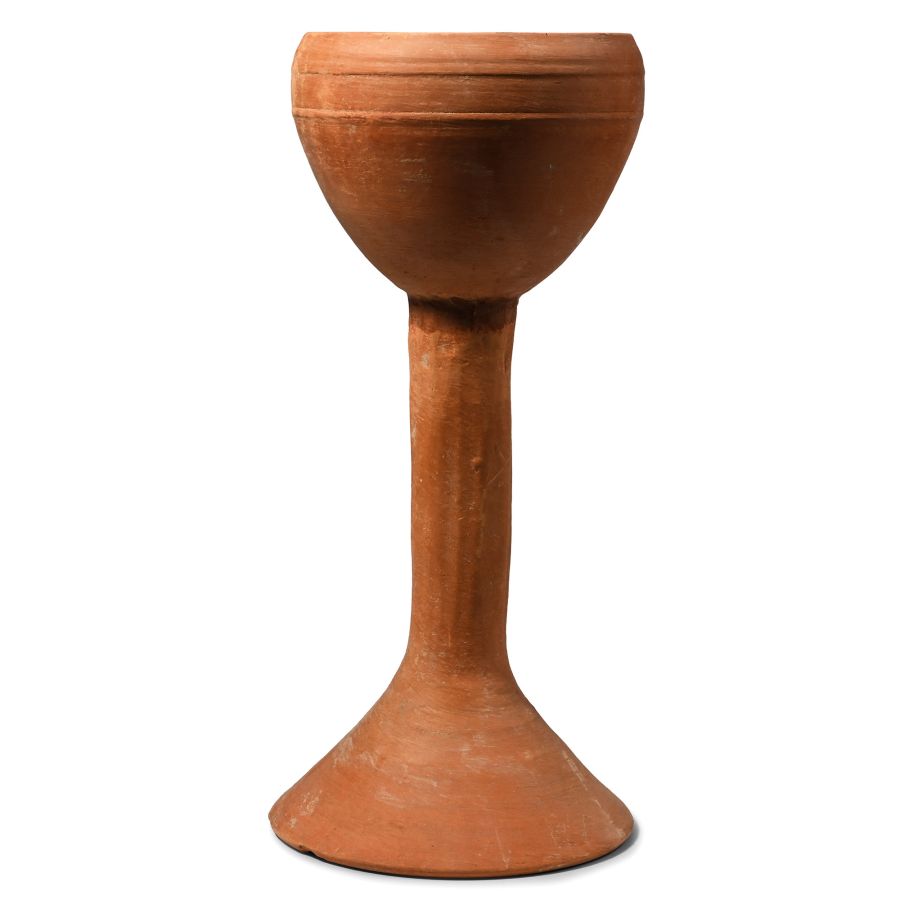
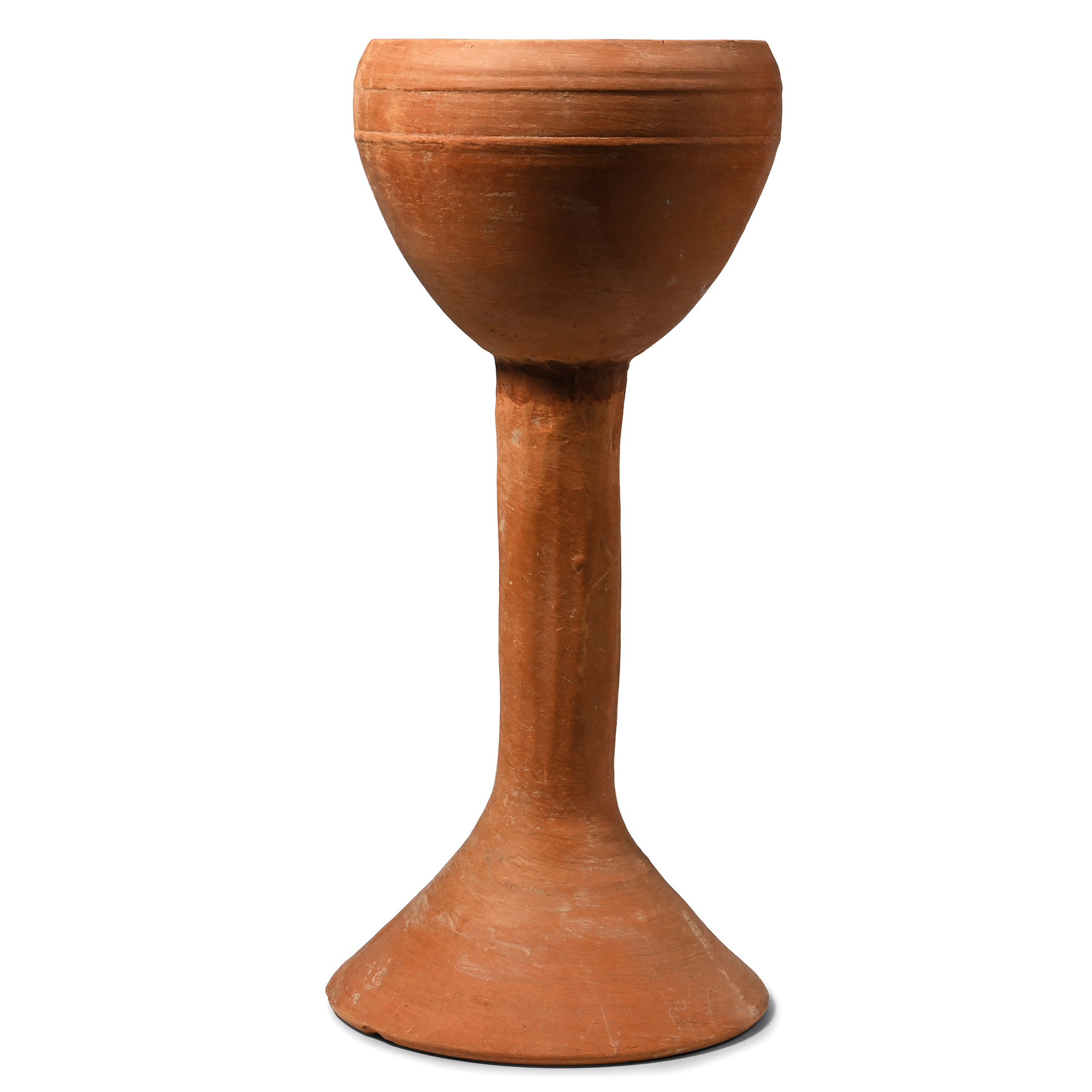
Tall Western Asiatic Pottery Chalice
1ST MILLENNIUM B.C.
10 3/8 in. (527 grams, 26.5 cm).
With slender stem and trumpet-shaped foot, mammiform bowl with raised collar beneath the rim.
ProvenanceFrom the collection of a gentleman, 1988-2000s.
CONDITIONTimeLine Auctions follows a vetting process to ensure the authenticity and legality of all items, reinforcing our commitment to integrity and responsible trading. Each antiquity, antique, and coin lot undergoes thorough examination by a vetting committee of at least ten external specialists, professional trade association members, scientists, and archaeologists: Our Vetting Process
AUCTIONS:
TimeLine is a leading auction house specialising in antiquities, ancient art, collectables, natural history, coins, medals, and books. Our auctions offer museums, collectors, historians, and enthusiasts the opportunity to acquire unique and historically significant pieces.
LOT 1132
Tall Western Asiatic Pottery Chalice
Estimate £100 - 140€120 - 160 (for guidance only)$140 - 190 (for guidance only)
-
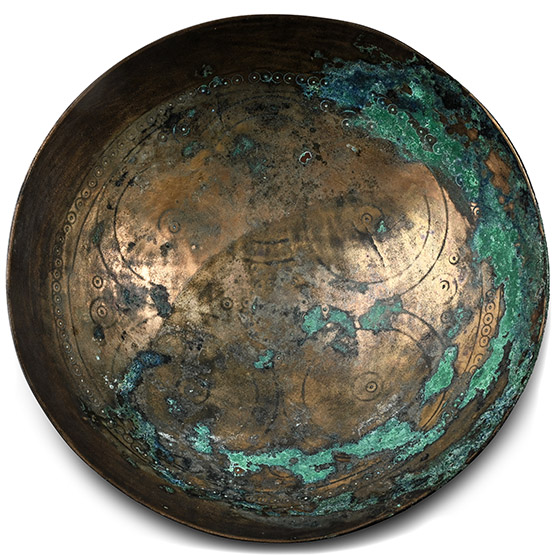
Qaznavid Decorated Bronze Bowl
12th century A.D.Estimate: £200 - 300 (+bp*)
Opening Bid: £100
Hemispherical in profile with incised design of concentric rings to the inner face. 205 grams, 15.7 cm
Ex 'S' collection, London, UK, 1970s-1990s. -
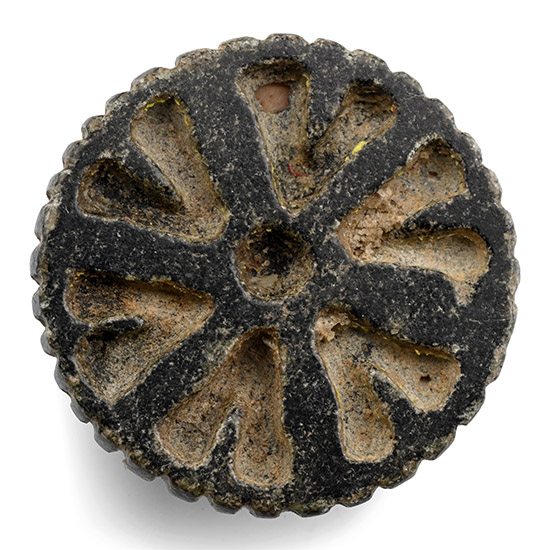
Neo-Assyrian Stone Stamp Seal with Inlays
Circa 800 B.C.Estimate: £250 - 350 (+bp*)
Opening Bid: £125
Discoid in plan with incuse rosette design to stamping face, rectangular stub handle; reverse with five inlaid triangular inserts with stepped edges and a sixth to the upper face of the handle; very rare. 5.52 grams, 25 mm
Ex 'S' collection, London, UK, 1970s-1990s. -
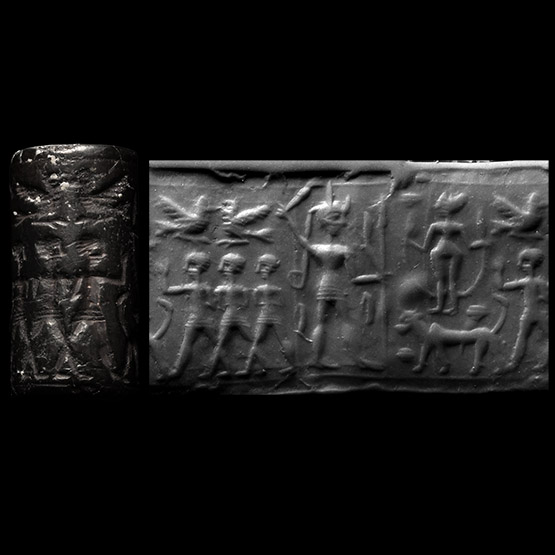
Syrian Stone Cylinder Seal with Storm God and Fertility Goddess
Circa 1800-1700 B.C.Sold for (Inc. bp): £715
With standing figures and animals, accompanied by a copy of an old scholarly note, typed and signed by W.G. Lambert, late Professor of Assyriology, University of Birmingham, 1970-1993, which states: 'Cylinder Seal of Hematite, 21.5 x 11 mm. The design is made up of two parts. The main scene shows two facing deities. On the left stand the Storm God, Hadad or Teshup, wearing a short kilt and a spiked helmet. A long plait of hair falls down his back. In his raised right hand he holds a mace, in the left a long spear and a bow(?). On the right stands a goddess, nude, having thrown back her cloke, and standing above a bull. This goddess is either Anat or Ashtart, goddess or fertility. There are four fillers in the main scene, two discs, a human hand and an unidentified item. The minor scene consists of a row of three walking humans, the first with one hand raised, below two facing birds. The whole engraing is set between lines, one above one below. This seal in Syrian, c. 1800-1700 B.C. and is a typical example of the interest which the Syrian engravers put into their seals. It is somewhat worn, but the whole of the design is clear, having been cut deeply in the original stone.'; accompanied by a museum quality impression and pair of red stone beads. 6.58 grams, 21 mm
Anonymous French sale. Private collection, London, UK. Accompanied by a copy of an old scholarly note, typed and signed by W.G. Lambert, late Professor of Assyriology, University of Birmingham, 1970-1993.
