
Loading, please wait...
LOT 1661
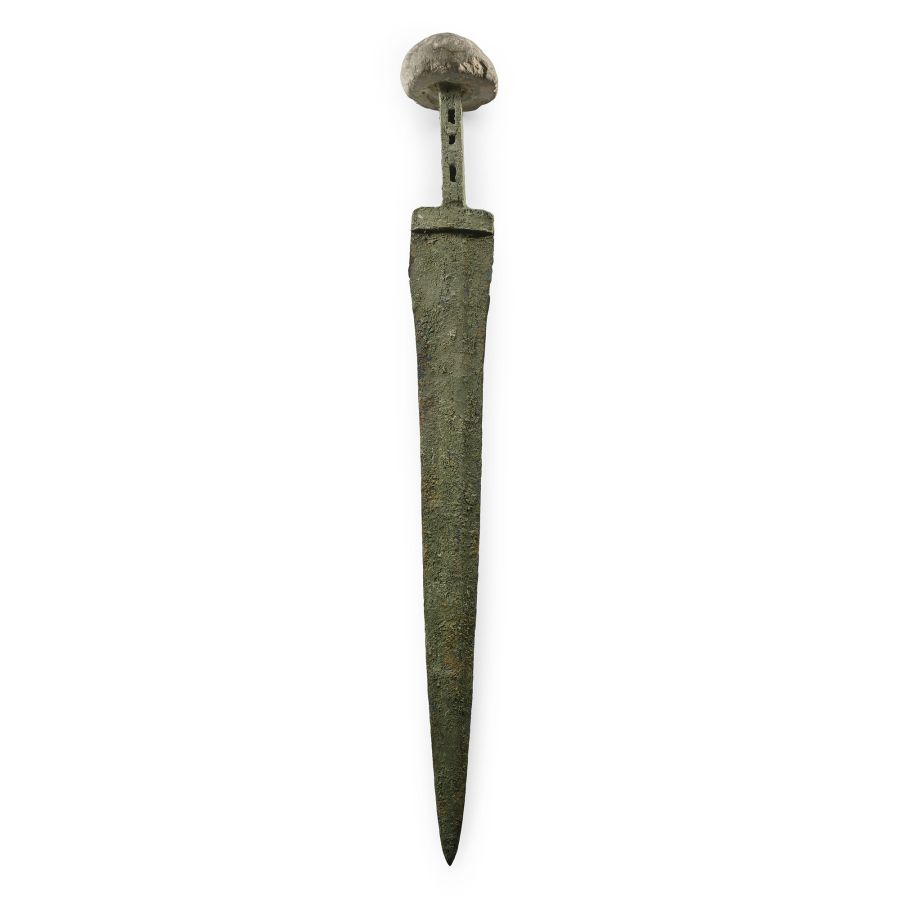
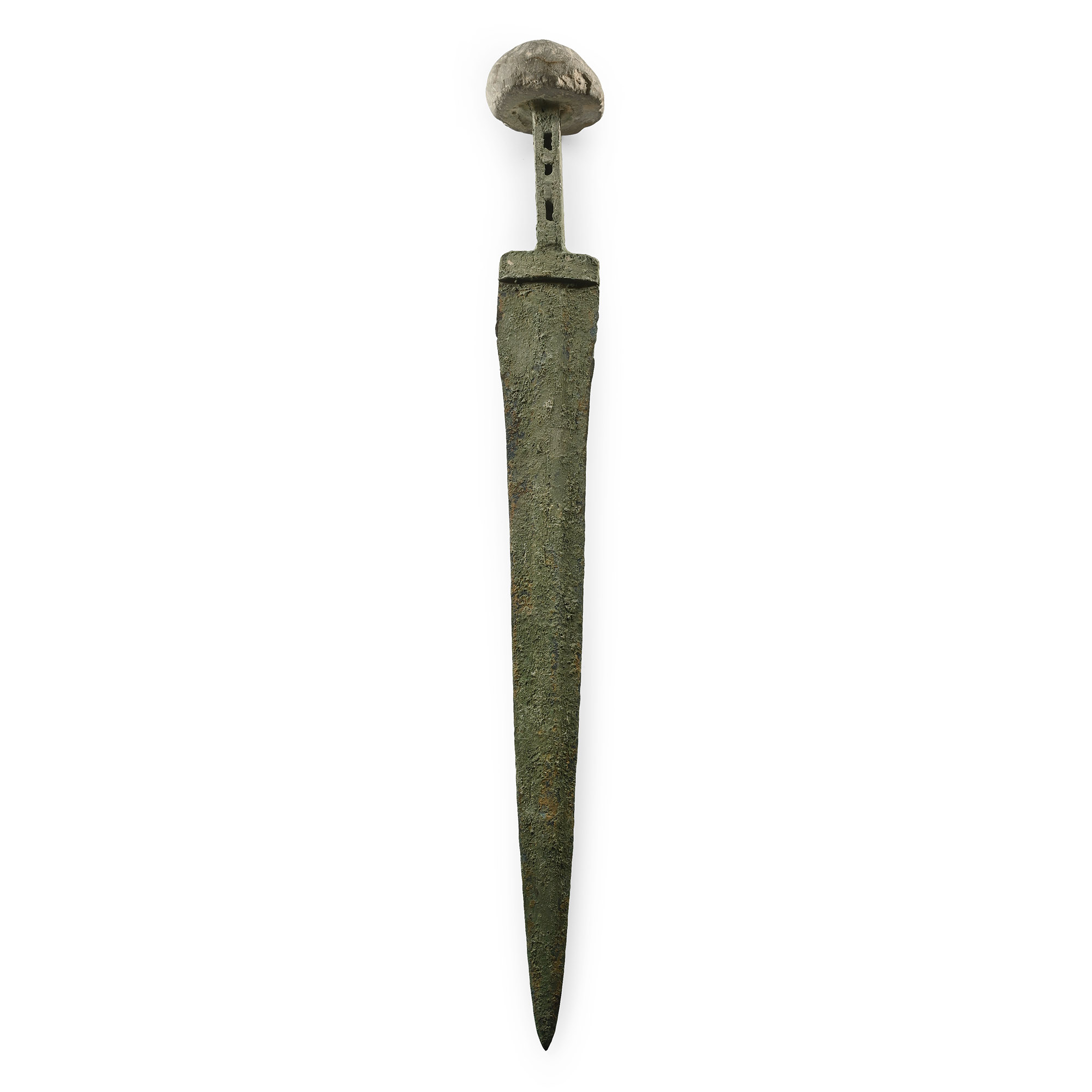
Talish Bronze Blade
13TH-7TH CENTURY B.C.
19 3/4 in. (595 grams, 50 cm).
Comprising a pointed blade with shallow midrib and concave sides, square shoulders with transverse horizontal ribbed guard, square-section tang with later mushroom pommel.
ProvenanceAcquired 1980-2015.
Ex Abelita family collection.
This lot is accompanied by an illustrated lot declaration signed by the Head of the Antiquities Department, Dr Raffaele D’Amato.
See Maxwell-Hyslop, R., 'Daggers and swords in Western Asia: a Study from Prehistoric Times to 600BC,' in Iraq, Volume 8, 1946, pp.1-65, pl.V, type 44a, for a similar sword from Talish.
FootnotesThese swords developed in the Period of the Wars of the Assyrian Empire. One may also compare the square shoulders and the ribs at the junction of hilt and blade here visible (and also visible on blades from Talish) with the Gandzha-Karabagh culture swords of Eastern Transcaucasia.
CONDITIONTimeLine Auctions follows a vetting process to ensure the authenticity and legality of all items, reinforcing our commitment to integrity and responsible trading. Each antiquity, antique, and coin lot undergoes thorough examination by a vetting committee of at least ten external specialists, professional trade association members, scientists, and archaeologists: Our Vetting Process
AUCTIONS:
TimeLine is a leading auction house specialising in antiquities, ancient art, collectables, natural history, coins, medals, and books. Our auctions offer museums, collectors, historians, and enthusiasts the opportunity to acquire unique and historically significant pieces.
-
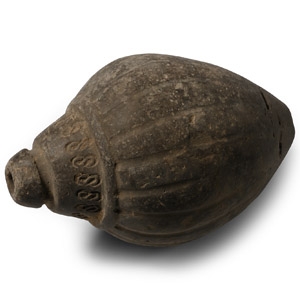
Byzantine 'Greek Fire' Ceramic Fire Bomb or Hand Grenade
9th-11th century A.D.Sold for (Inc. bp): £182
A piriform missile with dimed filler-hole, ribbed body and a band of stamped S-motifs around the neck, intended to be filled with explosive liquid and wick, used as a hand grenade. 560 grams, 14.2 cm
From an important specialist collection, London, UK, 1990s onwards. Accompanied by an academic paper by military specialist Dr Raffaele D'Amato, dated 15 July 2019 and titled 'Eastern Roman Empire - Greek Fire Bomb or Hand Grenade (μεσαίον kακάβιον) 9th-11th century AD'. This lot is accompanied by an illustrated lot declaration signed by the Head of the Antiquities Department, Dr Raffaele D’Amato. -
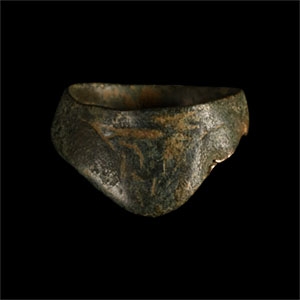
Medieval Bronze Archer's Thumb Ring
14th-15th century A.D.Sold for (Inc. bp): £52
With a D-section hoop, triangular extension with incised decoration. 2.99 grams, 24.04 mm overall, 19.35 mm internal diameter (approximate size British R, USA 8 1/2, Europe 18 3/4, Japan 18)
From an English collection formed before 2000. This lot is accompanied by an illustrated lot declaration signed by the Head of the Antiquities Department, Dr Raffaele D’Amato. -
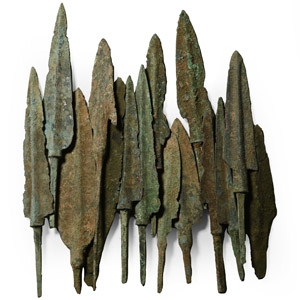
Luristan Bronze Arrowhead Group
13th-6th century B.C.Sold for (Inc. bp): £234
Comprising triangular types with thick midrib, leaf-shaped and other types. 400 grams total, 9.7-16.2 cm
Acquired 1980-2015. Ex Abelita family collection. This lot is accompanied by an illustrated lot declaration signed by the Head of the Antiquities Department, Dr Raffaele D’Amato.
