
Loading, please wait...
LOT 1403
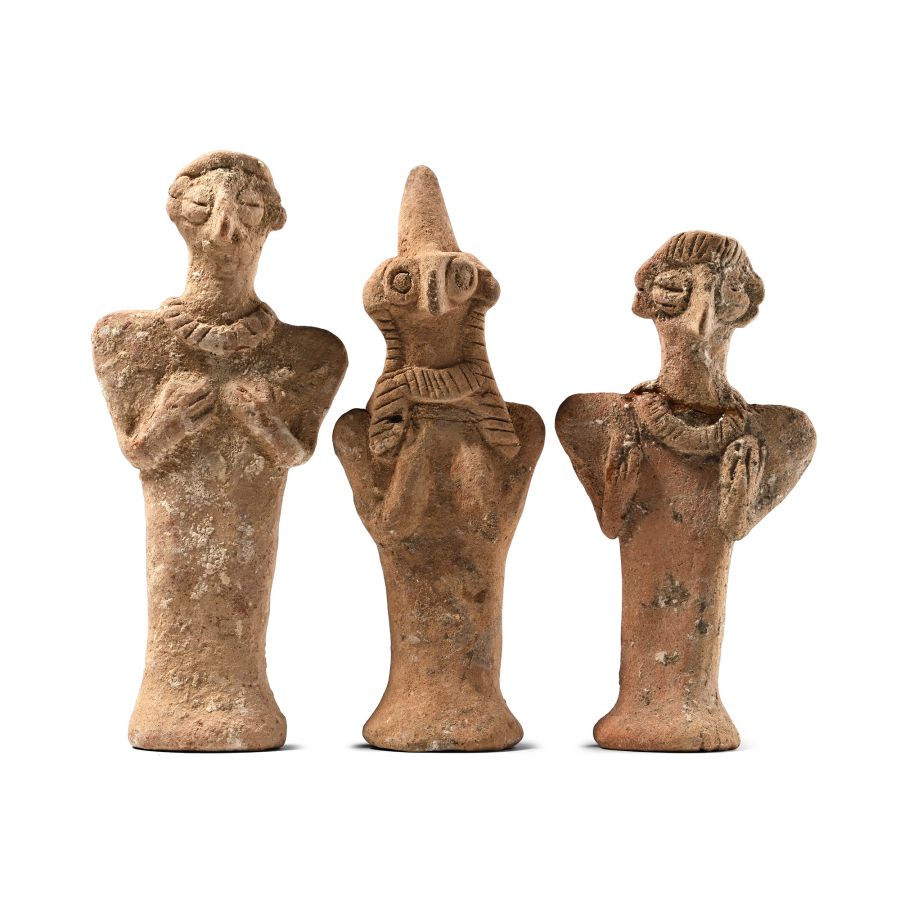
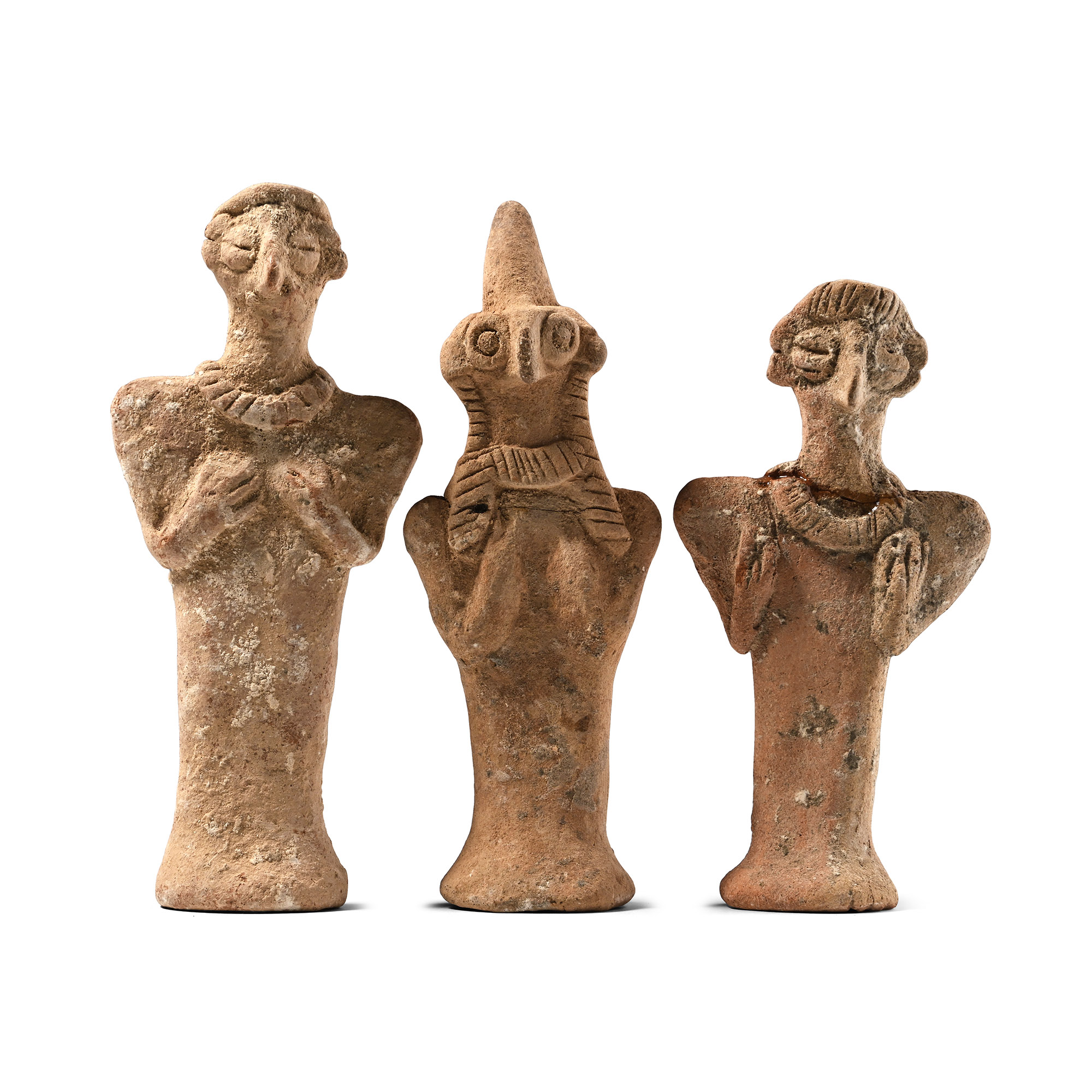
Syro-Hittite Terracotta Stading Figure Group
EARLY 1ST MILLENNIUM B.C.
4 1/8 - 4 7/8 in. (187 grams total, 10.5-12.5 cm).
Modelled in the round standing facing, each with pronounced facial features anf arms held to the chest. [3, No Reserve]
ProvenanceFrom the private collection of John Meredith, acquired since the 1990s; thence by descent.
CONDITIONTimeLine Auctions follows a vetting process to ensure the authenticity and legality of all items, reinforcing our commitment to integrity and responsible trading. Each antiquity, antique, and coin lot undergoes thorough examination by a vetting committee of at least ten external specialists, professional trade association members, scientists, and archaeologists: Our Vetting Process
AUCTIONS:
TimeLine is a leading auction house specialising in antiquities, ancient art, collectables, natural history, coins, medals, and books. Our auctions offer museums, collectors, historians, and enthusiasts the opportunity to acquire unique and historically significant pieces.
-
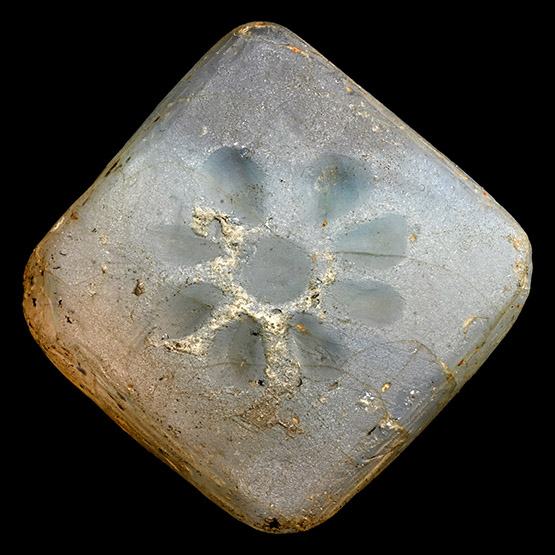
Western Asiatic Chalcedony Gaming Piece
3rd-5th century A.D.Estimate: £400 - 600 (+bp*)
Opening Bid: £200
Square in plan and plano-convex in section with tessellated triangles on the dome, horizontal grooves at the sides, incuse octofoil to the underside. 39.7 grams, 31 mm
Ex Mayfair, London, UK, collection, 1980s. -
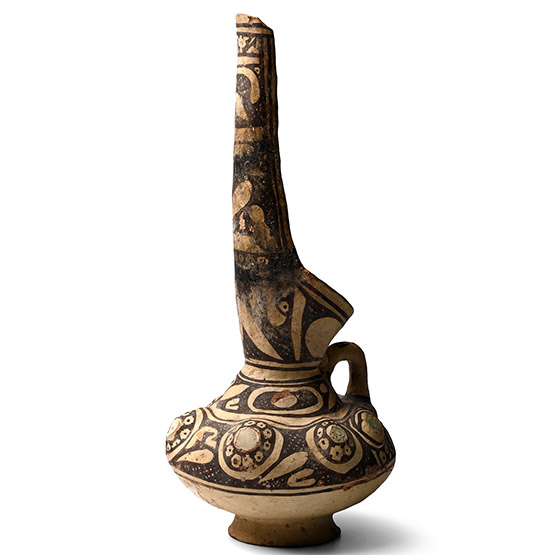
Western Asiatic Terracotta Zoomorphic Vessel with Glass Inlays
8th-9th century A.D.Estimate: £400 - 600 (+bp*)
Opening Bid: £200
Broad and squat with flared foot, loop handle, all U-section spout and strainer; raised bosses to shoulder each set with a glass inlay; reserved tendrils and flowers on a black field. 717 grams, 31.5 cm
UK collection, 1990s. Acquired on the UK art market, before 2000. Private collection, Mr M.V., a London-based businessman. -
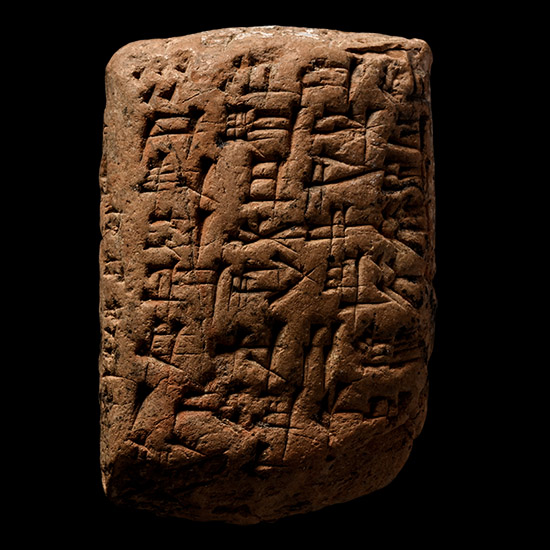
Old Babylonian Terracotta Cuneiform Tablet For the Sale of a Palm Grove during the Reign of Nur-Adad King of Larsa
1865-1850 B.C.Sold for (Inc. bp): £1,755
A pillow-shaped tablet, with cuneiform text on the broad faces and an edge, reading: '50 sar of orchard, planted with palm trees, next to Kunia, next to Amurutu, on the first small side: Rabutum. Sîn-pilah bought from Huzalum. He paid him its full price of 1/3 silver mine. He swore in the name of Nur-Adad the king that no one would constest in the future. In front of Itišumum In front of Sinennam Before Sugalum Before Kurušum Before Awīl-Amurrim the scribe In the month of šabatu, the year Nur-Adad (offered) a throne of justice (?) ...' 52 grams, 56 mm
Ex private collection. with Bonhams, Antiquities, London, 21 October 1999, no.260 (Part). Private central European collection. Accompanied by copies of the relevant Bonhams catalogue pages. This lot has been checked against the Interpol Database of stolen works of art and is accompanied by search certificate number no.12244-219769.
