
Loading, please wait...
LOT 0276
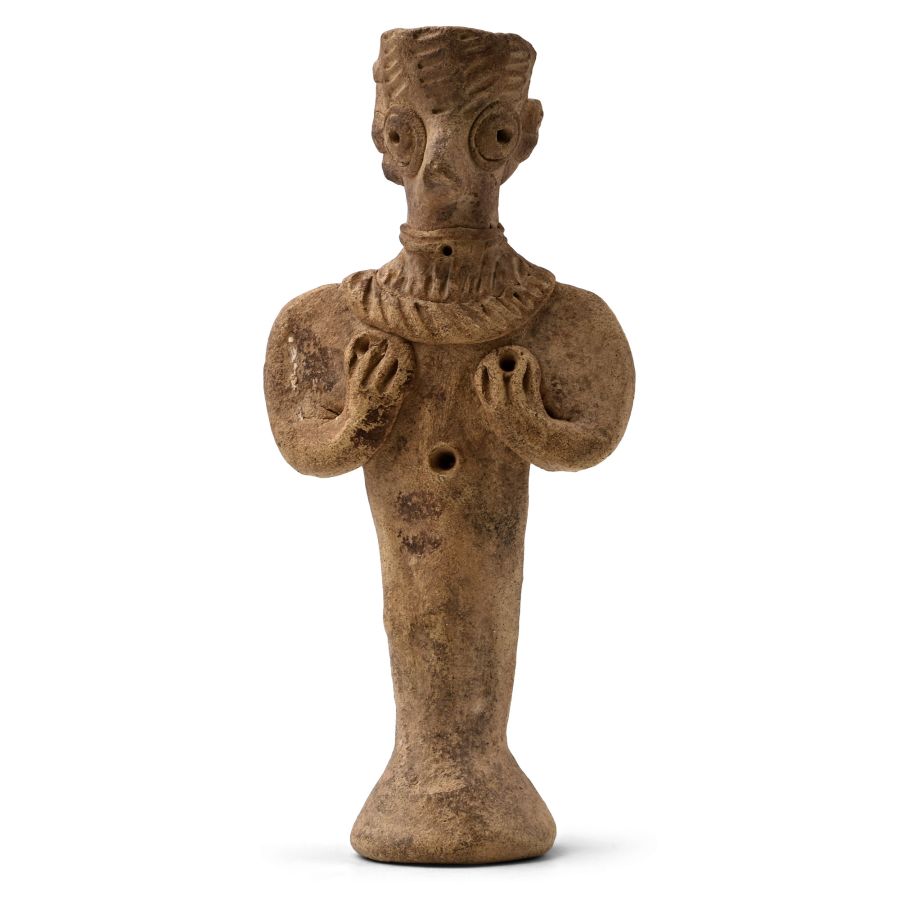
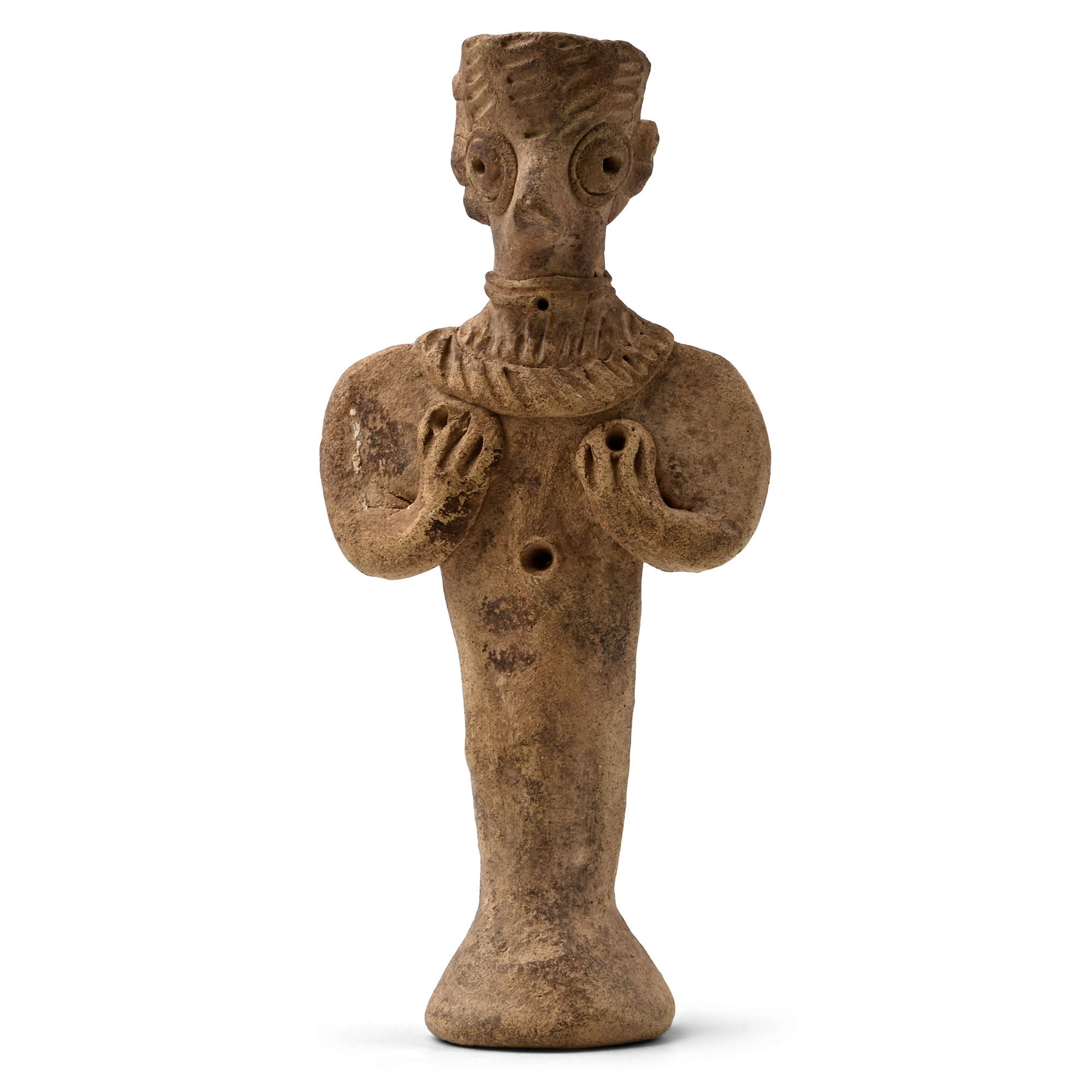
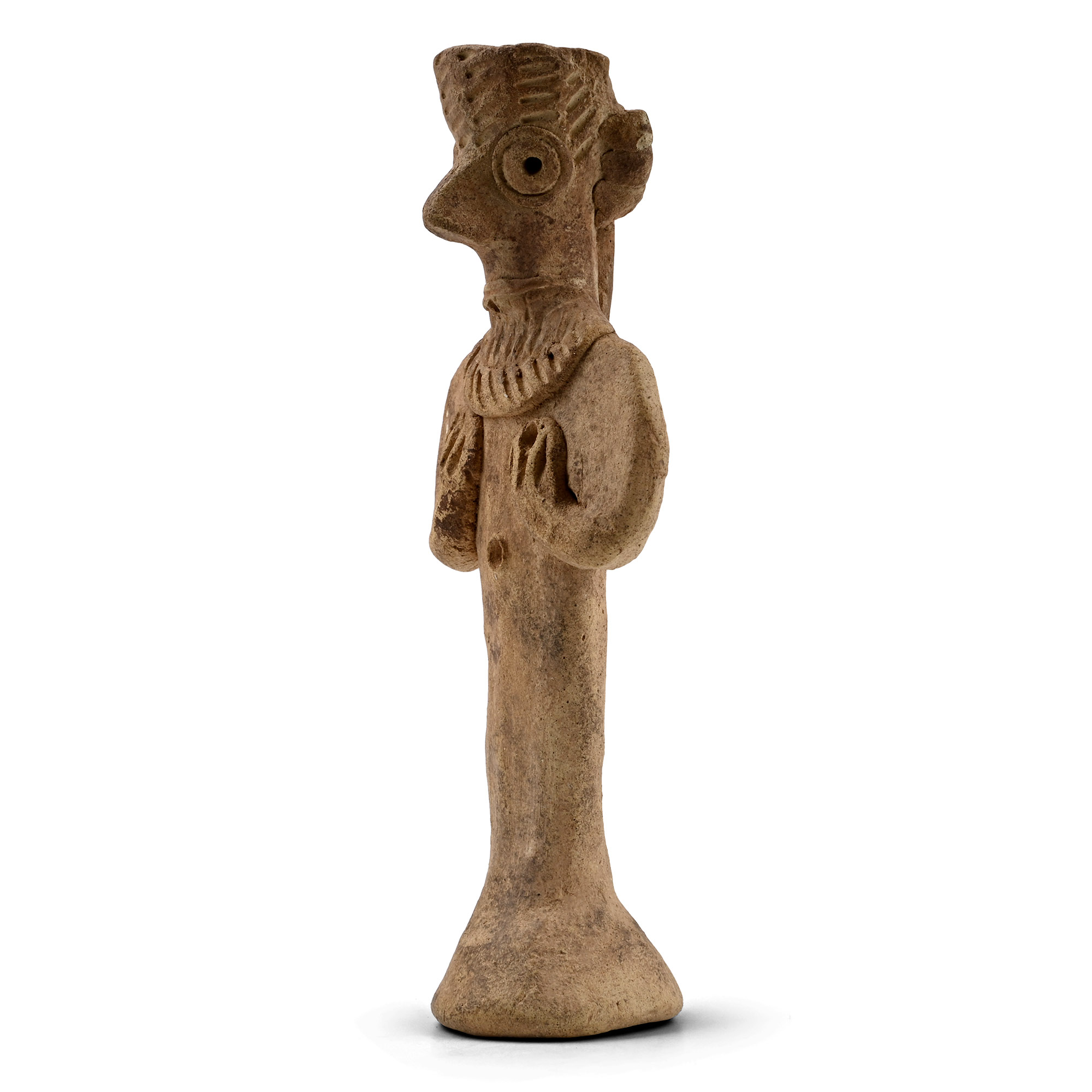
Syro-Hittite Terracotta Idol
2ND MILLENNIUM B.C.
5 3/4 in. (102 grams, 14.5 cm).
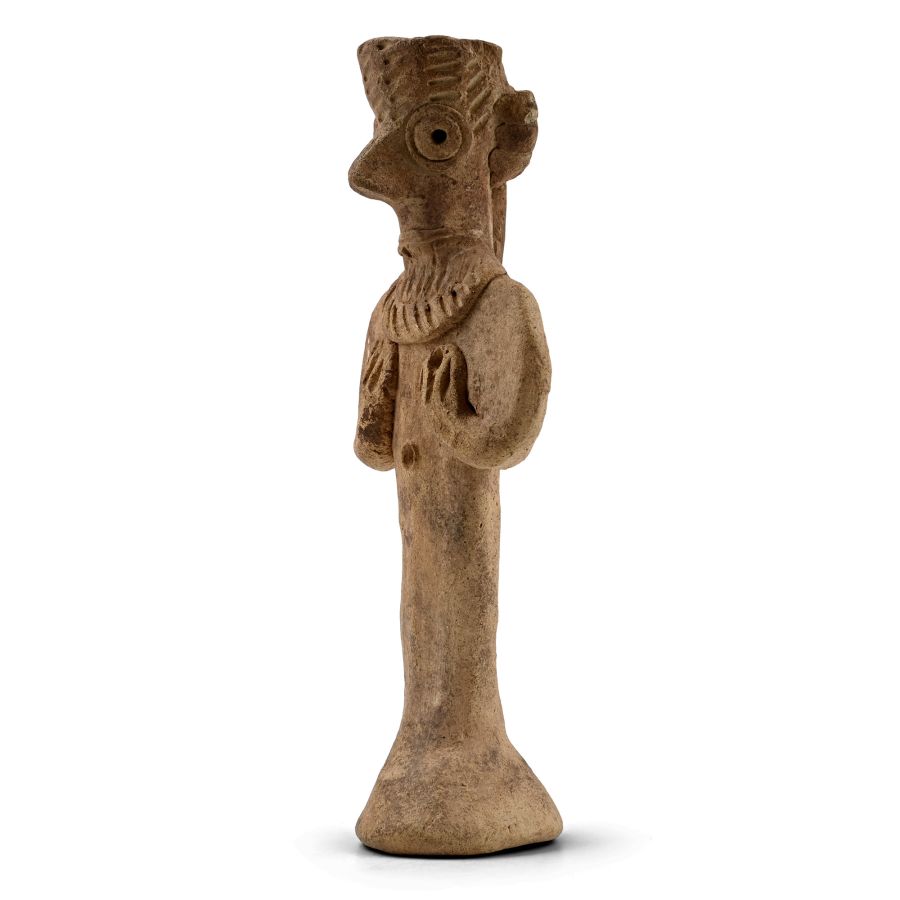
Modelled in the round with columnar body and flared base, arms bent and hands placed flat on the chest holding the nipples, herringbone pattern to the collar, hatched headdress, socket to rear of head.
ProvenanceCollection T. Arakji, Hamburg, Germany.
Private collection, Switzerland, acquired in 1994; thence by descent.
TimeLine Auctions follows a vetting process to ensure the authenticity and legality of all items, reinforcing our commitment to integrity and responsible trading. Each antiquity, antique, and coin lot undergoes thorough examination by a vetting committee of at least ten external specialists, professional trade association members, scientists, and archaeologists: Our Vetting Process
AUCTIONS:
TimeLine is a leading auction house specialising in antiquities, ancient art, collectables, natural history, coins, medals, and books. Our auctions offer museums, collectors, historians, and enthusiasts the opportunity to acquire unique and historically significant pieces.
LOT 0276
Syro-Hittite Terracotta Idol
Estimate £1,200 - 1,700€1,390 - 1,970 (for guidance only)$1,620 - 2,300 (for guidance only)
-
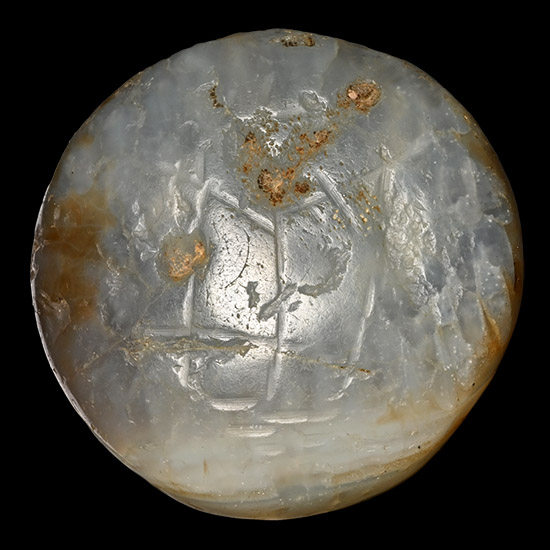
Large Sasanian Banded Agate Stamp Seal
Circa 4th-5th century A.D.Sold for (Inc. bp): £26
Plano-convex in section with linear motifs. 18.43 grams, 28.74 mm
From the private collection of a European gentleman (1942-2024), formed since the 1970s. -
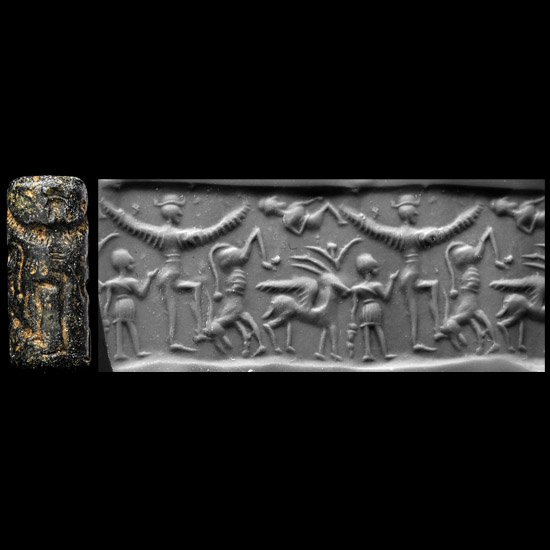
Western Asiatic Black Stone Cylinder Seal with Winged God
2nd-1st millennium B.C.Sold for (Inc. bp): £468
Frieze depicting a standing winged deity advancing above a hunting dog perpendicular, small attendant to the rear holding a vessel beside a standing gryphon, second crouching figure above; supplied with a museum-quality impression. 3.43 grams, 21.97 mm
From the private collection of a European gentleman (1942-2024), formed since the 1970s. -
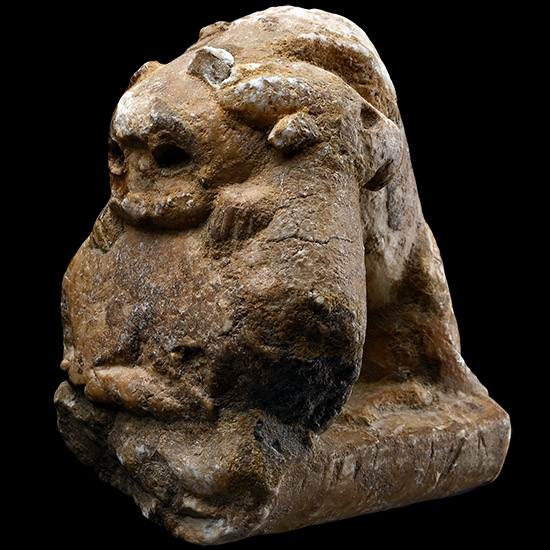
Sumerian Stone Statue Fragment
3rd millennium B.C.Sold for (Inc. bp): £1,040
Carved in the round figure of a lion crouching on its haunches, with neck arched and forepaws resting on the spine (upper edge) of an animal placed perpendicular to the lion's head biting into its flesh; the D-shaped face with teardrop-shaped sockets for the eyes, button nose, small triangular ears; the prey with legs folded beneath the body, head turned along the lion's mane and left shoulder, with small protrusive horn and ear, oval socket for the eye; integral base with rounded lateral edges, fracture at each end. 340 grams, 85 mm
From the collection of a gentleman, acquired on the London art market in the 1990s.
