
Loading, please wait...
LOT 0230
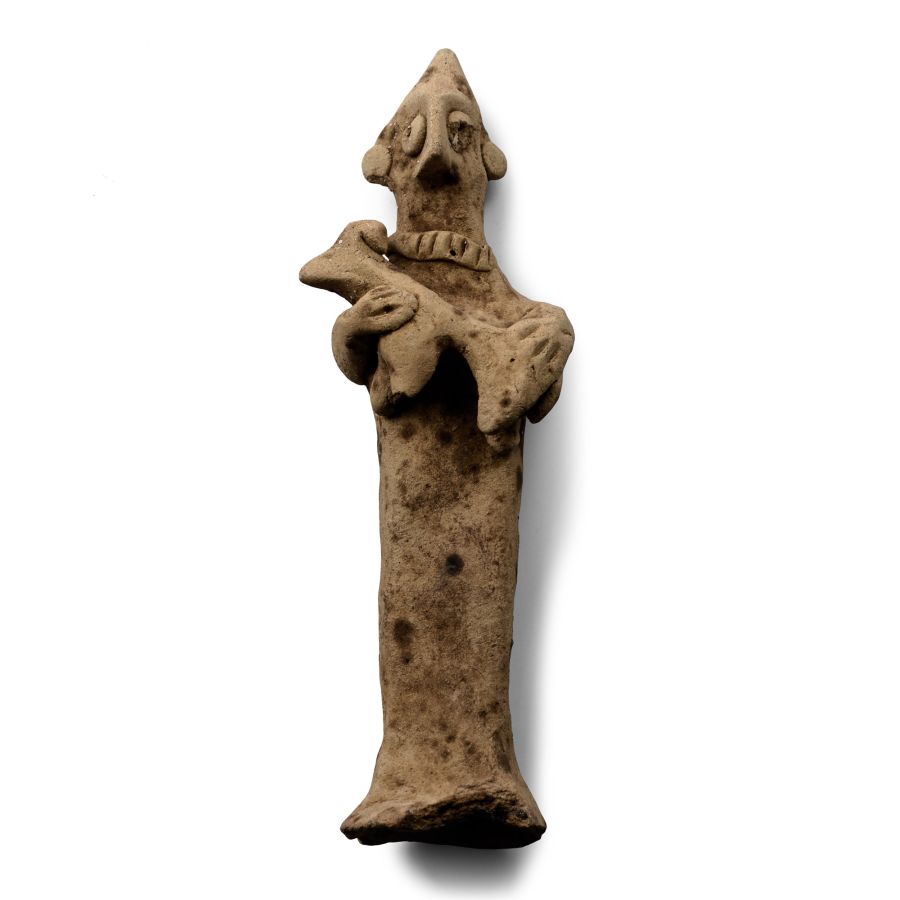
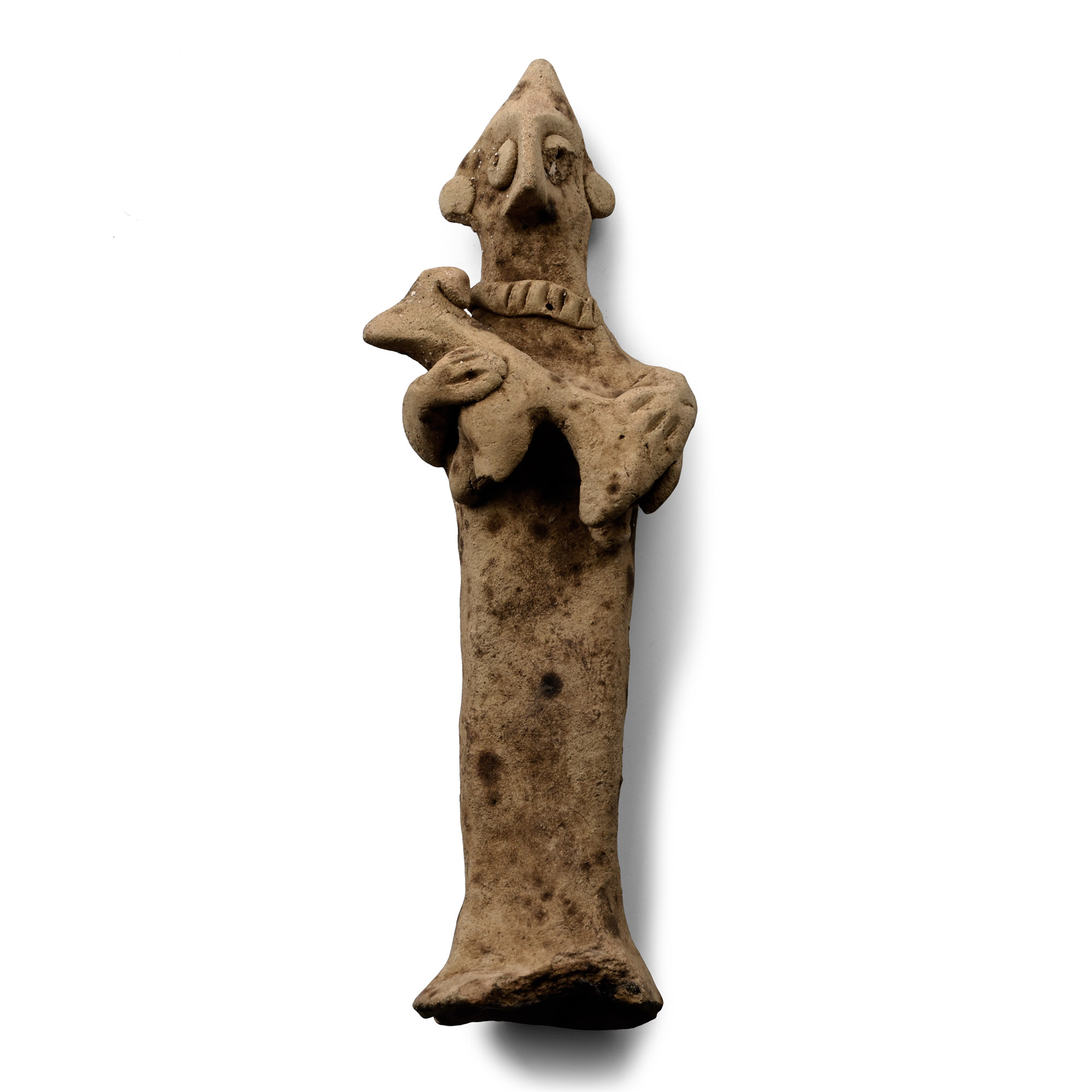
Syro-Hittite Terracotta Figurine with Animal
CIRCA 2ND MILLENNIUM B.C.
5 in. (56 grams, 12.6 cm high).
An abstract figure modelled standing, carrying a small animal in its arms, possibly a kid, with a pinched head, large circular eyes, conical headpiece, discoid ear ornaments and a neck ornament.
ProvenanceCollection of a deceased London gentleman, 1979-1999, by descent.
From the private collection of John Meredith, acquired since the 1990s; thence by descent.
Accompanied by an original thermoluminescence analysis report no. N122e89 from Oxford Authentication.
This lot has been cleared against the Art Loss Register database, and is accompanied by an illustrated lot declaration signed by the Head of the Antiquities Department, Dr Raffaele D'Amato.
The Syro-Hittite states rose to prominence in northern Syria and southern Anatolia (modern Turkey) following the collapse of the Hittite Empire, during which time many such figures were produced and widely distributed for domestic use. Such figures, later pejoratively referred to as 'idols', depicted deities carrying or standing with animals.
CONDITIONTimeLine Auctions follows a vetting process to ensure the authenticity and legality of all items, reinforcing our commitment to integrity and responsible trading. Each antiquity, antique, and coin lot undergoes thorough examination by a vetting committee of at least ten external specialists, professional trade association members, scientists, and archaeologists: Our Vetting Process
AUCTIONS:
TimeLine is a leading auction house specialising in antiquities, ancient art, collectables, natural history, coins, medals, and books. Our auctions offer museums, collectors, historians, and enthusiasts the opportunity to acquire unique and historically significant pieces.
-
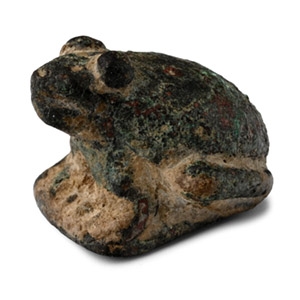
Old Babylonian Bronze Frog Weight
Circa 2400-1700 B.C.Estimate: £2,000 - 3,000 (‡+bp*)
Opening Bid: £1,000
Modelled in the round with anatomical detailing, undercut between legs and stomach; feet forming a wedge-shaped panel. 24.6 grams, 22 mm
Private collection of Contessa L.J., since the 1980s. Private collection, acquired in 2001. This lot has been checked against the Interpol Database of stolen works of art and is accompanied by a search certificate number no.12898-241690. This lot has been cleared against the Art Loss Register database, and is accompanied by an illustrated lot declaration signed by the Head of the Antiquities Department, Dr Raffaele D'Amato. -
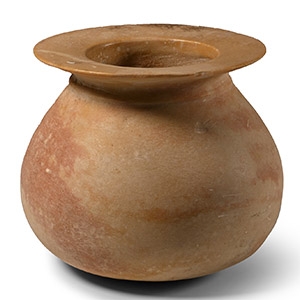
Mesopotamian Bulbous Marble Vase
4rd-3rd millennium B.C.Sold for (Inc. bp): £1,755
Squat-bodied with a broad, rounded shoulder and base, short neck and flat everted rim. 1.95 kg, 13.7 cm
with Gerhard Hirsch Nachf, Germany, Auction 238|239, February 2005, no.107. Acquired by the present owner from the above. This lot has been checked against the Interpol Database of stolen works of art and is accompanied by search certificate number no.12256-222173. This lot has been cleared against the Art Loss Register database, and is accompanied by an illustrated lot declaration signed by the Head of the Antiquities Department, Dr Raffaele D'Amato. -
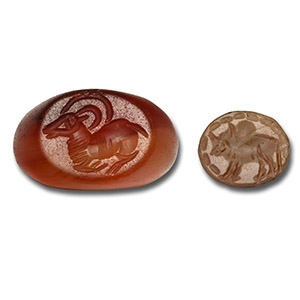
Sasanian Stamp Seal with Intaglio Depicting a Bull
4th-5th century A.D.Estimate: £200 - 300 (+bp*)
Opening Bid: £100
Comprising: carnelian stamp seal with crouching ram motif, ellipsoid intaglio with standing bull. 8.07 grams total, 11-22 mm
From the private collection of Mr K.A., acquired in the 1990s-early 2000s. This lot has been cleared against the Art Loss Register database, and is accompanied by an illustrated lot declaration signed by the Head of the Antiquities Department, Dr Raffaele D'Amato.
