
Loading, please wait...
LOT 1117
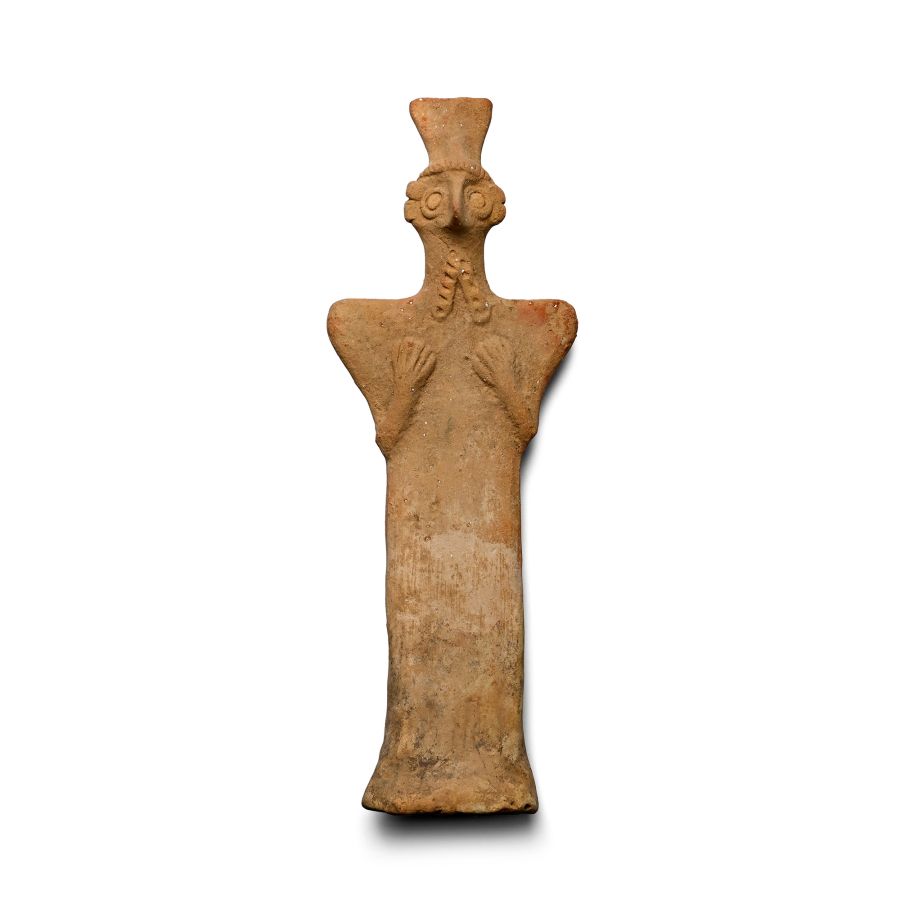
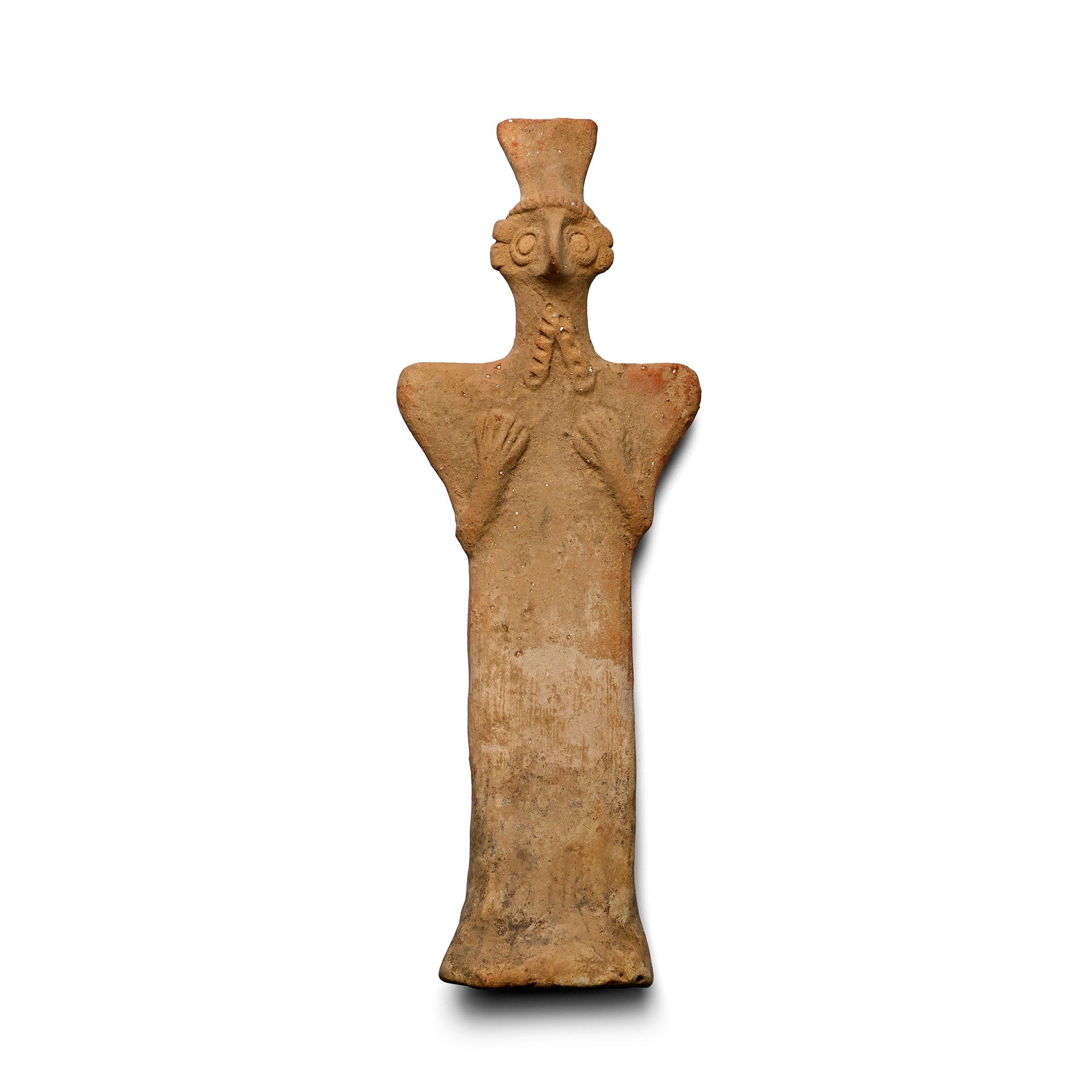
Syro-Hittite Terracotta Figure
1500-1200 B.C.
7 7/8 in. (150 grams, 20 cm).
With lentoid-section body and flared base (restored); the face with pinched profile, tall headdress with transverse segmented peak, applied disc eyes, applied chevron beard, hands raised to the chest. [no reserve]
ProvenancePreviously with Alex Szolin, Nottingham, UK.
Ex Gerrard collection, 1990s.
From the private collection of John Meredith, acquired since the 1990s; thence by descent.
This lot has been cleared against the Art Loss Register database, and is accompanied by an illustrated lot declaration signed by the Head of the Antiquities Department, Dr Raffaele D'Amato.
TimeLine Auctions follows a vetting process to ensure the authenticity and legality of all items, reinforcing our commitment to integrity and responsible trading. Each antiquity, antique, and coin lot undergoes thorough examination by a vetting committee of at least ten external specialists, professional trade association members, scientists, and archaeologists: Our Vetting Process
AUCTIONS:
TimeLine is a leading auction house specialising in antiquities, ancient art, collectables, natural history, coins, medals, and books. Our auctions offer museums, collectors, historians, and enthusiasts the opportunity to acquire unique and historically significant pieces.
-
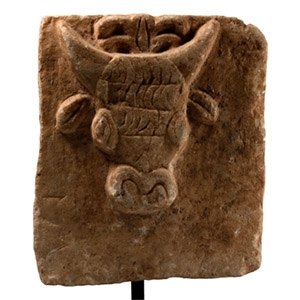
South Arabian Alabaster Plaque with Bull's Head
3rd-1st century B.C.Sold for (Inc. bp): £572
Comprising a square panel with a bull's head in low-relief, striated eyes and flaring nostrils, a thick tuft of hair arranged between the eyes, acanthus leaf between curved horns; mounted on a custom-made display stand. 2.18 kg total, 19.7 cm including stand
UK collection, 1990s. Acquired on the UK art market, before 2000. Private collection, Mr M.V., a London-based businessman. This lot has been cleared against the Art Loss Register database, and is accompanied by an illustrated lot declaration signed by the Head of the Antiquities Department, Dr Raffaele D'Amato.
Along with the ibex, the bull is one of the most frequently represented animals in the sculpture found in the Arabian cemeteries, like Timna. -
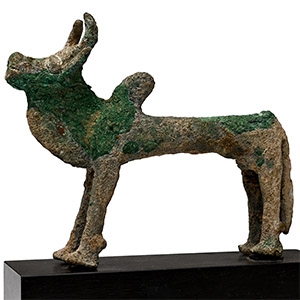
Bactrian Copper Standing Bull
3rd-2nd millennium B.C.Estimate: £1,500 - 2,000 (+bp*)
Opening Bid: £750
Figure of a zebu standing with head raised, dewlap to the chin and chest, angled hump behind the shoulders; mounted on a custom-made stand. 215 grams, 11.1 cm wide (357 grams total, 11.7 cm including stand).
Acquired before 1972. with a London, UK gallery. This lot has been cleared against the Art Loss Register database, and is accompanied by an illustrated lot declaration signed by the Head of the Antiquities Department, Dr Raffaele D'Amato. -
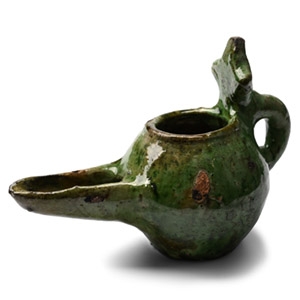
Seljuk Green-Glazed Ceramic Oil Lamp
Circa 11th century A.D. or laterSold for (Inc. bp): £124
With biconical profile to the body, U-section nozzle, loop handle with trefoil thumb-pad. 224 grams, 13.7 cm
Ex London, UK, collection, 1970-1990s. From the private collection of a Leicestershire, UK, gentleman. This lot has been cleared against the Art Loss Register database, and is accompanied by an illustrated lot declaration signed by the Head of the Antiquities Department, Dr Raffaele D'Amato.
