
Loading, please wait...


LOT 0248
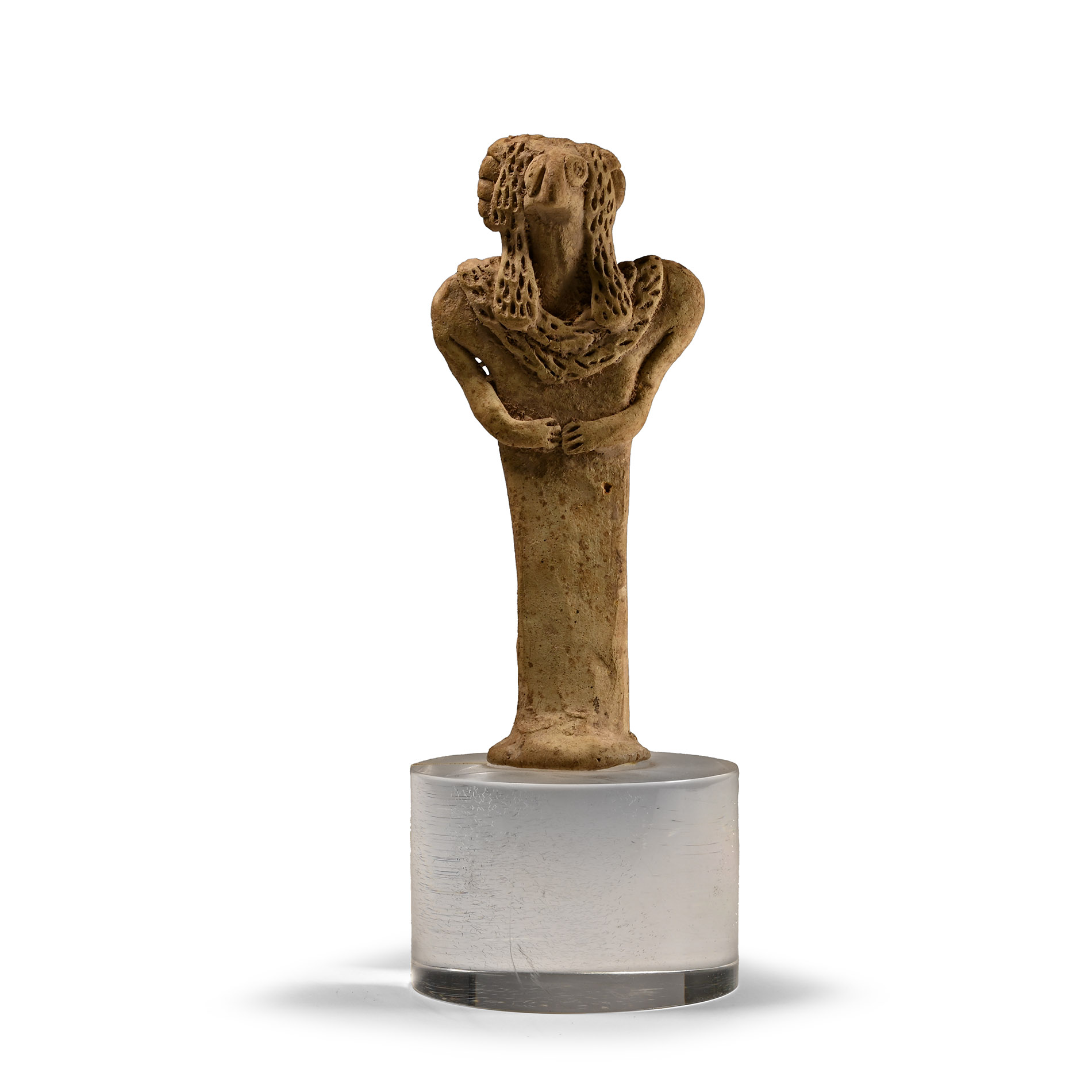
Syro-Hittite Terracotta Fertility Figure
1500-900 B.C.
7 3/4 in. (367 grams total, 19.6 cm including stand).
Standing female deity (Astarte?), wearing a long robe and a broad textured necklace; arms bent and hands placed on the abdomen; beaked facial features with applied eyes and two curved spurs to the rear; mounted on a custom-made stand.
ProvenanceCollected from 1970-1999.
From the collection of the late Mr S.M., London, UK.
Cf. Zahlhaas, G., Prähistorische Staatssammlung, Idole und Votive, München, 1993, p.32, fig.16, for type.
CONDITIONTimeLine Auctions follows a vetting process to ensure the authenticity and legality of all items, reinforcing our commitment to integrity and responsible trading. Each antiquity, antique, and coin lot undergoes thorough examination by a vetting committee of at least ten external specialists, professional trade association members, scientists, and archaeologists: Our Vetting Process
AUCTIONS:
TimeLine is a leading auction house specialising in antiquities, ancient art, collectables, natural history, coins, medals, and books. Our auctions offer museums, collectors, historians, and enthusiasts the opportunity to acquire unique and historically significant pieces.
-
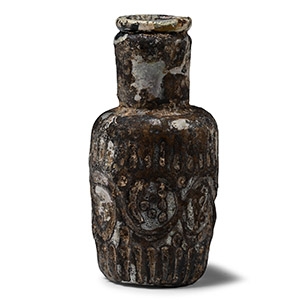
Western Asiatic Mould Blown Glass Flask
10th-12th century A.D.Sold for (Inc. bp): £234
With barrel-shaped body and flat shoulder, running spiral design between vertical slashes. 27.8 grams, 61 mm
From a London, UK, collection, 1990s. -
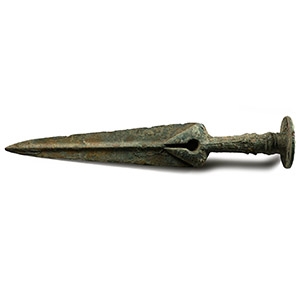
North-Western Luristan Bronze Dagger
Late 2nd-early 1st millennium B.C.Sold for (Inc. bp): £351
The hilt decorated with three ridges set above incised chevrons, guard with round shoulders forming two arms that overlap the blade, cast into a tapering triangular blade with round mid-rib. 505 grams, 33 cm
Acquired 1980-2015. Ex Abelita family collection.
This very rare typology of dagger is related in type with those with crescent guard, while the pommel is related to the daggers with disc pommel. A similar parallel came from Tepe Hissar in North Iran. According to Muscarella, it is highly probable that the daggers with such rare hilt had an origin in an area north of Luristan. -
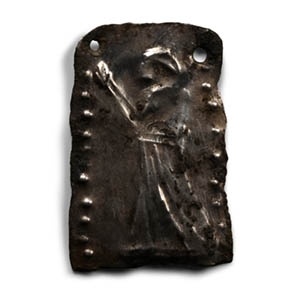
Assyrian Silver Plaque with Supplicant Figure
Early 2nd millennium B.C.Sold for (Inc. bp): £33
Tongue-shaped sheet silver panel with repoussé profile figure in floor-length robe raising hands; pierced at upper corners, band of repoussé pellets to each edge. 1.75 grams, 31 mm
UK private collection before 2000. Acquired on the UK art market. Property of a London gentleman.
