
Loading, please wait...
LOT 1352
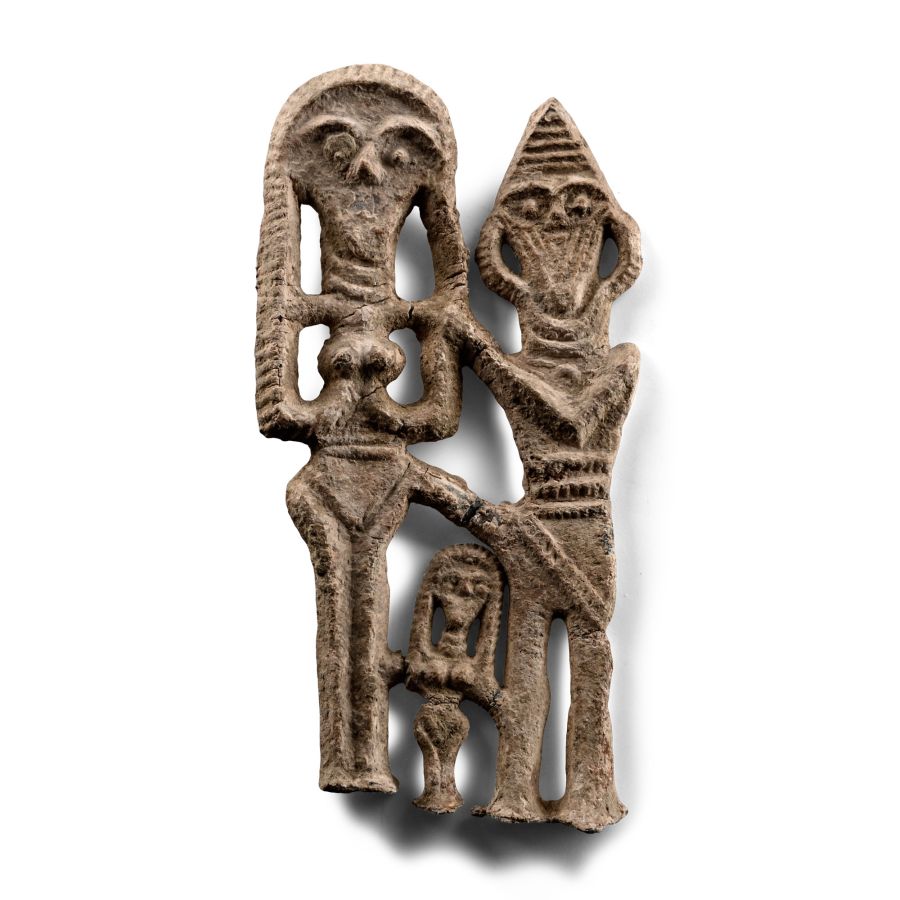
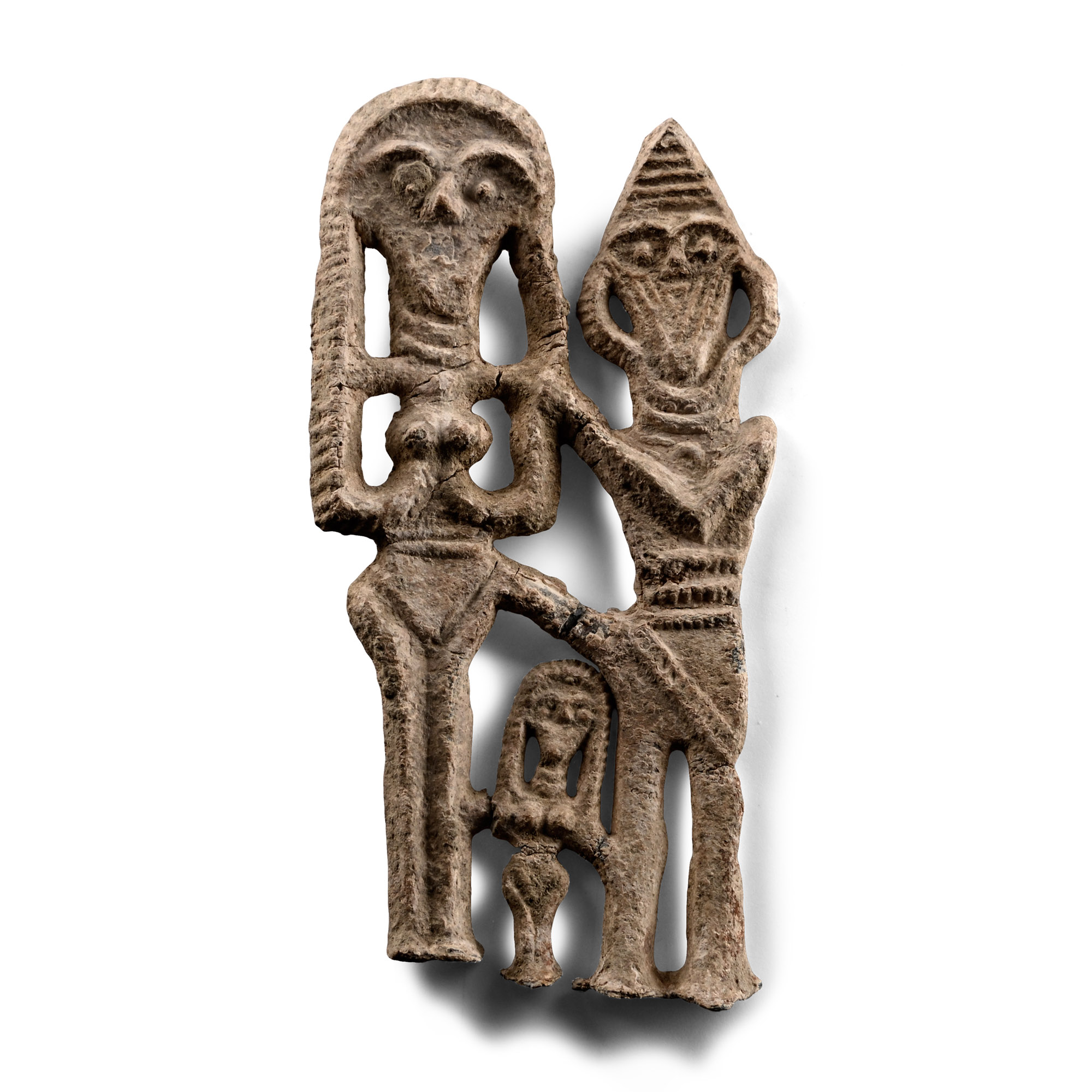
Syro-Hittite Lead Fertility Idol
2ND MILLENNIUM B.C.
2 3/4 in. (30 grams, 70 mm).
A plaque depicting a stylised man and woman conjoined at hips, flanking a small child holding their legs, the woman with large head and long hair, holding her breasts, the man wearing a loin cloth and conical headdress, holding the woman by the arm. [No Reserve]
ProvenanceEx property of a Dutch gentleman; formerly in an old Dutch collection formed in the 1970s.
From the private collection of John Meredith, acquired since the 1990s; thence by descent.
This lot has been cleared against the Art Loss Register database, and is accompanied by an illustrated lot declaration signed by the Head of the Antiquities Department, Dr Raffaele D'Amato.
TimeLine Auctions follows a vetting process to ensure the authenticity and legality of all items, reinforcing our commitment to integrity and responsible trading. Each antiquity, antique, and coin lot undergoes thorough examination by a vetting committee of at least ten external specialists, professional trade association members, scientists, and archaeologists: Our Vetting Process
AUCTIONS:
TimeLine is a leading auction house specialising in antiquities, ancient art, collectables, natural history, coins, medals, and books. Our auctions offer museums, collectors, historians, and enthusiasts the opportunity to acquire unique and historically significant pieces.
-
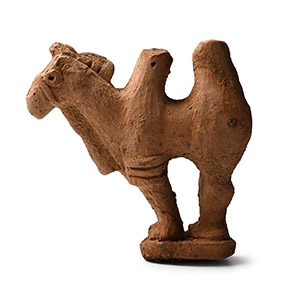
Bactrian Terracotta Camel Figurine
1st millennium B.C.Sold for (Inc. bp): £169
Modelled in the round standing on a sub-rectangular base, stylised anatomical detailing including remains of a bridge and eyes. 184 grams, 10.3 cm
Fair condition.
Ex property of an Essex gentleman; acquired on the UK art market; previously from an old English collection formed in the 1980s. From the private collection of John Meredith, acquired since the 1990s; thence by descent. This lot has been cleared against the Art Loss Register database, and is accompanied by an illustrated lot declaration signed by the Head of the Antiquities Department, Dr Raffaele D'Amato. -
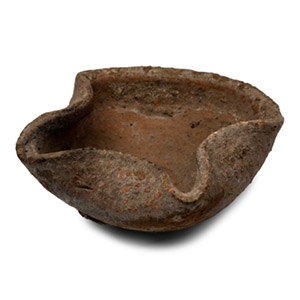
Western Asiatic Terracotta Two-Spouted Oil Lamp
Holy Land, circa 2200-1730 B.C.Sold for (Inc. bp): £91
Discoid in plan with pinched and folded rim to form two nozzles. 41 grams, 62 mm
From the private collection of a Canadian gentleman living in Essex, UK, formed since the 1920s-circa 1990. Property of an Essex lady until the late 1990s; thence by descent. From the private collection of an Essex gentleman since the late 1990s. This lot has been cleared against the Art Loss Register database, and is accompanied by an illustrated lot declaration signed by the Head of the Antiquities Department, Dr Raffaele D'Amato. -
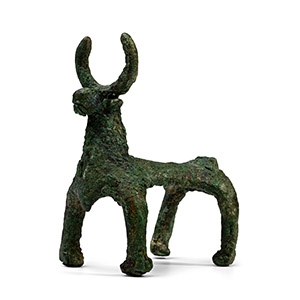
Western Asiatic Bronze Figure of a Bull
Circa 1000-600 B.C.Sold for (Inc. bp): £293
Modelled in a powerful stance with its legs spread, erect head with large curving horns. 151 grams, 88 mm
Nicolas Koutoulakis (1910-1996), thence by descent. Ex Galerie Khnoum, Geneva, Switzerland. Private collection of Mr K.A. This lot has been cleared against the Art Loss Register database, and is accompanied by an illustrated lot declaration signed by the Head of the Antiquities Department, Dr Raffaele D'Amato.
