
Loading, please wait...
LOT 1325
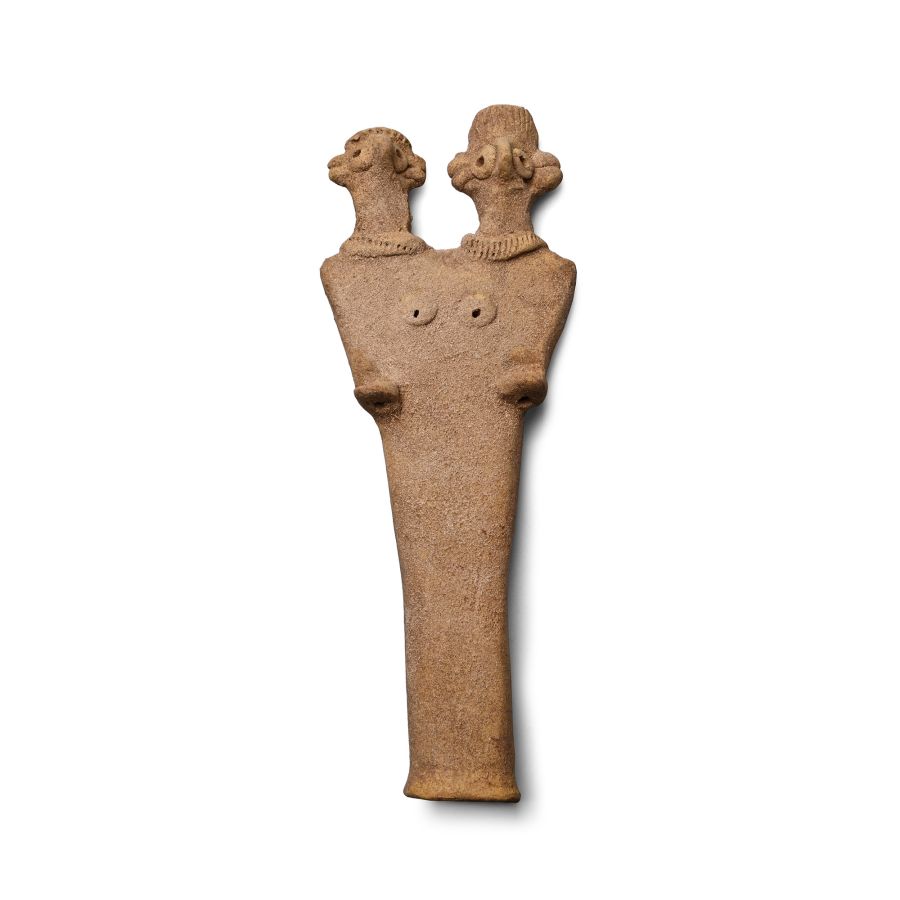
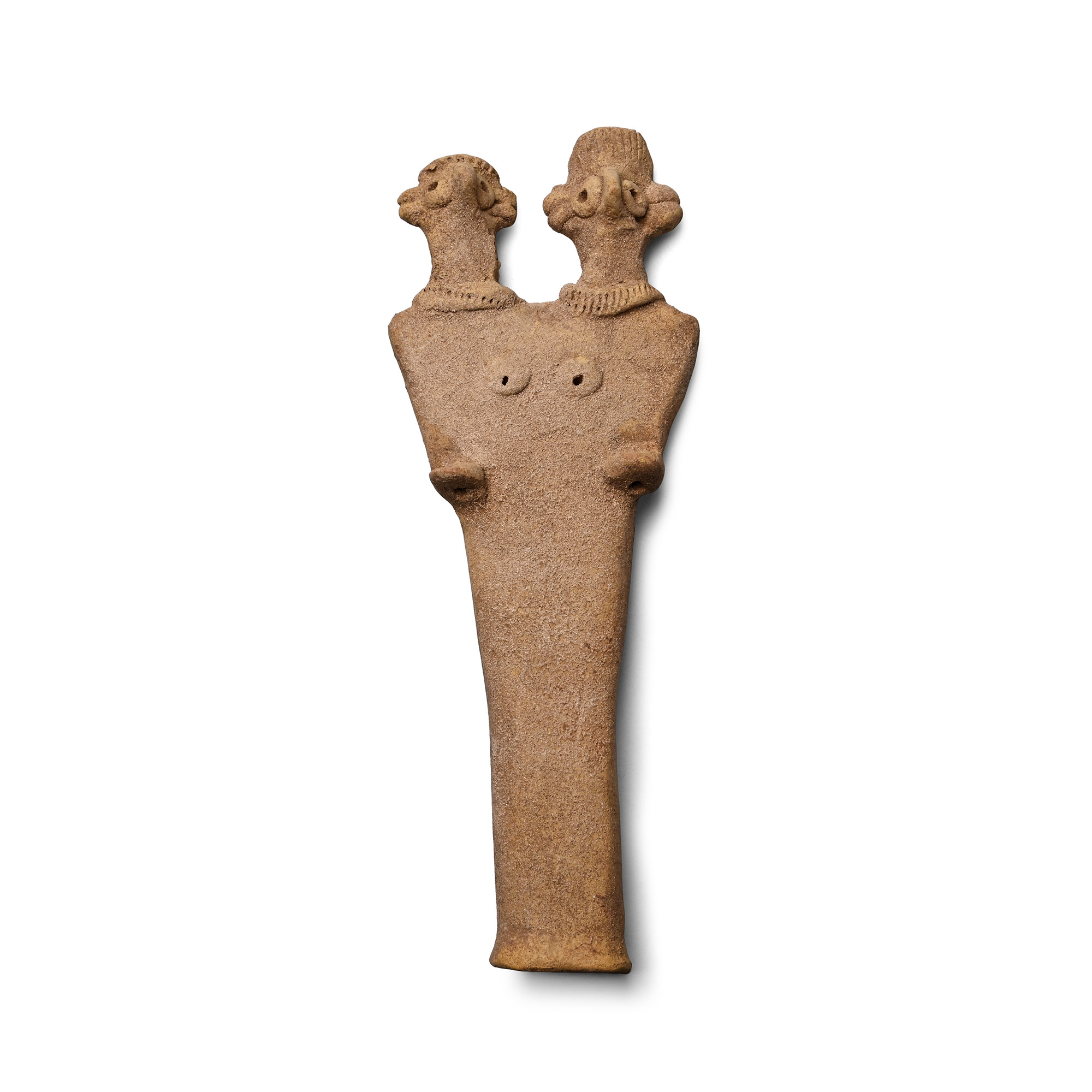
Syro-Hittite Double-Headed Idol
12TH-8TH CENTURY B.C.
7 in. (109 grams, 17.6 cm).
Human form with two heads; the eyes and breasts domed with round recesses, the headdresses and necklaces separately applied, formed with vertical strokes; ledge hand to each side; the lower body extending to a conical base.
ProvenanceProperty of a retired English university professor; acquired on the UK art market in 2013.
From the private collection of John Meredith, acquired since the 1990s; thence by descent.
This lot has been cleared against the Art Loss Register database, and is accompanied by an illustrated lot declaration signed by the Head of the Antiquities Department, Dr Raffaele D'Amato.
TimeLine Auctions follows a vetting process to ensure the authenticity and legality of all items, reinforcing our commitment to integrity and responsible trading. Each antiquity, antique, and coin lot undergoes thorough examination by a vetting committee of at least ten external specialists, professional trade association members, scientists, and archaeologists: Our Vetting Process
AUCTIONS:
TimeLine is a leading auction house specialising in antiquities, ancient art, collectables, natural history, coins, medals, and books. Our auctions offer museums, collectors, historians, and enthusiasts the opportunity to acquire unique and historically significant pieces.
-
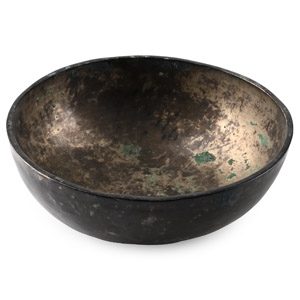
Graeco-Persian Bronze Vessel
2nd century B.C.-1st century A.D.Sold for (Inc. bp): £91
With broad base and inturned rim. 190 grams, 14.1 cm wide
Ex London, UK, collection, 1990-2000. This lot has been cleared against the Art Loss Register database, and is accompanied by an illustrated lot declaration signed by the Head of the Antiquities Department, Dr Raffaele D'Amato. -
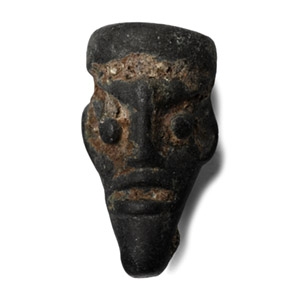
Western Asiatic Bronze Idol Head Amulet
1st millennium BCSold for (Inc. bp): £33
A stylised male head with ears, cap, prominent brow and strong nose, wide circular eyes, open mouth and long, prominent chin. 23.4 grams, 28 mm
Fine condition.
From a private collection formed in the Netherlands; previously in a European collection formed prior to 1980. From the private collection of John Meredith, acquired since the 1990s; thence by descent. This lot has been cleared against the Art Loss Register database, and is accompanied by an illustrated lot declaration signed by the Head of the Antiquities Department, Dr Raffaele D'Amato. -
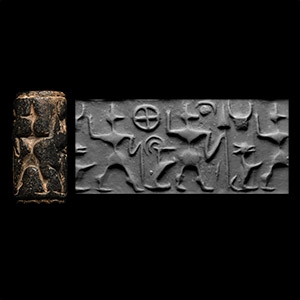
North-Syrian Black Stone Cylinder Seal with Storm God
Circa 2000-1800 B.C.Sold for (Inc. bp): £910
Cylinder with standing figures and animals, restrung pair of red stone beads, old handwritten label '1659'; accompanied by a copy of an old scholarly note, typed and signed by W.G. Lambert, late Professor of Assyriology, University of Birmingham, 1970-1993, which states: 'Cylinder Seal of Black Stone, 40.5 x 19.5 mm. The deeply engraved design shows two warrior gods, standing, wearing short kilts with one hand raised the other holding an object the one holding a spear, the other an unidentified item represented by a vertical line. Before each standing warrior god is a sideways horned animal in one case and a sideways donkey in the other. There is a row of symbols along the top of the area: a circle with cross inside, an inverted crescent and dot, and a bull's head. There are horizontal rulings above and below the scene. This is a North Syrian or Anatolian seal c. 2000-1800 B.C. This is a rare type, and a nice example. The points on the top of the heads of the gods are no doubt spiked helmets, and the short kilt also fits the Anatolian storm god, which was worshipped in a variety of different forms. The style of engraving is deep but uncluttered and has a considerable charm.'; accompanied by a museum-quality impression. 30.8 grams, 40 mm
Armand Trampitsch, Glyptique Archéologie, Paris, Hôtel Drouot, 13-14 May 1992, no.23 [Part]. Accompanied by a copy of a scholarly note, typed and signed by Professor Wilfrid George Lambert in 1992. This lot has been cleared against the Art Loss Register database, and is accompanied by an illustrated lot declaration signed by the Head of the Antiquities Department, Dr Raffaele D'Amato.
