Loading, please wait...
LOT 1385
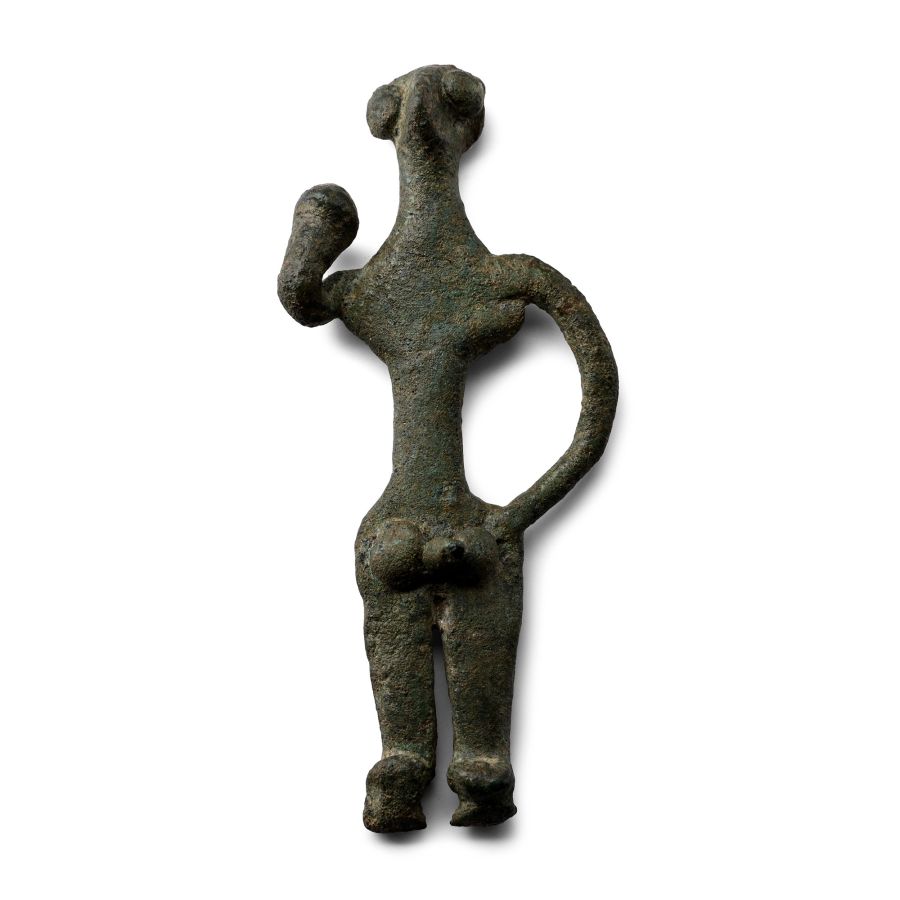
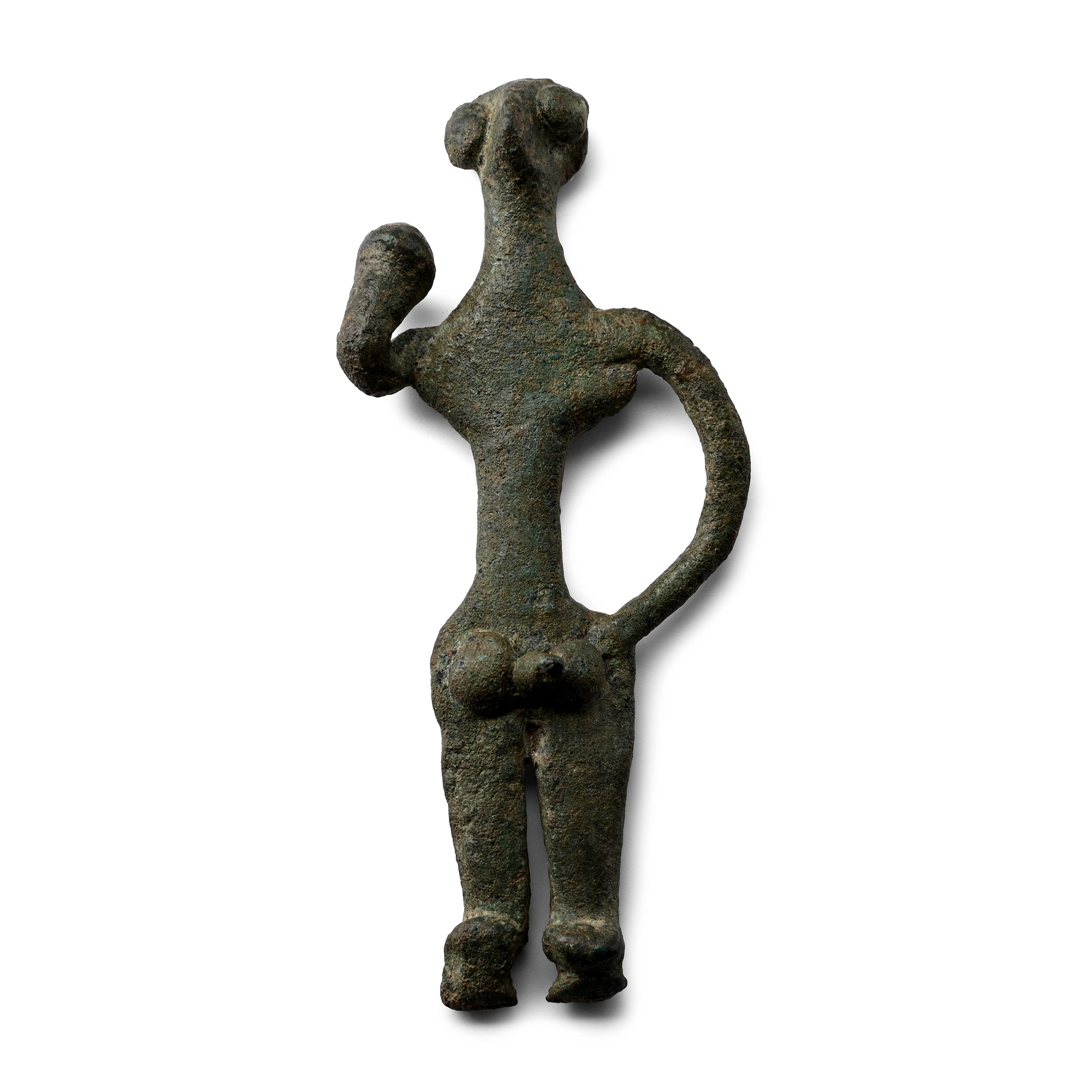
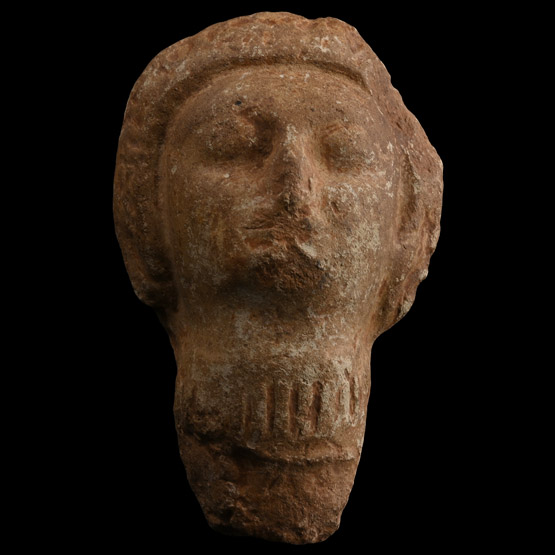
Syro-Hittite Bronze Male Idol
2ND MILLENNIUM B.C.
3 in. (36.5 grams, 78 mm).
Round-section body with pinched facial detailing, right arm raised and bent, left hand protecting the genitals. [No Reserve]
ProvenancePreviously the property of an Islington, London, UK, dealer.
From a London, UK, private collector since circa 1990.
TimeLine Auctions follows a vetting process to ensure the authenticity and legality of all items, reinforcing our commitment to integrity and responsible trading. Each antiquity, antique, and coin lot undergoes thorough examination by a vetting committee of at least ten external specialists, professional trade association members, scientists, and archaeologists: Our Vetting Process
AUCTIONS:
TimeLine is a leading auction house specialising in antiquities, ancient art, collectables, natural history, coins, medals, and books. Our auctions offer museums, collectors, historians, and enthusiasts the opportunity to acquire unique and historically significant pieces.
-
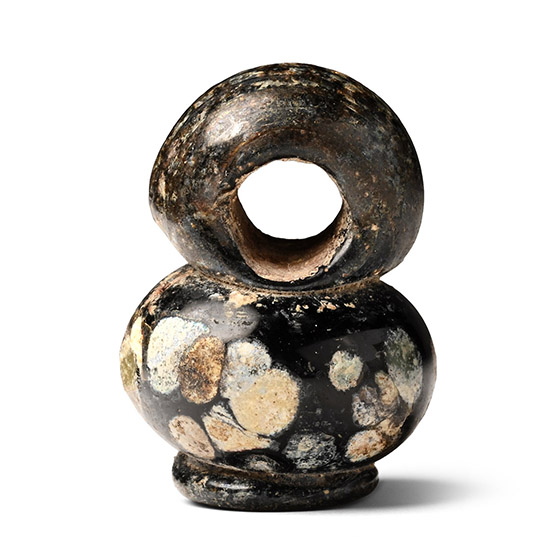
Achaemenid Gold Ring with Agate Bull
Circa 500 B.C.Estimate: £5,000 - 7,000 (+bp*)
Opening Bid: £2,500
Comprising a round-section swivel ring set with a carved Apis bull depicted recumbent with its head turned to the right. 4.71 grams, 27.98 mm overall, 19.07 mm internal diameter (approximate size British N, USA 6 1/2, Europe 13.72, Japan 13)
Private collection, UK. This lot has been checked against the Interpol Database of stolen works of art and is accompanied by search certificate number no.12939-245988.
The Apis bull was a sacred animal in ancient Egyptian religion, worshipped as a living manifestation of the god Ptah and later associated with Osiris and Ra. Regarded as an intermediary between the gods and humanity, the Apis bull was chosen based on specific physical characteristics, such as a black coat with unique white markings. Once identified, it was housed in a grand temple in Memphis, where it was treated with great reverence, adorned with jewellery, and participated in important religious ceremonies. Upon its death, the bull underwent elaborate mummification and burial rituals, symbolising its transition to the afterlife and its continued divine role. The cult of the Apis bull highlights the Egyptians’ deep connection to animals as symbols of divine power and their belief in the interconnectedness of the mortal and spiritual worlds. -
Khandjar Type Iron Dagger
19th century A.D.Estimate: £300 - 400 (+bp*)
Opening Bid: £150
The lentoid-section blade curved with a narrow point, the hilt comprising a wooden grip with reserved and hatched median collar; heart-shaped pommel; decorative iron studs. 119 grams, 32.5 cm
Acquired in the mid-1980s to early 1990s. Private collection, London, UK. -
Seljuk Lustre Ware Fragments
10th-12th century A.D.Sold for (Inc. bp): £2,340
Fragments of a monochrome lustreware footed bowl; the tondo with dense figural scene including (i) left, four females wearing patterned burqa garments beneath a wreath of floral panels; (ii) right, mounted male in riding jacket on an advancing bridled horse with attendant to his rear holding a fan, hunting dog beneath the horse's legs and an attendant in striped clothing walking beore the horse carrying a spear or pole-arm over his shoulder; (iii) above the pearberaer, two bearded figures in patterned robes watching the horseman; border with reserved calligraphic Kufic text above a band of cursive writing; pellets to the rim; outer face with reserved arcade, dense arabesque scrolls and rosettes; mounted in a plain modern ceramic matrix. 414 grams, 21.3 cm wide
Private collection, UK.