
Loading, please wait...
LOT 0252
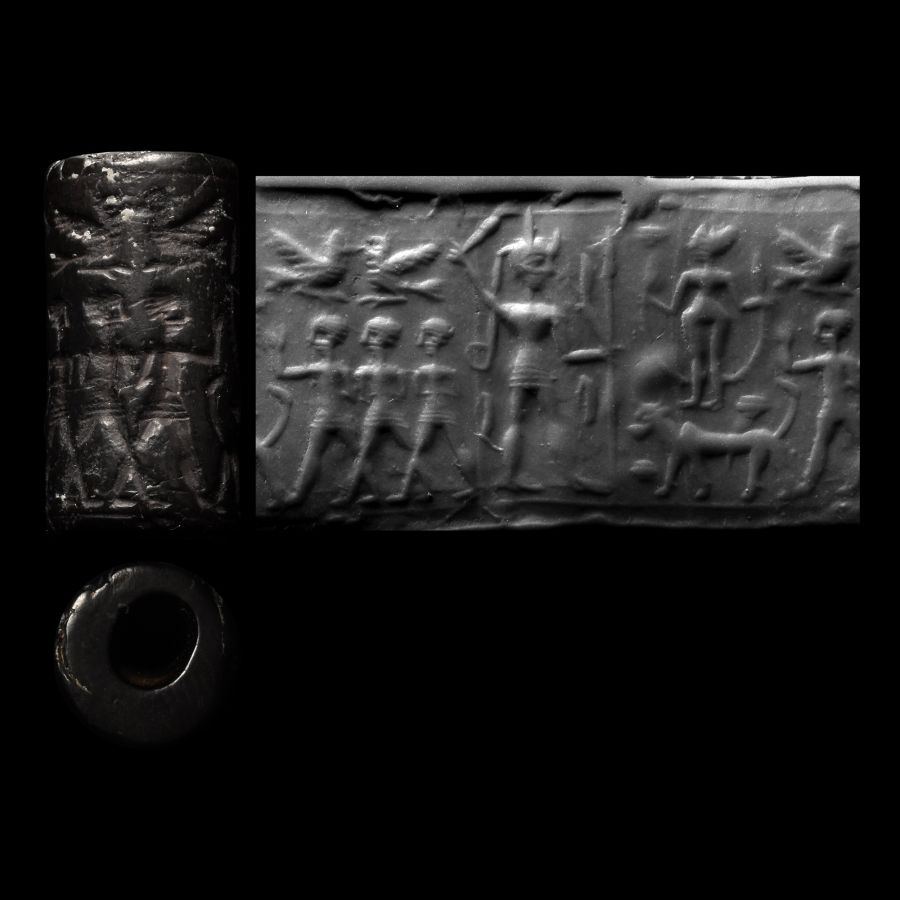
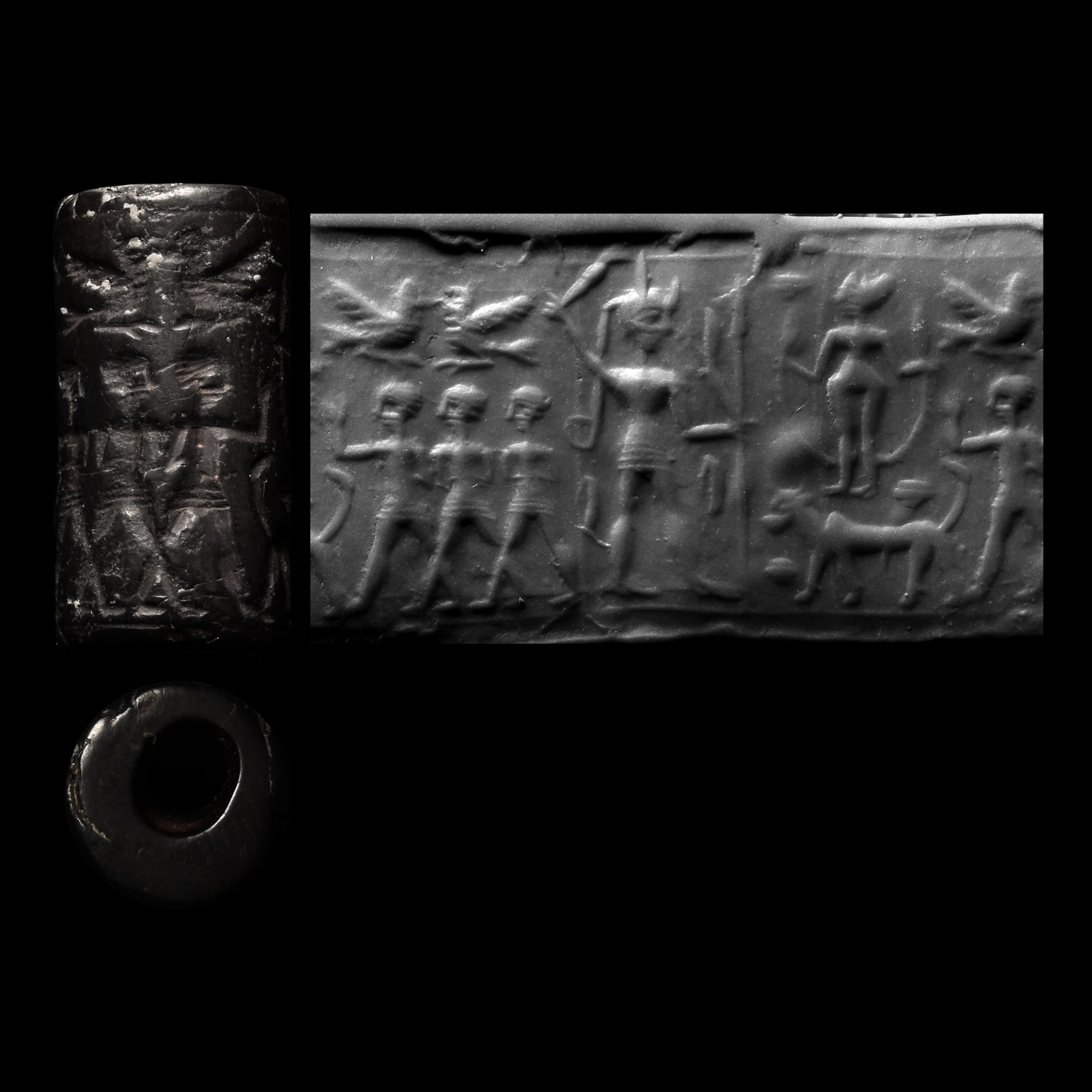
Syrian Stone Cylinder Seal with Storm God and Fertility Goddess
CIRCA 1800-1700 B.C.
3/4 in. (6.58 grams, 21 mm).
With standing figures and animals, accompanied by a copy of an old scholarly note, typed and signed by W.G. Lambert, late Professor of Assyriology, University of Birmingham, 1970-1993, which states: 'Cylinder Seal of Hematite, 21.5 x 11 mm. The design is made up of two parts. The main scene shows two facing deities. On the left stand the Storm God, Hadad or Teshup, wearing a short kilt and a spiked helmet. A long plait of hair falls down his back. In his raised right hand he holds a mace, in the left a long spear and a bow(?). On the right stands a goddess, nude, having thrown back her cloke, and standing above a bull. This goddess is either Anat or Ashtart, goddess or fertility. There are four fillers in the main scene, two discs, a human hand and an unidentified item. The minor scene consists of a row of three walking humans, the first with one hand raised, below two facing birds. The whole engraing is set between lines, one above one below. This seal in Syrian, c. 1800-1700 B.C. and is a typical example of the interest which the Syrian engravers put into their seals. It is somewhat worn, but the whole of the design is clear, having been cut deeply in the original stone.'; accompanied by a museum quality impression and pair of red stone beads.
ProvenanceAnonymous French sale.
Private collection, London, UK.
Accompanied by a copy of an old scholarly note, typed and signed by W.G. Lambert, late Professor of Assyriology, University of Birmingham, 1970-1993.
TimeLine Auctions follows a vetting process to ensure the authenticity and legality of all items, reinforcing our commitment to integrity and responsible trading. Each antiquity, antique, and coin lot undergoes thorough examination by a vetting committee of at least ten external specialists, professional trade association members, scientists, and archaeologists: Our Vetting Process
AUCTIONS:
TimeLine is a leading auction house specialising in antiquities, ancient art, collectables, natural history, coins, medals, and books. Our auctions offer museums, collectors, historians, and enthusiasts the opportunity to acquire unique and historically significant pieces.
LOT 0252
Syrian Stone Cylinder Seal with Storm God and Fertility Goddess
Sold for (Inc. bp): £715
-
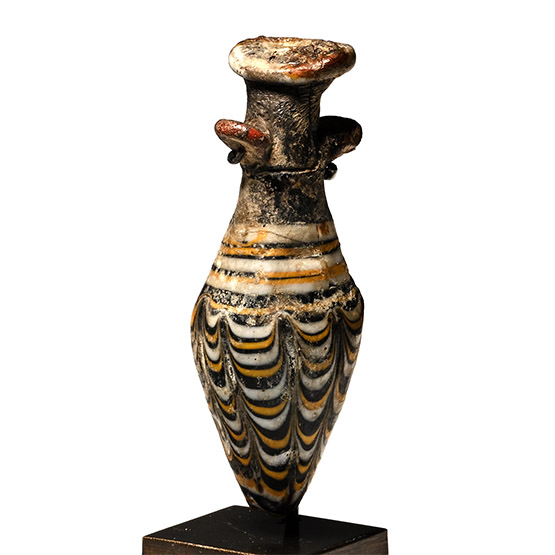
Achaemenid Miniature Core-Formed Glass Alabastron
Circa 5th century B.C.Sold for (Inc. bp): £416
Biconical in profile with narrow base, lateral ledge handles, flared rim; marvered trail detailing to the neck, marvered dragged trails to the body; mounted on a custom-made stand. 12.54 grams, 53 mm
From a London, UK, collection of glass, 1970-2000s. -
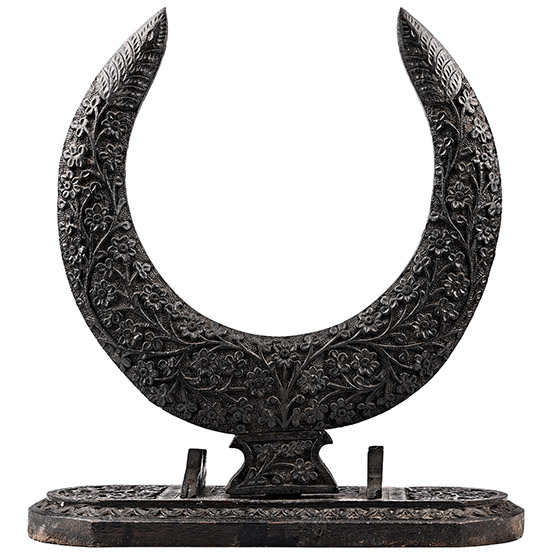
Ottoman Carved Wooden Stylus Base
19th century A.D.Sold for (Inc. bp): £72
Carved with repeating patterns of flowers and foliage on the base and separate crescent upstand; two lugs to the base with curved slot. 847 grams, 29.6 cm high
Private collection, London, UK. -
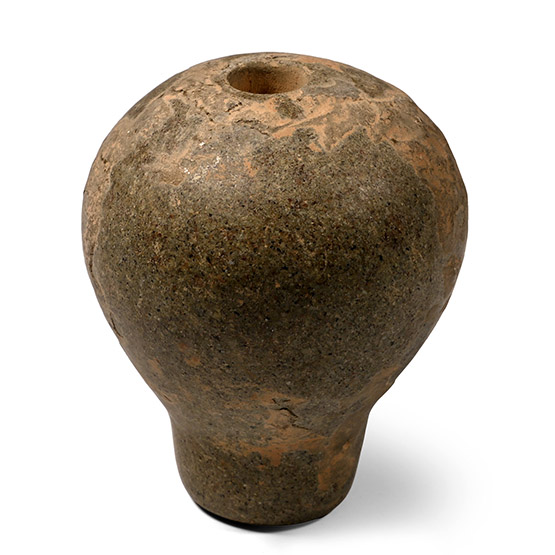
Western Asiatic Stone Macehead
3rd-2nd millennium B.C.Sold for (Inc. bp): £117
With globular body and short cylindrical socket. 510 grams, 88 mm
Ex London, UK, collection, 1990-2000s.
