
Loading, please wait...
LOT 0198
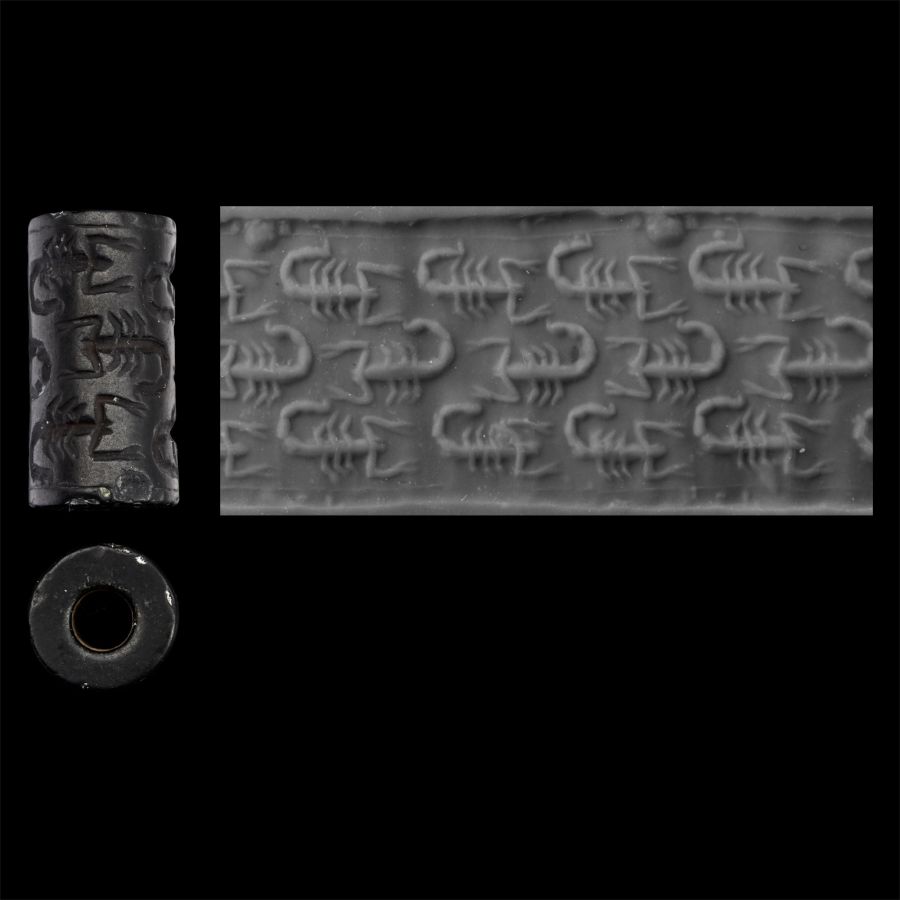
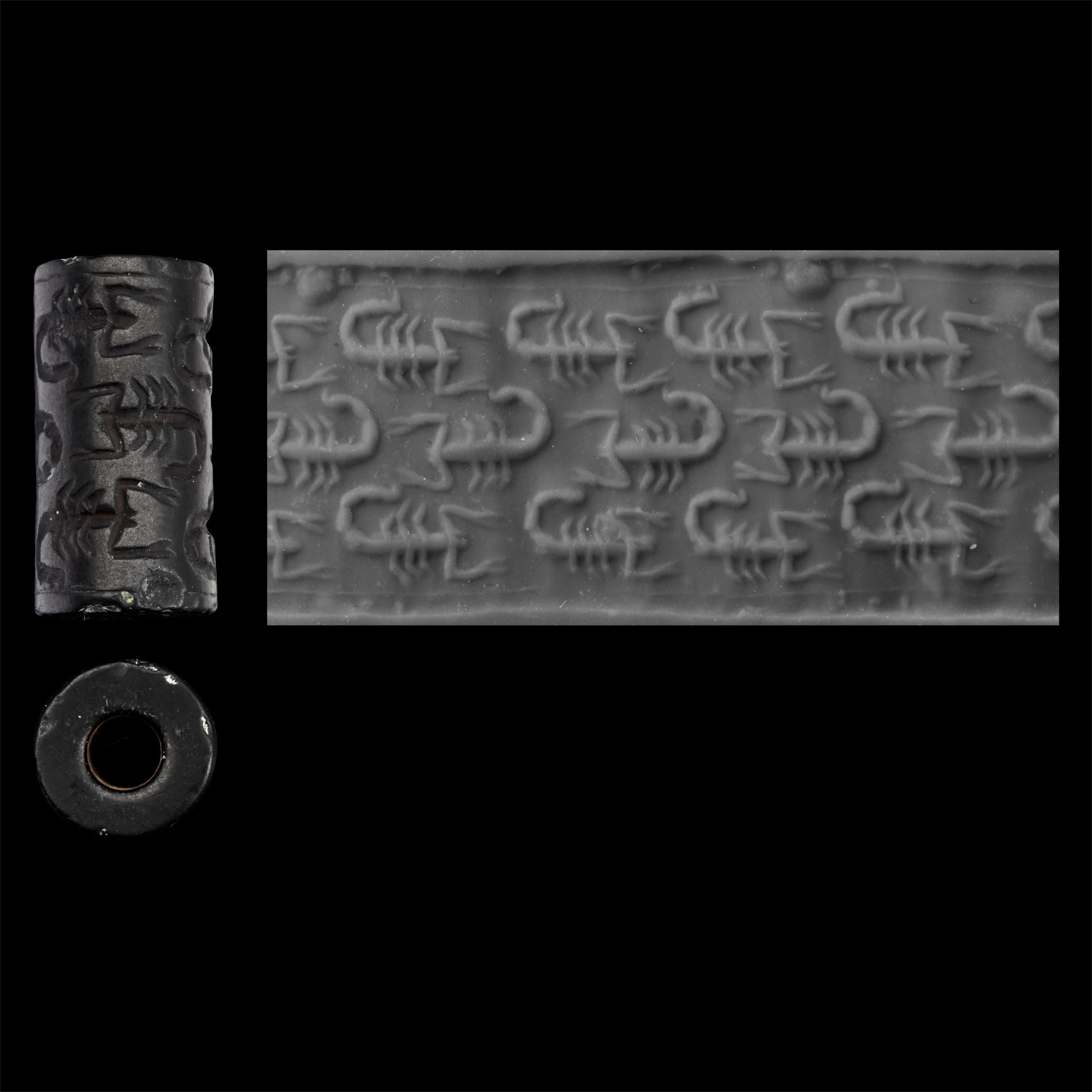
Syrian Hematite Cylinder Seal with Scorpions
1800-1500 B.C.
3/4 in. (5.4 grams, 18 mm).
With scorpions and restrung pair of red stone beads, old handwritten label '1628'; accompanied by an copy of an old scholarly note, typed and signed by W.G. Lambert, late Professor of Assyriology, University of Birmingham, 1970-1993, which states: 'Cylinder Seal of Hematite, 18x9.5 mm. This seal shows three rows of three scorpions, the middle row facing the opposite direction from the other two. This is a Syrian seal c. 1800-1500 B.C., of an unusual type. It is in fine state of preservation, and the insects are well engraved. The scorpion was a divine symbol ln the Ancient Near East, but in Syria it is not known of which deity it was the symbol. The design is in fact very old, being found in Jemdet Nasr seals c. 3000 B.C., and in Syria artists copied older motifs on many occasions.'; accompanied by a museum-quality impression. [No Reserve]
ProvenanceUK private collection, acquired 1980-1983.
Accompanied by a copy of a scholarly note, typed and signed by Professor Wilfrid George Lambert in 1992.
This lot has been cleared against the Art Loss Register database, and is accompanied by an illustrated lot declaration signed by the Head of the Antiquities Department, Dr Raffaele D'Amato.
TimeLine Auctions follows a vetting process to ensure the authenticity and legality of all items, reinforcing our commitment to integrity and responsible trading. Each antiquity, antique, and coin lot undergoes thorough examination by a vetting committee of at least ten external specialists, professional trade association members, scientists, and archaeologists: Our Vetting Process
AUCTIONS:
TimeLine is a leading auction house specialising in antiquities, ancient art, collectables, natural history, coins, medals, and books. Our auctions offer museums, collectors, historians, and enthusiasts the opportunity to acquire unique and historically significant pieces.
-
.jpg)
Mesopotamian Stone Reclining Ram Amulet
Uruk, 4th millennium B.C.Estimate: £500 - 700 (+bp*)
Opening Bid: £125
Stylised ram body in profile, head raised and turned, reverse with six engraved dots, pierced vertically for suspension. 19.6 grams, 46 mm
From a Mayfair, London, UK, gallery, 1990s. From a private UK collection. This lot has been cleared against the Art Loss Register database, and is accompanied by an illustrated lot declaration signed by the Head of the Antiquities Department, Dr Raffaele D'Amato. -
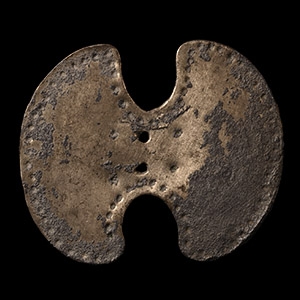
Early Bronze Age Silver Idol
Circa 2400-2100 B.C.Estimate: £2,000 - 3,000 (+bp*)
Opening Bid: £1,000
Of unusual double pelta type, symbolising a female human body, embossed dots to the perimeter and two holes to the centre. 17.88 grams, 64 mm
From a private family collection formed since the early 19th century, thence by descent. Property of a New Zealand legal professional. Accompanied by an academic report by Dr Raffaele D’Amato. This lot has been checked against the Interpol Database of stolen works of art and is accompanied by search certificate number no.12318-223718. This lot has been cleared against the Art Loss Register database, and is accompanied by an illustrated lot declaration signed by the Head of the Antiquities Department, Dr Raffaele D'Amato. -
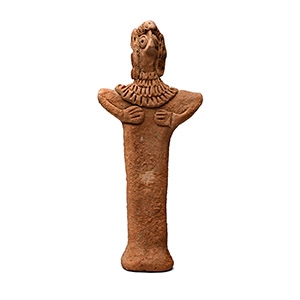
Syro-Hittite Terracotta Fertility Figure
Circa 12th-8th century B.C.Sold for (Inc. bp): £286
Modelled with a flat-section body and splayed base, arms and hands positioned on the chest, applied ornamental collar and headdress or hair; large circular eyes and pinched nose. 146 grams, 18.5 cm high
From the property of the late Mr SM, London, UK, 1969-1999; thence by descent. From the private collection of John Meredith, acquired since the 1990s; thence by descent. This lot has been cleared against the Art Loss Register database, and is accompanied by an illustrated lot declaration signed by the Head of the Antiquities Department, Dr Raffaele D'Amato.
