
Loading, please wait...
_900x900.jpg "Syrian Haematite Cylinder Seal with Storm God")
_200x200.jpg "Syrian Haematite Cylinder Seal with Storm God")
.jpg "Syrian Haematite Cylinder Seal with Storm God")
LOT 0251
Syrian Haematite Cylinder Seal with Storm God
2ND-1ST MILLENIUM B.C.
3/4 in. (3.38 grams, 20 mm).
With three standing figures and animals; accompanied by a copy of an old scholarly note, typed and signed by W.G. Lambert, late Professor of Assyriology, University of Birmingham, 1970-1993, which states: 'Cylinder Seal of Hematite, 19.5 x 8 mm. The main scene consists of three figures: to the right the Storm God standing with one foot on each of two mountains. He wears an elaborate hat, and holds up a symbol. Facing him is a human figure with both hands raised, and wearing a robe to the knees. behind the worshipper stands a goddess holding up a curved object. There are two fillers: a scorpion, and a pillar--table with two objects resting on it. The minor scene consists of a walking quadruped with human head below, and a reared-up lion above a short guilloche. This is a Syrian seal, c. 1800-1600 B.C., perhaps from Palestine.'; accompanied by a museum quality impression and a pair of red stone beads.
ProvenanceAnonymous French sale.
Private collection, London, UK.
Accompanied by a copy of an old scholarly note, typed and signed by W.G. Lambert, late Professor of Assyriology, University of Birmingham, 1970-1993.
TimeLine Auctions follows a vetting process to ensure the authenticity and legality of all items, reinforcing our commitment to integrity and responsible trading. Each antiquity, antique, and coin lot undergoes thorough examination by a vetting committee of at least ten external specialists, professional trade association members, scientists, and archaeologists: Our Vetting Process
AUCTIONS:
TimeLine is a leading auction house specialising in antiquities, ancient art, collectables, natural history, coins, medals, and books. Our auctions offer museums, collectors, historians, and enthusiasts the opportunity to acquire unique and historically significant pieces.
-
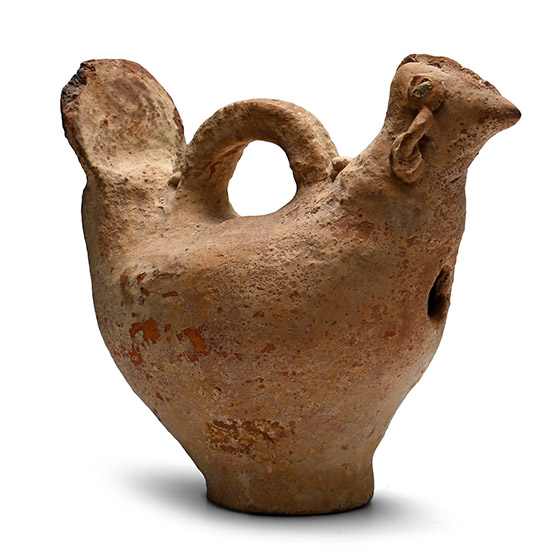
Western Asiatic Terracotta Bird Vessel with Glass Eyes
8th-9th century A.D.Sold for (Inc. bp): £176
Hollow-formed aviform vessel with loop handle and inset glass eyes, lateral loops at the neck. 395 grams, 15.2 cm
UK collection, 1990s. Acquired on the UK art market, before 2000. Private collection, Mr M.V., a London-based businessman. -
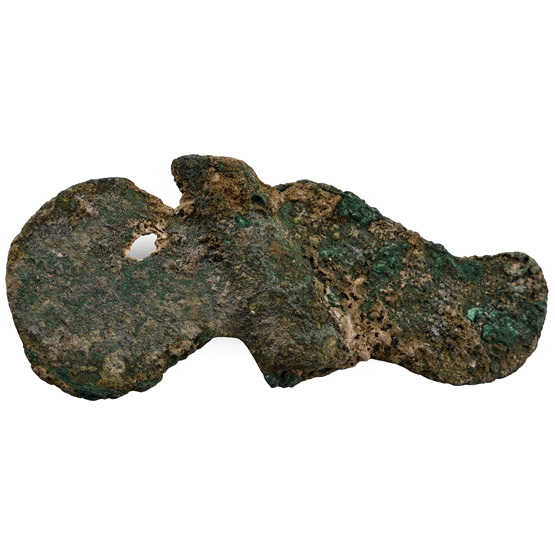
Western Asiatic Bronze Votive Axehead
1st millennium B.C.Sold for (Inc. bp): £20
With a curving blade and a round, tabular extension to the rear of the socket. 39.7 grams, 83 mm
Acquired on the UK art market before 2000. Property of an Essex, UK, gentleman. -
.jpg)
Mesopotamian Cuneiform Tablet Fragment
2nd millennium B.C.Sold for (Inc. bp): £520
Pillow-shaped with bands of cuneiform text on both faces and on the three edges, one edge with a seal impression; repaired. 173 grams, 10.3 cm
Specialised collection of cuneiform texts, the property of a London gentleman and housed in London before 1992. Thence by descent to family members. Examined by Professor Wilfrid George Lambert FBA (1926-2011), historian, archaeologist, and specialist in Assyriology and Near Eastern archaeology, in the late 1980s and early 1990s. This small collection is exceptional for the variety of types, including some very rare and well preserved examples.
