
Loading, please wait...
LOT 1260
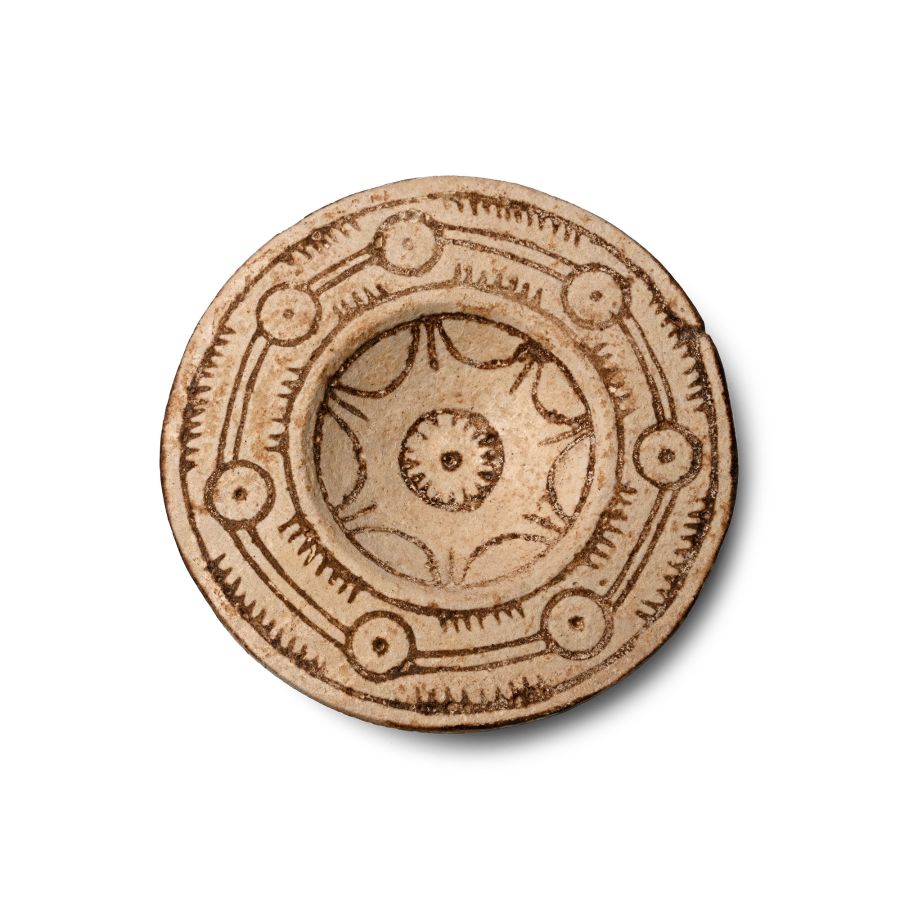
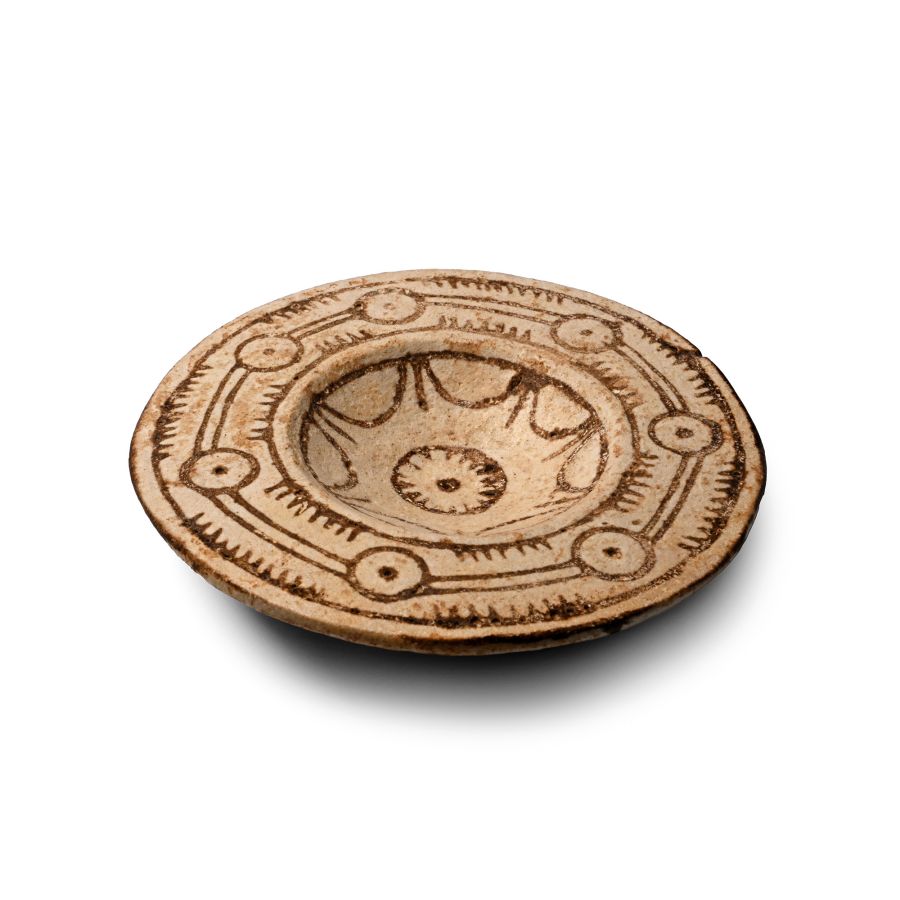
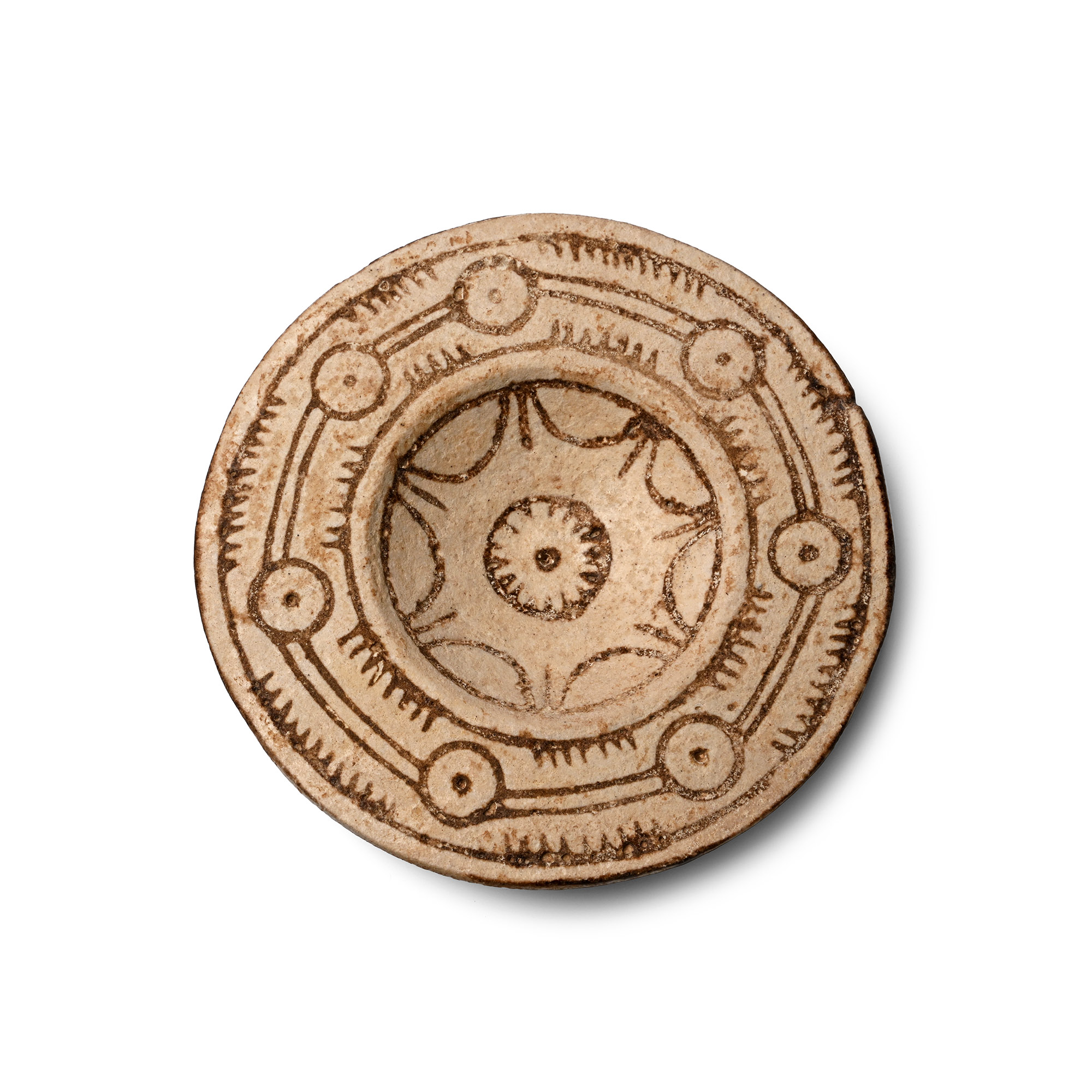
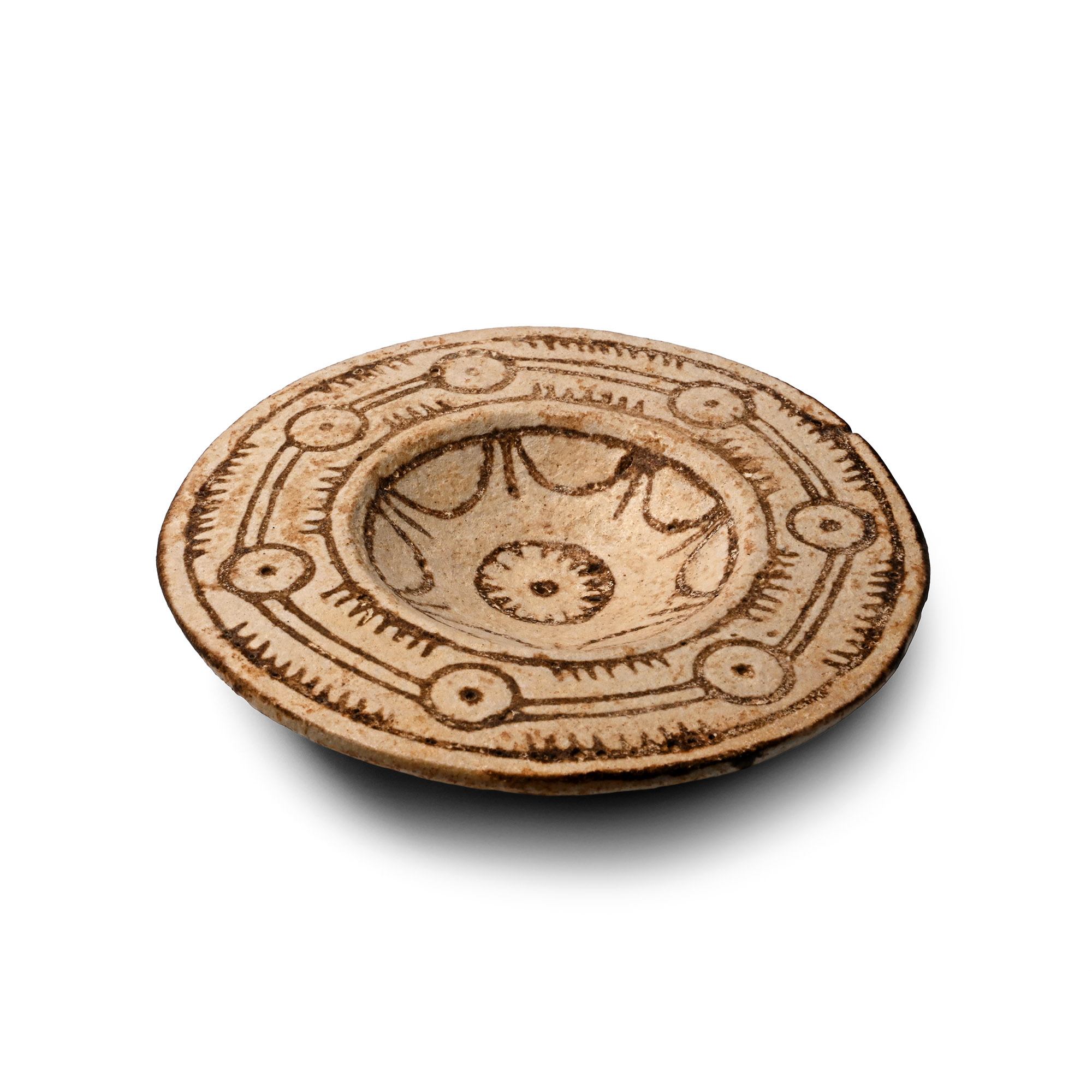
Syrian Glazed Terracotta Plate
1ST MILLENNIUM B.C.
4 7/8 in. (117 grams, 12.3 cm wide).
Discoid in plan with low conical foot, incised concentric rings to the tondo with hatching and pellet-in-ring motifs.
ProvenancePrivate collection of Mr K.A., acquired in the 1990s-early 2000s.
This lot has been cleared against the Art Loss Register database, and is accompanied by an illustrated lot declaration signed by the Head of the Antiquities Department, Dr Raffaele D'Amato.
TimeLine Auctions follows a vetting process to ensure the authenticity and legality of all items, reinforcing our commitment to integrity and responsible trading. Each antiquity, antique, and coin lot undergoes thorough examination by a vetting committee of at least ten external specialists, professional trade association members, scientists, and archaeologists: Our Vetting Process
AUCTIONS:
TimeLine is a leading auction house specialising in antiquities, ancient art, collectables, natural history, coins, medals, and books. Our auctions offer museums, collectors, historians, and enthusiasts the opportunity to acquire unique and historically significant pieces.
-
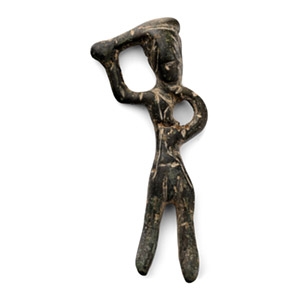
Elamite Bronze Piravend Statuette
1st millennium B.C.Sold for (Inc. bp): £72
A male wearing a tunic belted to the waist; left hand on hip, right hand raised holding a club(?); incised details to the face. 10 grams, 50 mm
Fine condition.
Ex property of a North London lady; gifted from her father's collection; formerly with a Mayfair gallery, London, UK; previously acquired in the 1980s. From the private collection of John Meredith, acquired since the 1990s; thence by descent. This lot has been cleared against the Art Loss Register database, and is accompanied by an illustrated lot declaration signed by the Head of the Antiquities Department, Dr Raffaele D'Amato. -
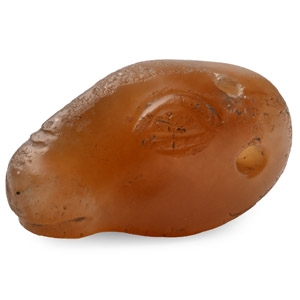
Mesopotamian Chalcedony Sheep's Head Amulet
3rd-2nd millennium B.C.Sold for (Inc. bp): £351
Finely carved bifacial sheep head with large lentoid eyes and wide mouth, pierced for suspension, two additional piercings to the top. 16.2 grams, 33 mm
Previously with a London, UK, dealership. Ex London, UK, art market, late 1990s. From a private UK collection. This lot has been cleared against the Art Loss Register database, and is accompanied by an illustrated lot declaration signed by the Head of the Antiquities Department, Dr Raffaele D'Amato. -
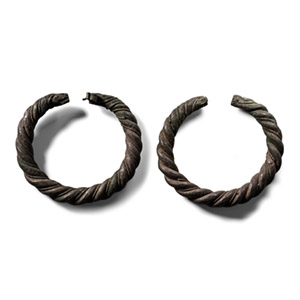
Western Asiatic Twisted Silver Bracelet Pair
10th-12th century A.D.Estimate: £800 - 1,000 (‡+bp*)
Opening Bid: £444
Each a penannular round-section band with a twisted filigree band coiled around the shank; clubbed finials, one with closure clip fitting. 259 grams total, 75-78 mm
Acquired in the mid 1980s-1990s. Private collection, Switzerland, thence by descent. Private collection, since the late 1990s. This lot has been cleared against the Art Loss Register database, and is accompanied by an illustrated lot declaration signed by the Head of the Antiquities Department, Dr Raffaele D'Amato.
