
Loading, please wait...
LOT 1520
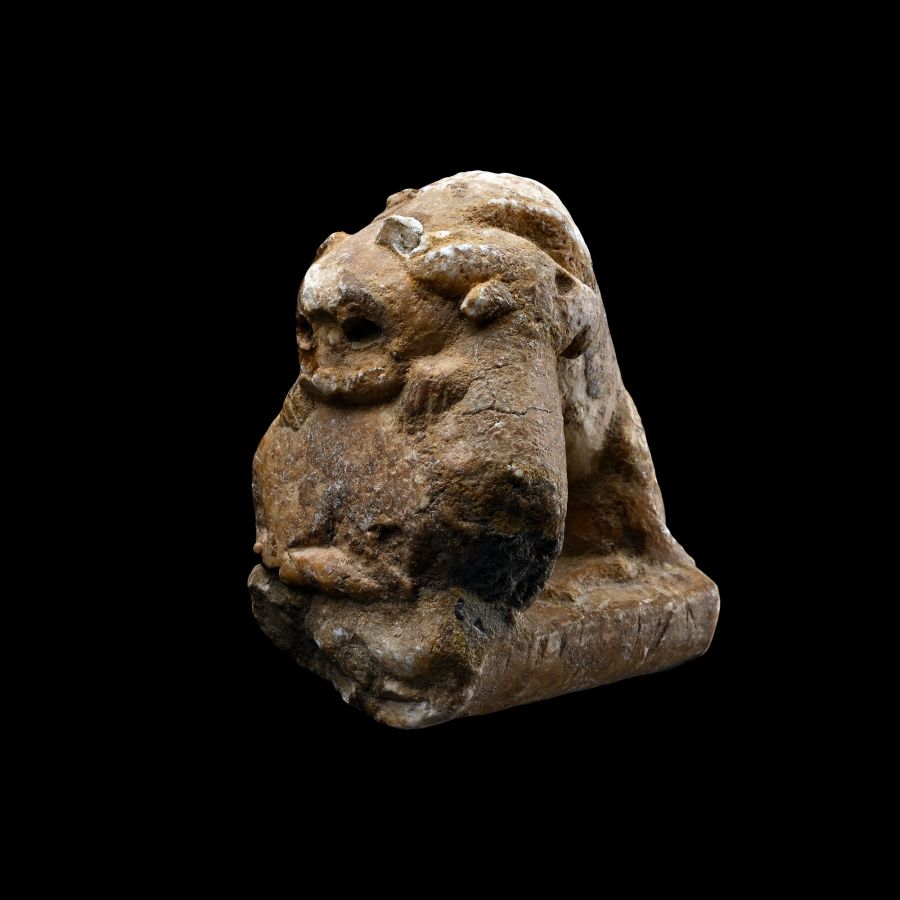
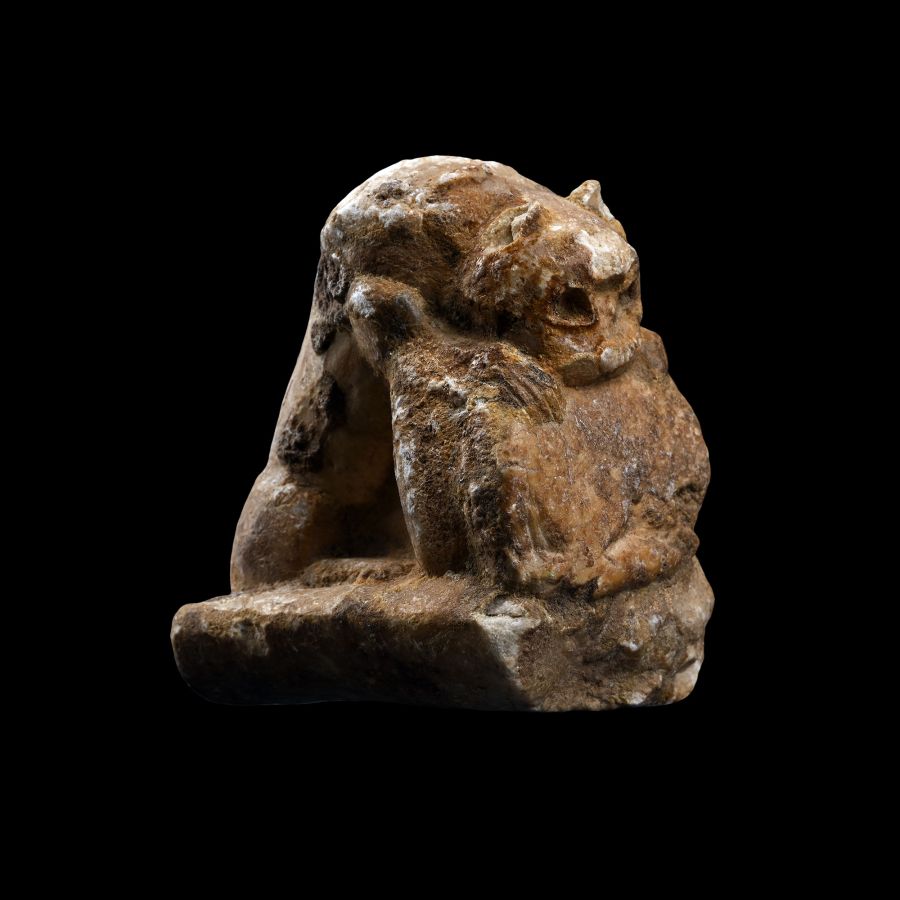
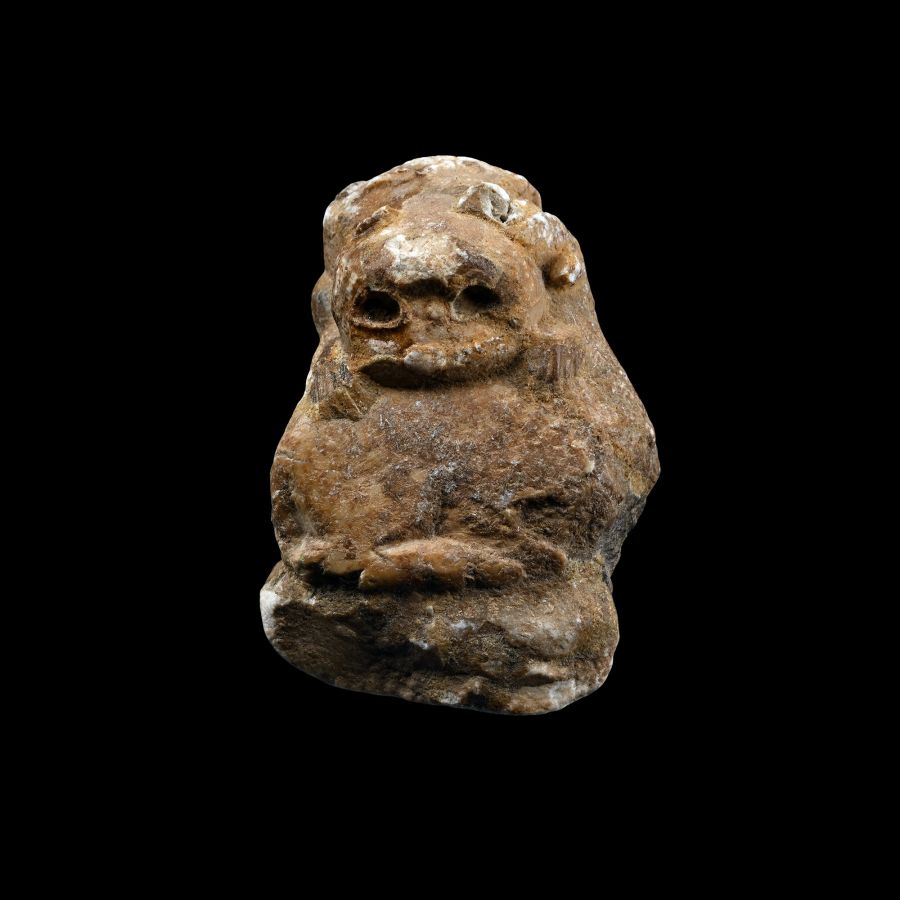
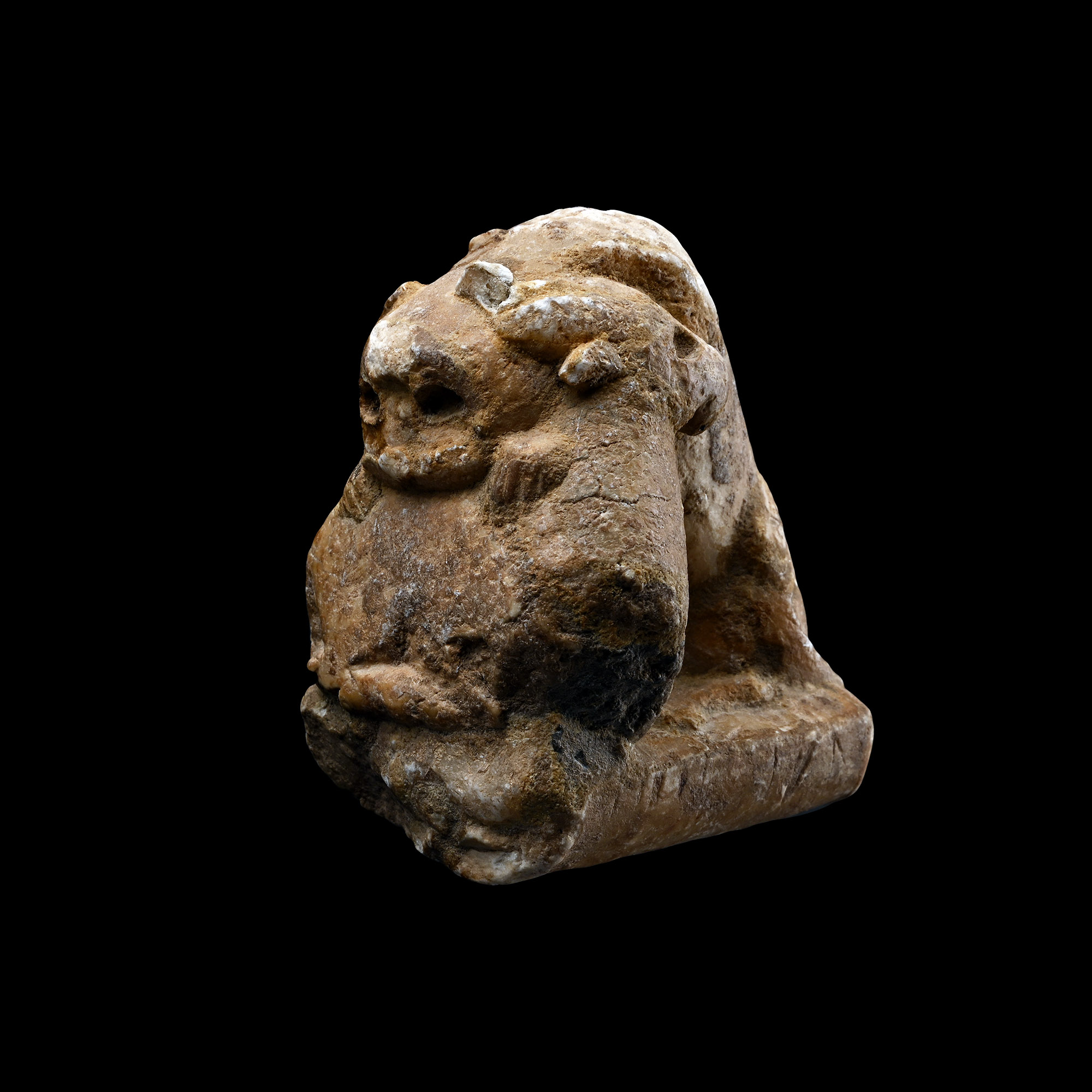
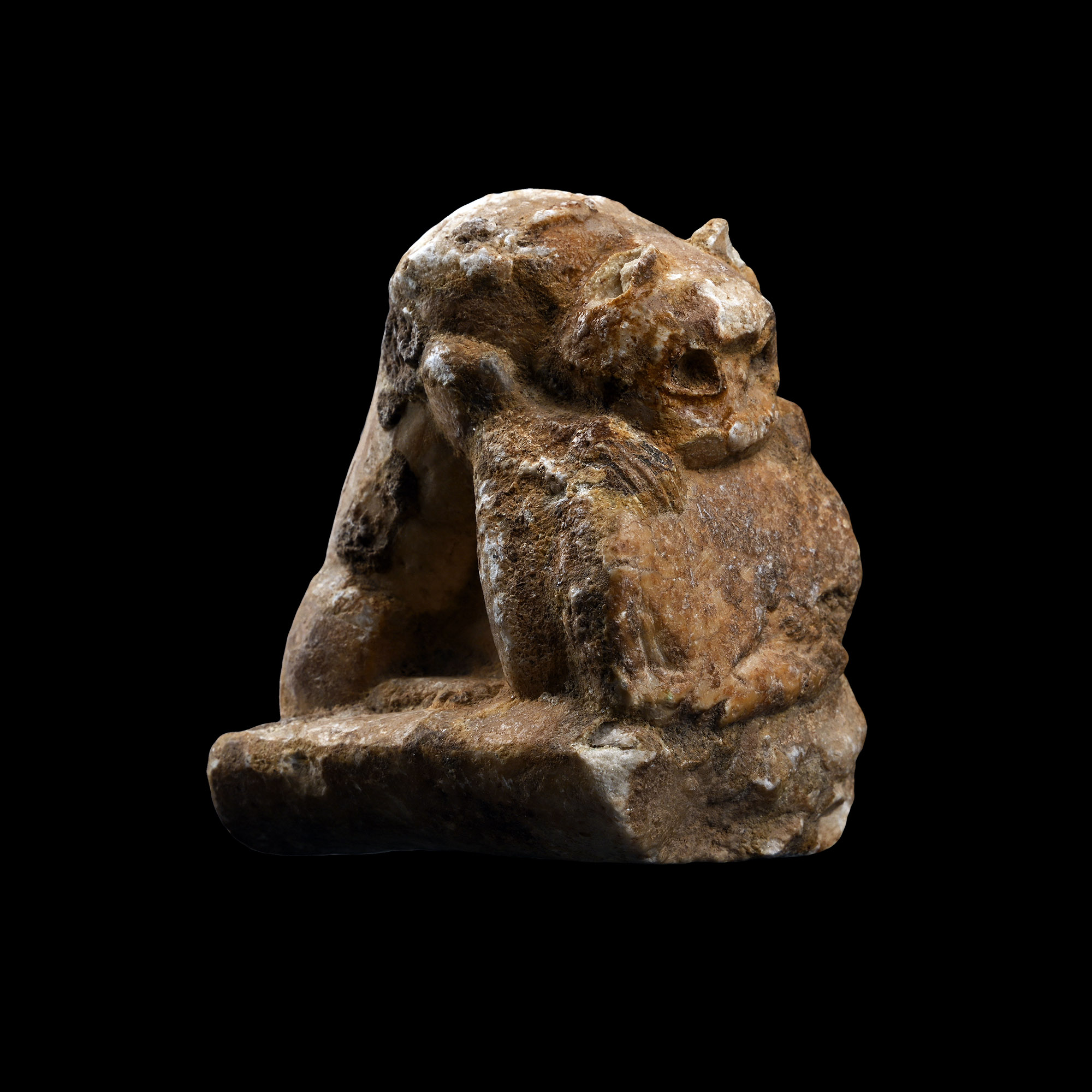
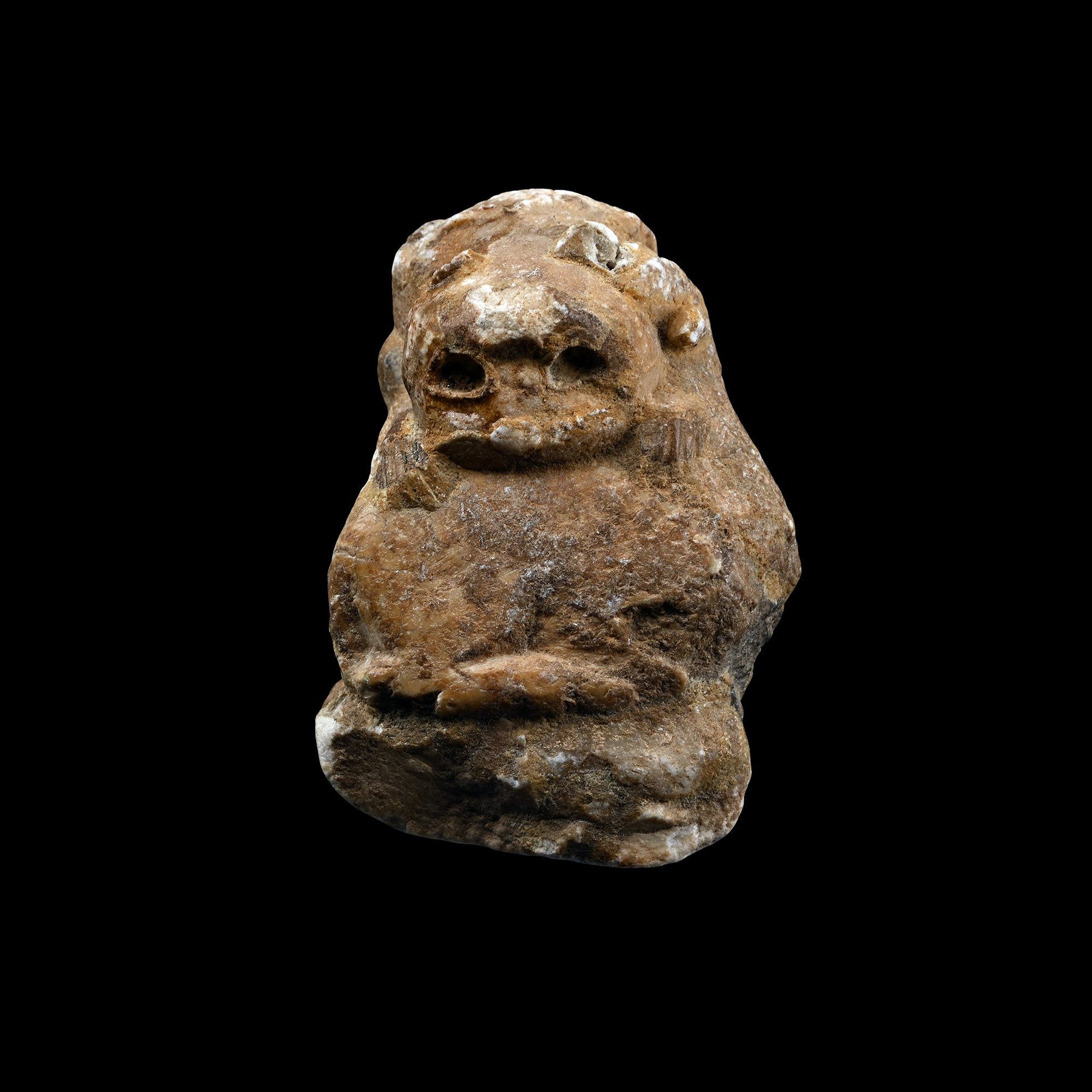
Sumerian Stone Statue Fragment
3RD MILLENNIUM B.C.
3 3/8 in. (340 grams, 85 mm).
Carved in the round figure of a lion crouching on its haunches, with neck arched and forepaws resting on the spine (upper edge) of an animal placed perpendicular to the lion's head biting into its flesh; the D-shaped face with teardrop-shaped sockets for the eyes, button nose, small triangular ears; the prey with legs folded beneath the body, head turned along the lion's mane and left shoulder, with small protrusive horn and ear, oval socket for the eye; integral base with rounded lateral edges, fracture at each end.
ProvenanceFrom the collection of a gentleman, acquired on the London art market in the 1990s.
LiteratureSee Strommenger, E., The Art of Mesopotamia, London, 1964, no.26, for examples of the theme of lions attacking their prey.
CONDITIONTimeLine Auctions follows a vetting process to ensure the authenticity and legality of all items, reinforcing our commitment to integrity and responsible trading. Each antiquity, antique, and coin lot undergoes thorough examination by a vetting committee of at least ten external specialists, professional trade association members, scientists, and archaeologists: Our Vetting Process
AUCTIONS:
TimeLine is a leading auction house specialising in antiquities, ancient art, collectables, natural history, coins, medals, and books. Our auctions offer museums, collectors, historians, and enthusiasts the opportunity to acquire unique and historically significant pieces.
-
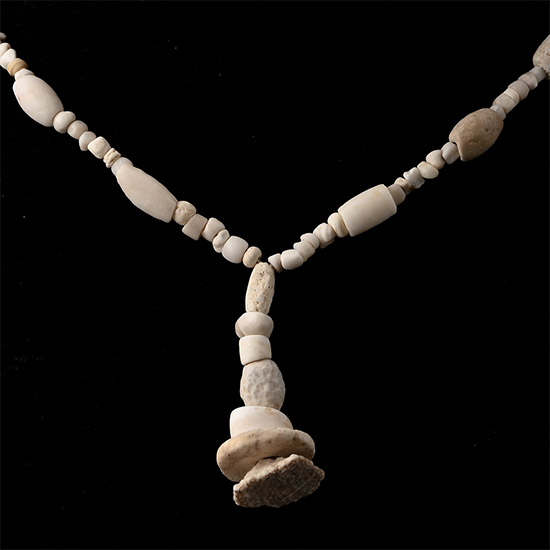
Western Asiatic White Stone Bead Necklace String
1st millennium B.C. and laterSold for (Inc. bp): £33
Comprising larger barrel-shaped beads interspersed with smaller beads, the central feature with larger beads, restrung. 15.21 grams, 32 cm
Ex London, UK, collection, 1990s. -
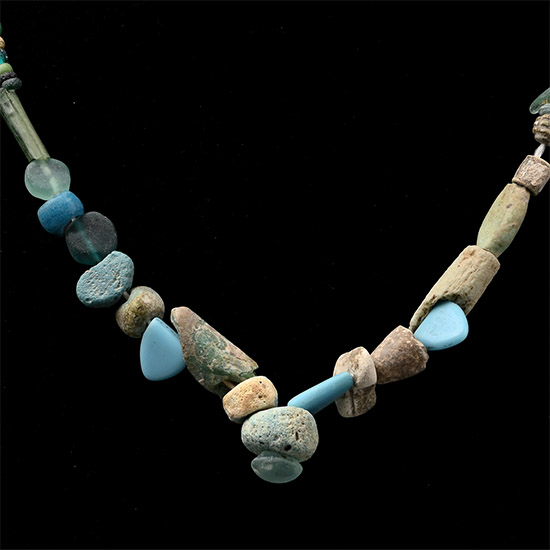
Western Asiatic Glass and Stone Bead Necklace String
1st millennium A.D. and laterSold for (Inc. bp): £39
Composed of mixed beads, including some reused bangle fragments, restrung. 18.7 grams, 35.5 cm
Ex London, UK, collection, 1990s. -
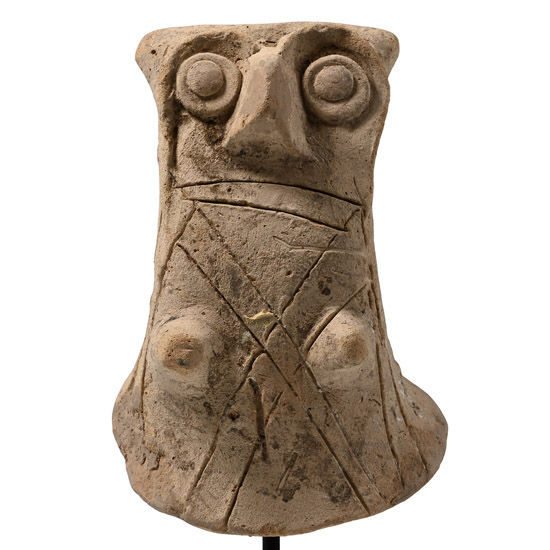
Western Asiatic Terracotta Vessel Attachment
1st millennium B.C.Sold for (Inc. bp): £572
Hollow-formed with flared conical base and rectangular upper end; applied facial features, incised saltire, domed breasts; mounted on a custom-made stand. 351 grams total, 10.96 cm including stand
Property of a North American gentleman, London, UK, 1990-2010.
