
Loading, please wait...
_900x900.jpg "Sumerian Stone Bull Amulet")
_200x200.jpg "Sumerian Stone Bull Amulet")

.jpg "Sumerian Stone Bull Amulet")
LOT 1045
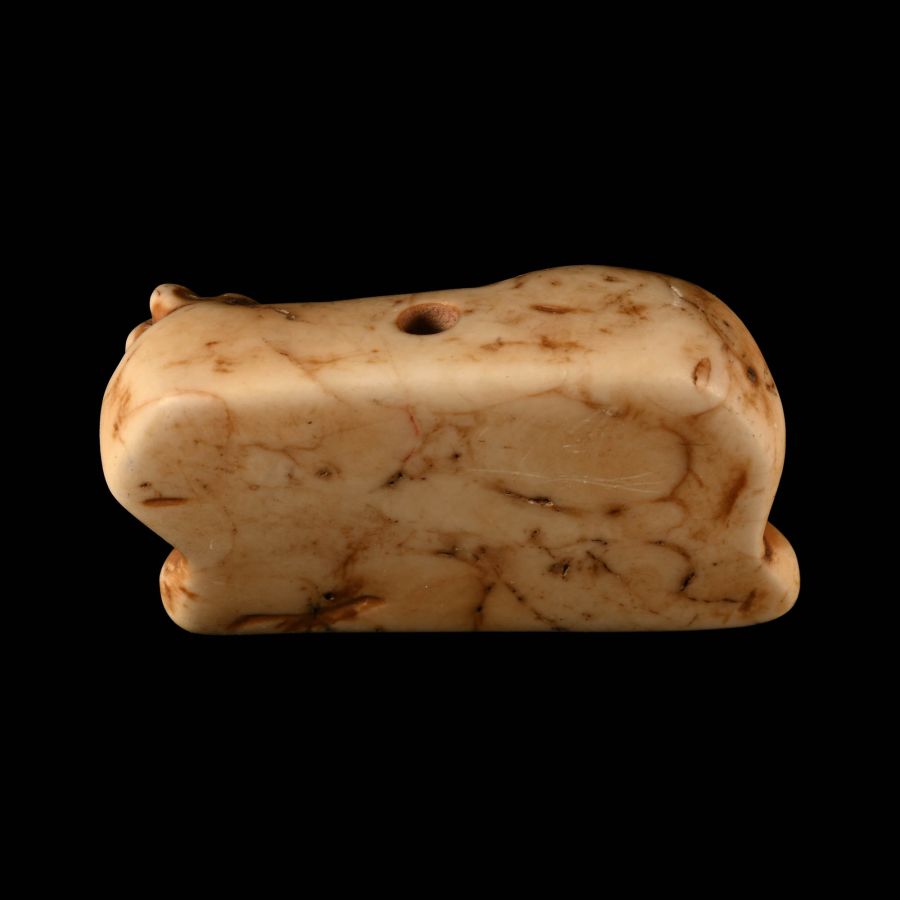
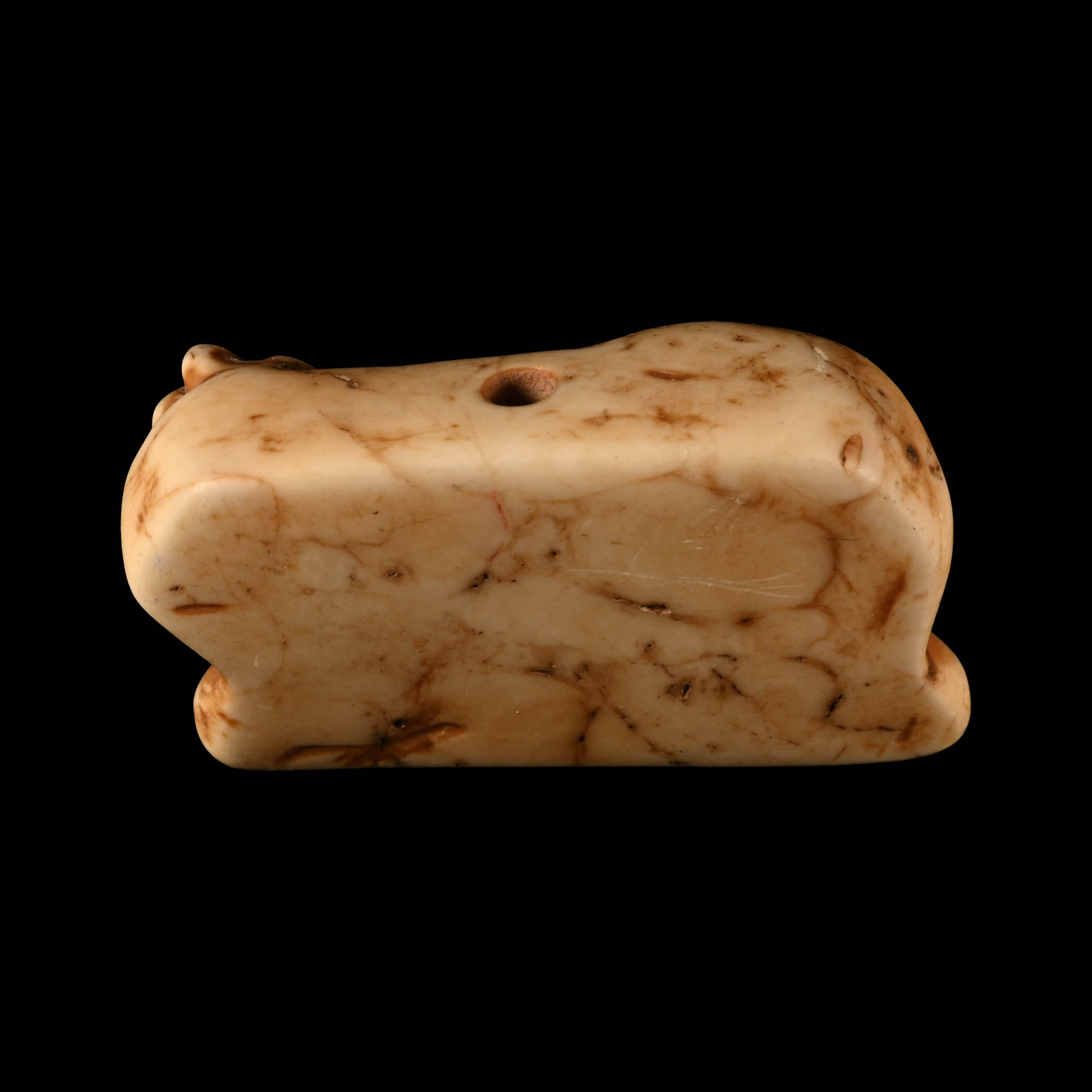
Sumerian Stone Bull Amulet
3RD MILLENNIUM B.C. OR LATER
2 in. (21.56 grams, 49 mm).
Carved in the half-round, a bull with the legs folded beneath the body and head turned backwards. [No Reserve]
ProvenanceAcquired in the 1980s.
From the collection of a London antiquarian.
TimeLine Auctions follows a vetting process to ensure the authenticity and legality of all items, reinforcing our commitment to integrity and responsible trading. Each antiquity, antique, and coin lot undergoes thorough examination by a vetting committee of at least ten external specialists, professional trade association members, scientists, and archaeologists: Our Vetting Process
AUCTIONS:
TimeLine is a leading auction house specialising in antiquities, ancient art, collectables, natural history, coins, medals, and books. Our auctions offer museums, collectors, historians, and enthusiasts the opportunity to acquire unique and historically significant pieces.
-
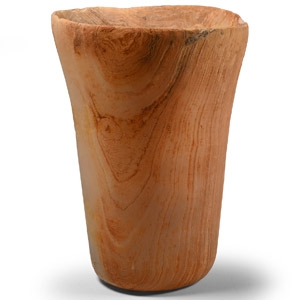
Bactrian Alabaster Vessel
1st millennium B.C.Estimate: £300 - 400 (+bp*)
Opening Bid: £150
Conical in profile with disc base, flared sidewall tapering to a narrow rim. 847 grams, 15 cm
Ex London, UK, gallery, 1971-early 2000s. London, UK, collection. -
.jpg)
Sumerian Limestone Bull Head Protome
3rd millennium B.C.Estimate: £40,000 - 60,000 (‡+bp*)
Opening Bid: £20,000
With large eyes, the pupils inlaid in black chlorite, bone insert for the sclerae, three arching grooved brows, the wide muzzle with a horizontal incision between the nostrils, closed mouth; sockets to the sides of the head to accept separately made horns and ears; the edge of the neck contoured for attachment; mounted on a custom-made display stand. 1.24 kg total, 14.5 cm high including stand
Private European collection, 1985. with Christie’s, New York, 3 June 2009, no.35. Private collection, Europe. Accompanied by an academic report by Dr Raffaele D’Amato. This lot has been checked against the Interpol Database of stolen works of art and is accompanied by search certificate number no.12358-226703.
In Sumerian mythology, the bull was associated with the storm and rain god Hadad (Iškur), and is widely represented on artworks (Woolley, 1961, pp.46, 52; Kramer, 1979, figs.17, 18, 22). The round inlaid eyes are typical of Sumerian art of Early Dynastic Period, as well as the three eyebrows. -
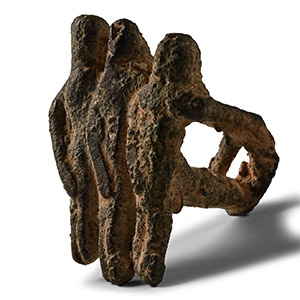
Bactrian Bronze Stamp Seal
1st millennium B.C.Estimate: £100 - 140 (‡+bp*)
Opening Bid: £50
Formed as three nude male figures each with one hand to the mouth and the other covering the anus; with vertical bar handle and ring finial. 99 grams, 54 mm
Acquired in the mid 1980s-1990s. Private collection, Switzerland, thence by descent. Private collection, since the late 1990s.
