
Loading, please wait...
LOT 0199
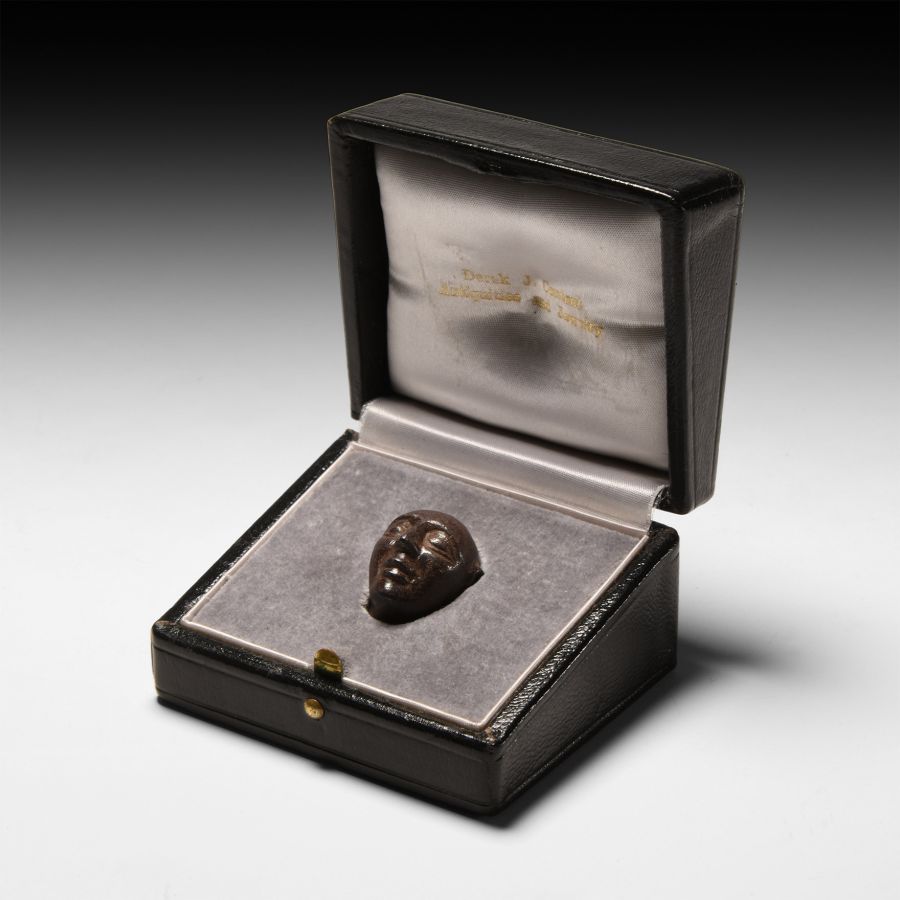
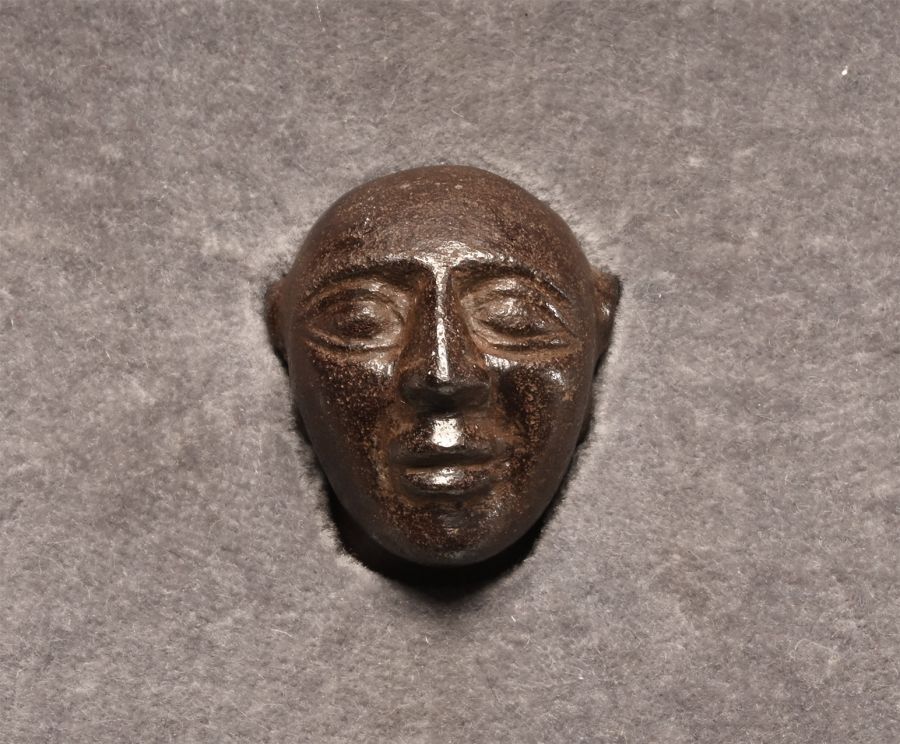
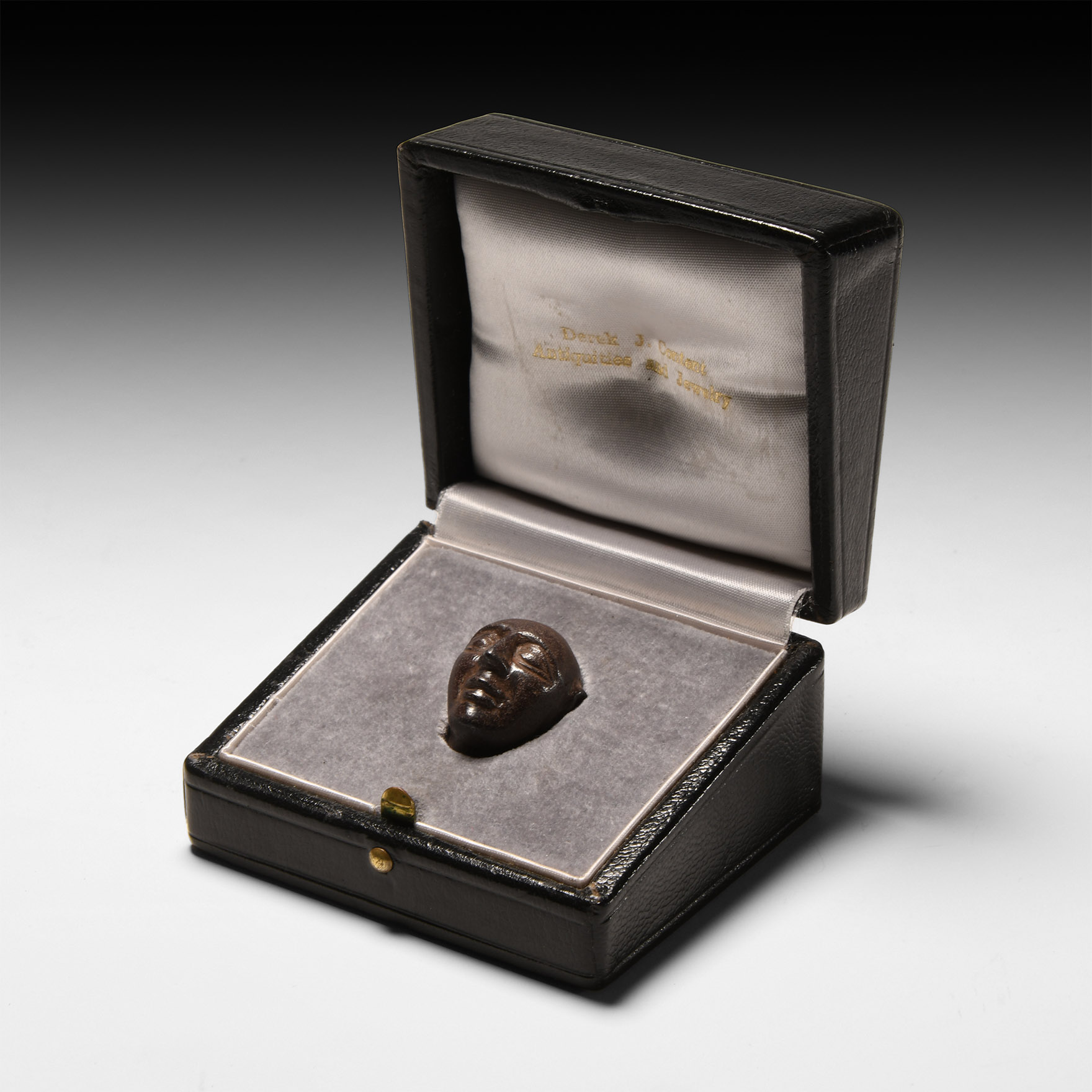
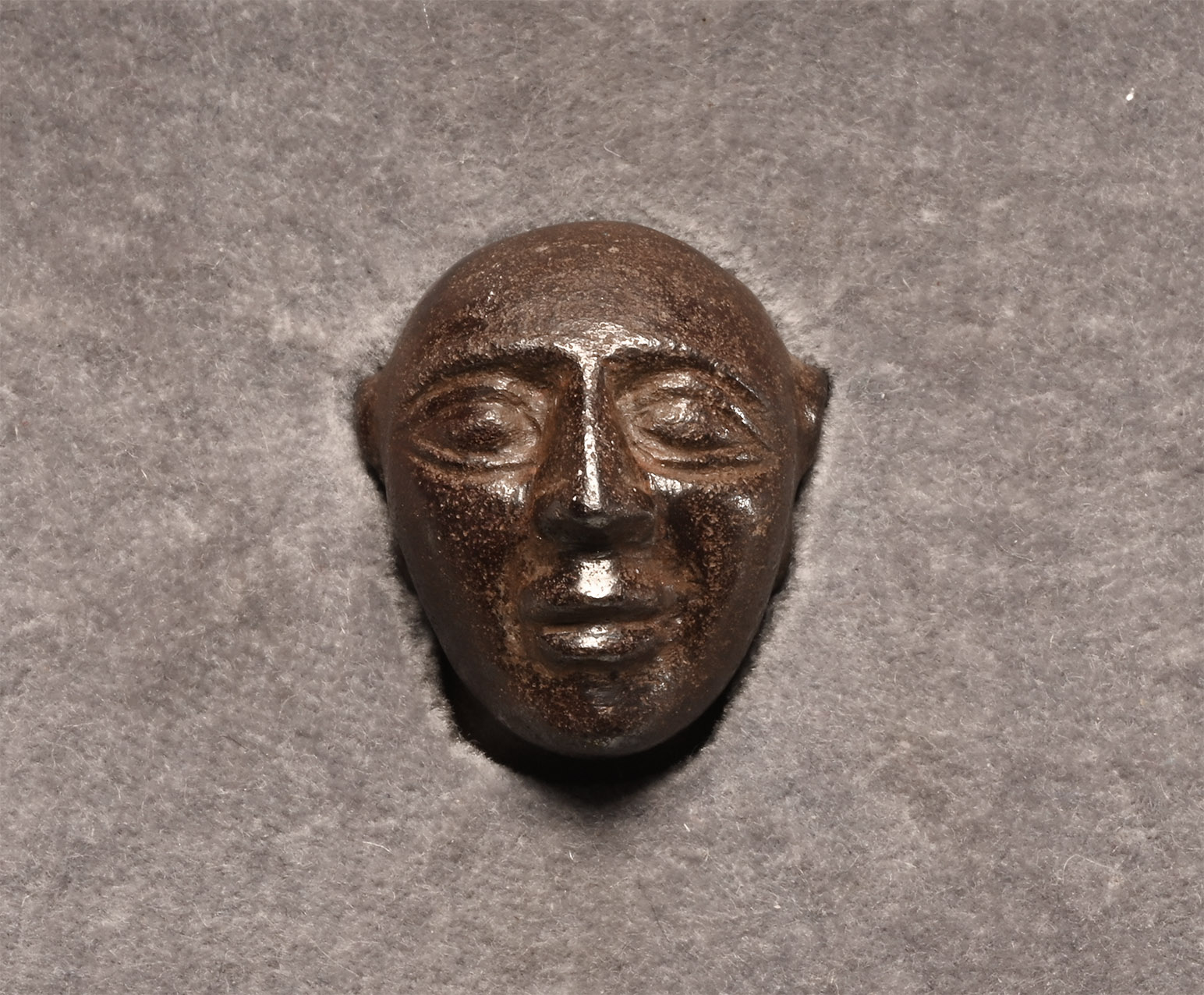
Sumerian Priest Head Pendant
3RD MILLENNIUM B.C.
7/8 in. (13 grams, 23.5 mm (82 grams total)).
A haematite pendant in the form of the shaved head of a priest carved with semi-naturalistic facial features; drilled horizontally through the top of the head for suspension; displayed in a custom-made presentation box printed 'Derek J. Content Antiquities and Jewelry' to the interior.
ProvenanceAcquired in the late 1970s.
Important North West London collection.
This lot has been checked against the Interpol Database of stolen works of art and is accompanied by search certificate no.11644-199720.
Cf. Aruz, J. ed., Art Of The First Cities, The Third Millennium B.C. from the Mediterranean to the Indus, The Metropolitan Museum of Art, New York, 2003, for figures showing stylistic similarities and for general discussion; cf. The Metropolitan Museum, New York, accession number 86.16.7, for a 3rd millennium B.C. head of a Neo-Sumerian man showing stylistic similarities.
CONDITIONTimeLine Auctions follows a vetting process to ensure the authenticity and legality of all items, reinforcing our commitment to integrity and responsible trading. Each antiquity, antique, and coin lot undergoes thorough examination by a vetting committee of at least ten external specialists, professional trade association members, scientists, and archaeologists: Our Vetting Process
AUCTIONS:
TimeLine is a leading auction house specialising in antiquities, ancient art, collectables, natural history, coins, medals, and books. Our auctions offer museums, collectors, historians, and enthusiasts the opportunity to acquire unique and historically significant pieces.
LOT 0199
Sumerian Priest Head Pendant
Estimate £3,500 - 4,500€4,060 - 5,220 (for guidance only)$4,730 - 6,080 (for guidance only)
-
Western Asiatic Gold and Gem Pendant
1st millennium B.C.Sold for (Inc. bp): £234
A gold pendant with honey-coloured piriform polished gemstone body set into a gold cell with polished garnet-set terminals, spherical bead to belly of the gemstone with trefoil finial composed of three coiled wire discs; suspension loop composed of coiled gold wire, spherical bead and hoop wrapped in a coiled wire sleeve; a marriage. 2.82 grams, 38 mm
Acquired 1980-2015. Ex Abelita family collection. -
Luristan Mouflon Whetstone Terminal
13th-7th century B.C.Sold for (Inc. bp): £279
A copper-alloy whetstone terminal in the form of the head and forequarters of a mouflon, with a cylindrical body, legs tucked beneath its chest, large curved horns creating two closed loops, large pricked ears and stylised facial features. 64 grams, 63 mm wide
Fine condition.
Acquired 1990s. From an important Paris gallery, France. Ex Parisian collection. -
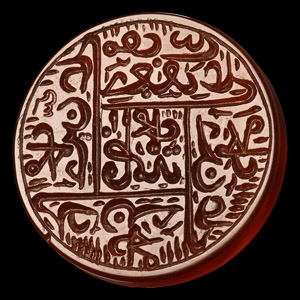
Western Asiatic Inscribed Gemstone
20th century A.D.Estimate: £200 - 300 (+bp*)
Opening Bid: £80
A discoid carnelian gemstone, bearing calligraphic Arabic script to one face. 4.5 grams, 25 mm
Acquired before the early 1970s. Ex London, UK, gallery. Property of a London gentleman.
