
Loading, please wait...
LOT 0202
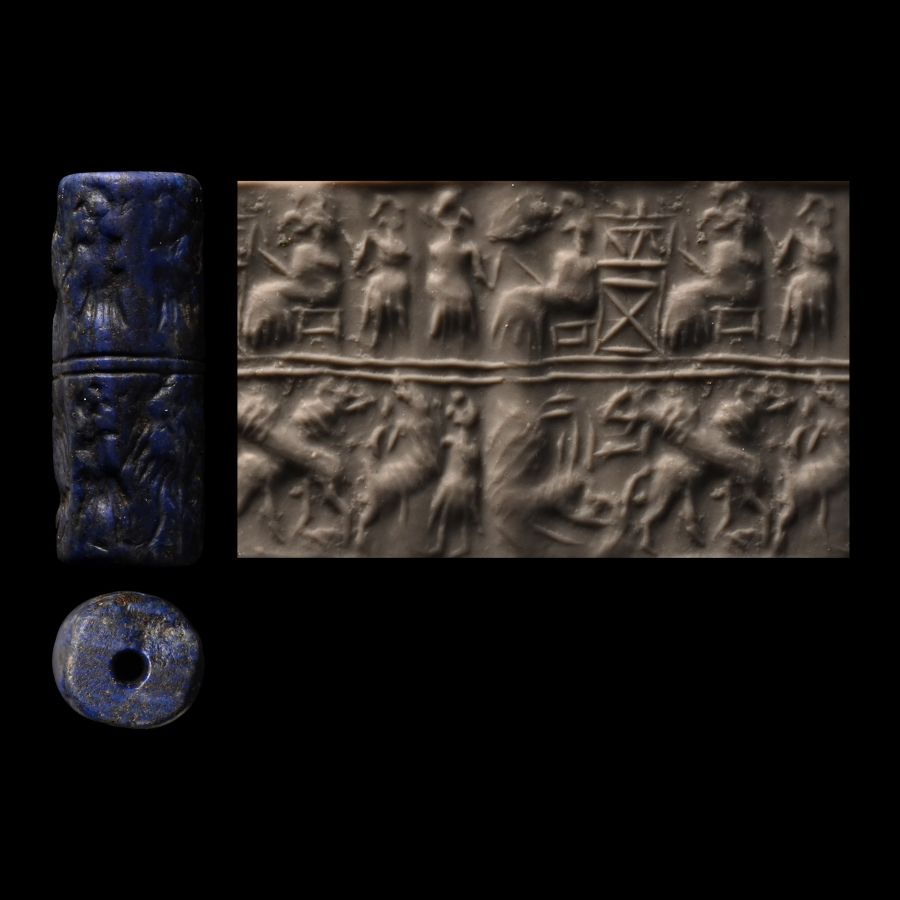
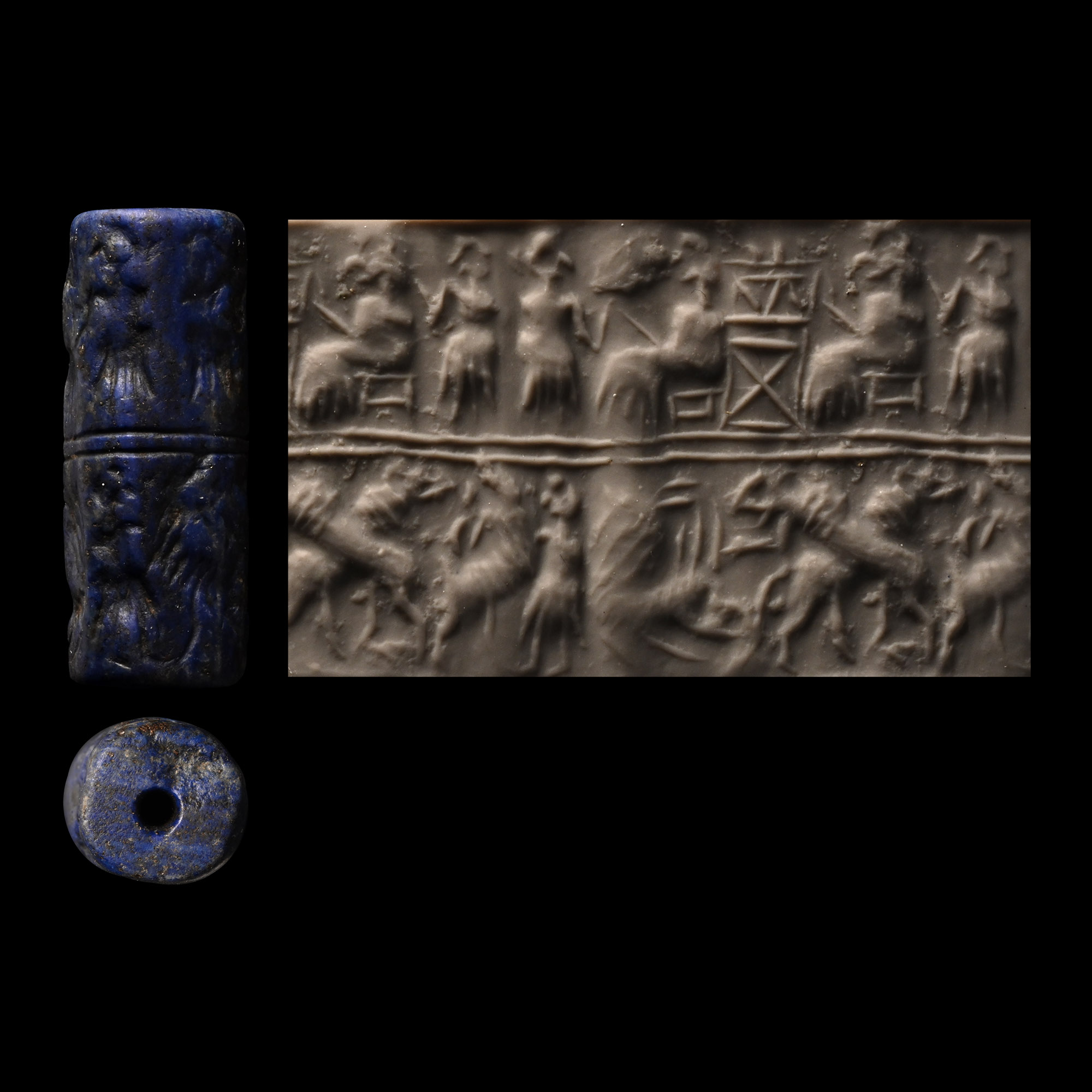
Sumerian Lapis Lazuli Cylinder Seal with Gods and Attendant
EARLY DYNASTIC III, 2600-2340 B.C.
1 1/4 in. (12.4 grams, 33 mm).
With two sections, upper section with two seated figures and two attendants, lower section with standing figure among animals; supplied with a museum-quality impression.
ProvenanceFrom the collection of the late S, London, UK, 1970-2000.
Examined by Professor Wilfrid George Lambert FBA (1926-2011), historian, archaeologist, and specialist in Assyriology and Near Eastern archaeology, in the 1990s.
This lot has been cleared against the Art Loss Register database, and is accompanied by an illustrated lot declaration signed by the Head of the Antiquities Department, Dr Raffaele D'Amato.
TimeLine Auctions follows a vetting process to ensure the authenticity and legality of all items, reinforcing our commitment to integrity and responsible trading. Each antiquity, antique, and coin lot undergoes thorough examination by a vetting committee of at least ten external specialists, professional trade association members, scientists, and archaeologists: Our Vetting Process
AUCTIONS:
TimeLine is a leading auction house specialising in antiquities, ancient art, collectables, natural history, coins, medals, and books. Our auctions offer museums, collectors, historians, and enthusiasts the opportunity to acquire unique and historically significant pieces.
LOT 0202
Sumerian Lapis Lazuli Cylinder Seal with Gods and Attendant
Sold for (Inc. bp): £1,105
-
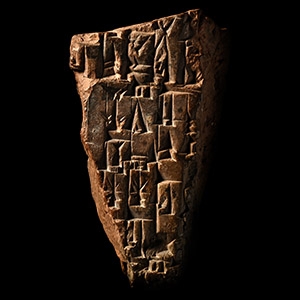
Sumerian Terracotta Cuneiform Tablet Section.
Ur III, 22nd-21st century B.C.Sold for (Inc. bp): £364
Trapezoidal in plan with impressed cuneiform text in columns. 26.39 grams, 50 mm
London, UK, art market, 1980s. From the collection of G.M.R.H., London, UK. This lot has been cleared against the Art Loss Register database, and is accompanied by an illustrated lot declaration signed by the Head of the Antiquities Department, Dr Raffaele D'Amato. -
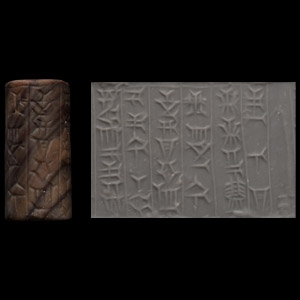
Kassite Stone Cylinder Seal with 'Merciful is An-Amurru, Giver of Health' Inscription
Circa 1530-1200 B.C.Sold for (Inc. bp): £1,430
With six columns of cuneiform inscription, reading 'Merciful is An-Amurru, giver of health -- his reverent servant, Ahushina, son of Itti-Ea-...'; accompanied by a museum-quality impression. 7.91 grams, 26 mm
From the collection of the late S, London, UK, 1970-2000. Examined by Professor Wilfrid George Lambert FBA (1926-2011), historian, archaeologist, and specialist in Assyriology and Near Eastern archaeology, in the 1990s. This lot has been cleared against the Art Loss Register database, and is accompanied by an illustrated lot declaration signed by the Head of the Antiquities Department, Dr Raffaele D'Amato. -
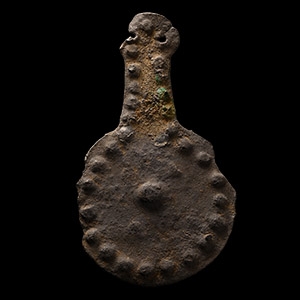
Early Bronze Age Silver Idol
Circa 2400-2100 B.C.Estimate: £1,200 - 1,700 (+bp*)
Opening Bid: £600
Violin-shaped with round body, long neck and stylised head, symbolising a female body, perforated with two holes at the top representing the eyes, embossed with dots around the perimeter. 5.34 grams, 62 mm
From a private family collection formed since the early 19th century, thence by descent. Property of a New Zealand legal professional. Accompanied by an academic report by Dr Raffaele D’Amato. This lot has been checked against the Interpol Database of stolen works of art and is accompanied by search certificate number no.12321-223719. This lot has been cleared against the Art Loss Register database, and is accompanied by an illustrated lot declaration signed by the Head of the Antiquities Department, Dr Raffaele D'Amato.
