
Loading, please wait...
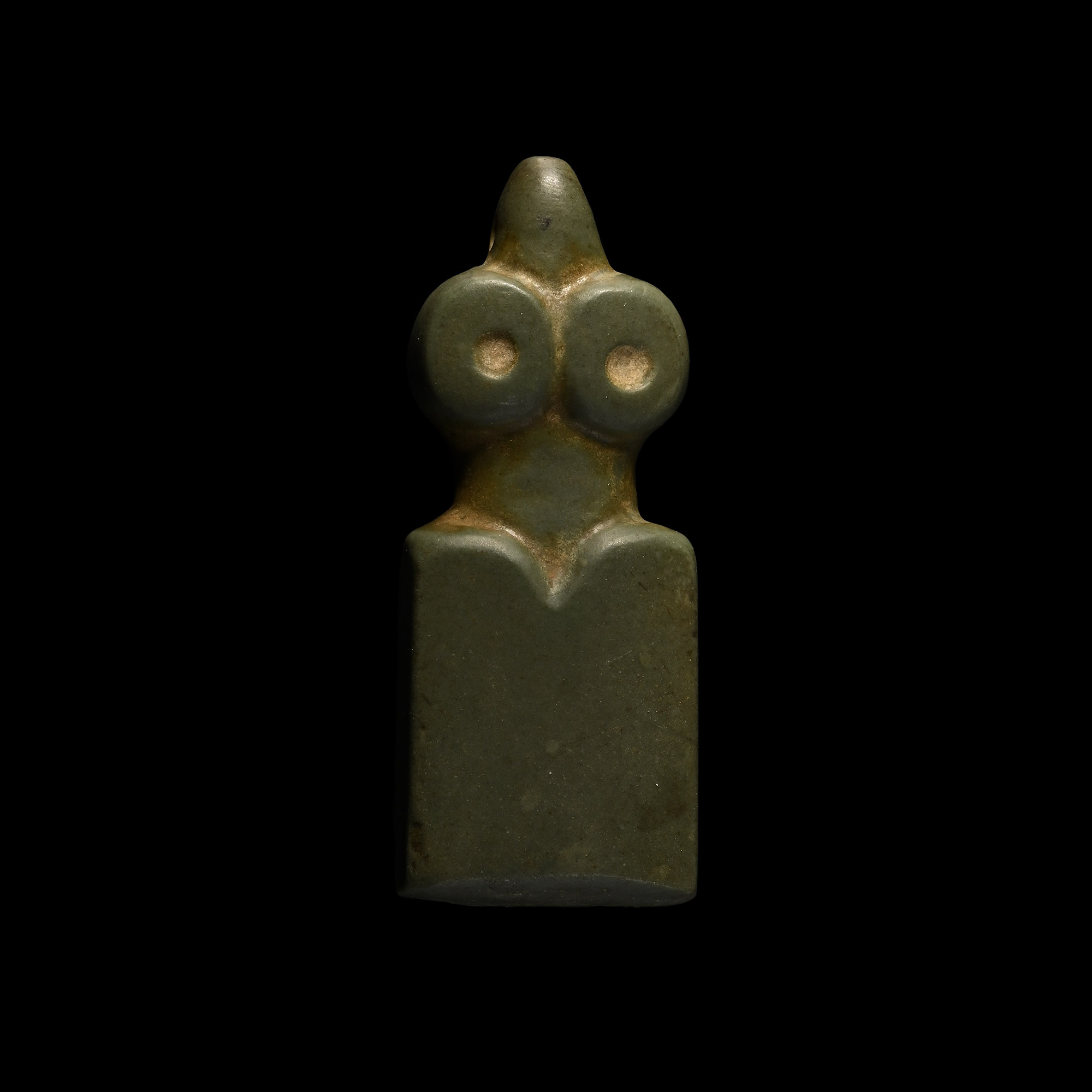
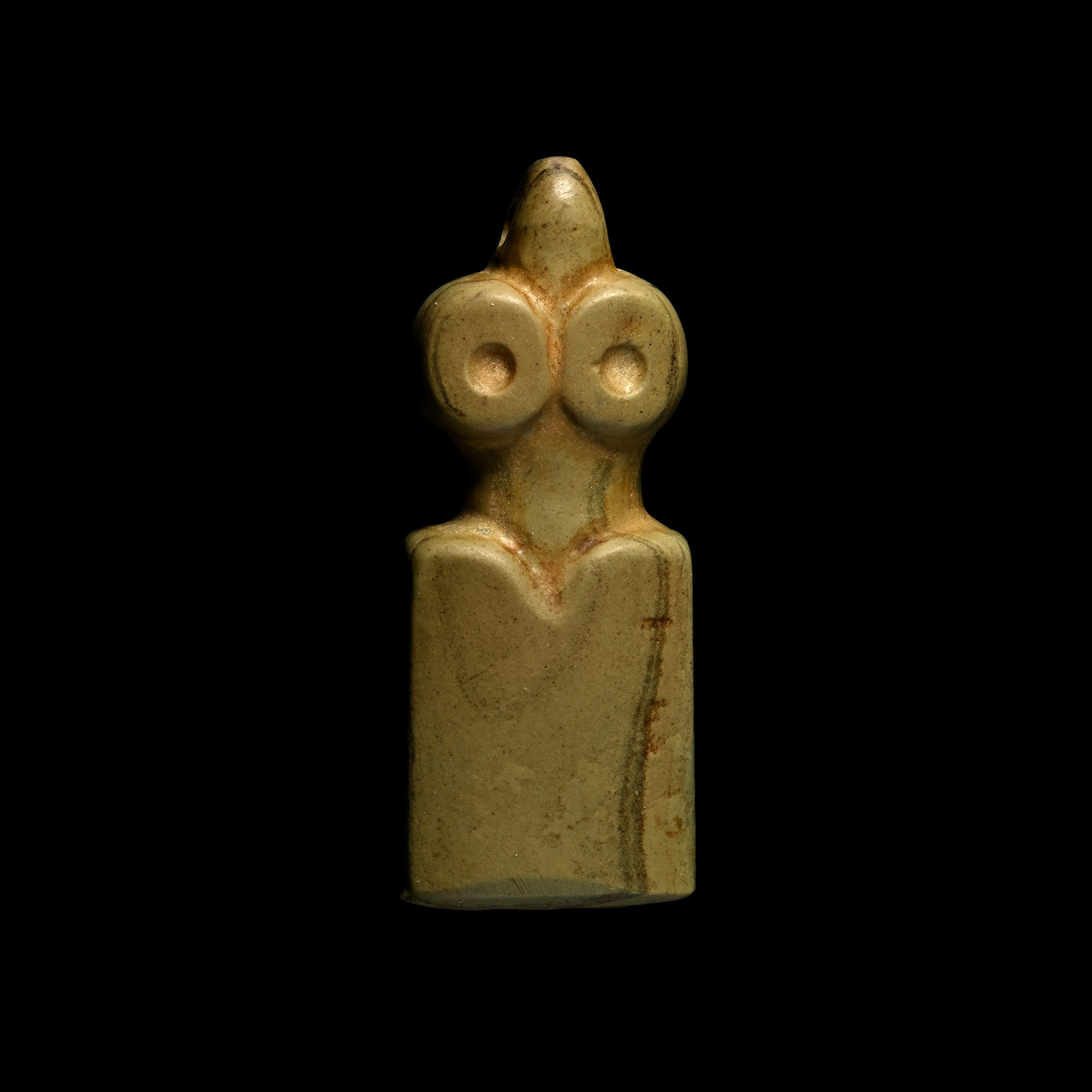
LOT 0294
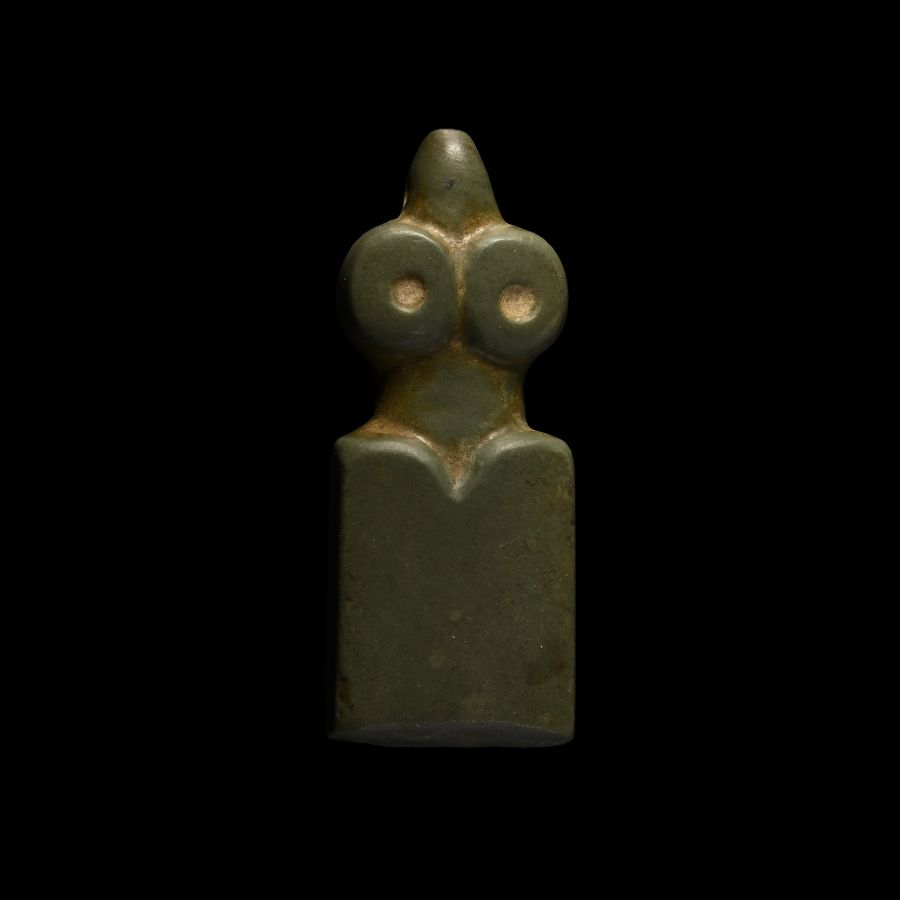
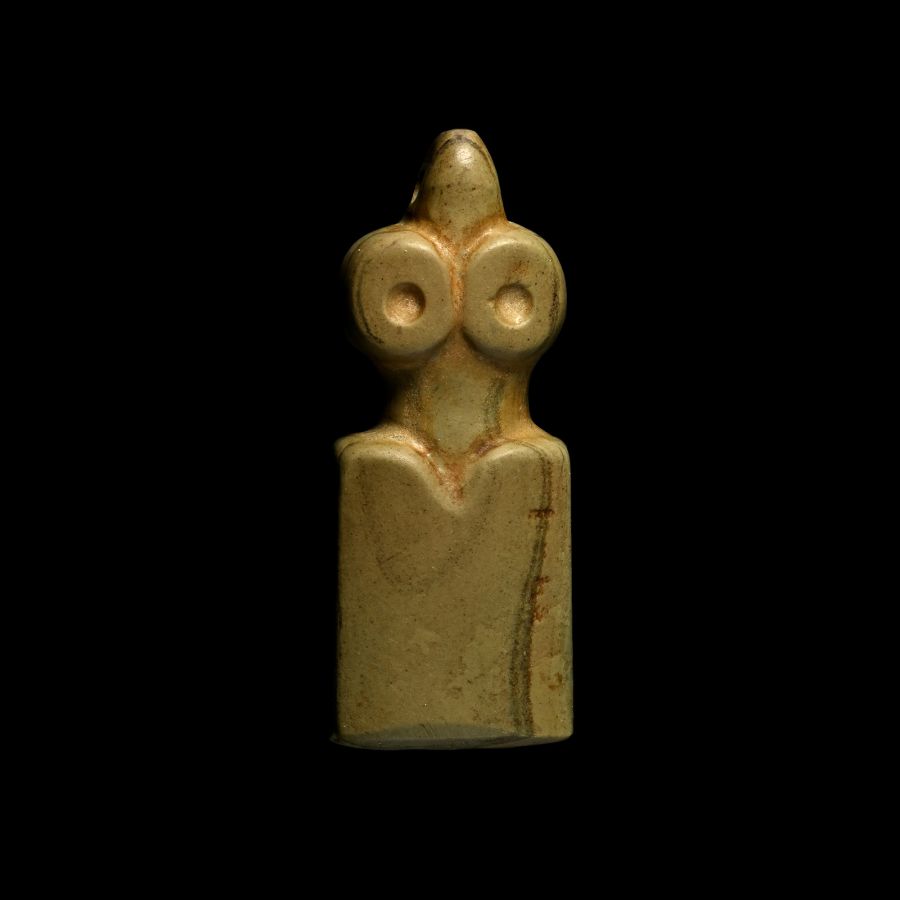
Sumerian Green Stone Eye Idol
3RD MILLENNIUM B.C.
1 5/8 in. (13.2 grams, 41 mm).
Carved in the round as a rectangular block with a slit to the upper edge, vertical spike with two annulet 'eyes'; pierced for suspension.
Provenancewith M. Petropoulos, Zurich, early 1990s.
with Rhéa gallery.
Private collection, acquired in 1999.
This lot has been checked against the Interpol Database of stolen works of art and is accompanied by a search certificate number no.12897-241753.
See Amiet, P., Art of the Ancient Near East, New York, 1980, figures 215-216.
FootnotesIdols were an important part of religious life in South Arabia and across the ancient Near East. They were made as images of gods, spirits, or protective powers, and helped people feel a closer connection to the divine. These figures might be placed in temples, shrines, or even in the home, where they could have a protective or devotional role. Their shapes were often simple and stylised, with more importance placed on their meaning than on making them look fully realistic.
CONDITIONTimeLine Auctions follows a vetting process to ensure the authenticity and legality of all items, reinforcing our commitment to integrity and responsible trading. Each antiquity, antique, and coin lot undergoes thorough examination by a vetting committee of at least ten external specialists, professional trade association members, scientists, and archaeologists: Our Vetting Process
AUCTIONS:
TimeLine is a leading auction house specialising in antiquities, ancient art, collectables, natural history, coins, medals, and books. Our auctions offer museums, collectors, historians, and enthusiasts the opportunity to acquire unique and historically significant pieces.
LOT 0294
Sumerian Green Stone Eye Idol
Estimate £2,500 - 3,500€2,900 - 4,060 (for guidance only)$3,380 - 4,730 (for guidance only)
-
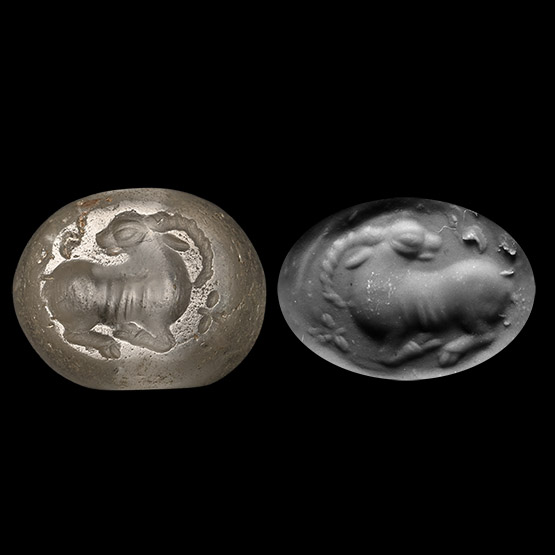
Sasanian Domed Rock Crystal Stamp Seal with Deer
3rd-5th century A.D.Sold for (Inc. bp): £33
Plano-convex with incuse motif of an ibex with legs folded beneath the body. 6.77 grams, 19 mm
London, UK, art market, 1980s. Private collection, London, UK. -
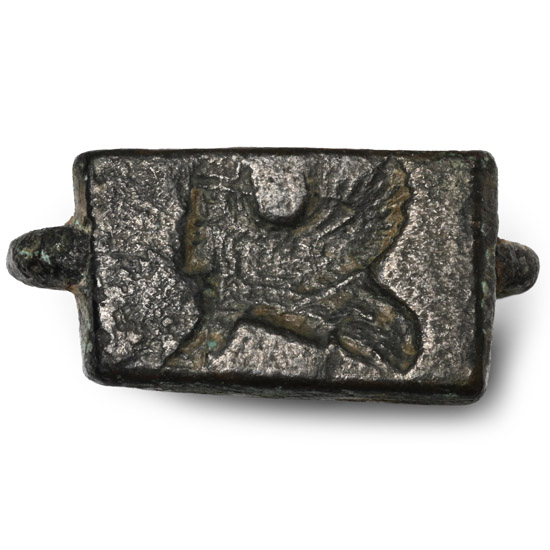
Western Asiatic Bronze Seal with Gryphon
1st millennium B.C.Sold for (Inc. bp): £59
Rectangular block with recurved wire handle; incuse profile gryphon motif. 4.31 grams, 19 mm
Ex London, UK, gentleman's collection by descent, 1980s. -
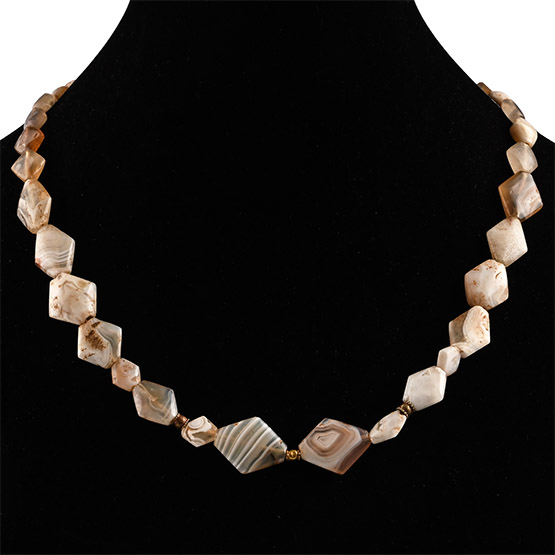
Western Asiatic Pale Agate and Gold Bead Necklace
1st millennium B.C.Estimate: £400 - 600 (+bp*)
Opening Bid: £222
Restrung group of graduated diamond-shaped beads. 42.9 grams, 50 cm
From a London gentleman's collection, 1995.
