
Loading, please wait...
LOT 0200
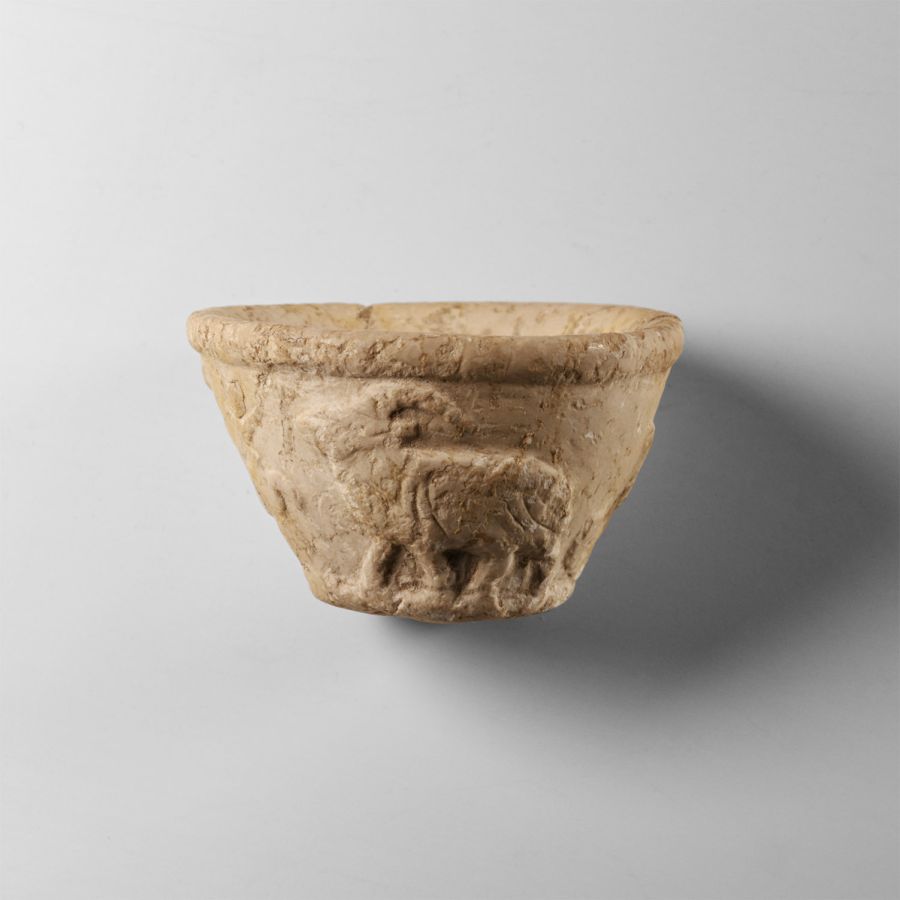
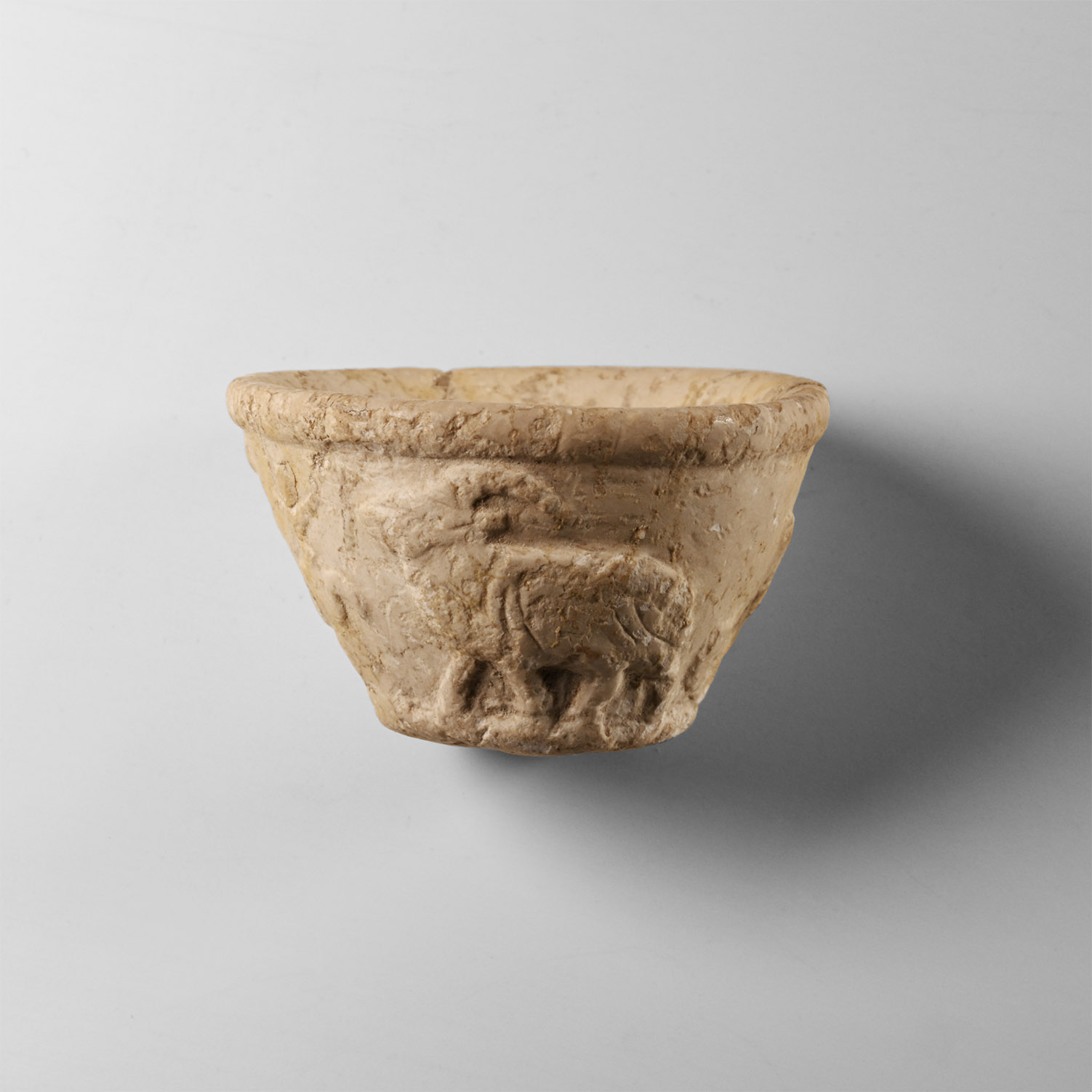
Sumerian Cup with Animal Frieze
EARLY DYNASTIC PERIOD, 2900-2560 B.C.
1 3/4 in. (27.9 grams, 46 mm wide).
A truncated conical gypsum ritual drinking cup with rounded rim and discoid foot, displaying a frieze of mythological animals in relief to the exterior, including a lion-headed eagle with its wings spread, and an iconic Mesopotamian religious scene composed of a deity wearing a horned cup, flanked by a bull and goat; repaired.
ProvenanceAcquired 1969-1999.
London collection of the late Mr S.M., thence by descent.
Accompanied by a previous typed cataloguing sheet.
In many ancient Mediterranean cultures, such vessels were symbols of wealth and status, or ritual objects associated with cult activities. Lion-headed eagles were associated with the god of Imdugud or Anzu, a divine bird and the personification of wind, thunder and cloud; this cup may have been used as a dedication to the god.
CONDITIONTimeLine Auctions follows a vetting process to ensure the authenticity and legality of all items, reinforcing our commitment to integrity and responsible trading. Each antiquity, antique, and coin lot undergoes thorough examination by a vetting committee of at least ten external specialists, professional trade association members, scientists, and archaeologists: Our Vetting Process
AUCTIONS:
TimeLine is a leading auction house specialising in antiquities, ancient art, collectables, natural history, coins, medals, and books. Our auctions offer museums, collectors, historians, and enthusiasts the opportunity to acquire unique and historically significant pieces.
-
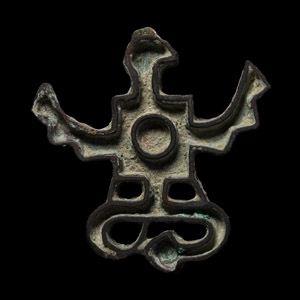
Central Asian Eagle and Snake Compartmented Seal Pendant
23rd-20th century B.C.Sold for (Inc. bp): £195
A copper-alloy compartmented stamp seal formed as a geometric style eagle with spread wings, a coiled snake gripped in its talons; suspension loop to reverse. 17.6 grams, 47 mm
1980s-early 1990s collection, UK. -
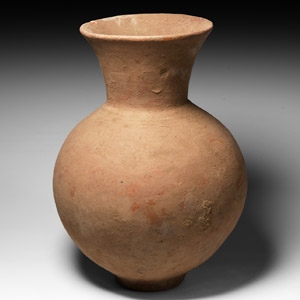
Western Asiatic Bulbous Vase
2nd-1st millennium B.C.Estimate: £200 - 300 (+bp*)
Opening Bid: £100
A bulbous ceramic vessel with trumpet-style neck and rim and integral foot. 1.1 kg, 23 cm high
Acquired 1980-2015. Ex Abelita family collection. -
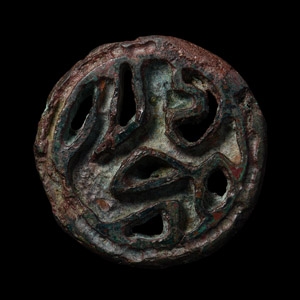
Central Asian Seal Pendant with Monkey
23rd-20th century B.C.Sold for (Inc. bp): £78
A bronze stamp seal featuring an openwork stylised monkey design; suspension loop to reverse; accompanied by a typed and signed scholarly note by W.G. Lambert, the late Professor of Assyriology at the University of Birmingham, 1970-1993, which states: '...This is round, with flat face and flat back, on which there is a small loop for suspension. The design consists of a depiction within a plain outer band. It shows a sitting monkey with tail up and front paws raised, perhaps holding something. This comes from west central Asia and dates to c.2300-2000 B.C. There is some wear and damage to the outer edge of the seal, but the design remains clear. The metal has been conserved.' 10 grams, 33 mm
1980s-early 1990s collection, UK. Accompanied by an original typed and signed scholarly note issued by the late Professor W.G. Lambert.
