
Loading, please wait...
LOT 1400
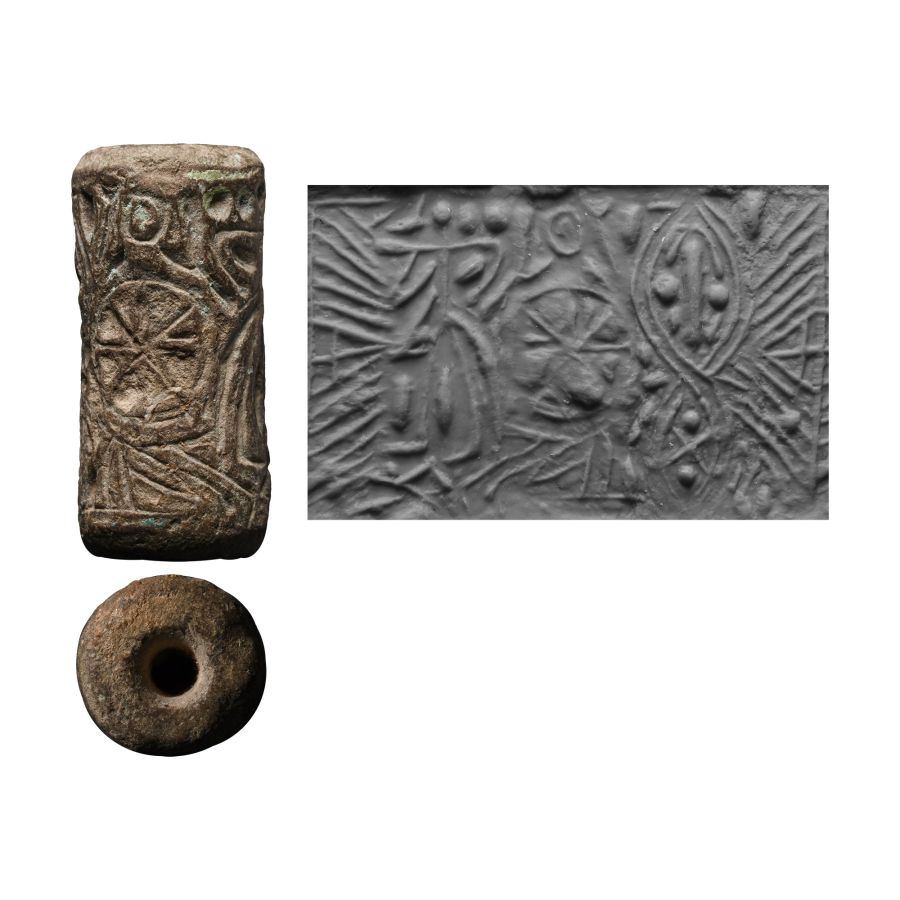
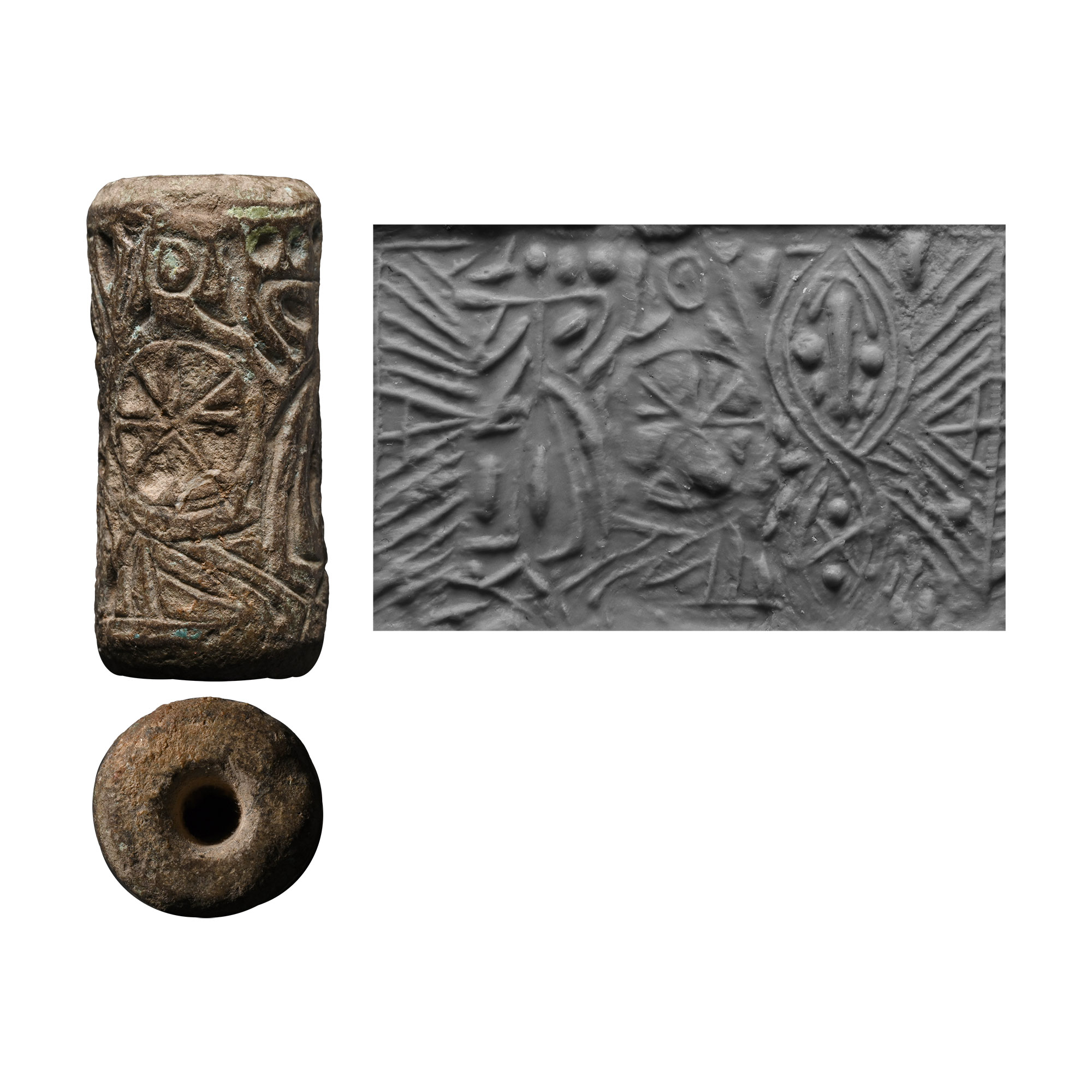
Sumerian Clay Cylinder Seal with Wheel Pattern
3RD MILLENNIUM B.C.
1 1/4 in. (6.32 grams, 30 mm).
With geometric pattern including a segmented octofoil, two vesica motifs with pellets to the centre and concentric bands outside, lozenge with parallel bands and others.
ProvenanceFrom the 'S' collection, acquired 1970-1990s.
The collection was seen and studied by W.G.Lambert, late Professor of Assyriology at the University of Birmingham, 1970-1993.
This lot has been cleared against the Art Loss Register database, and is accompanied by an illustrated lot declaration signed by the Head of the Antiquities Department, Dr Raffaele D'Amato.
TimeLine Auctions follows a vetting process to ensure the authenticity and legality of all items, reinforcing our commitment to integrity and responsible trading. Each antiquity, antique, and coin lot undergoes thorough examination by a vetting committee of at least ten external specialists, professional trade association members, scientists, and archaeologists: Our Vetting Process
AUCTIONS:
TimeLine is a leading auction house specialising in antiquities, ancient art, collectables, natural history, coins, medals, and books. Our auctions offer museums, collectors, historians, and enthusiasts the opportunity to acquire unique and historically significant pieces.
-
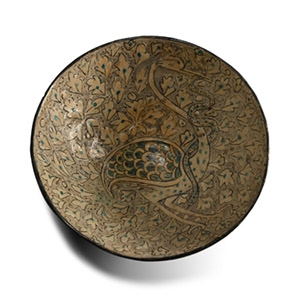
Western Asiatic Ceramic Bowl Depicting a Bird with Inscription
10th-12th century A.D.Sold for (Inc. bp): £208
With detailed depiction of a bird of elongated form on a dense field of flowing, intricate vegetal motifs with turquoise-coloured detailing; exterior ringed with a Kufic inscription, probably a blessing or prayer for the owner, written in a stylised script; heavily restored with overpainting. 569 grams, 20.5 cm
Acquired prior to 1998. Private collection, London. This lot has been cleared against the Art Loss Register database, and is accompanied by an illustrated lot declaration signed by the Head of the Antiquities Department, Dr Raffaele D'Amato.
The Sultanabad region was renowned for its high-quality ceramics during the Seljuk period. While the precise translation of the legend is uncertain, such inscriptions were commonly used to invoke protection or good fortune, making the object not only a functional piece but also a meaningful, personal artifact. -

Mesopotamian Cylinder Seal with Seated Deity
Third Dynasty of Ur, 2100-2000 B.C.Sold for (Inc. bp): £208
Cylinder with cord and bead handles; accompanied by a copy of an old scholarly note, typed and signed by W.G. Lambert, late Professor of Assyriology, University of Birmingham, 1970-1993, which states: 'Cylinder Seal of lapis Lazuli, 23.5 x 9 mm. The design shows a seated deity to the right, raising one hand, while from the left an introducing goddess leads in a worshipper. The cutting is simple, but is identifiable as from the period of the Third Dynasty of Ur, c. 2100-2000 B.C., coming from southern Mesopotamia or a neighbouring area. The design is worn, but clearly visible. Lapis is a rare stone for this period.'; accompanied by a museum-quality impression. 5.65 grams total, 8.1-23.5 mm
UK private collection, acquired 1980-1983. Accompanied by a copy of a scholarly note, typed and signed by Professor Wilfrid George Lambert in July 1991. This lot has been cleared against the Art Loss Register database, and is accompanied by an illustrated lot declaration signed by the Head of the Antiquities Department, Dr Raffaele D'Amato. -
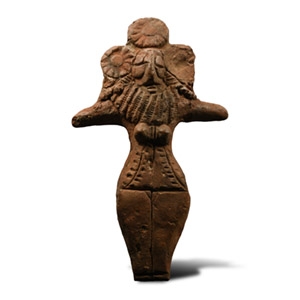
Neo-Hittite Terracotta Fertility Idol
12th-8th century B.C.Sold for (Inc. bp): £468
Standing female with radiating discs flanking the face, elaborate tiered collar. 166 grams, 14.6 cm
Ex London, UK, gallery, 1971-early 2000s. London, UK, collection. This lot has been cleared against the Art Loss Register database, and is accompanied by an illustrated lot declaration signed by the Head of the Antiquities Department, Dr Raffaele D'Amato.
