
Loading, please wait...
LOT 0281
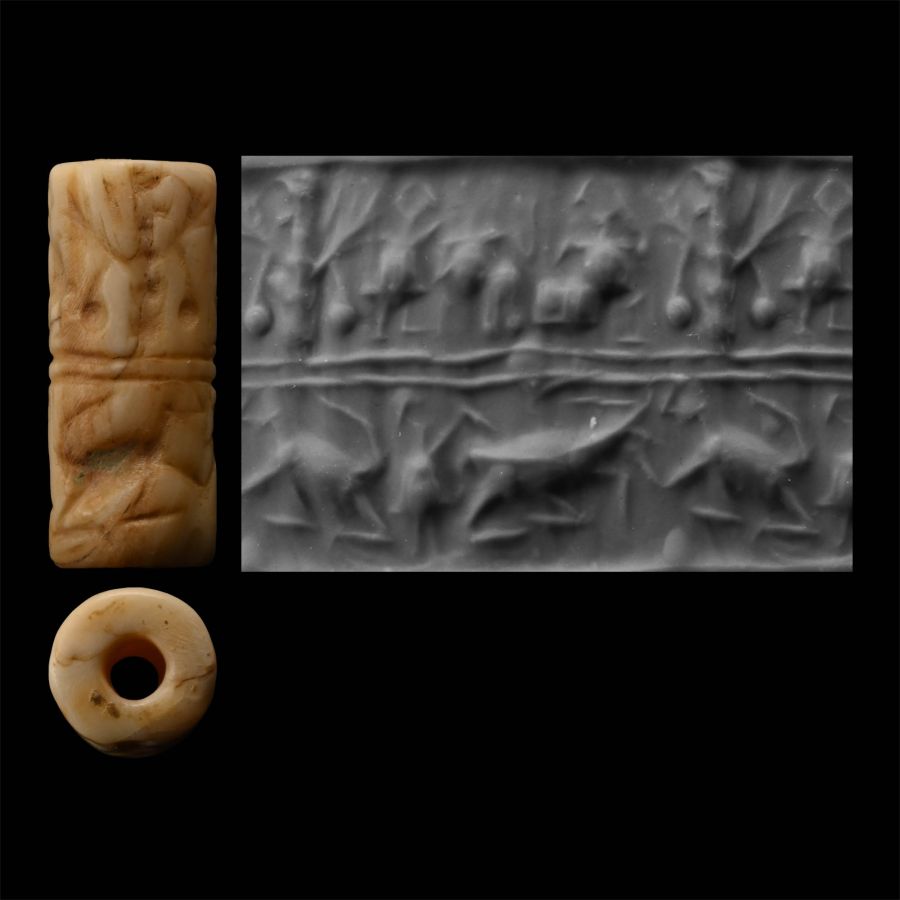
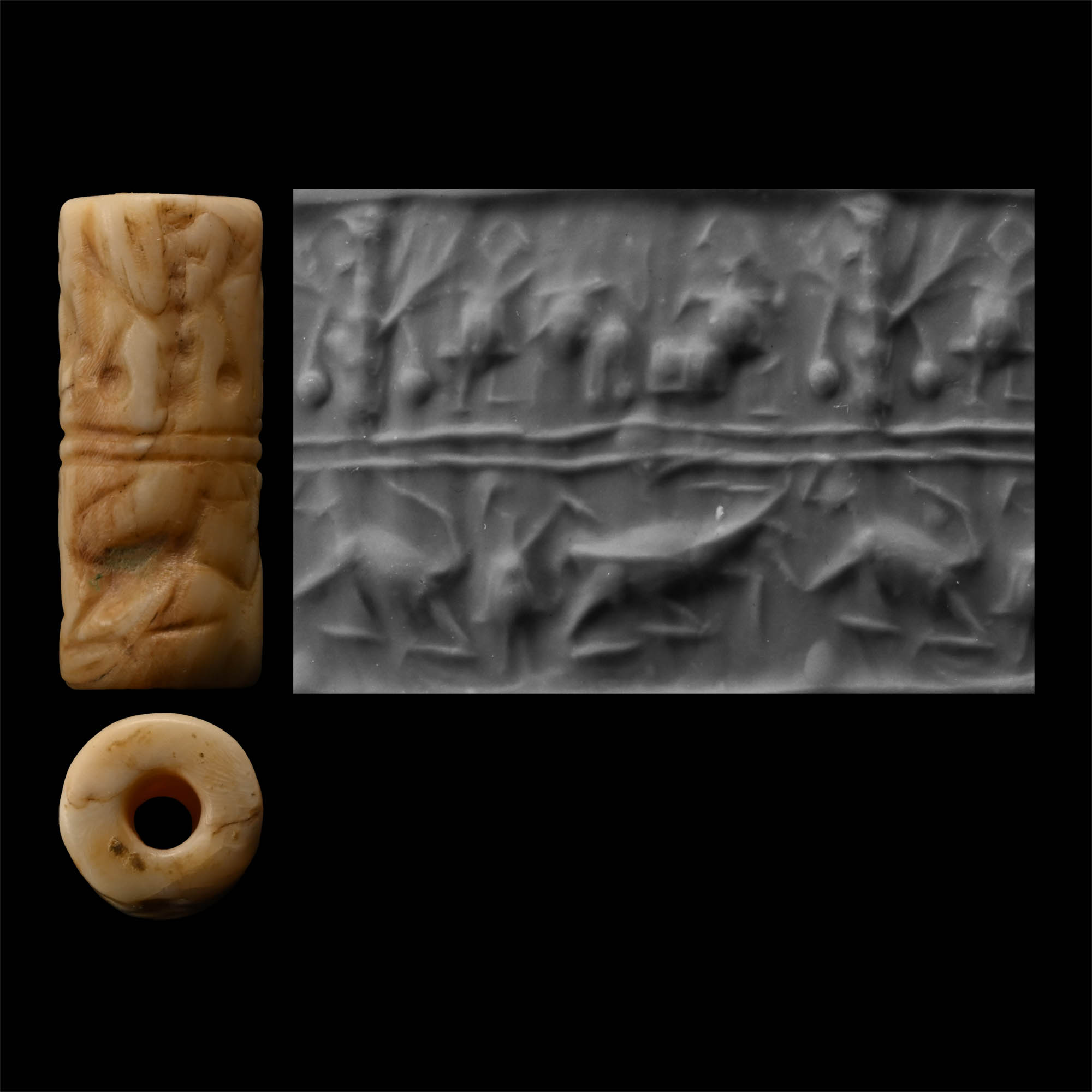
Sumerian Bone Cylinder Seal
2ND MILLENNIUM B.C.
1 in. (4.42 grams, 24 mm).
With frieze in two registers depicting running animals, facing figure with arms raised and other items.
ProvenanceEx 'S' collection, London, UK.
Examined by Professor Wilfrid George Lambert FBA (1926-2011), historian, archaeologist, and specialist in Assyriology and Near Eastern archaeology, in the late 1980s and early 1990s.
TimeLine Auctions follows a vetting process to ensure the authenticity and legality of all items, reinforcing our commitment to integrity and responsible trading. Each antiquity, antique, and coin lot undergoes thorough examination by a vetting committee of at least ten external specialists, professional trade association members, scientists, and archaeologists: Our Vetting Process
AUCTIONS:
TimeLine is a leading auction house specialising in antiquities, ancient art, collectables, natural history, coins, medals, and books. Our auctions offer museums, collectors, historians, and enthusiasts the opportunity to acquire unique and historically significant pieces.
LOT 0281
Sumerian Bone Cylinder Seal
Estimate £400 - 600€460 - 700 (for guidance only)$540 - 810 (for guidance only)
-
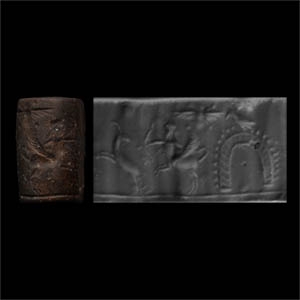
Assyrian Haematite Cylinder Seal with Hunting Scene
1st millennium B.C.Estimate: £400 - 600 (+bp*)
Opening Bid: £222
Frieze including ribbed arch, gryphon drawing a bow, winged sun-disc, rampant ibex. 3.65 grams, 15 mm
From the 'S' collection, 1970-1990s. -
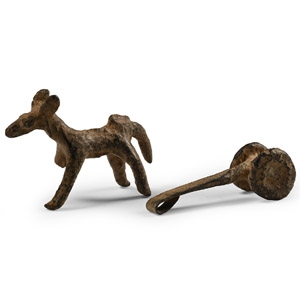
Luristan Bronze Horse and Chariot
13th-7th century B.C.Sold for (Inc. bp): £104
Amuletic figure of a standing beast with raised tag to the rump; separate chariot with lateral disc wheels and yoke with recurved end. 20.7 grams total, 38-41 mm
Ex London collection of a deceased collector, 1990s. -
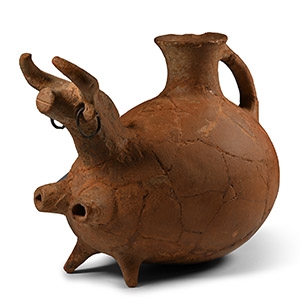
Amlash Terracotta Bull Rhyton
1st millennium B.C. and laterEstimate: £2,000 - 3,000 (+bp*)
Opening Bid: £1,000
Comprising a bulbous body with three stub legs, vertical filler spout with strap handle to the rear, bull-head finials on an arched neck with exaggerated horns and bronze rings to the ears; two short divergent spouts to the chest; with museum-style restoration. 1.7 kg, 29.5 cm
Ex London, UK, gallery, 1971-early 2000s. London, UK, collection. This lot has been checked against the Interpol Database of stolen works of art and is accompanied by search certificate number no.12259-218637.
