
Loading, please wait...
_900x900.jpg "Sumba Gold Mamuli Ear Ornament")
_200x200.jpg "Sumba Gold Mamuli Ear Ornament")
.jpg "Sumba Gold Mamuli Ear Ornament")
LOT 2156
Sumba Gold Mamuli Ear Ornament
19TH CENTURY A.D.
3 in. (28.12 grams, 74 mm).
Sheet-gold sleeve with median split, recurved ends with scrolled filigree, granules and granule clusters. [No Reserve]
ProvenancePurchased by a private German collector.
Property of a central London, UK, gallery.
TimeLine Auctions follows a vetting process to ensure the authenticity and legality of all items, reinforcing our commitment to integrity and responsible trading. Each antiquity, antique, and coin lot undergoes thorough examination by a vetting committee of at least ten external specialists, professional trade association members, scientists, and archaeologists: Our Vetting Process
AUCTIONS:
TimeLine is a leading auction house specialising in antiquities, ancient art, collectables, natural history, coins, medals, and books. Our auctions offer museums, collectors, historians, and enthusiasts the opportunity to acquire unique and historically significant pieces.
-
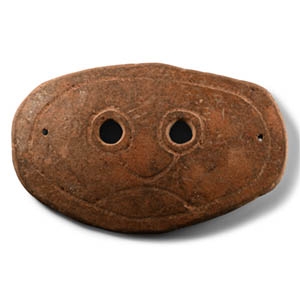
South East Asian Ceramic Funerary Mask
4th-3rd century B.C. or laterSold for (Inc. bp): £46
Slightly curved trapezoid shape with two eye-holes and incised stylised facial details; pierced at the outer edges for attachment. 228 grams, 17.7 cm
Acquired on the Asian art market. Ex property of a gentleman collector since before 2017. -
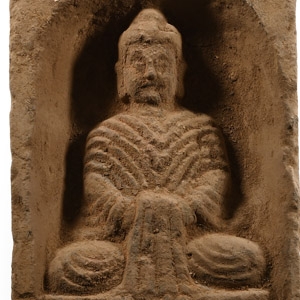
Chinese Wei Terracotta Buddha Brick
Northern Wei, 386-534 A.D. or laterSold for (Inc. bp): £195
Seated in a lotus pose on a low throne, his robe draped at the chest and legs. 3.16 kg, 28.5 cm
Ex Hong Kong collection, 1990s. From a London, UK, collection. -
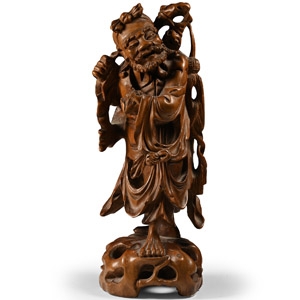
Chinese Wooden Figure
19th century A.D.Sold for (Inc. bp): £52
Carved in the round from a single wooden block, figure of an old man advancing with a club over his right shoulder and a fruit(?) in his left hand, barefoot in hunched posture with loosely draped clothing; deep undercutting and pierced work; old dealer's label to base with Arabic legend; small loss to left hand. 613 grams, 26 cm
Ex Scott family collection by descent.
