Loading, please wait...

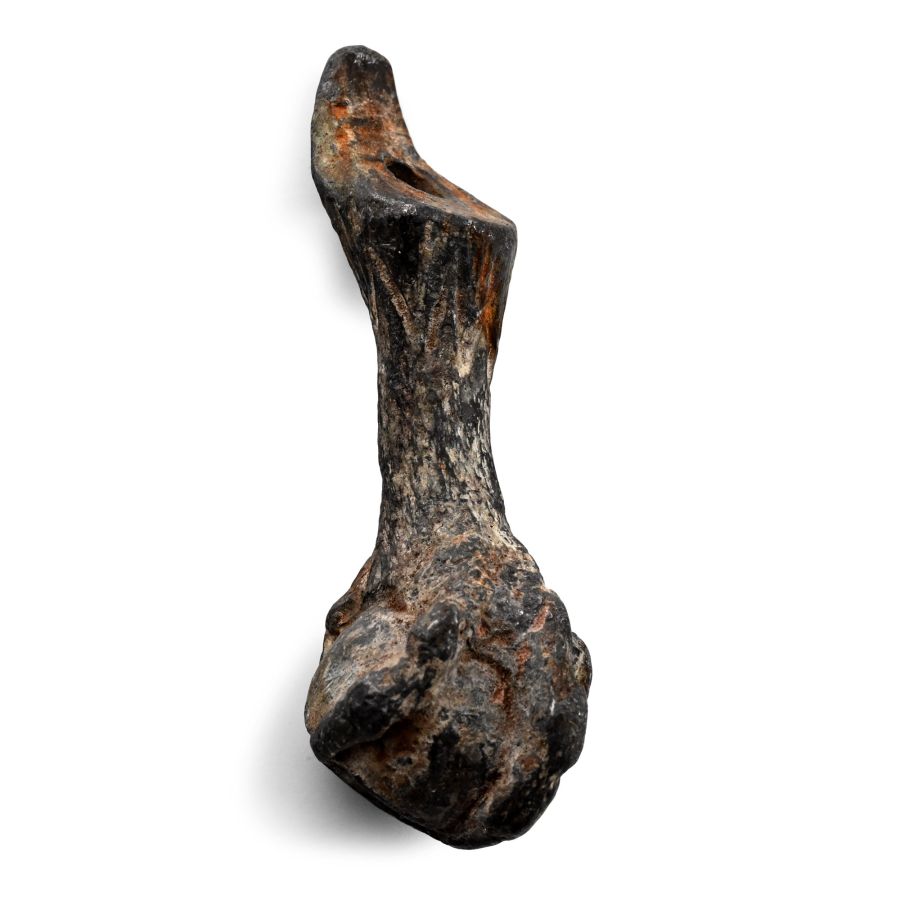
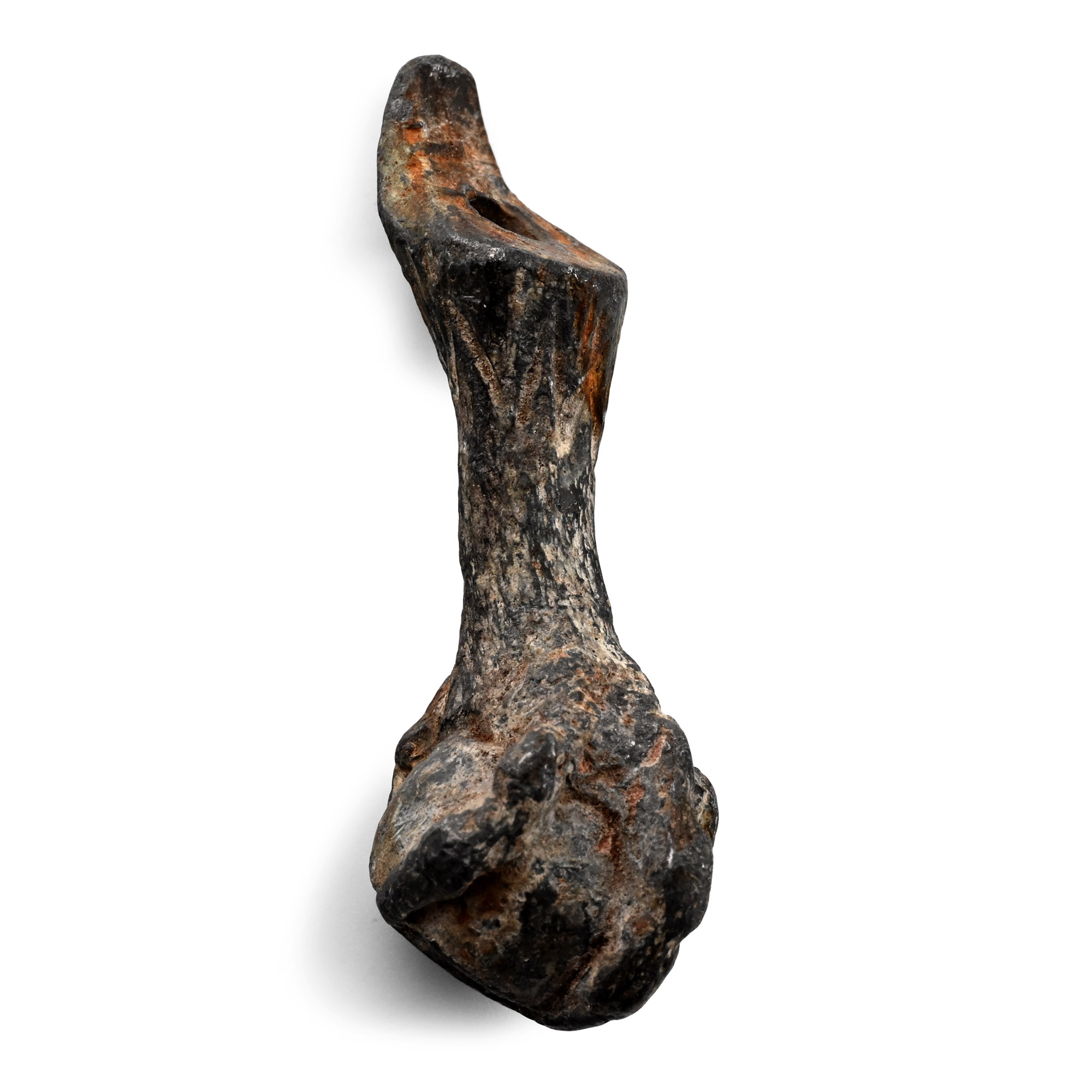
Stuart Period Lead Eagle Talon-and-Ball Merchant's Seal Pendant Stuart Period Lead Eagle Talon-and-Ball Merchant's Seal Pendant Stuart Period Lead Eagle Talon-and-Ball Merchant's Seal Pendant
Use mousewheel to zoom in and out, click to enlarge
Details

LOT 2017

Stuart Period Lead Eagle Talon-and-Ball Merchant's Seal Pendant

17TH CENTURY A.D.

1 1/2 in. (19.8 grams, 40 mm).

Comprising an eagle's talon with claws gripping a truncated sphere; flat underside divided into quarters with pellets in the upper quadrants, 'S W' in the lower; pierced flange above. [No Reserve]

Provenance

Previously from an old collection a Cornish, UK, gentleman.
Property of a private collector, West London, UK.
This lot is accompanied by an illustrated lot declaration signed by the Head of the Antiquities Department, Dr Raffaele D'Amato.

CONDITION
VETTING:

TimeLine Auctions follows a vetting process to ensure the authenticity and legality of all items, reinforcing our commitment to integrity and responsible trading. Each antiquity, antique, and coin lot undergoes thorough examination by a vetting committee of at least ten external specialists, professional trade association members, scientists, and archaeologists: Our Vetting Process


AUCTIONS:

TimeLine is a leading auction house specialising in antiquities, ancient art, collectables, natural history, coins, medals, and books. Our auctions offer museums, collectors, historians, and enthusiasts the opportunity to acquire unique and historically significant pieces.

LOT 2017

Stuart Period Lead Eagle Talon-and-Ball Merchant's Seal Pendant

Sold for (Inc. bp): £7

Print page

RELATED LOTS
  • Marble Fountain Sculpture of a Putto Wrestling a Fish
    Marble Fountain Sculpture of a Putto Wrestling a Fish
    Baroque, 17th century A.D.

    Estimate: £6,000 - 8,000 (‡+bp*)

    Opening Bid: £3,000

    Standing on an angular base resting his left knee on the open jaws of a fish, his left arm holding the jaws open, the body and tail held upright be the raised right hand (partly absent); with heavy sulphured patina. 20.75 kg, 48 cm


    Acquired prior to 1970. From the estate of a Swiss gentleman, Ticino. Private collection, Zurich, Switzerland. This lot has been checked against the Interpol Database of stolen works of art and is accompanied by a search certificate number no.12790-240308. This lot has been cleared against the Art Loss Register database, and is accompanied by an illustrated lot declaration signed by the Head of the Antiquities Department, Dr Raffaele D'Amato.

    In ancient Roman art and architecture, fountains were often decorated with sculptures of young boys or putti holding fish. These sculptures were known as 'putti with fish' or 'boy with fish' and were a popular motif in the decoration of fountains. The young boy or putti was shown holding a fish or a shell, which would spout water into the fountain basin below. The fish was a particularly popular motif because it symbolised abundance, fertility, and prosperity, which were all important values in ancient Roman society. Overall, the putti with fish sculptures are a notable example of the art and architecture of ancient Rome and have continued to be an enduring symbol of beauty, abundance, and prosperity throughout the centuries. Archaeological excavations in Pompeii have revealed many examples of sculptures of putti with fish. The putti with fish sculptures from Pompeii were usually made of bronze, marble, or terracotta. They were often placed in the centre of the fountain, surrounded by other decorative elements such as flowers, plants, and other sculptures. Many of these putti with fish sculptures are now on display in the National Archaeological Museum of Naples. The museum also houses a famous mosaic of a putto with a fish, which was discovered in the House of the Faun in Pompeii. The putti with fish sculptures from Pompeii and those in the Naples Museum provide valuable insights into the art and culture of ancient Rome. They demonstrate the importance of beauty and abundance in ancient Roman society and offer a glimpse into the everyday life of the people who lived in Pompeii over two thousand years ago. In the 17th and 18th centuries these sculptures were imitated and used to decorate the fountains of royal palaces and palaces.

    Lot Details

  • Vintage Celtic Revival Silver Brooch with Yellow Quartz
    Vintage Celtic Revival Silver Brooch with Yellow Quartz
    Edinburgh, before 1974 A.D.

    Sold for (Inc. bp): £20

    Disc brooch with claw setting and facetted stone; pin and catch to reverse; stamped with a thistle: 92.5% pure silver and used from 1759 to 1974, three turreted castle is the town mark for Edinburgh, WBS: manufacturer Ward Brothers, 6 likely refers to the letter sequence of the date mark. 10.4 grams, 30 mm


    From the private collection of a Canadian gentleman living in Essex, UK, formed since the 1920s-circa 1990. Property of an Essex lady until the late 1990s; thence by descent. From the private collection of an Essex gentleman since the late 1990s. This lot is accompanied by an illustrated lot declaration signed by the Head of the Antiquities Department, Dr Raffaele D'Amato.

    Lot Details

  • Stuart Period Gold Memento Mori Ring with Jewelled Skulls and Crossed Bones
    Stuart Period Gold Memento Mori Ring with Jewelled Skulls and Crossed Bones
    17th century A.D.

    Sold for (Inc. bp): £12,350

    Comprising a hefty hoop with scooped upper face, alternating applied skulls and crossed bones on the upper face decorated with white enamel, the eyes, noses and mouths of the skulls set with diamonds(?). 10.99 grams, 27.06 mm overall, 15.95 mm internal diameter (approximate size British K 1/2, USA 5 1/2, Europe 10.58, Japan 10)


    Private collection of a North London lady before 2000. Property of a London, UK, gentleman. This lot has been checked against the Interpol Database of stolen works of art and is accompanied by search certificate number no.12771-237884. This lot has been cleared against the Art Loss Register database, and is accompanied by an illustrated lot declaration signed by the Head of the Antiquities Department, Dr Raffaele D'Amato.

    The memento mori jewellery of the 16th and 17th centuries served as wearable ‘reminders of mortality’. Typical motifs within this genre included skulls, skeletons, crossbones, hourglasses, coffins, the gravedigger’s pick and shovel, and various other emblems of death and decay.

    Lot Details

Stay up-to-date with the latest from TimeLine Auctions by joining our mailing list