
Loading, please wait...
LOT 0427
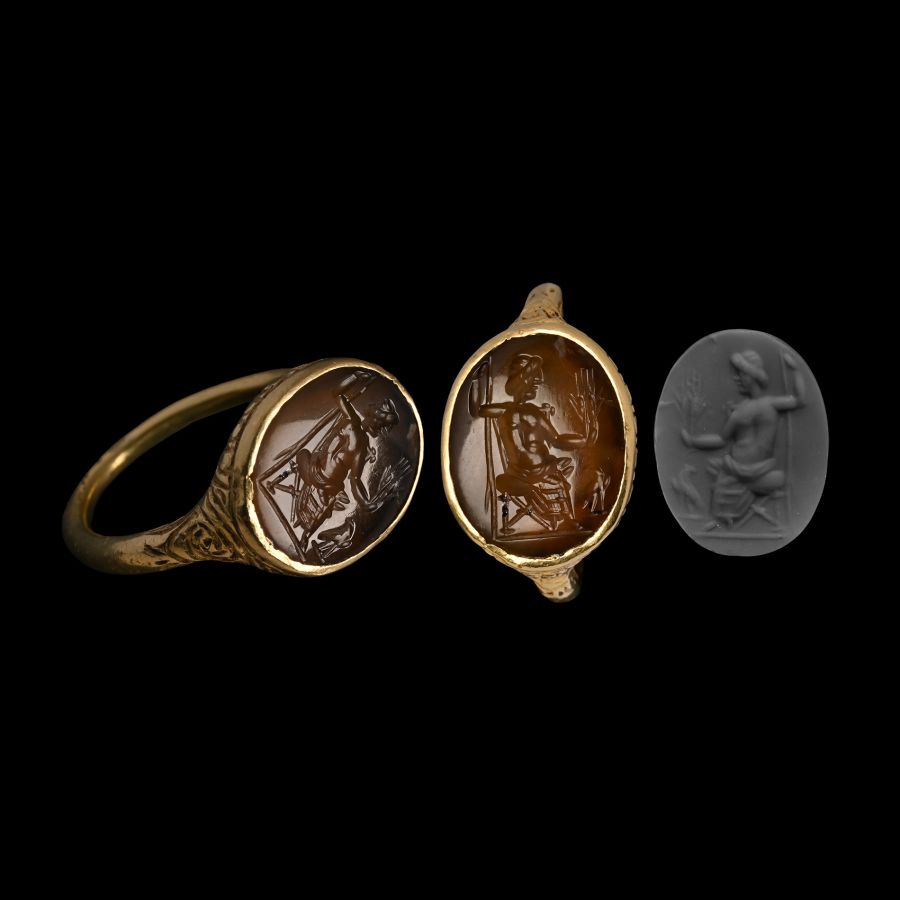
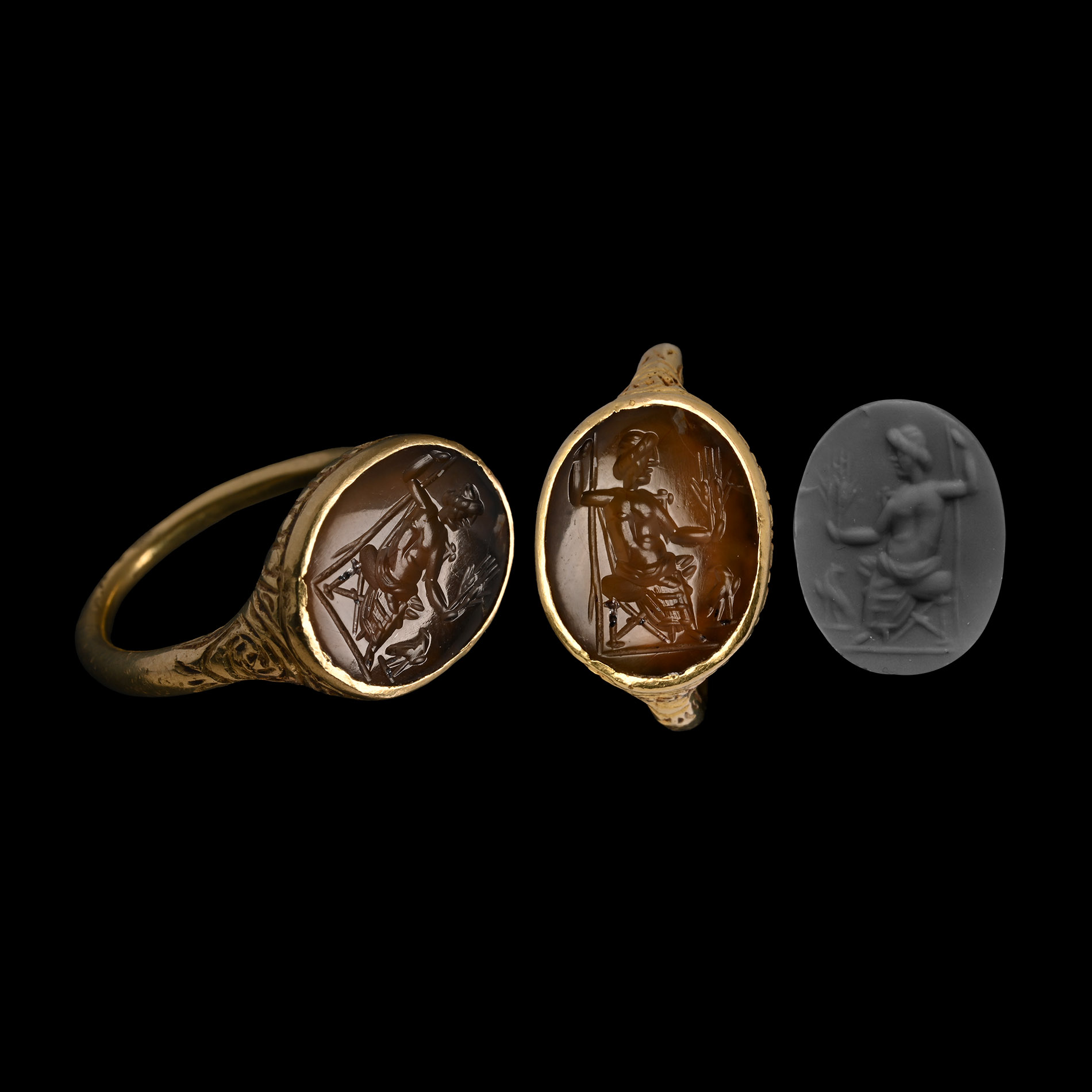
Stuart Period Gold Ring with Seated Figure Gemstone
17TH CENTURY A.D.
1 in. (7.64 grams, 24.67 mm overall, 17.09 mm internal diameter (approximate size British N 1/2, USA 6 3/4, Europe 14.35, Japan 13)).
Bezel with petal detailing extending to the underside and shoulders, inset onyx intaglio with figure of Jupiter seated on a throne with perching eagle and flame in his extended hand; supplied with a museum-quality impression.
ProvenanceAcquired on the London art market in the late 1980s-1990s.
From the family collection of an East London, UK, gentleman.
This lot has been checked against the Interpol Database of stolen works of art and is accompanied by a search certificate no.12349-222567.
Cf. Chadour, A.B., Rings. The Alice and Louis Koch Collection, volume I, Leeds, 1994, items 787,790; Scarisbrick, D., Rings, Jewelry of Power, Love and Loyalty, London, 2013, figs.253,254, for the type.
CONDITIONTimeLine Auctions follows a vetting process to ensure the authenticity and legality of all items, reinforcing our commitment to integrity and responsible trading. Each antiquity, antique, and coin lot undergoes thorough examination by a vetting committee of at least ten external specialists, professional trade association members, scientists, and archaeologists: Our Vetting Process
AUCTIONS:
TimeLine is a leading auction house specialising in antiquities, ancient art, collectables, natural history, coins, medals, and books. Our auctions offer museums, collectors, historians, and enthusiasts the opportunity to acquire unique and historically significant pieces.
LOT 0427
Stuart Period Gold Ring with Seated Figure Gemstone
Estimate £4,000 - 6,000€4,640 - 6,960 (for guidance only)$5,400 - 8,100 (for guidance only)
-
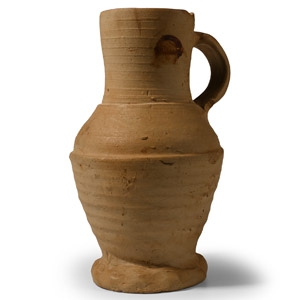
Tudor Terracotta Thumb Base Jug
Circa 16th century A.D.Sold for (Inc. bp): £59
With carination below the shoulder. broad neck and strap handle; rouldetting to the lower body, flared base with impressed piecrust edge. 391 grams, 16 cm
From a family collection mostly formed in the 1940s-1950s, thence by descent. -
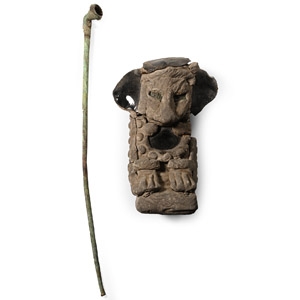
Mixed Bronze and Terracotta Artefact Group
20th century A.D. or earlierSold for (Inc. bp): £7
Comprising: ceramic seated figure with voided mouth; bronze pipe with bell-shaped bowl. 2.14 kg total, 24-46 cm
From a collection acquired on the UK art market from various auction houses and collections mostly before 2000. From an important Cambridgeshire estate; thence by descent. -
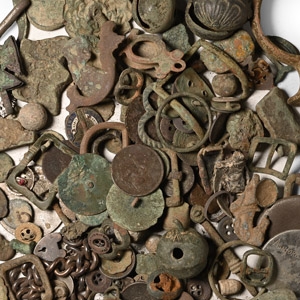
Tudor and Later Bronze and Other Artefact Collection
16th-20th century A.D.Sold for (Inc. bp): £85
Including coins, buttons, buckle frames, tokens, appliqués and other items. 1.5 kg total, 1.1-12.1 cm
Ex Stocker collection, Kent, UK, 1955-early 2000s.
