
Loading, please wait...
LOT 0336
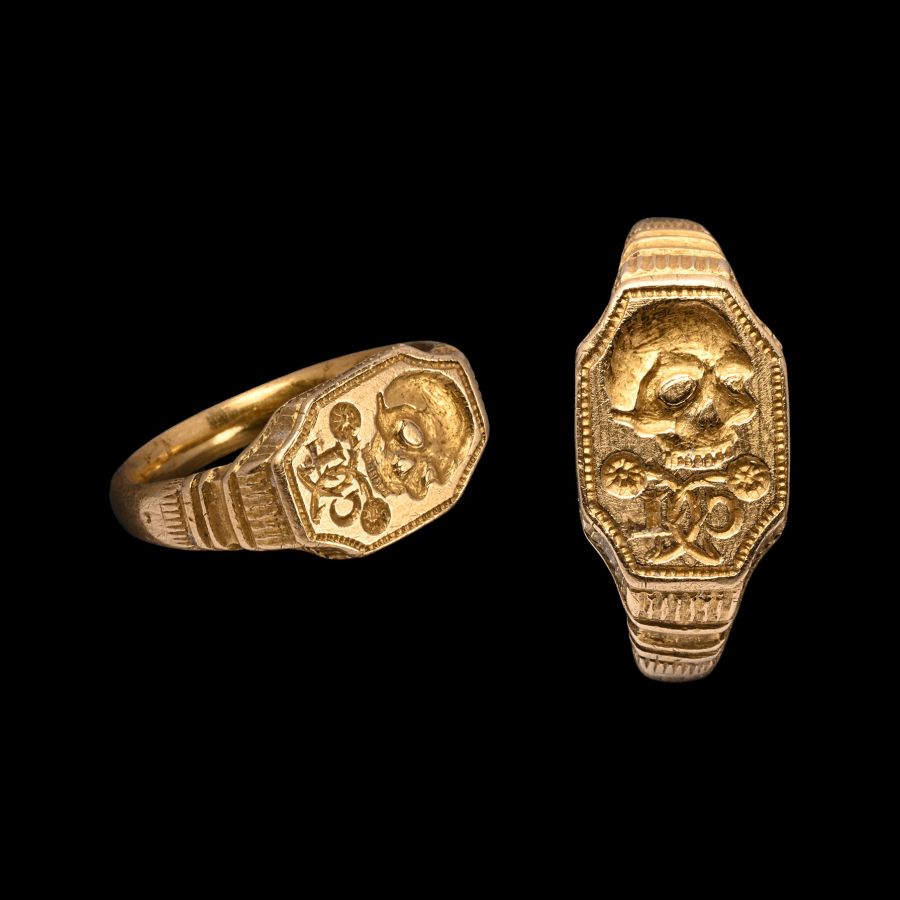
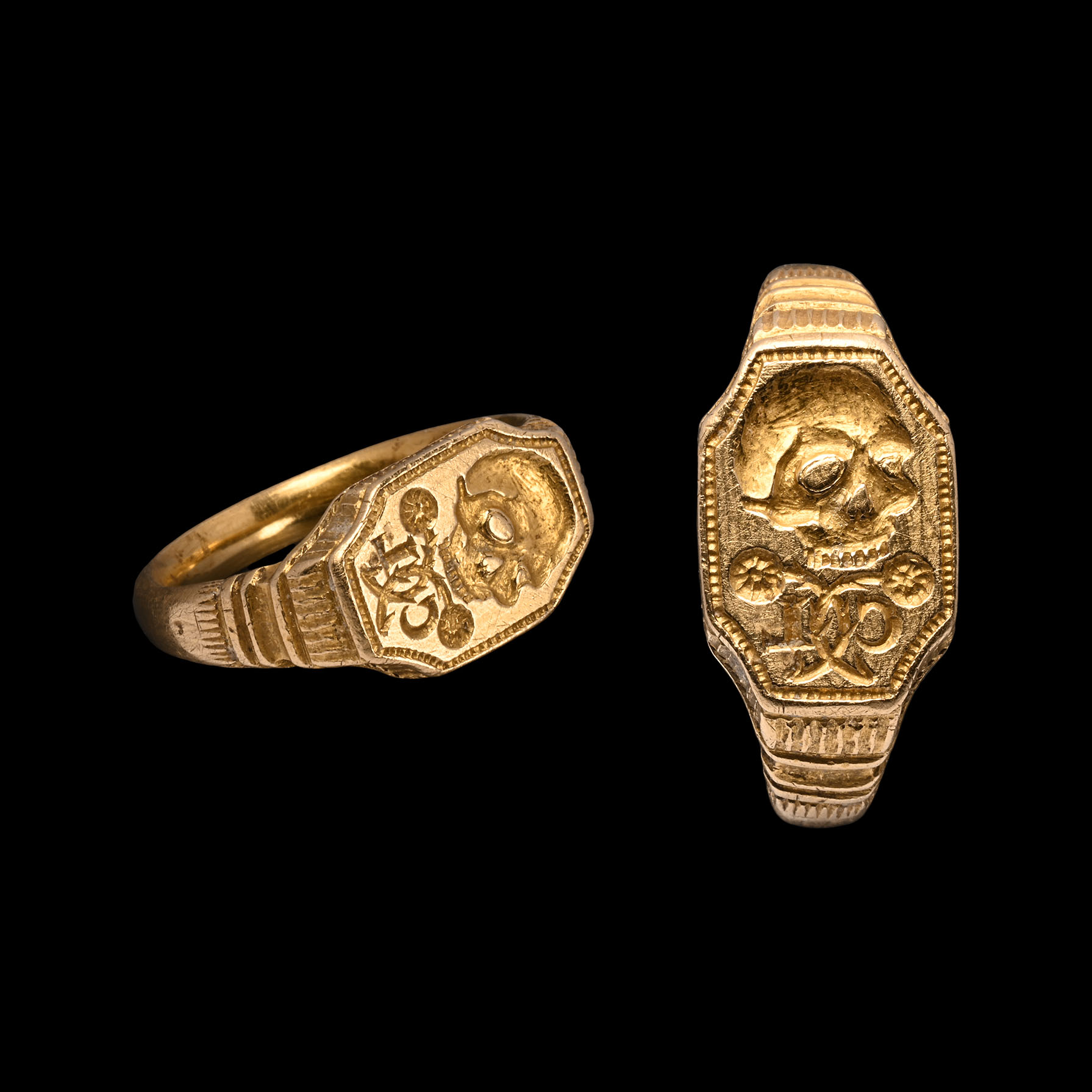
Stuart Period Gold Renaissance Memento Mori Signet Ring with C.L. and Skull
17TH CENTURY A.D.
1 1/8 in. (15.65 grams, 27.14 mm overall, 22.68 mm internal diameter (approximate size British X, USA 11 1/2, Europe 26.29, Japan 25)).
A substantial gold signet ring composed of a lentoid-section hoop, expanding capital style shaped shoulders and irregular octagonal bezel engraved with a skull, two flowers below separating the reversed initials in capitals: 'CL', framed by a beaded border.
ProvenanceAcquired in the 1980s.
Property of a London gentleman.
This lot has been checked against the Interpol Database of stolen works of art and is accompanied by search certificate no.11664-197587.
Cf. The Metropolitan Museum, New York, accession number 197587, for a very similar ring dated c.1600 A.D.; cf. The V&A Museum, accession numbers M.272-1962, M.378-1927 and M.273-1962, for broadly comparable examples.
FootnotesSignet rings were jewellery items serving practical functions, and were pressed into hot wax to seal letters and packets. Personal seals or secreta acted as a legal safeguard, since they were used to witness wills, loans, commercial, personal and other documents. Such rings were often engraved with a coat of arms, initials, merchant's mark or some other personal symbol. Painted portraits of this period portray the wearer with the signet ring on the thumb or forefinger, allowing for practical use. Skulls on rings were potent symbols of mortality. 'Memento mori' or 'remember that you must die' imagery served as a reminder to the Christian of the need to keep their soul in good order for the final judgment.
CONDITIONTimeLine Auctions follows a vetting process to ensure the authenticity and legality of all items, reinforcing our commitment to integrity and responsible trading. Each antiquity, antique, and coin lot undergoes thorough examination by a vetting committee of at least ten external specialists, professional trade association members, scientists, and archaeologists: Our Vetting Process
AUCTIONS:
TimeLine is a leading auction house specialising in antiquities, ancient art, collectables, natural history, coins, medals, and books. Our auctions offer museums, collectors, historians, and enthusiasts the opportunity to acquire unique and historically significant pieces.
LOT 0336
Stuart Period Gold Renaissance Memento Mori Signet Ring with C.L. and Skull
Sold for (Inc. bp): £19,500
-
Stuart Period Large Gold Signet Ring with Arm and Floral Spray
17th century A.D.Sold for (Inc. bp): £13,000
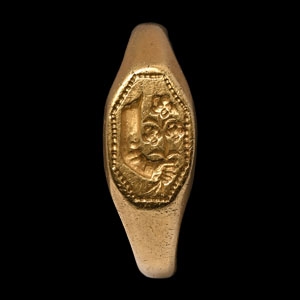
A gold signet ring composed of a D-section hoop and facetted oval bezel, engraved with crest depicting a forearm and hand oriented right, holding a floral spray composed of three five-petalled flowers and four leaves, set within a beaded octagonal border. 9.78 grams, 24.40 mm overall, 20.51 mm internal diameter (approximate size British V, USA 10 1/2, Europe 23.77, Japan 22)
Acquired in the 1980s. Property of a London gentleman. This lot has been checked against the Interpol Database of stolen works of art and is accompanied by search certificate no.11663-197588.
Signet rings were jewellery items serving practical functions, and were pressed into hot wax to seal letters and packets. Personal seals or secreta acted as a legal safeguard, since they were used to witness wills, loans, commercial, personal and other documents. Such rings were often engraved with a coat of arms, initials, merchant's mark or some other personal symbol. Painted portraits of this period portray the wearer with the signet ring on the thumb or forefinger, allowing for practical use. -
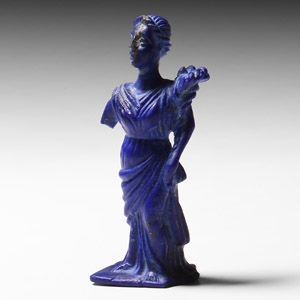
Statuette of Demeter in Lapis Lazuli
18th-19th century A.D.Sold for (Inc. bp): £127
A free-standing Grand Tour statuette of the goddess Demeter, carved from brilliant blue lapis lazuli; modelled in the round standing on an integral polygonal base, wearing a floor-length peplos and mantle, holding a cornucopia. 14.4 grams, 55 mm
Fine condition, right arm lost in antiquity.
Private UK collection. Property of a Cambridgeshire gentleman. -
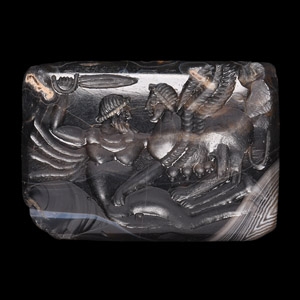
Neoclassical Gemstone Plaque
18th-19th century A.D.Sold for (Inc. bp): £279
A banded agate intaglio engraved with an ancient Assyrian(?) style figural scene showing a man with sword in hand battling a sphinx-like mythical winged creature with the head of a woman and body of a lion, swollen teats lining the creature's belly; pair of drilled holes for suspension; chipped. 21.6 grams, 43 mm
Fine condition.
Property of a North London gentleman.
Likely an allusion to ancient tales of the monstrous and treacherous sphinx attacking the hero.
