
Loading, please wait...
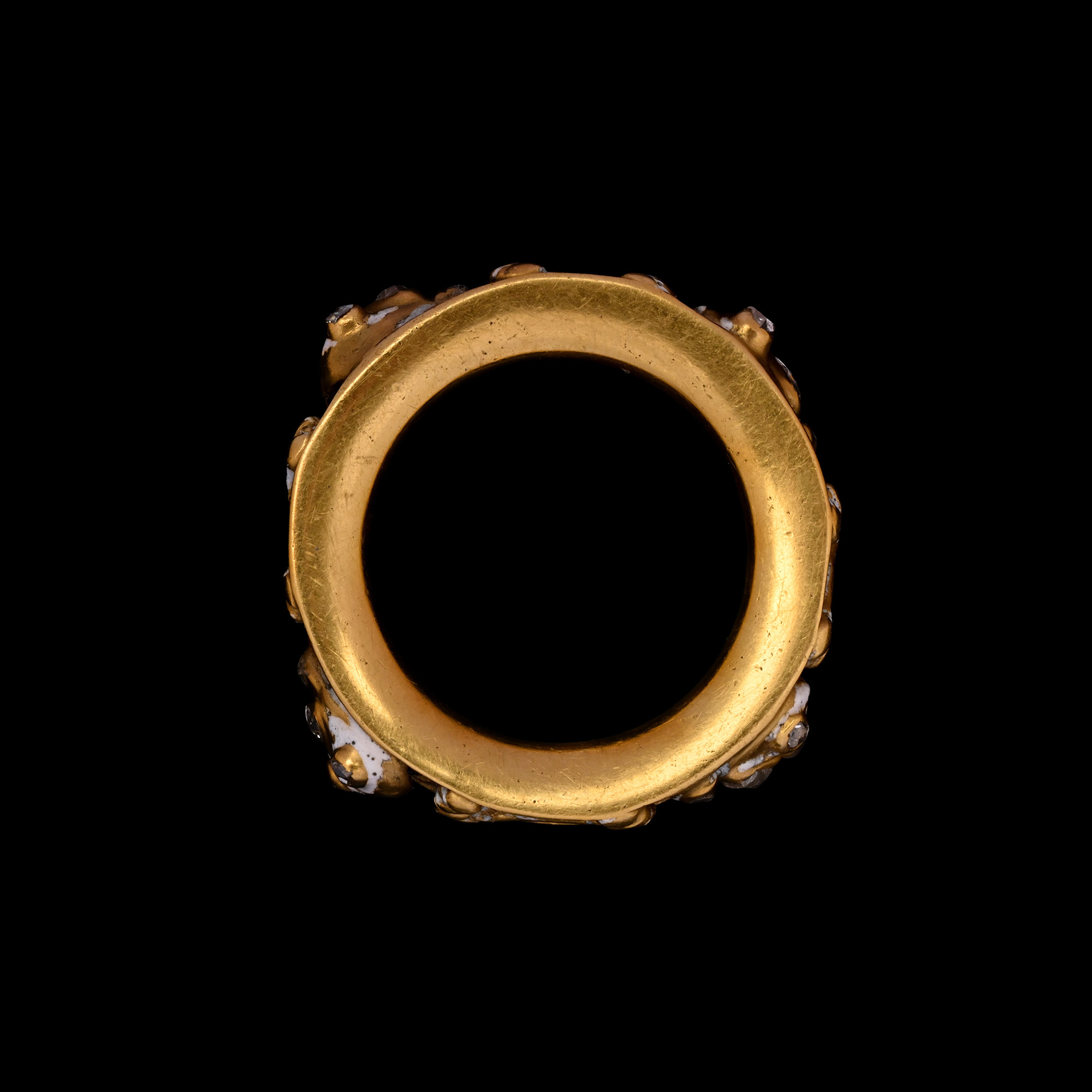
LOT 0344
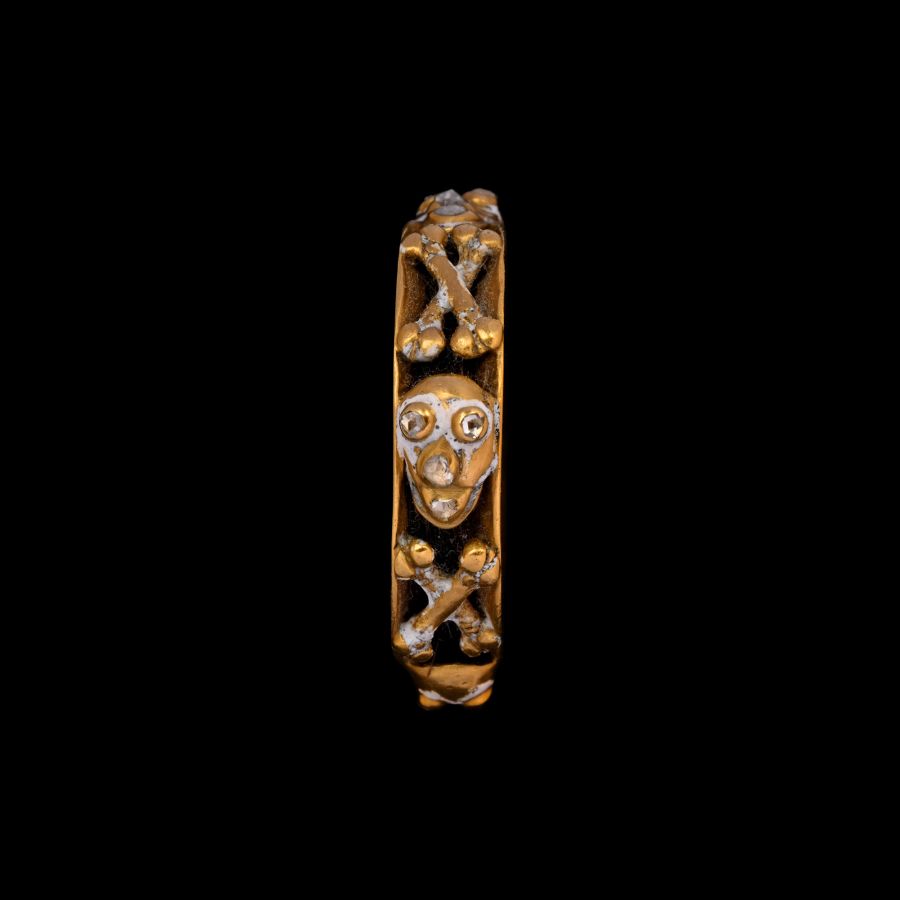
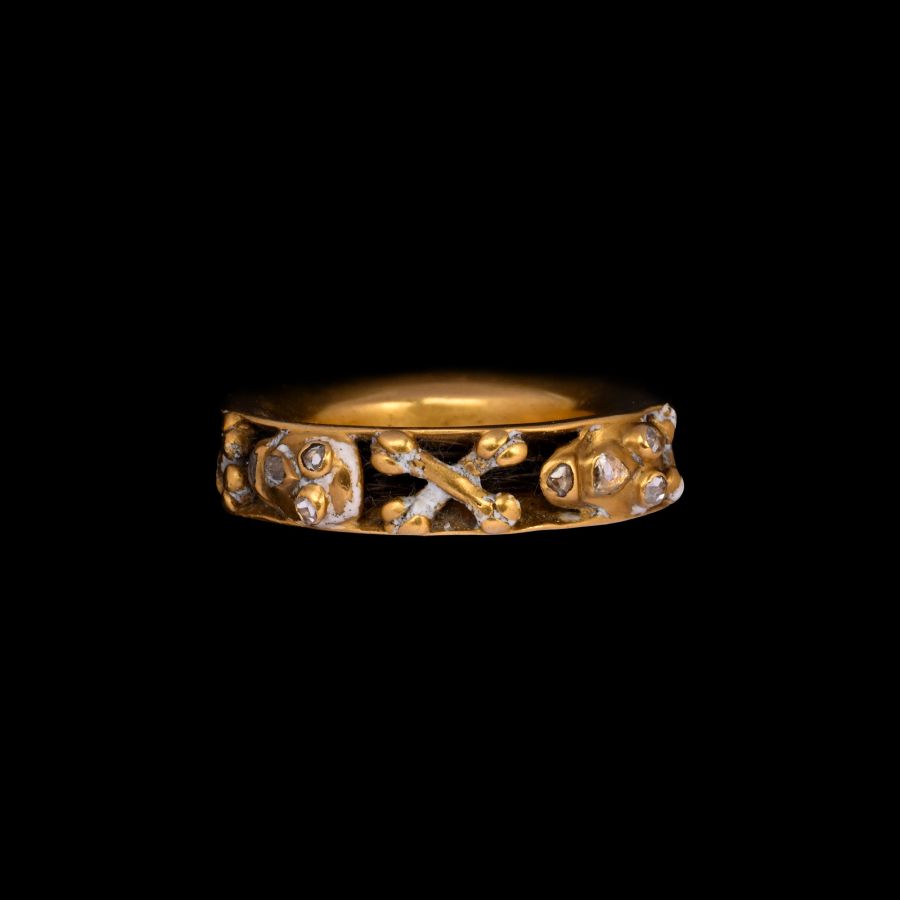
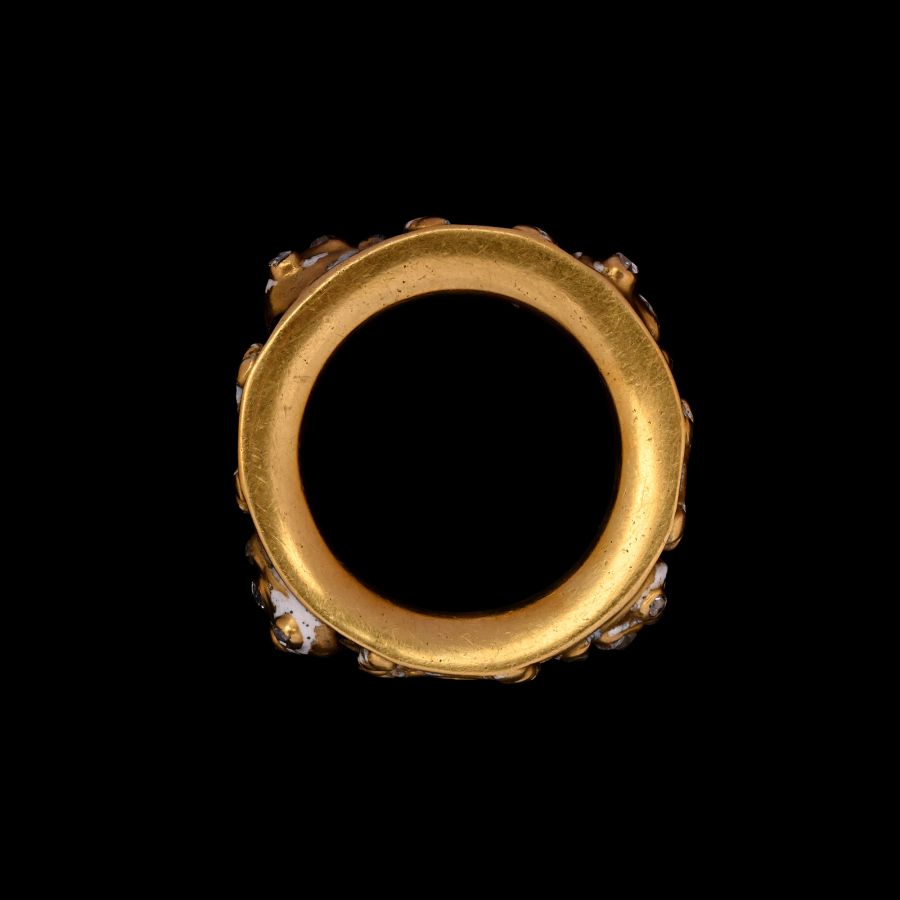
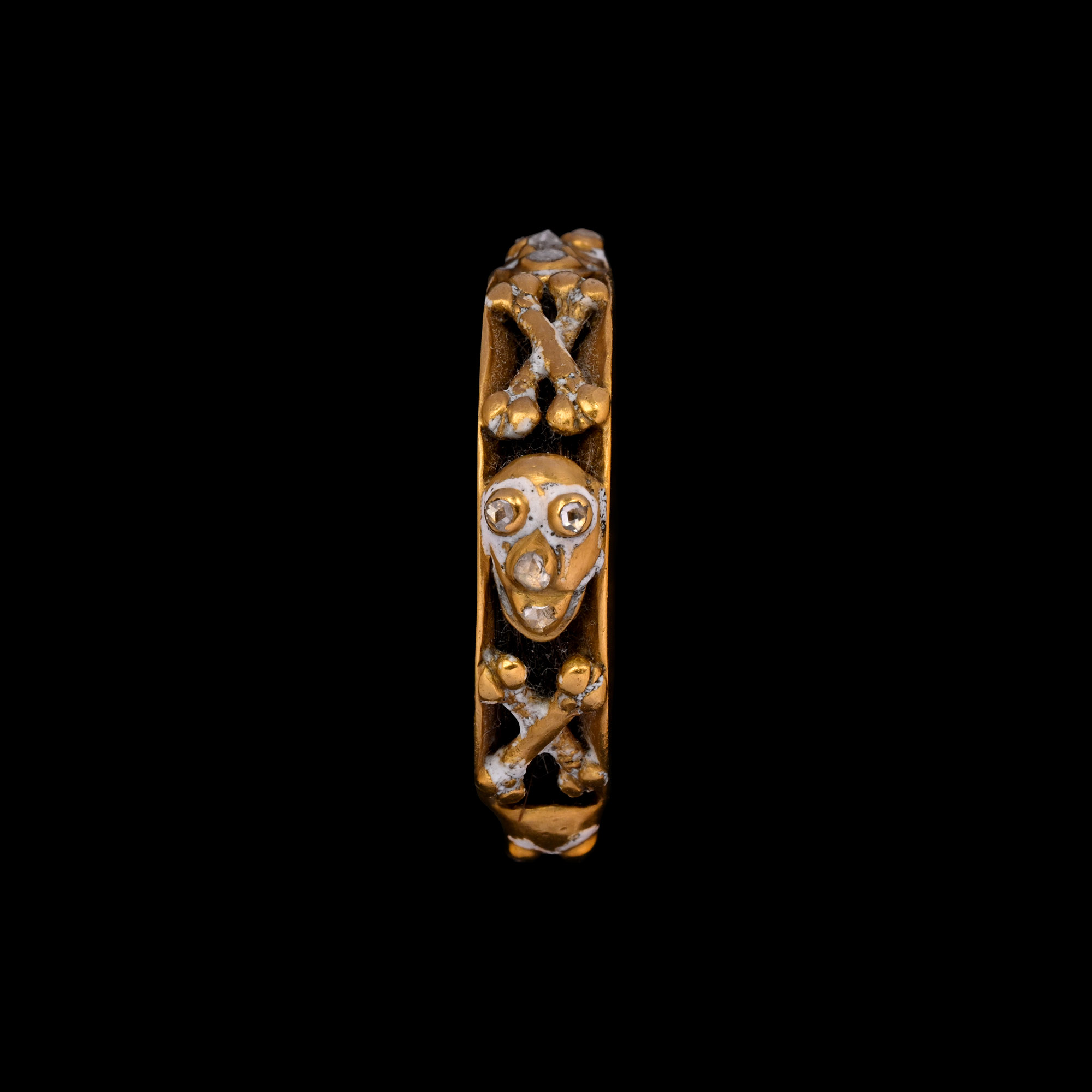
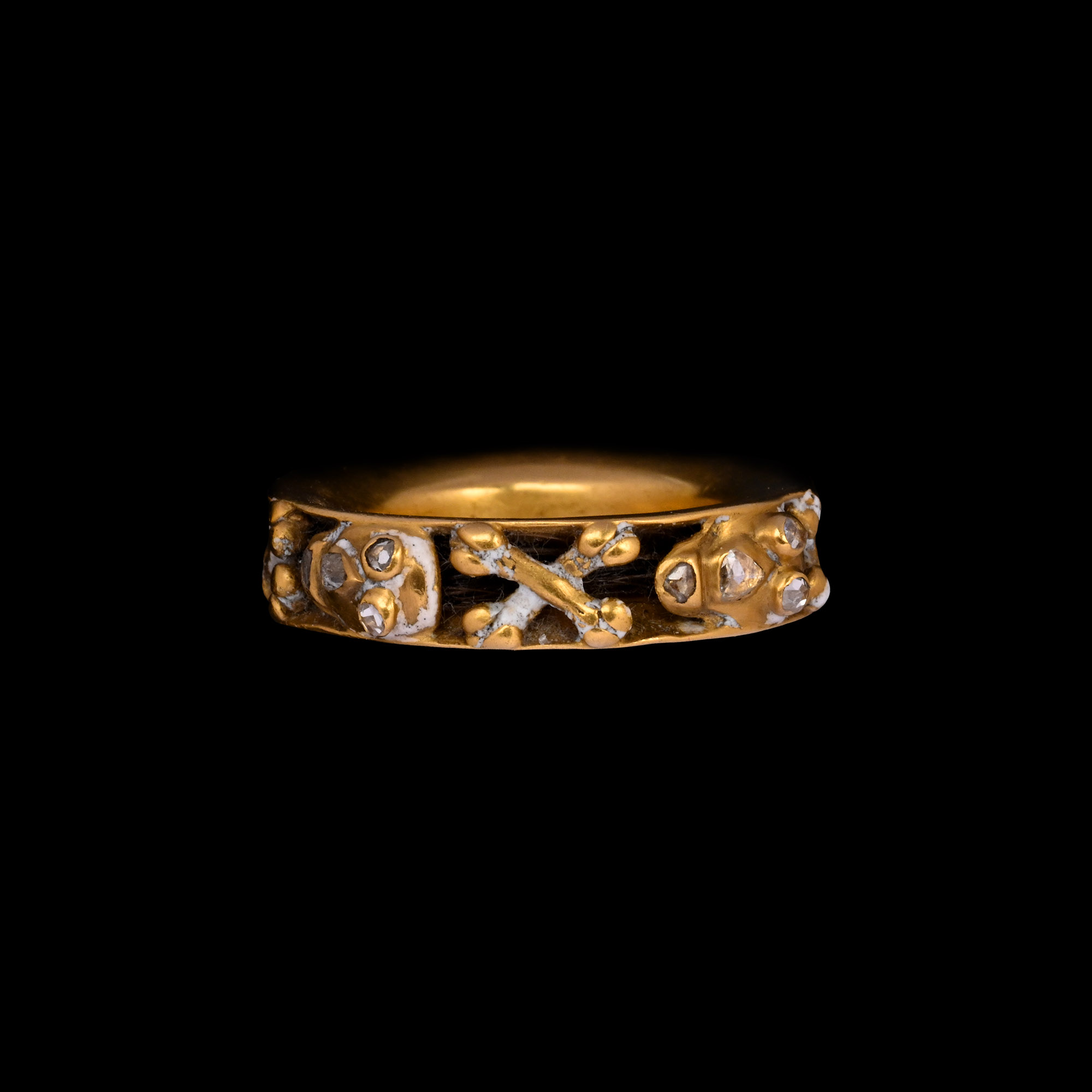
Stuart Period Gold Memento Mori Ring with Jewelled Skulls and Crossed Bones
17TH CENTURY A.D.
1 1/8 in. (10.99 grams, 27.06 mm overall, 15.95 mm internal diameter (approximate size British K 1/2, USA 5 1/2, Europe 10.58, Japan 10)).
Comprising a hefty hoop with scooped upper face, alternating applied skulls and crossed bones on the upper face decorated with white enamel, the eyes, noses and mouths of the skulls set with diamonds(?).
ProvenancePrivate collection of a North London lady before 2000.
Property of a London, UK, gentleman.
This lot has been checked against the Interpol Database of stolen works of art and is accompanied by search certificate number no.12771-237884.
This lot has been cleared against the Art Loss Register database, and is accompanied by an illustrated lot declaration signed by the Head of the Antiquities Department, Dr Raffaele D'Amato.
Cf. PAS no. HESH-23A8A2, for similar.
FootnotesThe memento mori jewellery of the 16th and 17th centuries served as wearable ‘reminders of mortality’. Typical motifs within this genre included skulls, skeletons, crossbones, hourglasses, coffins, the gravedigger’s pick and shovel, and various other emblems of death and decay.
CONDITIONTimeLine Auctions follows a vetting process to ensure the authenticity and legality of all items, reinforcing our commitment to integrity and responsible trading. Each antiquity, antique, and coin lot undergoes thorough examination by a vetting committee of at least ten external specialists, professional trade association members, scientists, and archaeologists: Our Vetting Process
AUCTIONS:
TimeLine is a leading auction house specialising in antiquities, ancient art, collectables, natural history, coins, medals, and books. Our auctions offer museums, collectors, historians, and enthusiasts the opportunity to acquire unique and historically significant pieces.
LOT 0344
Stuart Period Gold Memento Mori Ring with Jewelled Skulls and Crossed Bones
Sold for (Inc. bp): £12,350
-
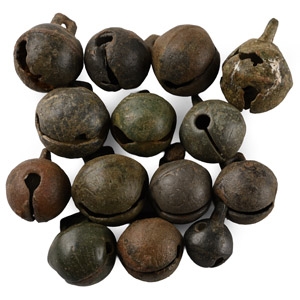
Post Medieval Bronze Crotal Bell Group
17th-18th century A.D.Sold for (Inc. bp): £26
All with suspension loop, slot to underside and vents above; some with incised decoration. 375 grams total, 27-40 mm
Found East Anglia, UK. This lot is accompanied by an illustrated lot declaration signed by the Head of the Antiquities Department, Dr Raffaele D'Amato. -
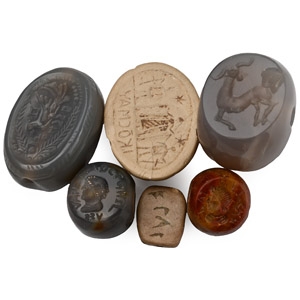
Group of Seals and Scaraboids
20th century A.D.Estimate: £100 - 140 (+bp*)
Opening Bid: £50
Including scarab with figural scene and legend to underside, plano-convex type with wreath, perching bird and legend, and other types; after the antique. 78 grams total, 15-33 mm
From the late S M collection, London, UK, 1969-1999. This lot is accompanied by an illustrated lot declaration signed by the Head of the Antiquities Department, Dr Raffaele D'Amato. -
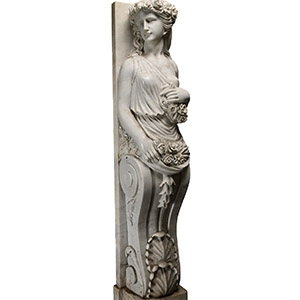
Neo-Classical Marble Column
20th century A.D.Sold for (Inc. bp): £260
Carved in high-relief female figure with floral wreath to the brow, peplos robe draped from one shoulder, holding posies in each of her hands; lower body developing to a swept panel with lateral scroll detailing, palmettes to the obverse, rectangular block to the foot; after the antique. 118 kg, 120.5 cm
From a London, UK, gallery, 1990s. This lot is accompanied by an illustrated lot declaration signed by the Head of the Antiquities Department, Dr Raffaele D'Amato.
