
Loading, please wait...
LOT 0348
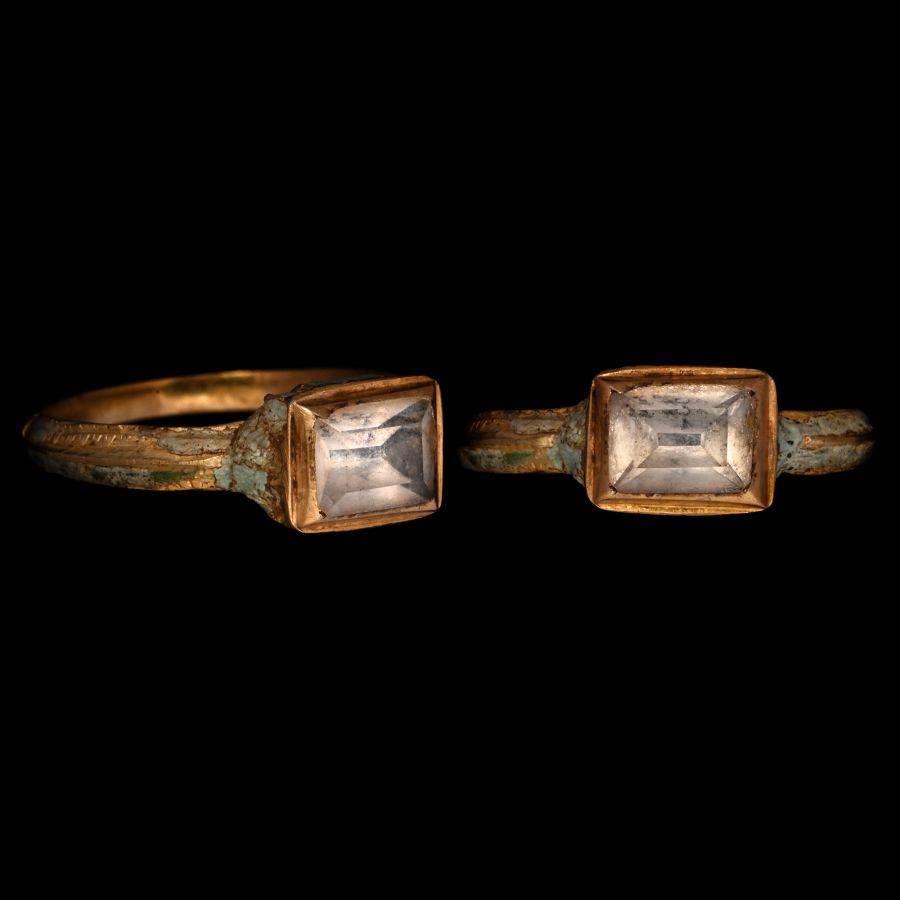
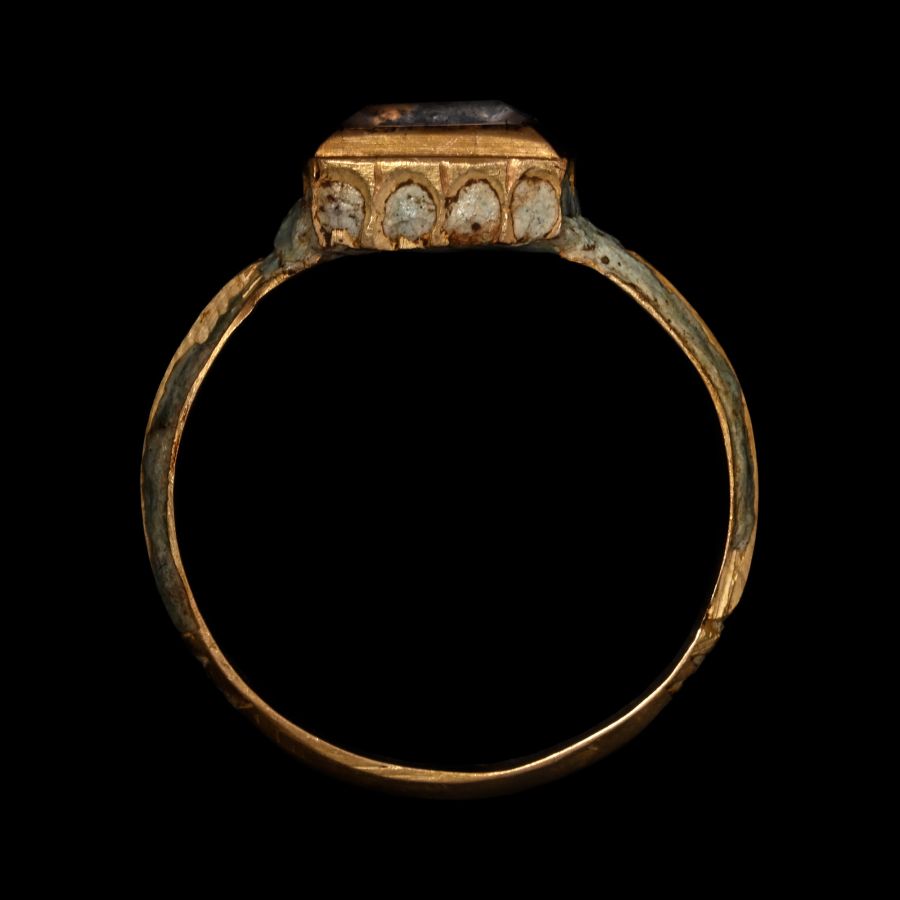
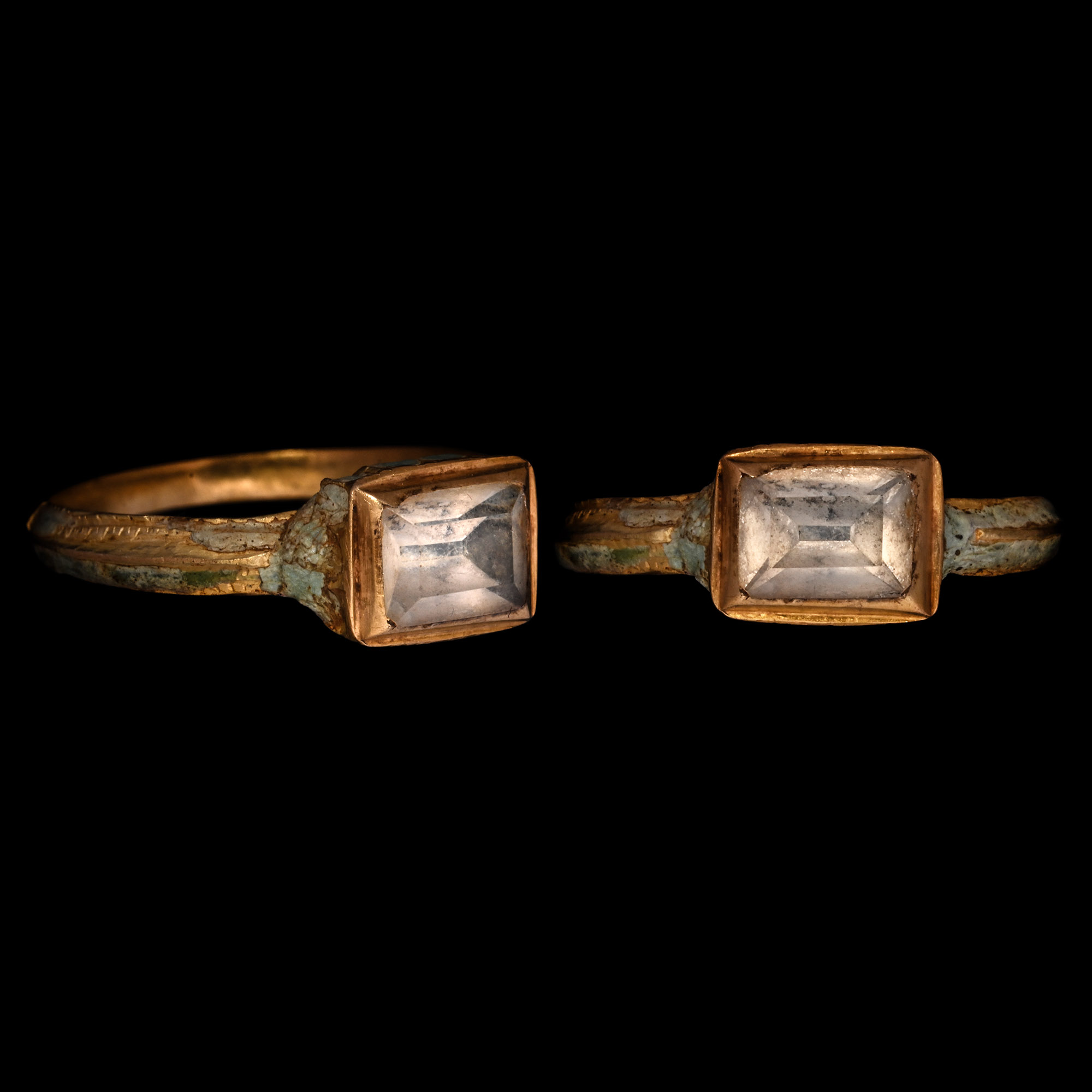
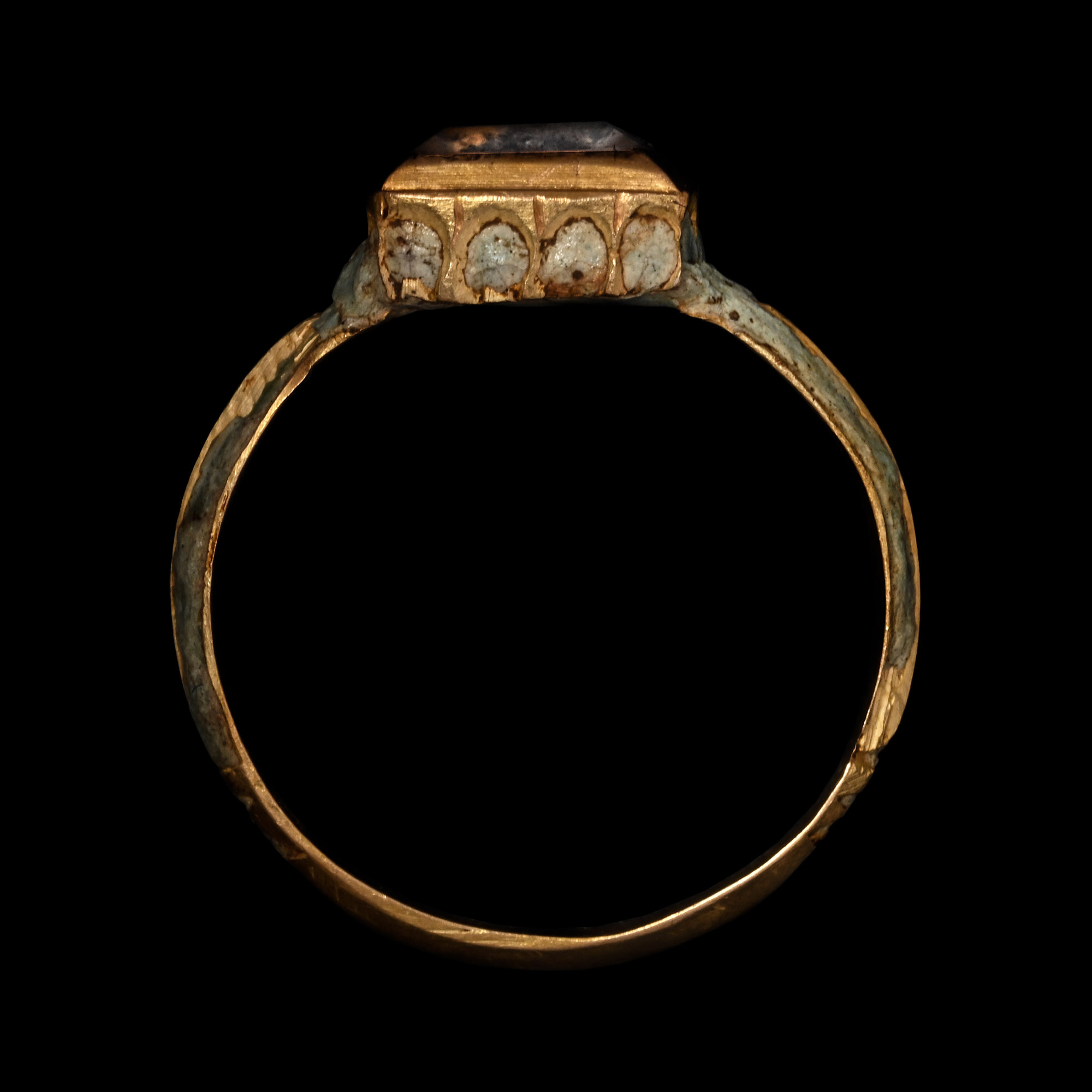
Stuart Period Enamelled Gold Ring with Table-Cut Rock Crystal
ENGLAND, 17TH CENTURY A.D.
3/4 in. (2.17 grams, 21.88 mm overall, 16.84 mm internal diameter (approximate size British M, USA 6, Europe 12.46, Japan 12)).
D-section hoop with enamel panels to the shoulders, arcade to the rectangular bezel with inset table-cut crystal.
ProvenanceFound whilst searching with a metal detector near Harlaxton, Lincolnshire, UK, on Wednesday 17th November 2021.
Acquired on the English art market.
Accompanied by a copy of the British Museum's Portable Antiquities Scheme (mPAS) report no.LIN-CCA6D4.
This lot has been checked against the Interpol Database of stolen works of art and is accompanied by a search certificate number no.13050-248358.
Cf. Chadour, A.B., Rings. The Alice and Louis Koch Collection, volume I, Leeds, 1994, item 681, for type.
FootnotesFinger rings with a principal stone and subsidiary settings in separate collets came into use in the early 13th century, and this form of simple collet continued in use until the 15th century. A gold medieval finger ring with a similar bezel, but with subsidiary settings, is recorded on the PAS database (LIN-EC74C7, 2020T819). Other gold finger rings with a principal stone (albeit with subsidiary settings) and similar framed bezel recorded as treasure on the PAS database, including one from Soberton, Hampshire (HAMP-1DCFF0, 2017T156) and Huntingdon district area, CAM-4A8AB6, 2020T089.
CONDITIONTimeLine Auctions follows a vetting process to ensure the authenticity and legality of all items, reinforcing our commitment to integrity and responsible trading. Each antiquity, antique, and coin lot undergoes thorough examination by a vetting committee of at least ten external specialists, professional trade association members, scientists, and archaeologists: Our Vetting Process
AUCTIONS:
TimeLine is a leading auction house specialising in antiquities, ancient art, collectables, natural history, coins, medals, and books. Our auctions offer museums, collectors, historians, and enthusiasts the opportunity to acquire unique and historically significant pieces.
LOT 0348
Stuart Period Enamelled Gold Ring with Table-Cut Rock Crystal
Sold for (Inc. bp): £2,600
-
WWI Trench Art Wooden Walking Stick
1914-1918 A.D.Sold for (Inc. bp): £286
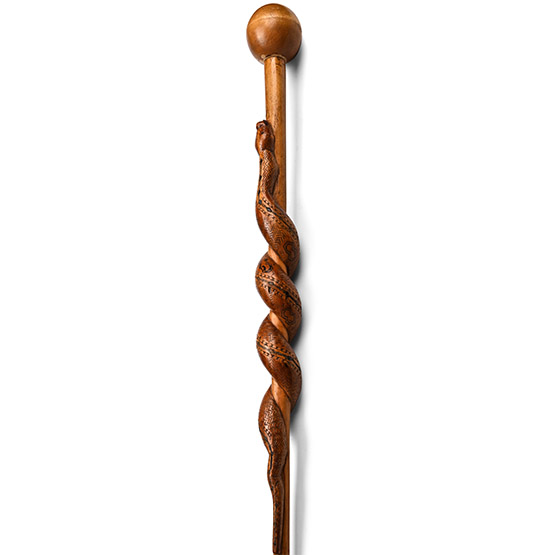
Carved as the staff or 'Rod of Asclepius' with a snake curled around the staff and inscribed 'IN MEMORY OF GREAT EUROPEAN WAR'; chip-carved median band and differential staining. 389 grams, 85 cm
From a Cambridgeshire, UK, collection.
'Trench Art' refers to decorated objects made by soldiers from the debris of war and serving as souvenirs and pastimes. -
Tibetan Glass Necklace Prayer Bead Group
20th century A.D.Sold for (Inc. bp): £46
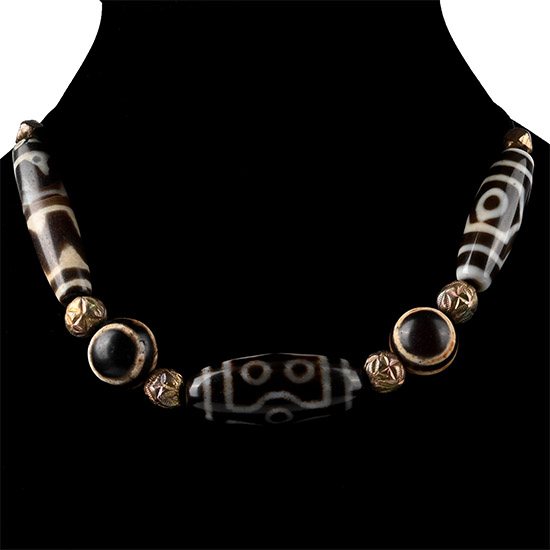
Including glass bicone and spherical beads zi banded and gilt spacer beads. 72 grams, 80 cm
Private collection, UK. -
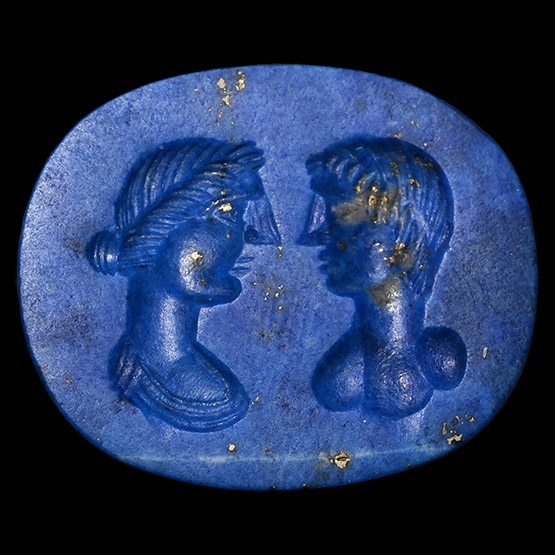
Post-Classical Lapis-Coloured Gem with Facing Busts
19th century A.D. or earlierEstimate: £200 - 300 (+bp*)
Opening Bid: £100
Sub-rectangular in plan with an intaglio female bust in profile with hair drawn up in a chignon and a male bust with Julian hairstyle; supplied with a museum-quality impression. 1.63 grams, 23 mm
Private collection, England.
