
Loading, please wait...
LOT 1985
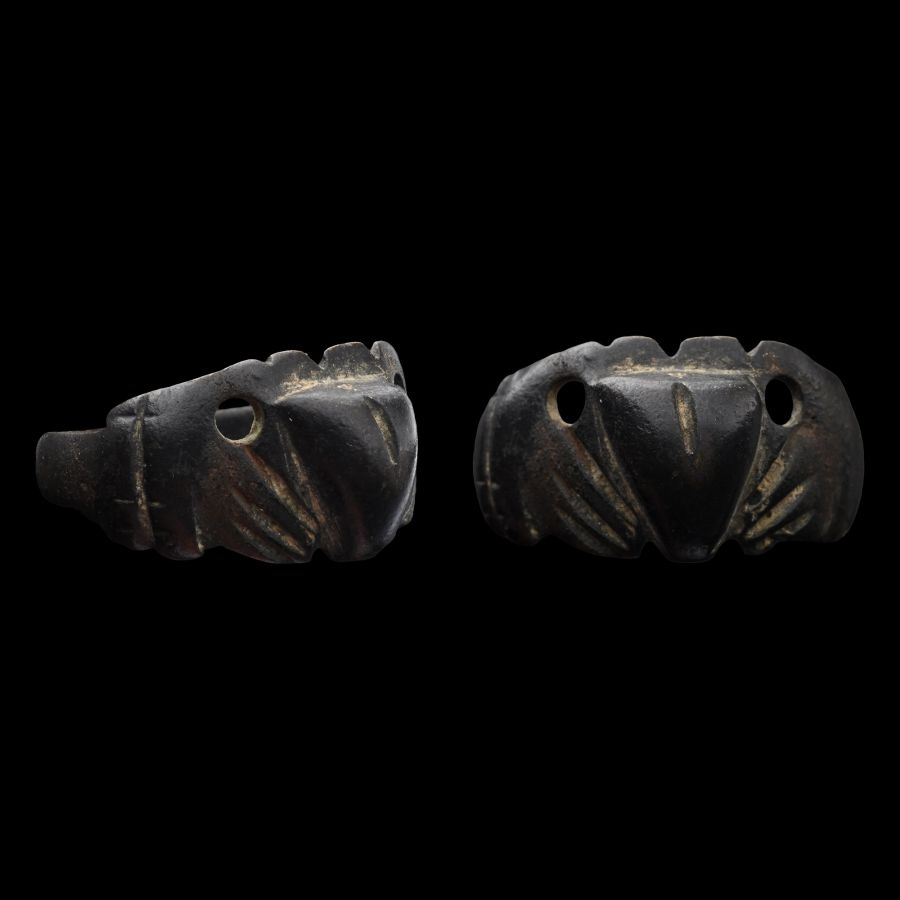
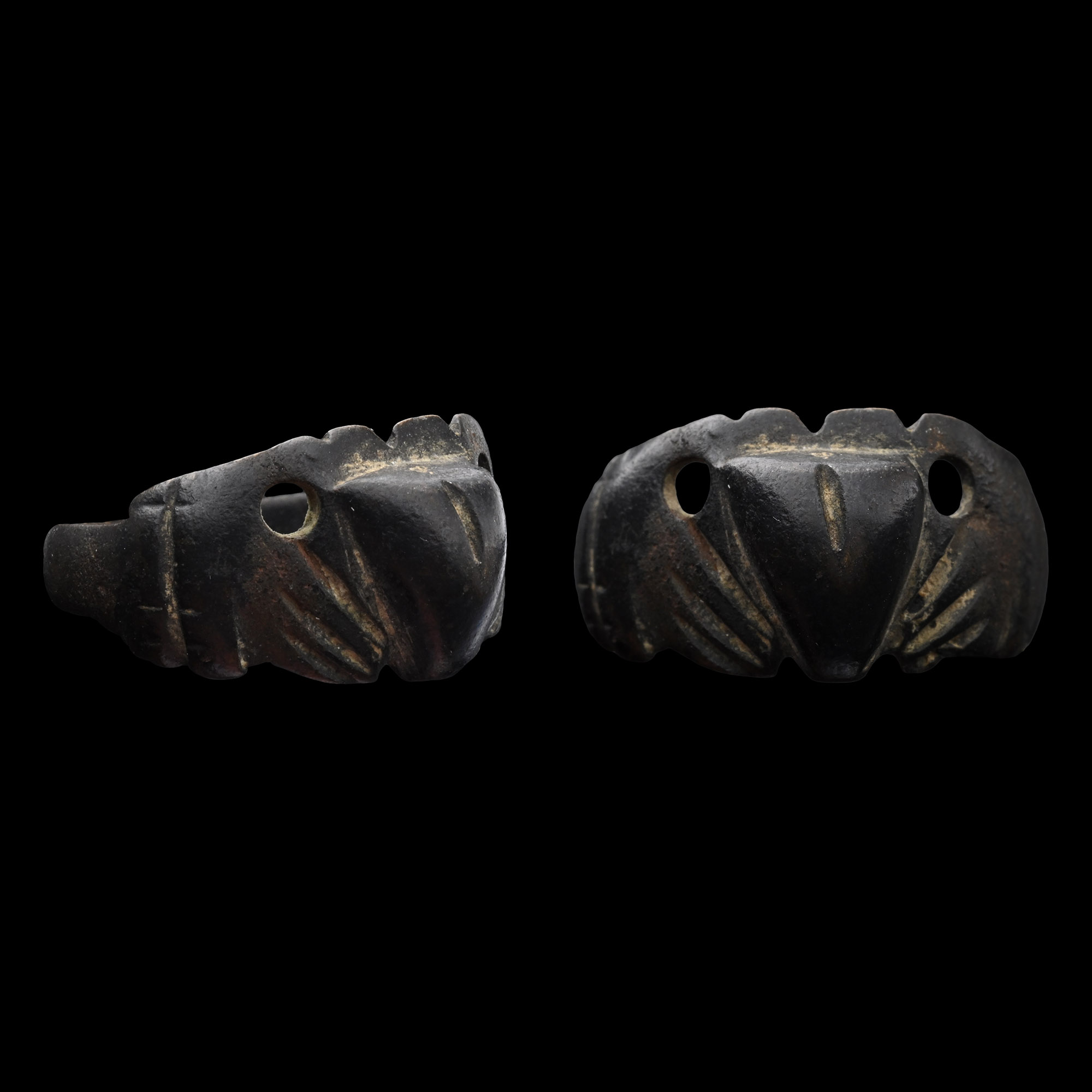
Stuart Period Bronze Hands Holding Heart Ring
17TH CENTURY A.D.
7/8 in. (3.71 grams, 21.00 mm overall, 16.15 mm internal diameter (approximate size British K, USA 5 1/4, Europe 9.95, Japan 9)).
Claddagh ring with a tapering hoop, the bezel with two hands holding a raised heart. [No Reserve]
ProvenanceFrom the private collection of Graham Slater (1927-2024), Cambridge, UK; formed 1980s-1990s.
CONDITIONTimeLine Auctions follows a vetting process to ensure the authenticity and legality of all items, reinforcing our commitment to integrity and responsible trading. Each antiquity, antique, and coin lot undergoes thorough examination by a vetting committee of at least ten external specialists, professional trade association members, scientists, and archaeologists: Our Vetting Process
AUCTIONS:
TimeLine is a leading auction house specialising in antiquities, ancient art, collectables, natural history, coins, medals, and books. Our auctions offer museums, collectors, historians, and enthusiasts the opportunity to acquire unique and historically significant pieces.
-
Macedonian Painted Wooden Triptych Panel with Saint Mercury
17th century A.D.Sold for (Inc. bp): £910
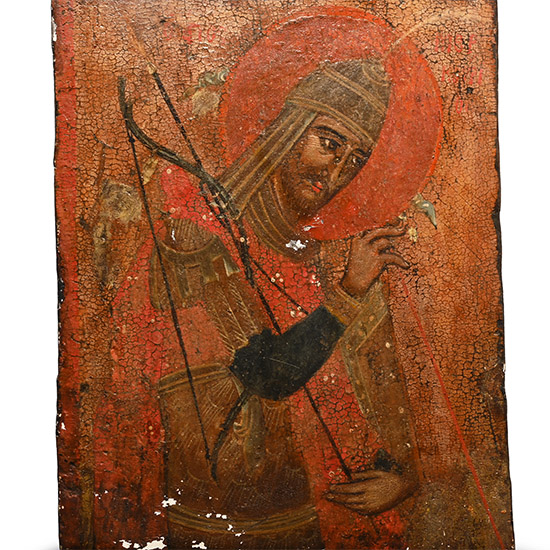
Rectangular panel showing a nimbate saint in full armour, supporting a bow and a long spear on his right shoulder, and a shield with his left hand, inscription above; an old handwritten label to the reverse reading 'Judy took it to the British Museum who said it is 17th century from Macedonia. It is only a fragment of the left side of a triptych and is a warrior saint, saint [ ...] os. From George Churchill Xmas 1989'. 127 grams, 14.5 x 11.9 cm
The Cotswold Auction Company, Cheltenham, UK, 14 December 2021, no.97. Private collection, Suffolk. -
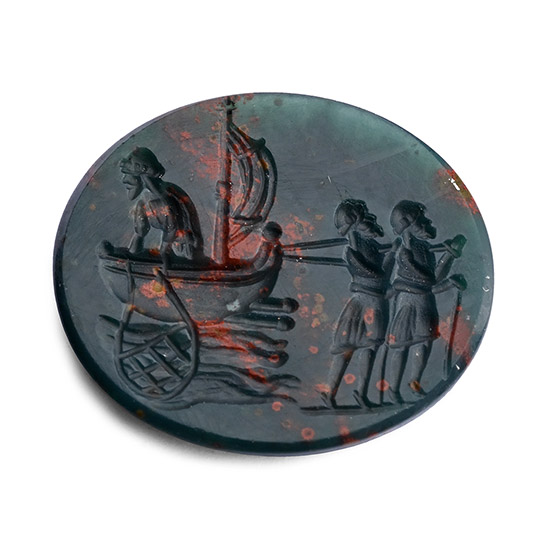
Georgian Period Bloodstone Gemstone with Christ Fishing
17th-18th century A.D.Estimate: £600 - 800 (+bp*)
Opening Bid: £300
Oval heliotrope intaglio showing a boat on water with an open sail, Christ casting a net in the water, and the boat drawn by the disciples; supplied with a museum-quality impression. 0.55 grams, 14 mm
Acquired on the European art market. -
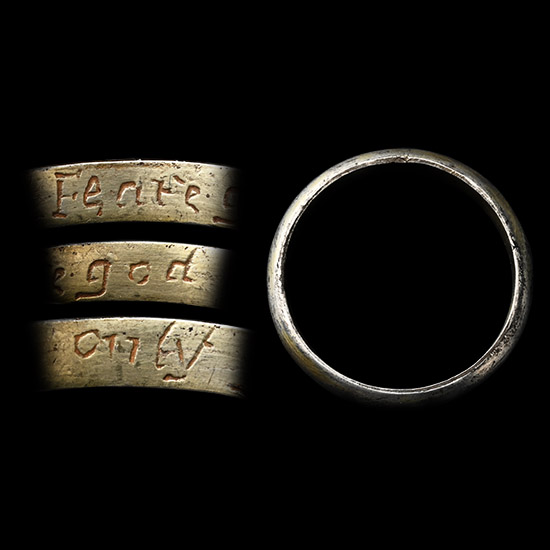
Post Medieval Silver-Gilt 'Feare God Only' Posy Ring
Circa 18th century A.D.Sold for (Inc. bp): £143
Comprising a D-section hoop with plain exterior, inner face inscribed with 'Feare God only'. 2.99 grams, 22.24 mm overall, 18.65 mm internal diameter (approximate size British R, USA 8 1/2, Europe 18 3/4, Japan 18)
Acquired on the UK art market. Property of a Suffolk, UK, gentleman.
