
Loading, please wait...
LOT 2014
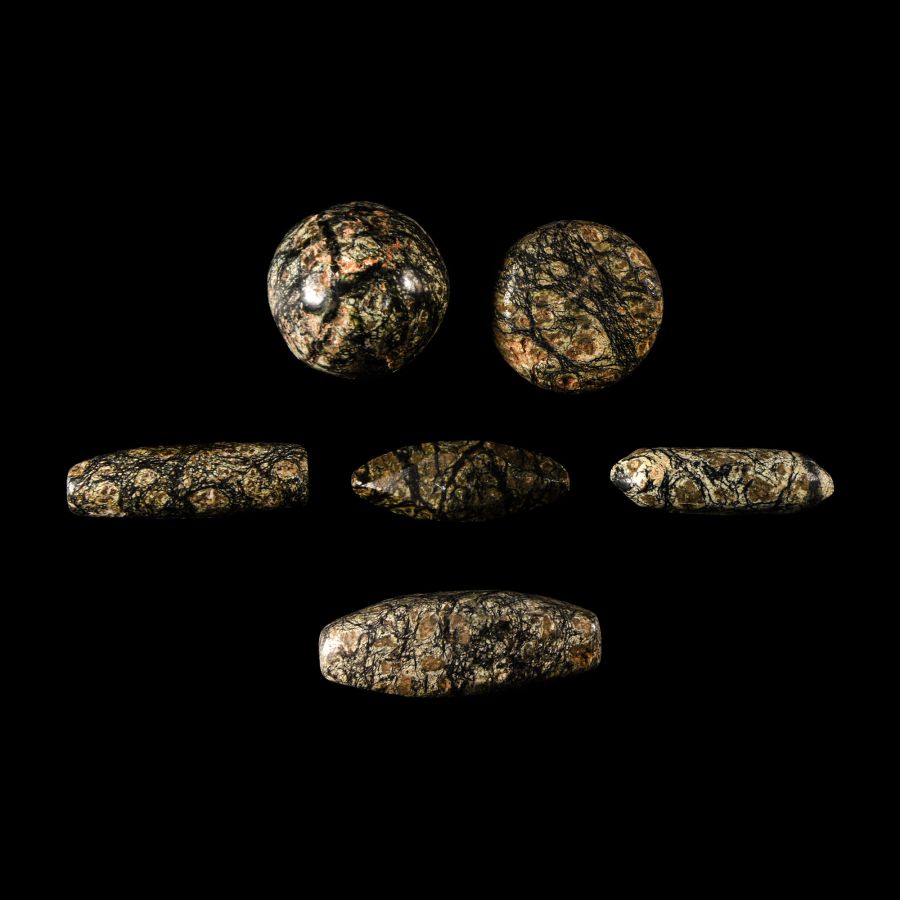
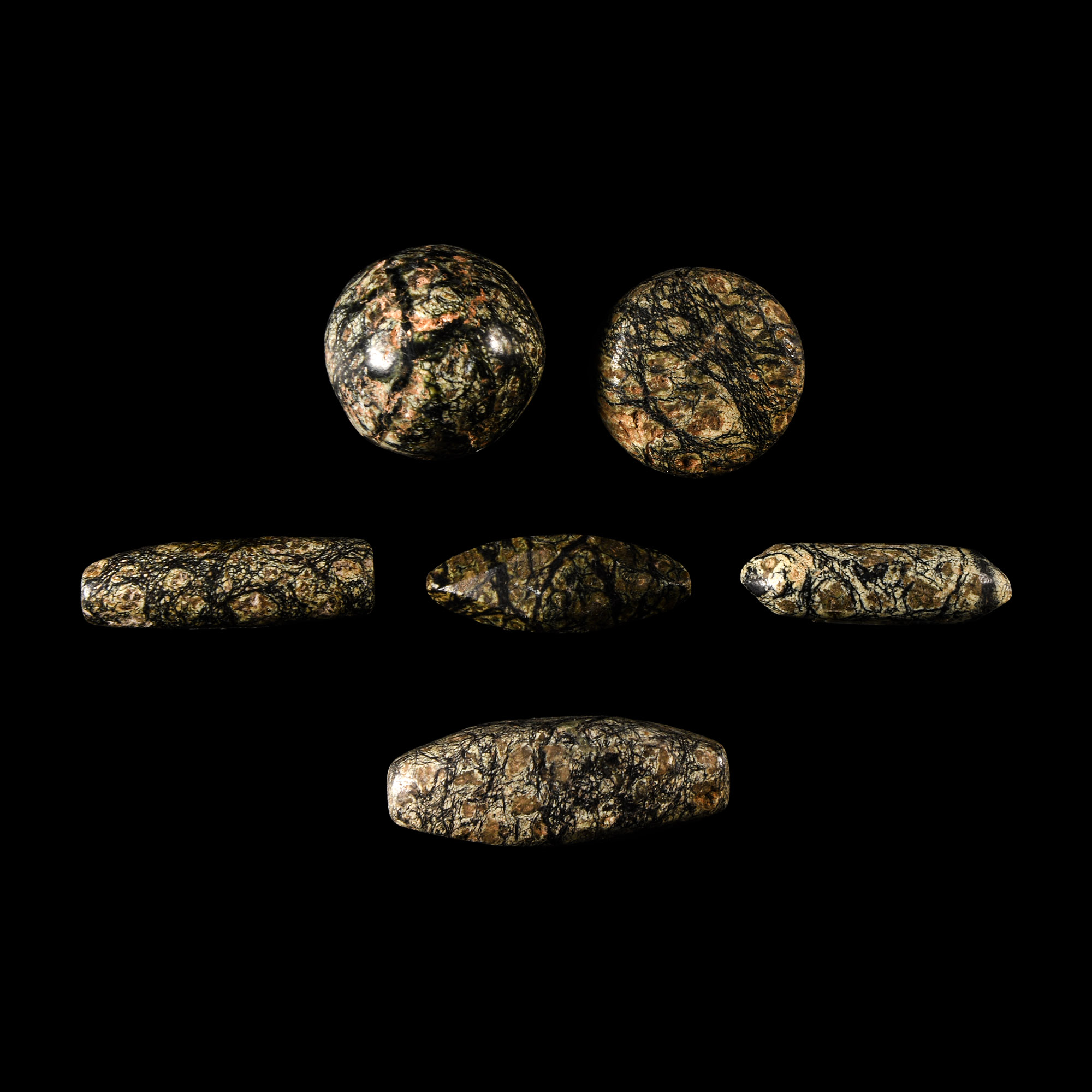
Stone Weight Collection
20TH CENTURY A.D. OR EARLIER
1 - 1 5/8 in. (76 grams total, 26-42 mm).
Composed of spherical, coin-shaped and tubular weights, together with examples of hexagonal and octagonal cross-section; carved using a veined stone. [6, No Reserve]
ProvenanceEx Simmons Gallery, London E11, UK, in the 1990s.
From a North London collection.
TimeLine Auctions follows a vetting process to ensure the authenticity and legality of all items, reinforcing our commitment to integrity and responsible trading. Each antiquity, antique, and coin lot undergoes thorough examination by a vetting committee of at least ten external specialists, professional trade association members, scientists, and archaeologists: Our Vetting Process
AUCTIONS:
TimeLine is a leading auction house specialising in antiquities, ancient art, collectables, natural history, coins, medals, and books. Our auctions offer museums, collectors, historians, and enthusiasts the opportunity to acquire unique and historically significant pieces.
-

Large Glazed Blue and White Dish
20th century A.D. or earlierSold for (Inc. bp): £104
The shallow bowl or dish with pedestal foot, decorated to the interior with a blue floral and geometric scheme, guilloche to the inner rim, brass sheath to the outer rim. 1.13 kg, 33.5 cm wide
Ex late Walter Steinberg collection. Property of a lady, by inheritance. -

Tudor Period and Later Iron Padlock Collection
Circa 16th-17th century A.D.Sold for (Inc. bp): £117
Comprising a variety of types of padlocks, most retaining their arm and ceased in the locked position. 443 grams total, 4-11.5 cm
Acquired 1990s-early 2000s. East Anglian private collection. -

Stuart Period Silver Charles II and Katherine of Braganza Wedding Cufflinks
17th century A.D.Sold for (Inc. bp): £91
Button links with flaming hearts over crossed arrows joined by an oval loop. 2.17 grams, 21 mm
Acquired on the UK art market. Property of a Somerset collector, UK, since at least the early 2000s.
Cufflinks and other dress fittings such as buttons featuring the hearts design were originally conceived to commemorate the marriage of king Charles II of England to Catherine of Braganza in 1662, although various designs continued as a general symbol of love and/or marriage.
