
Loading, please wait...
LOT 1247
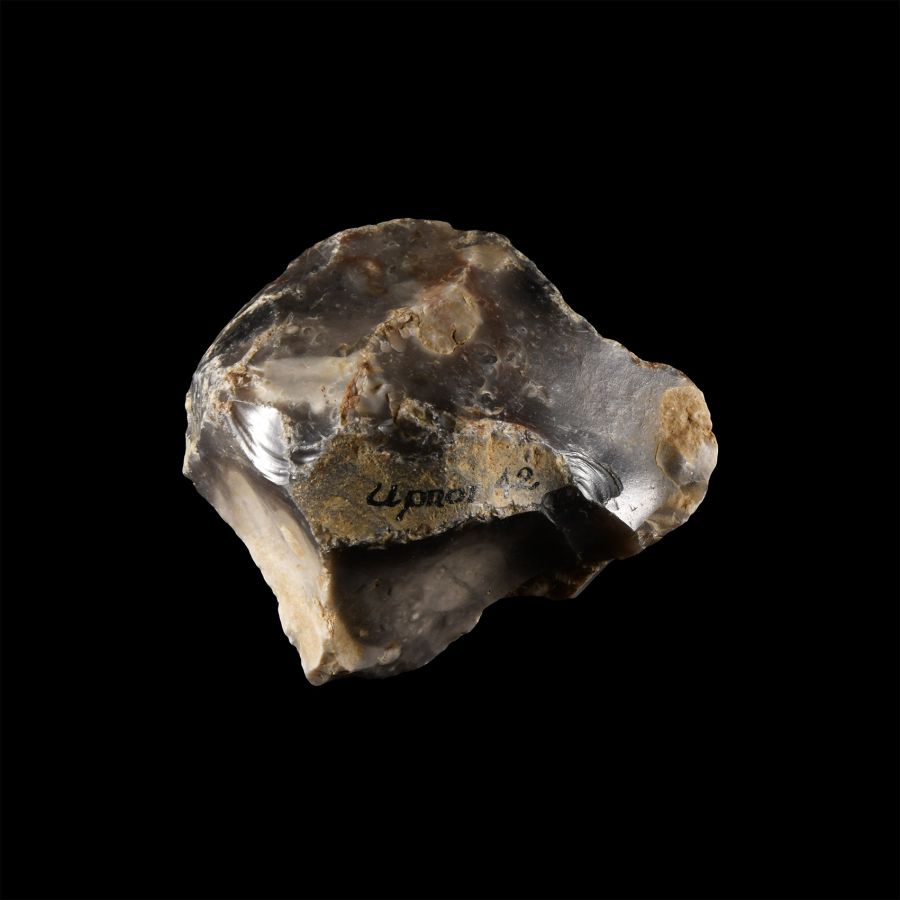
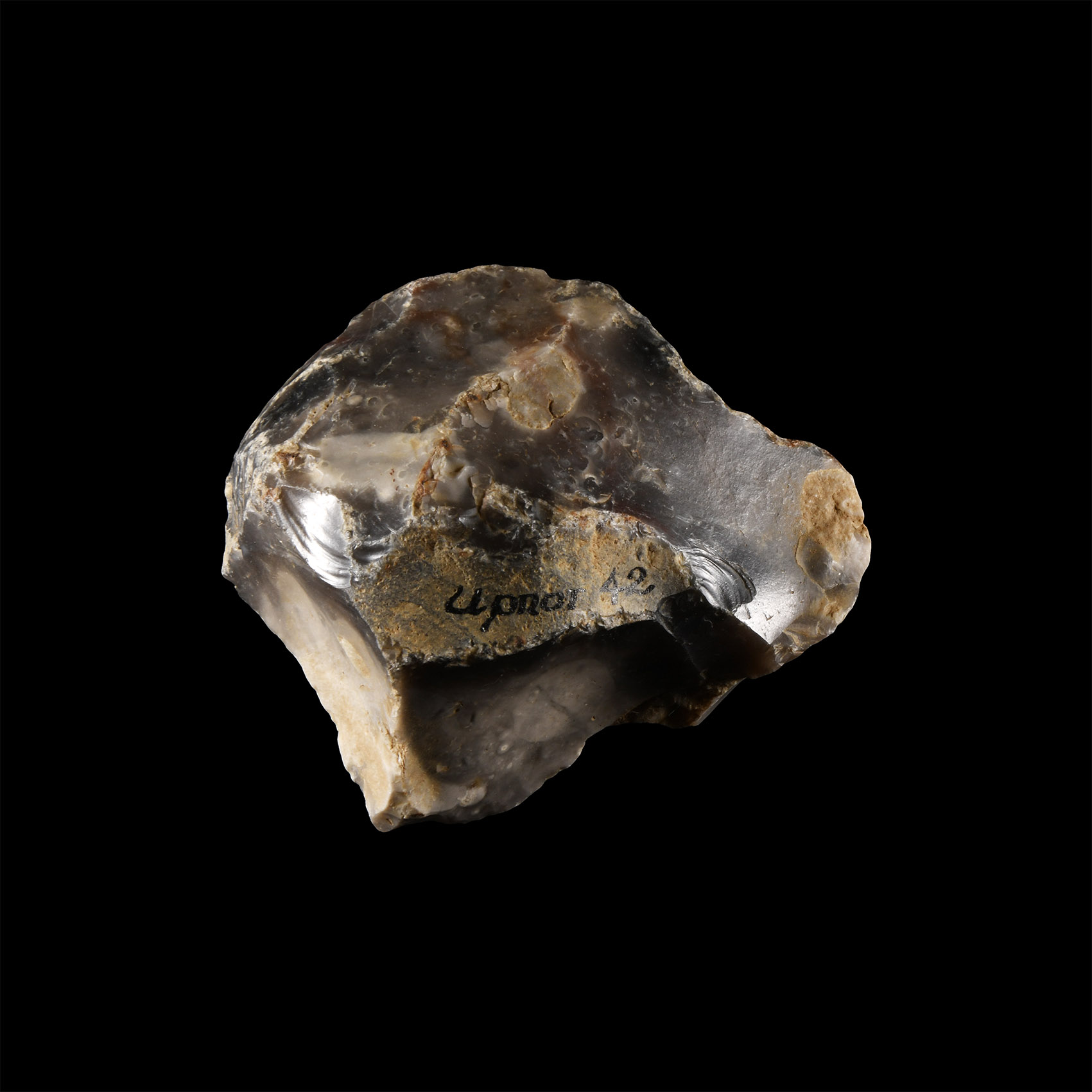
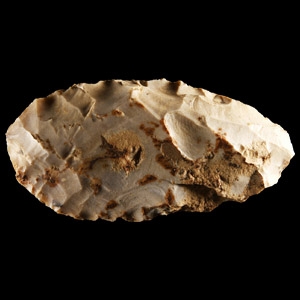
Stone Age Upnor Flint Multiple Implement
LOWER PALAEOLITHIC PERIOD, CIRCA 400,000 B.P.
3 in. (164 grams, 75 mm).
Formed on a keeled flake with trimming at edges forming crude scraping elements and a boring point; with inked collection number: 'Upnor 42'. [No Reserve]
ProvenanceFound Upnor, Kent, UK.
Richard Jones collection, Welling, Kent, UK, 1912-1915.
Ex Rochester Museum, Kent collections.
Specialist collection of J Edwin Jarvis.
Ex Martin Schoyen collection, London, UK.
TimeLine Auctions follows a vetting process to ensure the authenticity and legality of all items, reinforcing our commitment to integrity and responsible trading. Each antiquity, antique, and coin lot undergoes thorough examination by a vetting committee of at least ten external specialists, professional trade association members, scientists, and archaeologists: Our Vetting Process
AUCTIONS:
TimeLine is a leading auction house specialising in antiquities, ancient art, collectables, natural history, coins, medals, and books. Our auctions offer museums, collectors, historians, and enthusiasts the opportunity to acquire unique and historically significant pieces.
-
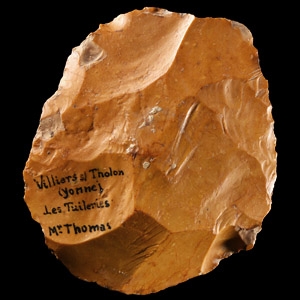
Stone Age French Ovate Flint Hand Axe
Lower Palaeolithic Period, circa 400,000-200,000 B.P.Sold for (Inc. bp): £111
Bifacially knapped with slightly asymmetric point and rounded butt; with inked 'Villiers sl Tholon / (Yonne) / Les Tuileries / Mr Thomas' find spot note. 233 grams, 95 mm
Found Villiers sl Tholon, Les Tuileries, France French private collection. Accompanied by a copy of the French cultural passport no.226712. -
Stone Age French Variegated Grey Flint Limande Handaxe
Palaeolithic Period, circa 300,000 B.P.Sold for (Inc. bp): £416
Knapped with a rounded butt and convex cutting edge. 408 grams, 15.3 cm
Private collection established since the 1950s. From the collection of a South West London, UK, collector. -

Stone Age Axehead Fragment Group
Neolithic Period, 8th-5th millennium B.C.Sold for (Inc. bp): £20
Comprising mostly fragments of pecked and ground stone axes, with part of a large knapped and polished flint type; this likely to be of Scandinavian origin. 1 kg total, 6.6-17.5 cm
UK gallery, early 2000s.
