
Loading, please wait...
LOT 1102
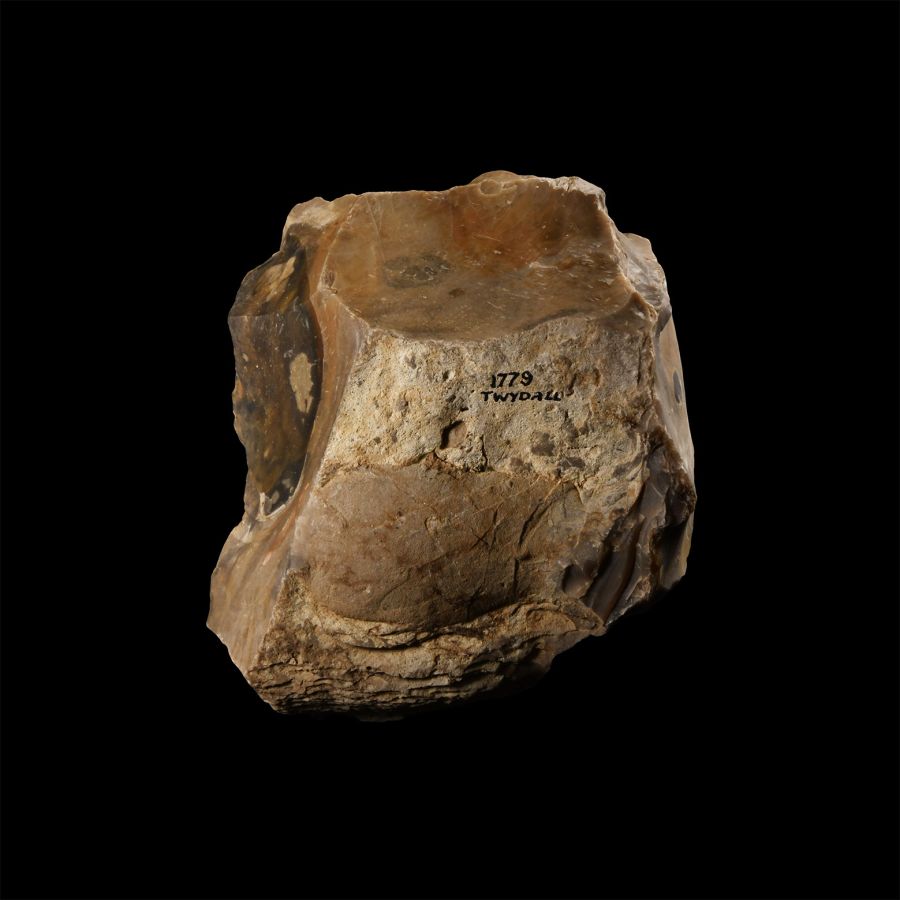
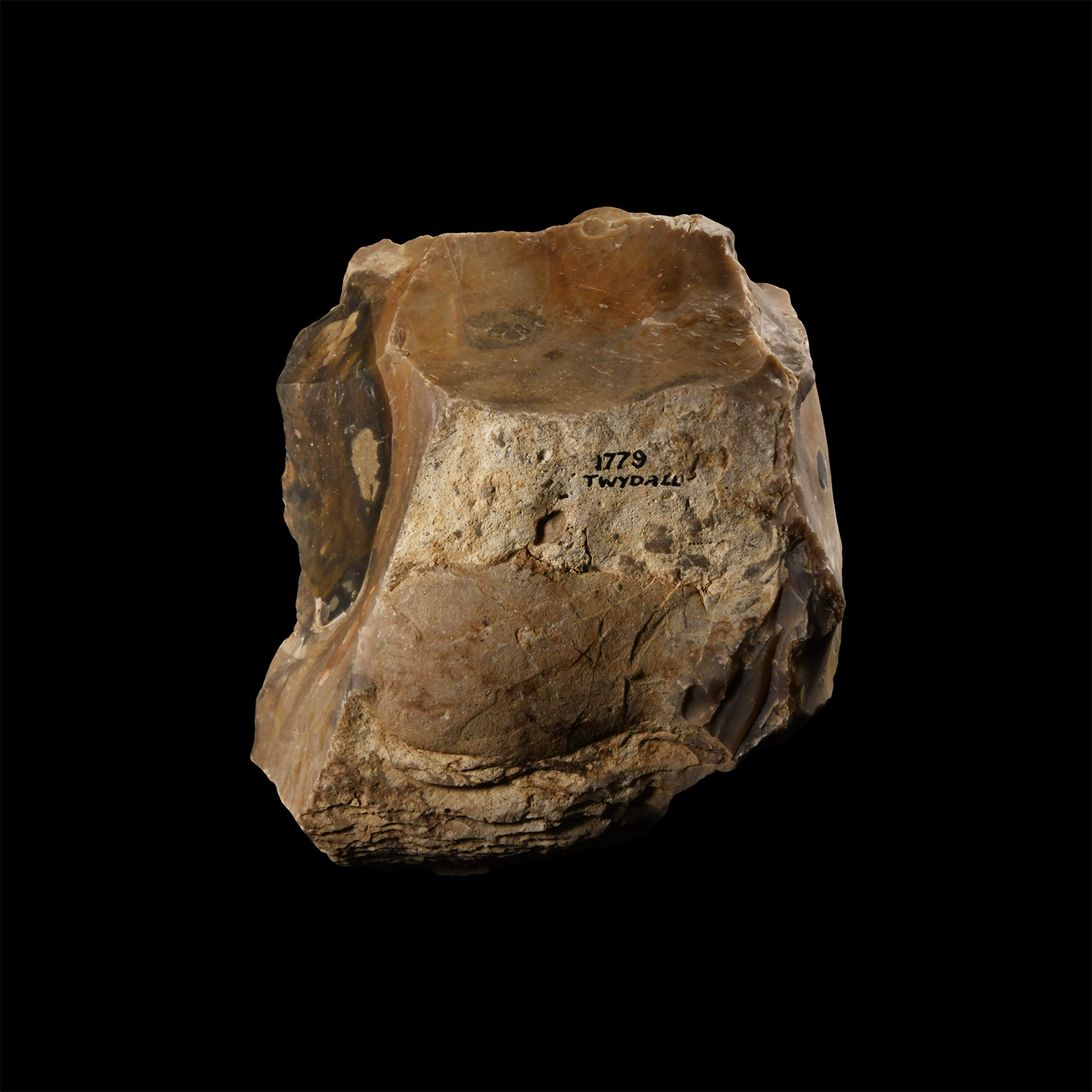
Stone Age Twydall Large Flint Core
LOWER PALEOLITHIC PERIOD, CIRCA 400,000 B.P.
4 1/2 in. (994 grams, 11.3 cm).
A large Twydall flint core bearing collector's handwritten inventory id. '1779 Twydall'. [No Reserve]
ProvenanceFound Twydall, Kent, UK.
Richard Jones collection, Welling, Kent, UK, 1912-1915.
Ex Rochester Museum, Kent collections.
Specialist collection of J Edwin Jarvis.
Ex Martin Schoyen collection, London, UK.
Accompanied by a copy of an article on the site at Twydall.
TimeLine Auctions follows a vetting process to ensure the authenticity and legality of all items, reinforcing our commitment to integrity and responsible trading. Each antiquity, antique, and coin lot undergoes thorough examination by a vetting committee of at least ten external specialists, professional trade association members, scientists, and archaeologists: Our Vetting Process
AUCTIONS:
TimeLine is a leading auction house specialising in antiquities, ancient art, collectables, natural history, coins, medals, and books. Our auctions offer museums, collectors, historians, and enthusiasts the opportunity to acquire unique and historically significant pieces.
-
.jpg)
Stone Age Vinca Idol
Neolithic Period, 6th-4th millennium B.C.Sold for (Inc. bp): £508
A ceramic figurine fragment of a standing female with stub arms extended laterally, incised chevron detailing to lower body. 74 grams, 88 mm
Fine condition.
Ex central European collection. Munich, Germany 1999. G.M.R.H.collection, West London, UK. -
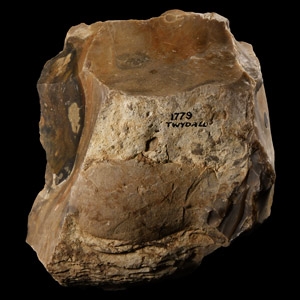
Stone Age Twydall Large Flint Core
Lower Paleolithic Period, circa 400,000 B.P.Sold for (Inc. bp): £26
A large Twydall flint core bearing collector's handwritten inventory id. '1779 Twydall'. 994 grams, 11.3 cm
Found Twydall, Kent, UK. Richard Jones collection, Welling, Kent, UK, 1912-1915. Ex Rochester Museum, Kent collections. Specialist collection of J Edwin Jarvis. Ex Martin Schoyen collection, London, UK. Accompanied by a copy of an article on the site at Twydall. -
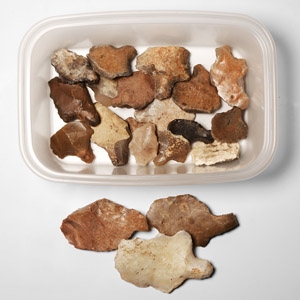
Stone Age Aterian Tanged Arrowheads
Circa 85,000-40,000 B.P.Sold for (Inc. bp): £26
A group of 20 tanged stone transverse style arrowheads. 298 grams total, 30-71 mm
From Grotte des Pigeons in Taforalt, Morocco, North Africa. Ex Arthur Halcrow Versage collection, Reigate, Surrey, UK.
The tang would have been inserted into a split handle or shaft material, like wood or bone, and then bound in position with cord, or with a binding agent which would have harden to form a permanent bond. The Aterian is the name given to a distinctive stone tool industry made by anatomically modern humans between about 80,000 and 40,000 years ago. The tools are found on sites in northern Africa between the Atlantic coast to the Kharga Oasis and the western edge of the Nile River Basin. The manufacturing process for these tools is derived from the earlier "Mousterian" methods for working stone, using prepared and shaped cores from which were struck off large flakes which were then often unifacially trimmed into the desired tool shapes. They continued with the same basic stone working processes, but with a major conceptual difference. The "Aterian" style tools are the first to have clearly been designed and manufactured to be mounted on handles, with the projectile points and the scrapers having distinctive prepared "tangs" at the base of the tool or projectile point.
